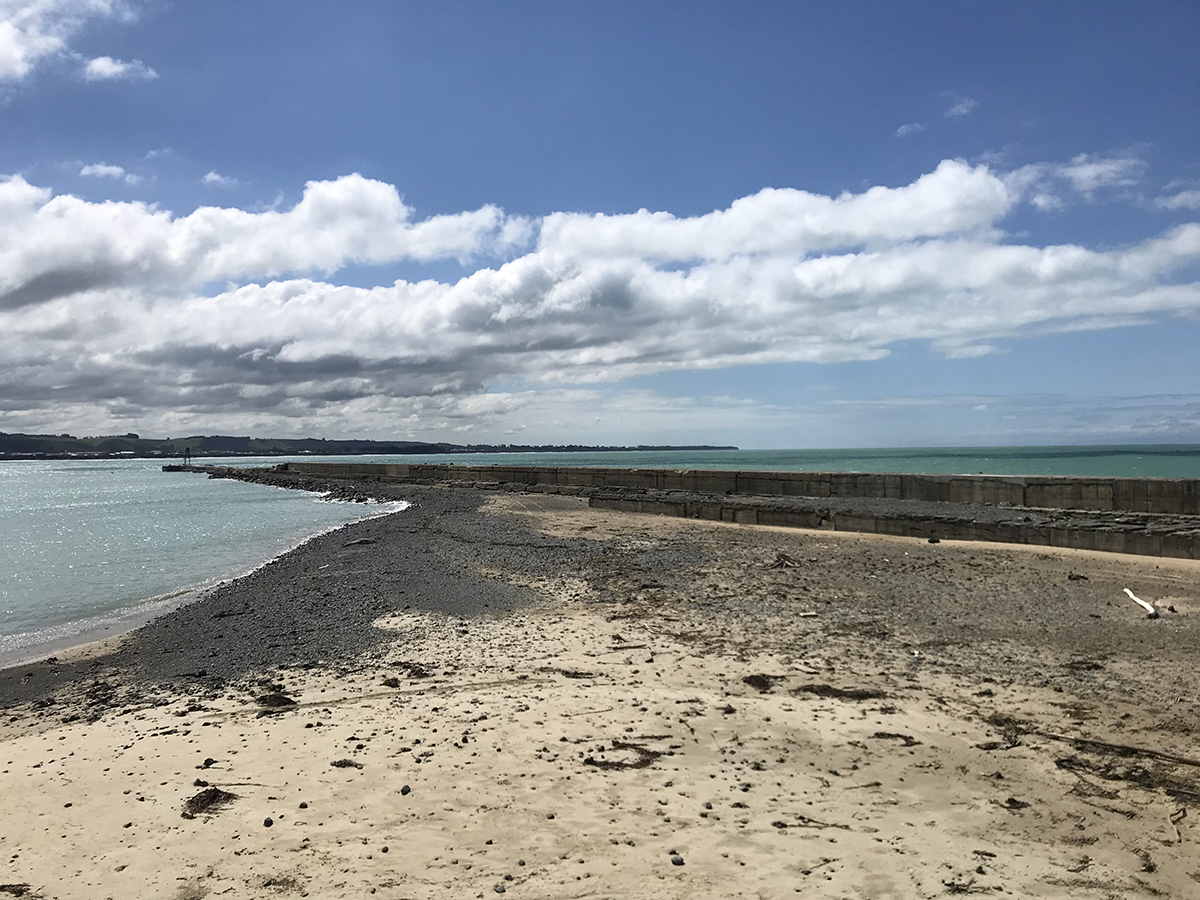
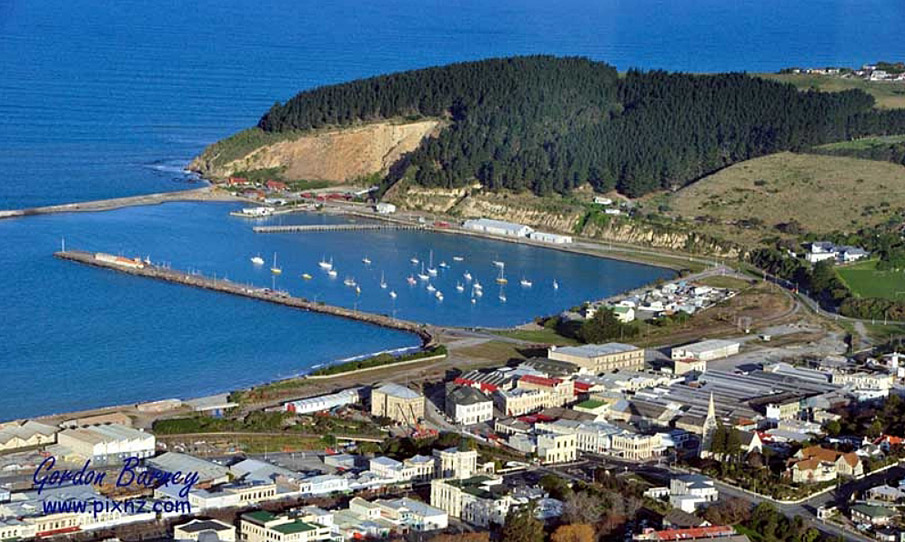
The Waitaki area is traditionally associated with the Kāhui-tipua, Te Rapuwai, Waitaha and Kāti Māmoe peoples. The Waitaki River was an ara tawhito (traditional travel route) for Kāi Tahu into the interior of Te Wai Pounamu and there are many kāika nohoka (seasonal settlements) and kāika mahika kai (food gathering sites) along the river. The land around the Waitaki River mouth shows evidence of extensive settlement, while Moeraki was one of the early cradles of knowledge for Waitaha and Kāti Māmoe histories. Key coastal settlements were at Makotukutuku (Cape Wanbrow), Moeraki, Matakaea (Shag Point), Waikouaiti, and Huriawa (the Karitane Peninsula). Following the arrival of Pākehā in number, Māori were alienated from the land. Soon afterwards, in 1858, the town was surveyed, and the first sections were opened for sale the following year. From the 1860s, as the town grew, many older buildings were replaced by the stone structures that survive today. By the early-1870s, a modern harbour was deemed necessary – the passing of the Oamaru Harbour Board Land Act, in 1874, gave the Harbour Board the necessary land, and a firm financial basis. The area that now contains Harbour Street was an aera of foreshore to the south of the Oamaru Creek inlet; this area was then surveyed and subdivided into 32 land parcels, and the roads through them established. Prior to the new office’s construction, the Harbour Board had been operating out of temporary offices on Tyne Street. In November 1875, it was decided that the Board should build its own office at the top of Harbour Street. A plan, ‘prepared by Mr Forrester’, for the building was submitted to the Board in January of 1876, with tenders called for that March.
In May, the Oamaru Mail reported on a preview they had been given of the designs:
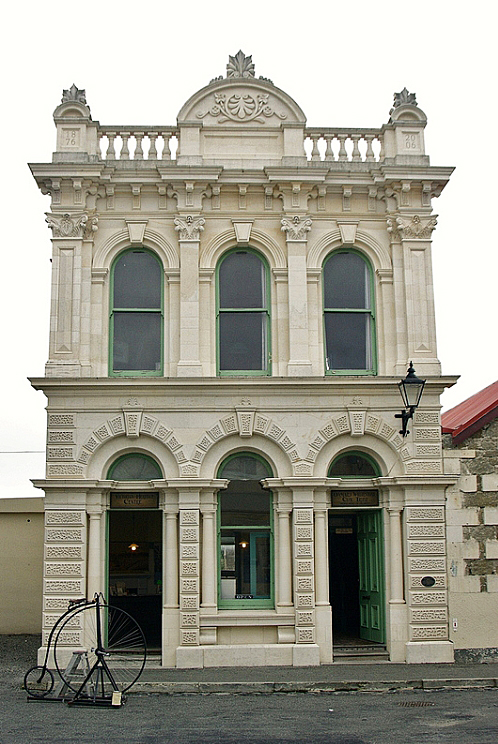
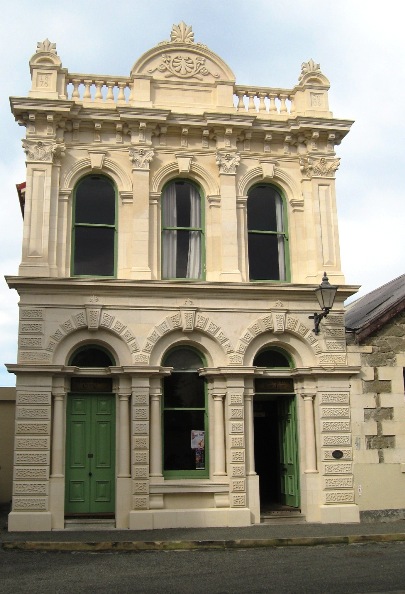
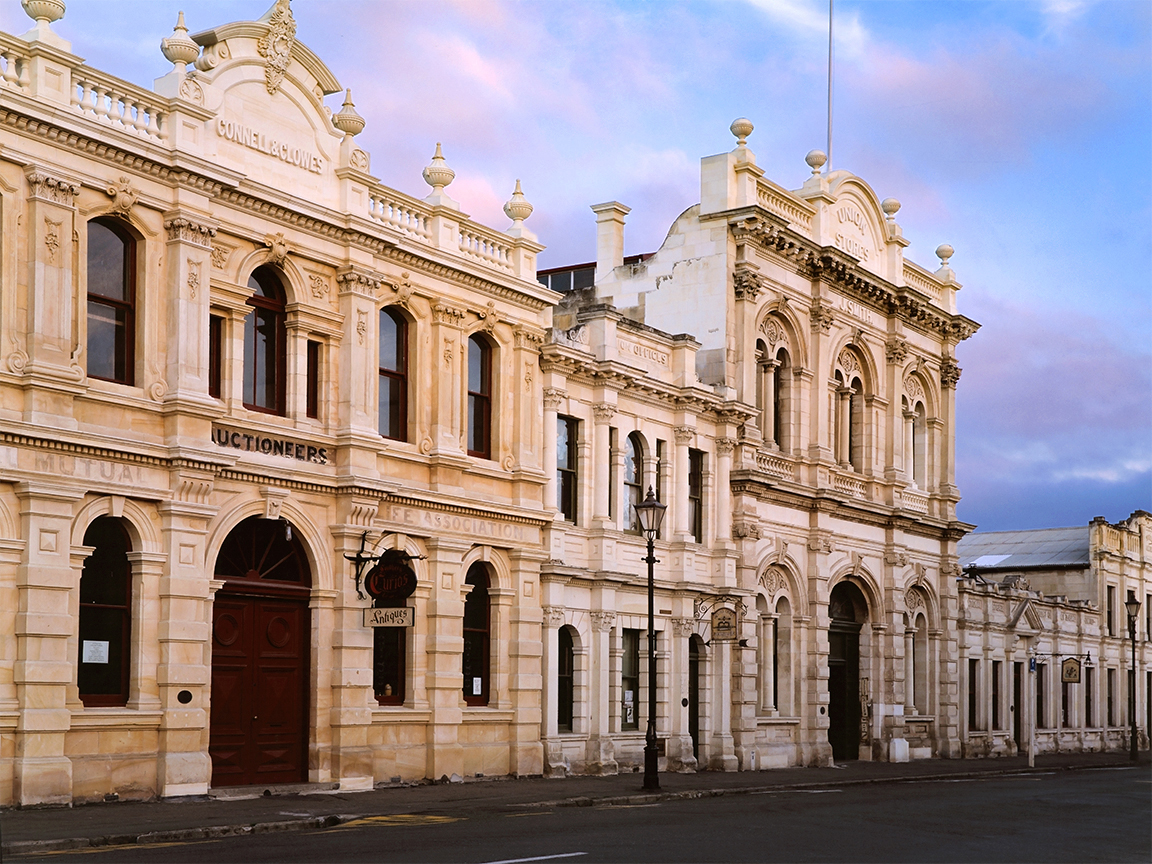
The style of the edifice is Venetian, the lower story [sic] consisting of an arcade with three bays, rusticated quoins and arch stones, the openings flanked by Doric columns. The upper story [sic] is filled in…with cantilever cornice, the whole being surmounted by pierced balustrades. The Harbour Department consists of front and back office, 15ft. by 15ft. and 15ft. by 12ft. respectively. The Board-room is situated on the upper floor and is approached by a handsome staircase…The Board room is 15ft. by 22ft.
Certain aspects of the design of the building, such as the ‘repetition of the composite pilasters on the corners of the first floor, in which one pilaster appears to have been placed over another’ have been described as recalling Baroque architecture. The first meetings of the Harbour Board at their new office occurred at some date between late-September and late-October 1876.
The Harbour Board operated out of this building for the rest of its existence. However, by the 1960s, the trend in the decline of the use of shipping led to the closure of the Oamaru Customs Office in 1964; Oamaru ceased to be a port of entry in 1966, and by 1974, only seven ships called in at the port. The Harbour Board Office became the property of the Oamaru Borough Council when the Board was dissolved in 1978. By the late--1980s, the building had deteriorated somewhat, which included the removal of the original balustraded parapet and tympanum. By August 2005, the leasehold of the building had been acquired by the Whitestone Civic Trust, who had set about a renovation of the building, which included the reconstruction of its façade. In 2023, the former Harbour Board Office Building remains one of the outstanding heritage buildings of Ōamaru.
List Entry Information
Status
Listed
List Entry Status
Historic Place Category 1
Access
Private/No Public Access
List Number
4381
Date Entered
2nd July 1987
Date of Effect
2nd July 1987
City/District Council
Waitaki District
Region
Otago Region
Extent of List Entry
Extent includes the land described as Lot 1 DP 332876 (RTs 134675, 800188), Otago Land District and the building known as Oamaru Harbour Board Office (Former) thereon.
Legal description
Lot 1 DP 332876 (RTs 134675, 800188), Otago Land District
Status
Listed
List Entry Status
Historic Place Category 1
Access
Private/No Public Access
List Number
4381
Date Entered
2nd July 1987
Date of Effect
2nd July 1987
City/District Council
Waitaki District
Region
Otago Region
Extent of List Entry
Extent includes the land described as Lot 1 DP 332876 (RTs 134675, 800188), Otago Land District and the building known as Oamaru Harbour Board Office (Former) thereon.
Legal description
Lot 1 DP 332876 (RTs 134675, 800188), Otago Land District
Why is this place significant?
Historic Significance
Historical Significance or Value This building is an important link with the development of Oamaru Harbour over 100 years. Built two years after the formation of the Harbour Board, it served as the Board's headquarters right through its extensive port construction. All the business of the Board was run from this office, the Board room and Inspector's office being upstairs. The building has connections with all the Board members who were prominent in Oamaru's history including pioneer and merchant George Sumpter (President 1876-91), H J Miller ( the first President 1874-6), Shrimski McMaster, Meek etc. The ornate Venetian style of the building was thought appropriate to the Board's sense of importance and prosperity.
Physical Significance
Architectural Significance The building is an elegant, heavily embellished structure with Venetian detailing. It is one of the first public buildings designed by Forrester and Lemon in Oamaru, and one which helped cement their reputation as the town's principal architects. Forrester was appointed Secretary and Inspector of Works to the Dock Trust (Oamaru Harbour Board from 1874) in 1871 and held this position until his death in 1907. He was the outstanding figure in the history of the harbour's construction. TOWNSCAPE/LANDMARK SIGNIFICANCE: The building is prominent in the Harbour/Tyne Street Conservation Area. In its corner position it acts as a visual stop when viewed from Tyne Street. Its appearance and scale is entirely compatible with adjacent buildings.
Why is this place significant?
Historic Significance
Historical Significance or Value This building is an important link with the development of Oamaru Harbour over 100 years. Built two years after the formation of the Harbour Board, it served as the Board's headquarters right through its extensive port construction. All the business of the Board was run from this office, the Board room and Inspector's office being upstairs. The building has connections with all the Board members who were prominent in Oamaru's history including pioneer and merchant George Sumpter (President 1876-91), H J Miller ( the first President 1874-6), Shrimski McMaster, Meek etc. The ornate Venetian style of the building was thought appropriate to the Board's sense of importance and prosperity.
Physical Significance
Architectural Significance The building is an elegant, heavily embellished structure with Venetian detailing. It is one of the first public buildings designed by Forrester and Lemon in Oamaru, and one which helped cement their reputation as the town's principal architects. Forrester was appointed Secretary and Inspector of Works to the Dock Trust (Oamaru Harbour Board from 1874) in 1871 and held this position until his death in 1907. He was the outstanding figure in the history of the harbour's construction. TOWNSCAPE/LANDMARK SIGNIFICANCE: The building is prominent in the Harbour/Tyne Street Conservation Area. In its corner position it acts as a visual stop when viewed from Tyne Street. Its appearance and scale is entirely compatible with adjacent buildings.
Construction Professional
Name
E. Rowland
Type
Carpenter
Biography
No biography is currently available for this construction professional
Name
Forrester & Lemon
Type
Architectural Partnership
Biography
The architectural partnership of Forrester and Lemon was established in Oamaru in 1872. Thomas Forrester (1838-1907) was born in Glasgow and educated at the Glasgow School of Art. Emigrating to New Zealand in 1861 he settled in Dunedin and worked under William Mason (1810-97) and William Henry Clayton (1823-77) and later Robert Arthur Lawson (1833-1902). In 1865 he superintended the Dunedin Exhibition and from 1870 he became involved with the supervision of harbour works. Some time after 1885 he became Engineer to the Oamaru Harbour Board and in this capacity designed the repairs to the breakwater following storm damage in 1886 and later the Holmes Wharf. On his death in 1907 he was still in the employ of the Harbour Board. John Lemon (1828-1890) was born in Jamaica and travelled to England before emigrating to New Zealand in 1849. He settled in Oamaru in 1860 and with his brother Charles established a timber merchant's business. By 1869 he was in partnership with his father-in-law, George Sumpter calling themselves "Timber and General Merchants, Land and Commission Agents". This partnership was dissolved in 1872 and Lemon entered into partnership with Forrester. Lemon had no architectural experience at all, but had a wide circle of business contacts and was an efficient administrator. Buildings designed by the partnership of Forrester and Lemon include St Paul's Church (1875-76), the Harbour Board Offices (1876), Queen's (later Brydone) Hotel (1881), Waitaki Boys' High School (1883), The Courthouse (1883) and the Post Office (1883-84), all in Oamaru. Forrester and Lemon contributed greatly to Oamaru's nineteenth century character. On Lemon's death in 1890 the practice was taken over by Forrester's son, John Megget Forrester (1865-1965).
Name
E.B Hook
Type
Stonemason
Biography
Construction Details
Start Year
1988
startYearCirca
Type
Modification
Description
Original balustraded parapet and tympanum removed.
Period
pre
Start Year
2005
startYearCirca
Type
Modification
Description
Original balustraded parapet and tympanum restored.
Start Year
1876
Type
Original Construction
Construction Materials
Oamaru stone
Construction Professional
Name
E. Rowland
Type
Carpenter
Biography
No biography is currently available for this construction professional
Name
Forrester & Lemon
Type
Architectural Partnership
Biography
The architectural partnership of Forrester and Lemon was established in Oamaru in 1872. Thomas Forrester (1838-1907) was born in Glasgow and educated at the Glasgow School of Art. Emigrating to New Zealand in 1861 he settled in Dunedin and worked under William Mason (1810-97) and William Henry Clayton (1823-77) and later Robert Arthur Lawson (1833-1902). In 1865 he superintended the Dunedin Exhibition and from 1870 he became involved with the supervision of harbour works. Some time after 1885 he became Engineer to the Oamaru Harbour Board and in this capacity designed the repairs to the breakwater following storm damage in 1886 and later the Holmes Wharf. On his death in 1907 he was still in the employ of the Harbour Board. John Lemon (1828-1890) was born in Jamaica and travelled to England before emigrating to New Zealand in 1849. He settled in Oamaru in 1860 and with his brother Charles established a timber merchant's business. By 1869 he was in partnership with his father-in-law, George Sumpter calling themselves "Timber and General Merchants, Land and Commission Agents". This partnership was dissolved in 1872 and Lemon entered into partnership with Forrester. Lemon had no architectural experience at all, but had a wide circle of business contacts and was an efficient administrator. Buildings designed by the partnership of Forrester and Lemon include St Paul's Church (1875-76), the Harbour Board Offices (1876), Queen's (later Brydone) Hotel (1881), Waitaki Boys' High School (1883), The Courthouse (1883) and the Post Office (1883-84), all in Oamaru. Forrester and Lemon contributed greatly to Oamaru's nineteenth century character. On Lemon's death in 1890 the practice was taken over by Forrester's son, John Megget Forrester (1865-1965).
Name
E.B Hook
Type
Stonemason
Biography
Construction Details
Start Year
1988
startYearCirca
Type
Modification
Description
Original balustraded parapet and tympanum removed.
Period
pre
Start Year
2005
startYearCirca
Type
Modification
Description
Original balustraded parapet and tympanum restored.
Start Year
1876
Type
Original Construction
Construction Materials
Oamaru stone
ARCHITECTURAL DESCRIPTION (Style): A well proportioned, two storey façade in the Venetian Renaissance style, made up of an arcaded elevation of round headed windows capped by a boldly projecting cornice. There is considerable attention to decorative detail in the delicate brackets supporting the cornice, the usual composite capitals, and the ground floor windows, which have flanking colonettes and vermiculated voussoirs on the window arches. The first floor pilasters are 'staggered' creating an effect of depth. MODIFICATIONS: Original balustraded parapet and tympanum removed otherwise building is in largely original condition.
Historical and Associated Iwi / Hapū / Whānau
Completion Date
30th October 2024
Report Written By
Andrew Winter
Information Sources
McCarthy, 2002
Conal McCarthy, Forrester and Lemon of Oamaru, architects, Oamaru, 2002
Oamaru Borough Council
Historic Building Catalogue
Other Information
A fully referenced copy of the summary upgrade report is available upon request from the Southern Area office of Heritage New Zealand Pouhere Taonga. This historic place was registered under the Historic Places Act 1980. This report includes the text from the original Building Classification Committee report considered by the NZHPT Board at the time of registration. This registration is also included in the Harbour/Tyne Street Historic Area (Record no. 7064). Please note that entry on the New Zealand Heritage List/Rarangi Korero identifies only the heritage values of the property concerned, and should not be construed as advice on the state of the property, or as a comment of its soundness or safety, including in regard to earthquake risk, safety in the event of fire, or insanitary conditions.
Historical and Associated Iwi / Hapū / Whānau
Completion Date
30th October 2024
Report Written By
Andrew Winter
Information Sources
McCarthy, 2002
Conal McCarthy, Forrester and Lemon of Oamaru, architects, Oamaru, 2002
Oamaru Borough Council
Historic Building Catalogue
Other Information
A fully referenced copy of the summary upgrade report is available upon request from the Southern Area office of Heritage New Zealand Pouhere Taonga. This historic place was registered under the Historic Places Act 1980. This report includes the text from the original Building Classification Committee report considered by the NZHPT Board at the time of registration. This registration is also included in the Harbour/Tyne Street Historic Area (Record no. 7064). Please note that entry on the New Zealand Heritage List/Rarangi Korero identifies only the heritage values of the property concerned, and should not be construed as advice on the state of the property, or as a comment of its soundness or safety, including in regard to earthquake risk, safety in the event of fire, or insanitary conditions.
Former Usages
General Usage: Trade
Specific Usage: Office building/Offices
Former Usages
General Usage: Trade
Specific Usage: Office building/Offices
Stay up to date with Heritage this month