

In 1903 Auckland's Mayor, the Hon Edwin Mitchelson suggested that a statue would be a fitting tribute to Campbell while he was still alive. Aucklanders were initially enthusiastic about the idea, but the sum required was only slowly raised. The land on which the statue was erected was owned by Campbell himself and he personally spent thousands of pounds preparing the site.
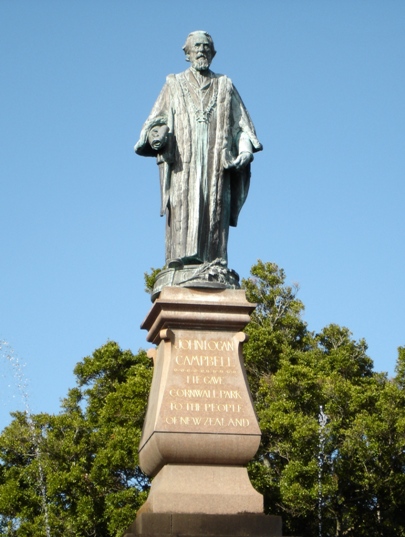
The statue was designed to portray Campbell's generous gift of Cornwall Park to the public during the visit of the Duke and Duchess of Cornwall in 1901. He had been elected as mayor especially to act as Auckland's representative during their visit because he was considered to be Auckland's 'Grand Old Man' due to his long association with the city's development dating back to the early 1840s.
The sculptor, Henry Pegram, was based in London and worked from photographs to achieve a likeness. A plaster cast of Campbell's features was inspected by a number of his London based friends. Only after they had approved it, was Pegram permitted to cast it in bronze. He increased the size of the statue when he discovered that it was to be set in a base of rockwork which he felt would detract from the dignity of his statue.
The statue was finally unveiled on Empire Day, 24 May 1906.
List Entry Information
Status
Listed
List Entry Status
Historic Place Category 1
Access
Able to Visit
List Number
4478
Date Entered
28th June 1990
Date of Effect
28th June 1990
City/District Council
Auckland Council
Region
Auckland Council
Extent of List Entry
Extent includes the land described as Allot 19A, Pt Allot 19 Sec 11 Suburbs of Auckland (RT NA1012/215), North Auckland Land District, and the structures known as John Logan Campbell Monument thereon.
Legal description
Allot 19A, Pt Allot 19 Sec 11 Suburbs of Auckland (RT NA1012/215), North Auckland Land District
Status
Listed
List Entry Status
Historic Place Category 1
Access
Able to Visit
List Number
4478
Date Entered
28th June 1990
Date of Effect
28th June 1990
City/District Council
Auckland Council
Region
Auckland Council
Extent of List Entry
Extent includes the land described as Allot 19A, Pt Allot 19 Sec 11 Suburbs of Auckland (RT NA1012/215), North Auckland Land District, and the structures known as John Logan Campbell Monument thereon.
Legal description
Allot 19A, Pt Allot 19 Sec 11 Suburbs of Auckland (RT NA1012/215), North Auckland Land District
Why is this place significant?
Historic Significance
Historical Significance or Value The memorial marks the munificent gift of Cornwall Park to the citizens of New Zealand by Sir John Logan Campbell. It reflects his close connection with the growth of Auckland City since the early 1840s in both its civic and commercial life, which led in later years to his public role as the 'Father' of Auckland.
Physical Significance
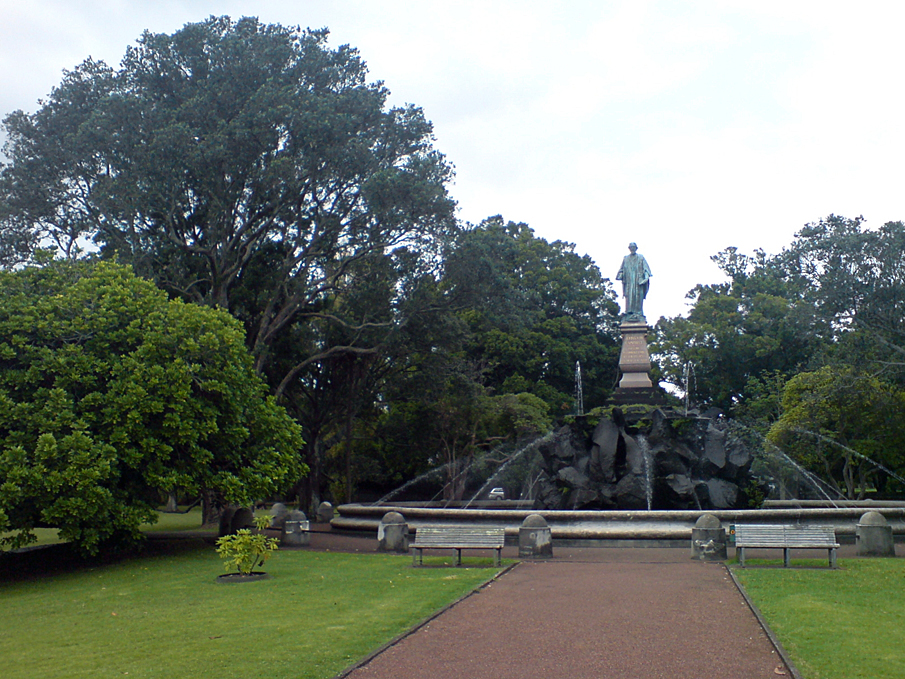
ARCHITECTURAL QUALITY: This memorial is one of the few early public water sculptures in Auckland. With the statue cast in England by a noted English sculptor and the contrasting rocky base designed by a local architect, the work combines the talent of leading designers in both countries. The statue is set within the academic tradition in which it was conceived, being a lifelike depiction of an important historic figure. TOWNSCAPE/LANDMARK VALUE: The monument stands on the very edge of the Park in the middle of a circular grassed area. While surrounding trees have obscured the view of the statue from the road to some extent, it is still an impressive ornament at the entrance to the Park.
Why is this place significant?
Historic Significance
Historical Significance or Value The memorial marks the munificent gift of Cornwall Park to the citizens of New Zealand by Sir John Logan Campbell. It reflects his close connection with the growth of Auckland City since the early 1840s in both its civic and commercial life, which led in later years to his public role as the 'Father' of Auckland.
Physical Significance
ARCHITECTURAL QUALITY: This memorial is one of the few early public water sculptures in Auckland. With the statue cast in England by a noted English sculptor and the contrasting rocky base designed by a local architect, the work combines the talent of leading designers in both countries. The statue is set within the academic tradition in which it was conceived, being a lifelike depiction of an important historic figure. TOWNSCAPE/LANDMARK VALUE: The monument stands on the very edge of the Park in the middle of a circular grassed area. While surrounding trees have obscured the view of the statue from the road to some extent, it is still an impressive ornament at the entrance to the Park.
Construction Professional
Name
Arnold, Charles
Type
Architect
Biography
Charles Le Neve Arnold The Campbell Free Kindergarten is the work of a noted Auckland architect, Charles Le Neve Arnold, who was involved in the development of the Arts and Crafts movement in New Zealand. He had joined the Auckland Institute of Architects in 1885. In 1886, Arnold supervised the erection of St Mary's Church in Parnell. He designed a number of important works over the coming years including the Mackelvie annexe to the Auckland City Council building (1892), the Admiralty House (1901), Great Northern Brewery, Colonial Sugar Refining Company Office (1903), Auckland Chamber of Commerce (1903) and the Ante-park at Cornwall Park (1903). He later formed a partnership with Mr Atkinson Abbott and this partnership was responsible for such notable designs as the Dilworth Ulster Institute (1916), the Auckland Grammar School (1913) and the Kings College Memorial Chapel (1922). Arnold died in 1955 at the age of 100. Arnold established a relationship with John Logan Campbell in the early years of the twentieth century when he was appointed architect to the Cornwall Park Trust Board. In 1903 he designed the Ante-park at Cornwall Park which was completed in 1906. He also designed the Arts and Crafts-style Huia Lodge in Cornwall Park, which originally housed the caretaker and his wife. Campbell had a strong interest in architectural design and proved himself to be a competent amateur architect. In 1869, Campbell had personally drawn up plans for extensive alterations to his home, Logan Bank, to be built in poured concrete using a special patent process. In 1878, he designed a new home to be known as Kilbryde and sent his plans to the architectural firm of Edward Mahoney & Son where they were revised and working drawings prepared. Arnold, in his design of the Cornwall Park Ante-park, was said to have 'to a great extent carried out the desires' of Campbell. However, it is unlikely that Campbell had such a significant role in the design of the Campbell Free Kindergarten. The building was designed late in Campbell's life and at a time that his eyesight and health were failing. In June 1906 his eyesight suddenly deteriorated and he was unable to read thereafter or write anything more than his signature.
Name
Pegram, Henry Alfred
Type
Sculptor
Biography
Henry Pegram was a London sculptor who was an assistant to Sir Hamo Thornycroft from 1887 to 1891. He specialised in portrait and figure sculpture, predominantly with classical subjects, and war memorials.
Construction Details
Start Year
1906
Type
Original Construction
Construction Materials
Base - Rough, unworked basalt slabs. Pedestal - Red granite. Statue - Bronze.
Construction Professional
Name
Arnold, Charles
Type
Architect
Biography
Charles Le Neve Arnold The Campbell Free Kindergarten is the work of a noted Auckland architect, Charles Le Neve Arnold, who was involved in the development of the Arts and Crafts movement in New Zealand. He had joined the Auckland Institute of Architects in 1885. In 1886, Arnold supervised the erection of St Mary's Church in Parnell. He designed a number of important works over the coming years including the Mackelvie annexe to the Auckland City Council building (1892), the Admiralty House (1901), Great Northern Brewery, Colonial Sugar Refining Company Office (1903), Auckland Chamber of Commerce (1903) and the Ante-park at Cornwall Park (1903). He later formed a partnership with Mr Atkinson Abbott and this partnership was responsible for such notable designs as the Dilworth Ulster Institute (1916), the Auckland Grammar School (1913) and the Kings College Memorial Chapel (1922). Arnold died in 1955 at the age of 100. Arnold established a relationship with John Logan Campbell in the early years of the twentieth century when he was appointed architect to the Cornwall Park Trust Board. In 1903 he designed the Ante-park at Cornwall Park which was completed in 1906. He also designed the Arts and Crafts-style Huia Lodge in Cornwall Park, which originally housed the caretaker and his wife. Campbell had a strong interest in architectural design and proved himself to be a competent amateur architect. In 1869, Campbell had personally drawn up plans for extensive alterations to his home, Logan Bank, to be built in poured concrete using a special patent process. In 1878, he designed a new home to be known as Kilbryde and sent his plans to the architectural firm of Edward Mahoney & Son where they were revised and working drawings prepared. Arnold, in his design of the Cornwall Park Ante-park, was said to have 'to a great extent carried out the desires' of Campbell. However, it is unlikely that Campbell had such a significant role in the design of the Campbell Free Kindergarten. The building was designed late in Campbell's life and at a time that his eyesight and health were failing. In June 1906 his eyesight suddenly deteriorated and he was unable to read thereafter or write anything more than his signature.
Name
Pegram, Henry Alfred
Type
Sculptor
Biography
Henry Pegram was a London sculptor who was an assistant to Sir Hamo Thornycroft from 1887 to 1891. He specialised in portrait and figure sculpture, predominantly with classical subjects, and war memorials.
Construction Details
Start Year
1906
Type
Original Construction
Construction Materials
Base - Rough, unworked basalt slabs. Pedestal - Red granite. Statue - Bronze.
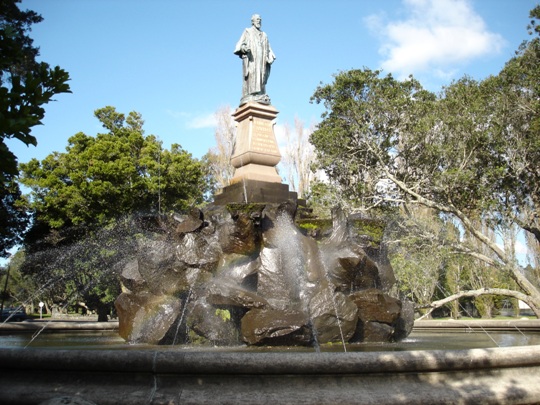
ARCHITECT/ENGINEER/DESIGNER: The statue was sculpted by Henry Alfred PEGRAM, and the rocky base, pool and surrounds were designed by the Auckland architect Charles ARNOLD, the Cornwall Park Trust architect ARCHITECTURAL DESCRIPTION: The bronze statue shows Sir John Logan Campbell dressed in Auckland's mayoral robes. He wears the chain of office and one hand holds the mayoral hat while the other holds out title deeds to Cornwall Park. It depicts the occasion in 1901 when Campbell was the city's mayor and bequeathed the Park to the people of New Zealand. The statue is 2.85 metres high, slightly more than one and a half times life size. The pedestal on which it stands rises from a rocky base inside a circular concrete basin. Jets of water spring up to form a fountain. MODIFICATIONS: None.
ARCHITECT/ENGINEER/DESIGNER: The statue was sculpted by Henry Alfred PEGRAM, and the rocky base, pool and surrounds were designed by the Auckland architect Charles ARNOLD, the Cornwall Park Trust architect ARCHITECTURAL DESCRIPTION: The bronze statue shows Sir John Logan Campbell dressed in Auckland's mayoral robes. He wears the chain of office and one hand holds the mayoral hat while the other holds out title deeds to Cornwall Park. It depicts the occasion in 1901 when Campbell was the city's mayor and bequeathed the Park to the people of New Zealand. The statue is 2.85 metres high, slightly more than one and a half times life size. The pedestal on which it stands rises from a rocky base inside a circular concrete basin. Jets of water spring up to form a fountain. MODIFICATIONS: None.
Historical and Associated Iwi / Hapū / Whānau
Information Sources
Stone, 1987
R. C. J Stone, The Father and his Gift: John Logan Campbell's Later Years, Auckland, 1987
Other Information
This historic place was registered under the Historic Places Act 1980. This report includes the text from the original Building Classification Committee report considered by the NZHPT Board at the time of registration. Please note that entry on the New Zealand Heritage List/Rarangi Korero identifies only the heritage values of the property concerned, and should not be construed as advice on the state of the property, or as a comment of its soundness or safety, including in regard to earthquake risk, safety in the event of fire, or insanitary conditions.
Historical and Associated Iwi / Hapū / Whānau
Information Sources
Stone, 1987
R. C. J Stone, The Father and his Gift: John Logan Campbell's Later Years, Auckland, 1987
Other Information
This historic place was registered under the Historic Places Act 1980. This report includes the text from the original Building Classification Committee report considered by the NZHPT Board at the time of registration. Please note that entry on the New Zealand Heritage List/Rarangi Korero identifies only the heritage values of the property concerned, and should not be construed as advice on the state of the property, or as a comment of its soundness or safety, including in regard to earthquake risk, safety in the event of fire, or insanitary conditions.
Current Usages
Uses: Civic Facilities
Specific Usage: Fountain
Uses: Civic Facilities
Specific Usage: Statue/public art
Uses: Commemoration
Specific Usage: Memorial - Particular person or group
Former Usages
General Usage: Civic Facilities
Specific Usage: Fountain
General Usage: Civic Facilities
Specific Usage: Statue/public art
General Usage: Commemoration
Specific Usage: Memorial - Particular person or group
Web Links
description:
Current Usages
Uses: Civic Facilities
Specific Usage: Fountain
Uses: Civic Facilities
Specific Usage: Statue/public art
Uses: Commemoration
Specific Usage: Memorial - Particular person or group
Former Usages
General Usage: Civic Facilities
Specific Usage: Fountain
General Usage: Civic Facilities
Specific Usage: Statue/public art
General Usage: Commemoration
Specific Usage: Memorial - Particular person or group
Web Links
description:
Sign up to hear more
Get the latest heritage news, features and events delivered
straight to your inbox.
