The obelisk is an Auckland icon, standing on the summit of the Maori pa at Maungakiekie - also known as One Tree Hill - in the centre of Cornwall Park. Originally erected for Auckland's centenary celebrations in 1940, it formed part of the bequest of Sir John Logan Campbell, to commemorate his admiration of 'the achievements and character of the great Maori people'. Campbell, who arrived as one of Auckland's pioneer settlers in 1840, lived and worked among local Maori before making his fortune as a general merchant and businessman. He died in 1912 after gifting Cornwall Park to the city, and is buried on top of One Tree Hill.
The obelisk is roughly 30 m (100 feet) tall and surrounded by a paved area, incorporating Logan Campbell's grave. Obelisks were popular as funerary monuments in nineteenth-century Europe, and elsewhere. The memorial includes a bronze Maori statue, cast by the sculptor Richard Gross, of a man with a huia feather in his hair and mere in his raised right hand. Four bronze plaques around the plinth commemorate Campbell's bequest, and provide a mid twentieth-century account of Maori migration and the 1840 Treaty of Waitangi. They are notable for being inscribed in both English and Maori, and affirm Maori as the first peoples of New Zealand. Retaining powerful symbolism, few modifications have been made to the monument since its construction, although a nearby Monterey Pine on the summit was removed in 2001. This had been damaged by Treaty of Waitangi activists, who believed that a non-indigenous species in such a location was inappropriate.
One Tree Hill Obelisk has considerable significance as a symbol of biculturalism and respect between Maori and Pakeha, and lies on a site of great importance to Maori. It commemorates a prominent early pioneer who gifted the land to the city for public use, preserving a large part of the pa for posterity. It is the most dramatic of several monuments in Cornwall Park that commemorate Logan Campbell, and plays an important role as an Auckland landmark and icon. The obelisk is one of the most prominent monuments in the region, while its statue is considered the earliest casting of a Maori figure in Auckland. The monument demonstrates the educational function of public parks in the twentieth century, and the importance of cultural conciliation in the years surrounding the Second World War. It is held in high public esteem for its symbolic qualities, and as a popular sight and vantage point.
The obelisk is roughly 30 m (100 feet) tall and surrounded by a paved area, incorporating Logan Campbell's grave. Obelisks were popular as funerary monuments in nineteenth-century Europe, and elsewhere. The memorial includes a bronze Maori statue, cast by the sculptor Richard Gross, of a man with a huia feather in his hair and mere in his raised right hand. Four bronze plaques around the plinth commemorate Campbell's bequest, and provide a mid twentieth-century account of Maori migration and the 1840 Treaty of Waitangi. They are notable for being inscribed in both English and Maori, and affirm Maori as the first peoples of New Zealand. Retaining powerful symbolism, few modifications have been made to the monument since its construction, although a nearby Monterey Pine on the summit was removed in 2001. This had been damaged by Treaty of Waitangi activists, who believed that a non-indigenous species in such a location was inappropriate.
One Tree Hill Obelisk has considerable significance as a symbol of biculturalism and respect between Maori and Pakeha, and lies on a site of great importance to Maori. It commemorates a prominent early pioneer who gifted the land to the city for public use, preserving a large part of the pa for posterity. It is the most dramatic of several monuments in Cornwall Park that commemorate Logan Campbell, and plays an important role as an Auckland landmark and icon. The obelisk is one of the most prominent monuments in the region, while its statue is considered the earliest casting of a Maori figure in Auckland. The monument demonstrates the educational function of public parks in the twentieth century, and the importance of cultural conciliation in the years surrounding the Second World War. It is held in high public esteem for its symbolic qualities, and as a popular sight and vantage point.
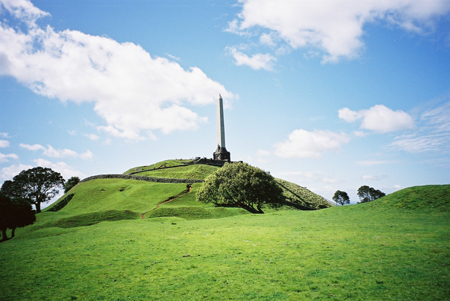
One Tree Hill Obelisk, Auckland | Martin Jones | 29/10/2001 | Heritage New Zealand Pouhere Taonga
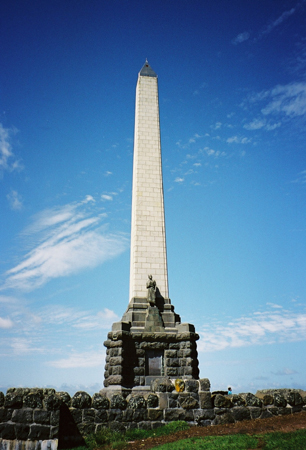
One Tree Hill Obelisk, Auckland | Martin Jones | 18/09/2001 | Heritage New Zealand Pouhere Taonga
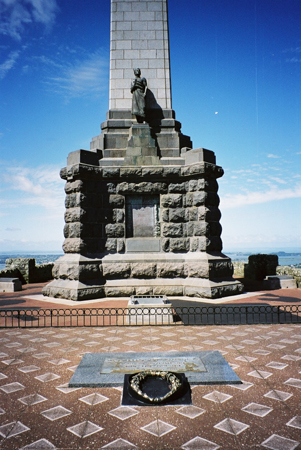
One Tree Hill Obelisk, Auckland | Martin Jones | 18/09/2001 | Heritage New Zealand Pouhere Taonga
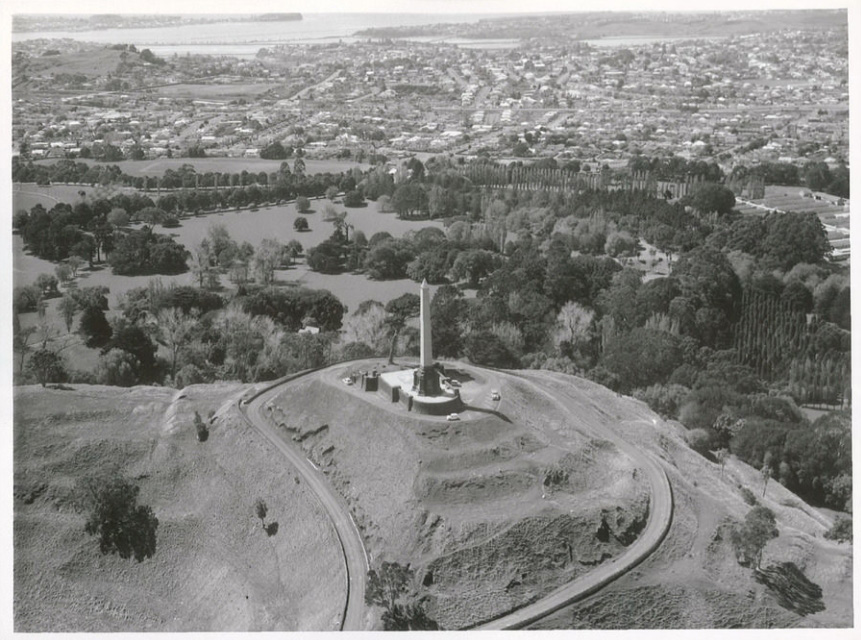
One Tree Hill Obelisk, Auckland. October 1965. Image courtesy of www.flickr.com CC Licence 2.0 | Mr G Riethmaier | Archives New Zealand
One Tree Hill Obelisk, Auckland | Martin Jones | 29/10/2001 | Heritage New Zealand Pouhere Taonga
One Tree Hill Obelisk, Auckland | Martin Jones | 18/09/2001 | Heritage New Zealand Pouhere Taonga
One Tree Hill Obelisk, Auckland | Martin Jones | 18/09/2001 | Heritage New Zealand Pouhere Taonga
One Tree Hill Obelisk, Auckland. October 1965. Image courtesy of www.flickr.com CC Licence 2.0 | Mr G Riethmaier | Archives New Zealand