Quick links


Quick links
Quick links
Quick links
Quick links
Quick links
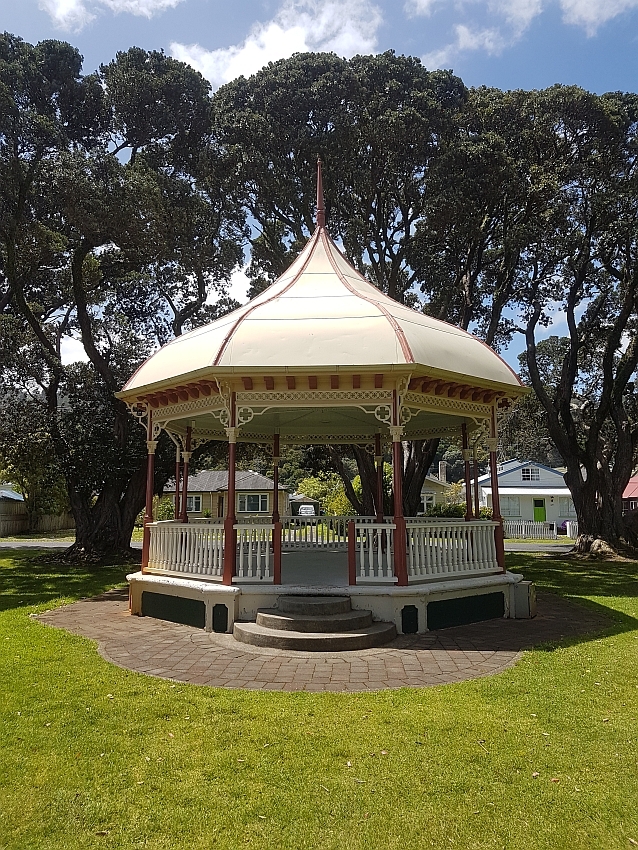
101 Beach Road and Albert Street, Victoria Park, THAMES
Public
Historic Place Category 2
List No. 4609
List Entry Information
Status
Listed
List Entry Status
Historic Place Category 2
Access
Able to Visit
List Number
4609
Date Entered
19th March 1986
Date of Effect
19th March 1986
City/District Council
Thames-Coromandel District
Region
Waikato Region
Extent of List Entry
Extent includes the land described as Moanatairi 8B 9 Blks and Kauaeranga B13 Blk DP 2379 (RT SA840/53), and part of the land described as Moanatairi 8A 8B 9 Blks (RT SA47/225), South Auckland Land District, and the structure known as Band Rotunda thereon. Refer to the extent map tabled at the Heritage List/ Rārangi Kōrero Committee meeting on 4 June 2020.
Legal description
Moanatairi 8B 9 Blks and Kauaeranga B13 Blk DP 2379 (RT SA840/53) and Moanatairi 8A 8B 9 Blks (RT SA47/225), South Auckland Land District
Status
Listed
List Entry Status
Historic Place Category 2
Access
Able to Visit
List Number
4609
Date Entered
19th March 1986
Date of Effect
19th March 1986
City/District Council
Thames-Coromandel District
Region
Waikato Region
Extent of List Entry
Extent includes the land described as Moanatairi 8B 9 Blks and Kauaeranga B13 Blk DP 2379 (RT SA840/53), and part of the land described as Moanatairi 8A 8B 9 Blks (RT SA47/225), South Auckland Land District, and the structure known as Band Rotunda thereon. Refer to the extent map tabled at the Heritage List/ Rārangi Kōrero Committee meeting on 4 June 2020.
Legal description
Moanatairi 8B 9 Blks and Kauaeranga B13 Blk DP 2379 (RT SA840/53) and Moanatairi 8A 8B 9 Blks (RT SA47/225), South Auckland Land District
Construction Professional
Name
Simmonds, Henry
Type
Designer
Biography
No biography is currently available for this construction professional
Name
Adams, C.W.
Type
Builder
Biography
No biography is currently available for this construction professional
Name
Battson, F
Type
Plumber
Biography
Name
Rae Bros
Type
Painter
Biography
Name
Graeme Burgess
Type
Architect
Biography
Construction Details
Start Year
1901
Type
Original Construction
Description
Park created through land reclamation, tree planting and other works
Start Year
1902
Type
Original Construction
Description
Band Rotunda
Start Year
1983
Type
Modification
Description
Repairs
Start Year
1986
startYearCirca
Type
Modification
Description
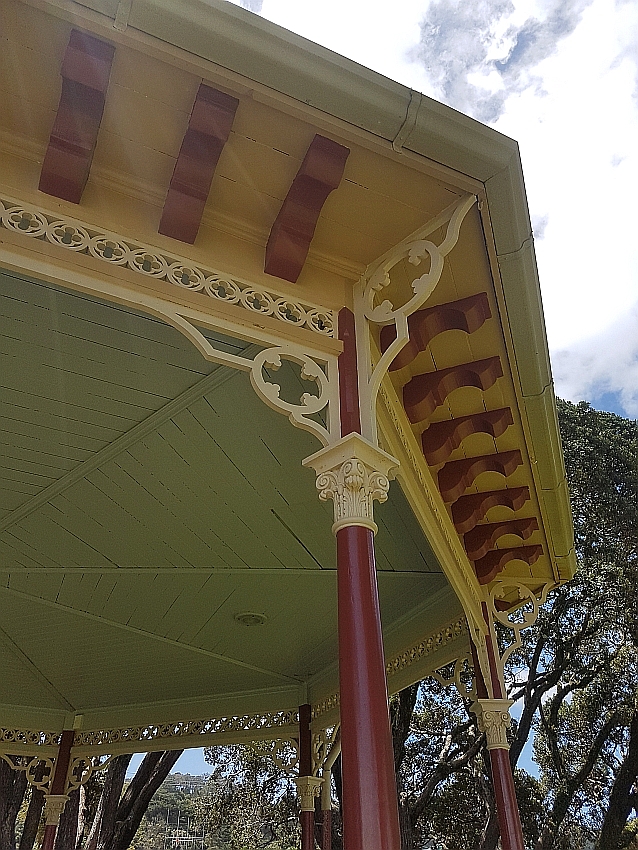
Removal of balustrade, fretwork brackets
Start Year
2001
Type
Modification
Description
Restitution of railings and balusters; replacement of roof cladding, replastering of steps, repainting
Start Year
1902
Finish Year
1902
Type
Original Construction
Description
Band Rotunda
Construction Professional
Name
Simmonds, Henry
Type
Designer
Biography
No biography is currently available for this construction professional
Name
Adams, C.W.
Type
Builder
Biography
No biography is currently available for this construction professional
Name
Battson, F
Type
Plumber
Biography
Name
Rae Bros
Type
Painter
Biography
Name
Graeme Burgess
Type
Architect
Biography
Construction Details
Start Year
1901
Type
Original Construction
Description
Park created through land reclamation, tree planting and other works
Start Year
1902
Type
Original Construction
Description
Band Rotunda
Start Year
1983
Type
Modification
Description
Repairs
Start Year
1986
startYearCirca
Type
Modification
Description
Removal of balustrade, fretwork brackets
Start Year
2001
Type
Modification
Description
Restitution of railings and balusters; replacement of roof cladding, replastering of steps, repainting
Start Year
1902
Finish Year
1902
Type
Original Construction
Description
Band Rotunda
Historical and Associated Iwi / Hapū / Whānau
Completion Date
7th June 2024
Report Written By
Alexandra Foster
Information Sources
Thames Star
Thames Star
Greenslade, 2014
Greenslade, Brian, The Four Names of Thames Citizens’ Band, [Thames], 2014.
Other Information
This place was identified as significant under previous legislation with different information requirements. It remains significant under the current legislation. There is opportunity under our legislation and policies to add to this information. Further information about this place may be available from the Northern Regional Office of Heritage New Zealand Pouhere Taonga. A fully referenced copy of the Upgrade Report is available upon request from the Northern Regional Office of Heritage New Zealand Pouhere Taonga Disclaimer Please note that entry on the New Zealand Heritage List/Rarangi Korero identifies only the heritage values of the property concerned, and should not be construed as advice on the state of the property, or as a comment of its soundness or safety, including in regard to earthquake risk, safety in the event of fire, or insanitary conditions. Archaeological sites are protected by the Heritage New Zealand Pouhere Taonga Act 2014, regardless of whether they are entered on the New Zealand Heritage List/Rarangi Korero or not. Archaeological sites include ‘places associated with pre-1900 human activity, where there may be evidence relating to the history of New Zealand’. This List entry report should not be read as a statement on whether or not the archaeological provisions of the Act apply to the property (s) concerned. Please contact your local Heritage New Zealand office for archaeological advice.
Historical and Associated Iwi / Hapū / Whānau
Completion Date
7th June 2024
Report Written By
Alexandra Foster
Information Sources
Thames Star
Thames Star
Greenslade, 2014
Greenslade, Brian, The Four Names of Thames Citizens’ Band, [Thames], 2014.
Other Information
This place was identified as significant under previous legislation with different information requirements. It remains significant under the current legislation. There is opportunity under our legislation and policies to add to this information. Further information about this place may be available from the Northern Regional Office of Heritage New Zealand Pouhere Taonga. A fully referenced copy of the Upgrade Report is available upon request from the Northern Regional Office of Heritage New Zealand Pouhere Taonga Disclaimer Please note that entry on the New Zealand Heritage List/Rarangi Korero identifies only the heritage values of the property concerned, and should not be construed as advice on the state of the property, or as a comment of its soundness or safety, including in regard to earthquake risk, safety in the event of fire, or insanitary conditions. Archaeological sites are protected by the Heritage New Zealand Pouhere Taonga Act 2014, regardless of whether they are entered on the New Zealand Heritage List/Rarangi Korero or not. Archaeological sites include ‘places associated with pre-1900 human activity, where there may be evidence relating to the history of New Zealand’. This List entry report should not be read as a statement on whether or not the archaeological provisions of the Act apply to the property (s) concerned. Please contact your local Heritage New Zealand office for archaeological advice.
Current Usages
Uses: Civic Facilities
Specific Usage: Bandstand/Rotunda
Uses: Civic Facilities
Specific Usage: Recreation Area/Picnic Ground
Uses: Commemoration
Specific Usage: Royal Commemoration
Current Usages
Uses: Civic Facilities
Specific Usage: Bandstand/Rotunda
Uses: Civic Facilities
Specific Usage: Recreation Area/Picnic Ground
Uses: Commemoration
Specific Usage: Royal Commemoration
Get the latest heritage news, features and events delivered
straight to your inbox.