DonateMembershipVisit Heritage
  • Tūrangawaewae
    Places
  • Tira Māori
    Māori Heritage
  • Poutairangahia
    Archaeology
  • Rauemi
    Resources
  • Mō Tātou
    About Us
  • New Zealand Heritage List
  • Nominate and submit
  • Explore the List
  • National Historic Landmarks
  • Plaques
  • Rainbow List Project
  • Lost heritage
  • Visit Heritage
  • Our properties
  • Turnbull House Project
  • Collections
  • Shop
  • Tohu Whenua
  • Tira Māori
  • Conserving Māori heritage
  • Marae built heritage
  • Māori heritage on the List
  • Hinemihi—Te Hokinga Mai
  • What is archaeology?
  • Is there a site on my property?
  • What are my legal requirements?
  • Affecting an archaeological site
  • Declaring an archaeological site
  • Archaeology FAQs
  • Archaeology Digital Library
  • Archaeology guidelines and templates
  • Resources
  • Funding
  • Publications
  • Sustainable management guides
  • Disaster recovery
  • Podcasts & digital resources
  • Education Hub
  • Conservation plans
  • About
  • Board
  • Māori Heritage Council
  • Senior Staff
  • Offices
  • Contact us
  • Careers
  • Covenants
  • Fast-track
  • Corporate documents
  • Currently consulting on
  • Our submissions
  • News
  • Covid-19 response
Quick links
Rārangi Kōrero | The List
Explore the List
National Historic Landmarks
Ngā Manawhenua o Aotearoa me ōna Kōrero Tūturu
Quick links
Tapuwae
A Vision for Places of Māori Heritage
Funding for Māori Heritage
Resources
Quick links
Archaeological Authority Portal
Applying for an archaeological authority
Archaeology FAQs
Browse the most frequently asked questions about archaeological authorities and the archaeological process.
Quick links
Quick links
News
News Keep up to date with Heritage New Zealand Pouhere Taonga
Membership
Membership Find out more and sign up today
DonateMembershipVisit Heritage
  • Tūrangawaewae
    Places
  • Tira Māori
    Māori Heritage
  • Poutairangahia
    Archaeology
  • Rauemi
    Resources
  • Mō Tātou
    About Us
  • New Zealand Heritage List
  • Nominate and submit
  • Explore the List
  • National Historic Landmarks
  • Plaques
  • Rainbow List Project
  • Lost heritage
  • Visit Heritage
  • Our properties
  • Turnbull House Project
  • Collections
  • Shop
  • Tohu Whenua
  • Tira Māori
  • Conserving Māori heritage
  • Marae built heritage
  • Māori heritage on the List
  • Hinemihi—Te Hokinga Mai
  • What is archaeology?
  • Is there a site on my property?
  • What are my legal requirements?
  • Affecting an archaeological site
  • Declaring an archaeological site
  • Archaeology FAQs
  • Archaeology Digital Library
  • Archaeology guidelines and templates
  • Resources
  • Funding
  • Publications
  • Sustainable management guides
  • Disaster recovery
  • Podcasts & digital resources
  • Education Hub
  • Conservation plans
  • About
  • Board
  • Māori Heritage Council
  • Senior Staff
  • Offices
  • Contact us
  • Careers
  • Covenants
  • Fast-track
  • Corporate documents
  • Currently consulting on
  • Our submissions
  • News
  • Covid-19 response
Quick links
Rārangi Kōrero | The List
Explore the List
National Historic Landmarks
Ngā Manawhenua o Aotearoa me ōna Kōrero Tūturu
Quick links
Tapuwae
A Vision for Places of Māori Heritage
Funding for Māori Heritage
Resources
Quick links
Archaeological Authority Portal
Applying for an archaeological authority
Archaeology FAQs
Browse the most frequently asked questions about archaeological authorities and the archaeological process.
Quick links
Quick links
News
News Keep up to date with Heritage New Zealand Pouhere Taonga
Membership
Membership Find out more and sign up today
  • Places
  • Nominate and submit
  • National Historic Landmarks
  • Places
  • Nominate and submit
  • National Historic Landmarks
  • Tira Māori
  • Conserving Māori heritage
  • Marae built heritage
  • Tira Māori
  • Conserving Māori heritage
  • Marae built heritage
  • Archaeological authorities
  • Archaeology Digital Library
  • Archaeological authorities
  • Archaeology Digital Library
  • All resources
  • Publications
  • Funding
  • All resources
  • Publications
  • Funding
  • FAQs
  • FAQs
Follow us on:
Places
  • Places
  • Nominate and submit
  • National Historic Landmarks
Tira Māori
  • Tira Māori
  • Conserving Māori heritage
  • Marae built heritage
Archaeology
  • Archaeological authorities
  • Archaeology Digital Library
Resources
  • All resources
  • Publications
  • Funding
FAQs
  • FAQs
Follow us on
HomePrivacyTerms and conditionsAbout this site
© Heritage New Zealand Pouhere Taonga 2026.
 
Criterion Hotel

3-5 Tyne Street and 3 Harbour Street, OAMARU

Private

Historic Place Category 1

List No. 4689

Quick links:
List GalleryLocationDetails
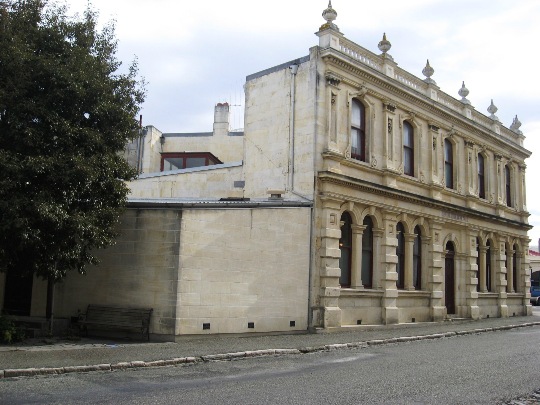
Oamaru’s Criterion Hotel, opened in 1877 and designed in elaborate Italianate style on a prominent corner site by architectural partnership Forrester and Lemon. The building has special architectural, historical and social significance as an ornate reminder of Oamaru’s prosperity.

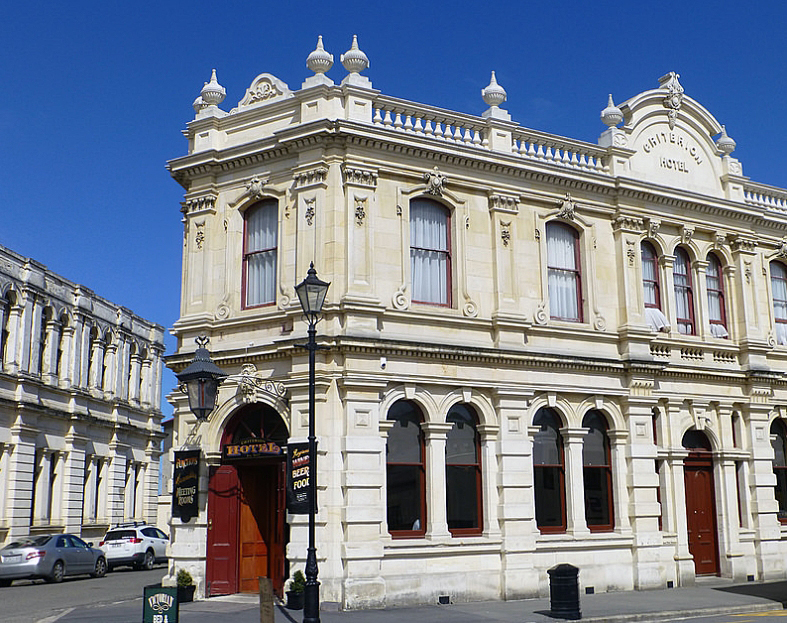
William Gillespie built the Criterion Hotel. The Criterion was opened at the end of 1877. The North Otago Times described it as ‘the most ornamental of the recent additions to our street architecture.’ Designed by Oamaru architectural partnership Forrester and Lemon and built of Oamaru stone from the Cave Valley quarries, it was built in an elaborate Italianate style. The completed portion had a frontage of 96 feet [29.2 metres] to Tyne Street, and a 90 foot [27.4 metres] frontage to Harbour Street, ‘forming a very handsome corner.’ The façade was 35 feet high [10.7 metres]. The lower storey was ‘ornamented with rusticated pilasters dividing the two facades into eleven bays[,] the spaces being filled in with double circular headed windows, with the exception of the corner and two centre bays which are occupied by doorways of a more or less ornamental character.’ The upper façade was similar, with panelled pilasters, ‘enriched with drop ornaments and carved capitals.’ The windows had a flat arch, ornamented with a shield keystone, and the architraves had a scroll at the base. The whole of the building was surmounted with a balustrade, with the centre bay finished with a sold tympanum, ‘having the name of the hotel highly enriched with shield and scroll ornaments.’ The writer also praised the interior for its ‘well lighted and lofty rooms’ – the ceilings on the lower floor being over 13 foot [13.9 metres], with those on the upper floor being 12 foot [3.6 metres]. On the ground floor was a bar, a smaller bar parlour and a private parlour, a small sitting room and a dining room. The staircase was built of white pine. There were twelve rooms on the first floor – three sitting rooms and nine bedrooms, both single and double.

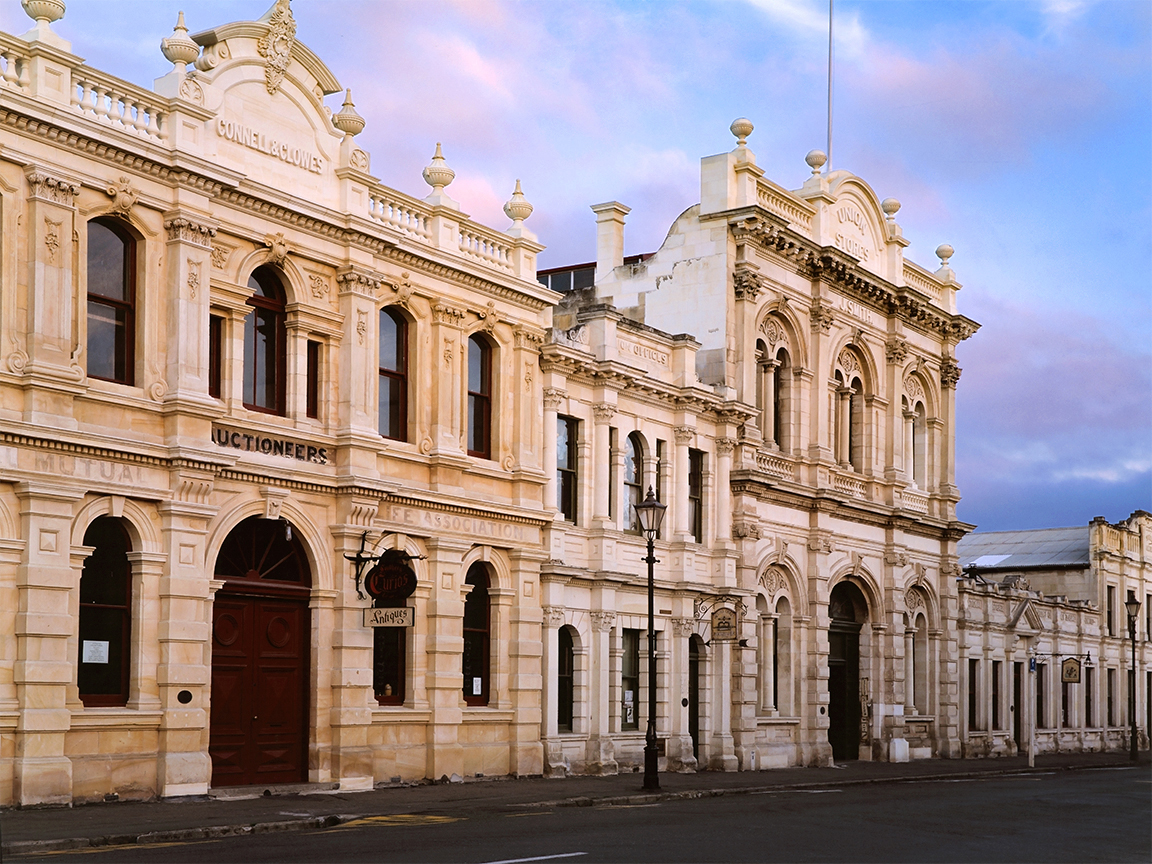
The Criterion Hotel incorporated rooms above Connell and Clowes premises that were being erected at the same time. A further ten rooms, located over Connell and Clowes offices were to be added in a few days, making a total of 28 rooms. This was Connell and Clowes’ first store and offices with the design forming part of the Criterion’s façade, although the businesses and the buildings were separate, as made clear by the entrance which has ‘Connell and Clowes’ on the pediment on the first floor (See List Entry No. 2283). The offices and wool store have never been part of the hotel operation. In later years the hotel rooms were closed off and were unused.

Gillespie sold the hotel to Peter Alexander. Alexander sold to William Manning around 1888. John Marshall Brown, who had run the nearby Star and Garter Hotel, owned the hotel. There was a steady change of owners throughout the nineteenth and early twentieth century. After Oamaru voted for Prohibition in 1906, the Criterion survived as a Temperance Hotel. By the 1930s, it was in a poor state of repair. In the 1940s, Gillies Foundry and Engineering Company bought the building and used it as a store for the material from their Tyne Street foundry until the mid-1990s. In later years the Whitestone Civic Trust took over the building. The Trust has since restored the Hotel, returning the parapet detailing to its original form. The hotel has been refurbished and in 2015, it once again offers accommodation for travellers and hospitality to travellers and locals alike.
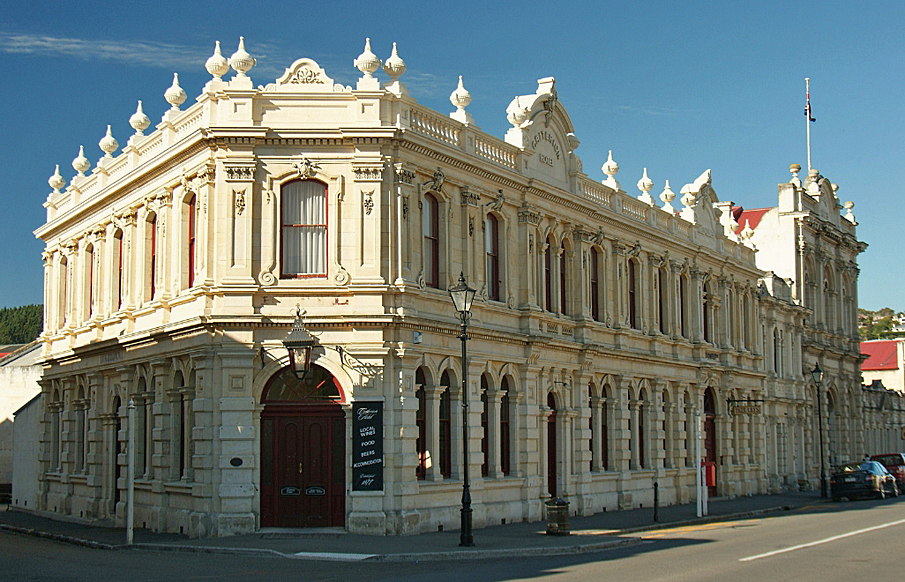
Criterion Hotel, Oamaru | Bernardo Manangkil | 24/10/2024 | Bernardo Manangkil
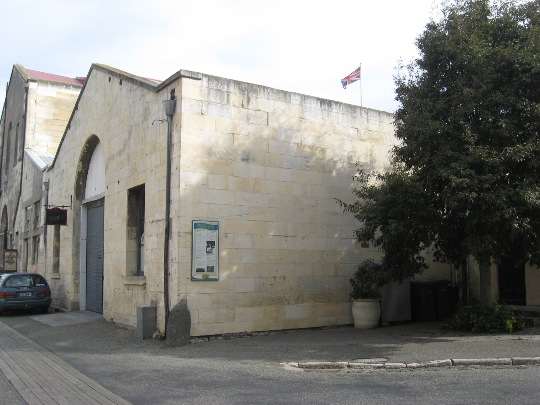
Criterion Hotel, Oamaru | Raquel Doreen | 27/10/2024 | Raquel Doreen
Criterion Hotel, Oamaru. View from corner of Harbour and Tyne Streets. Image courtesy of www.flickr.com | PhilBee NZ - Phil Braithwaite | 10/04/2013 | Phil Braithwaite
Criterion Hotel, Oamaru. Image courtesy of www.flickr.com | Shelley Morris – Shells | 13/11/2016 | Shelley Morris
Criterion Hotel, Oamaru | Bernardo Manangkil | 24/10/2024 | Bernardo Manangkil
Criterion Hotel, Oamaru | Raquel Doreen | 27/10/2024 | Raquel Doreen
Criterion Hotel, Oamaru. View from corner of Harbour and Tyne Streets. Image courtesy of www.flickr.com | PhilBee NZ - Phil Braithwaite | 10/04/2013 | Phil Braithwaite
Criterion Hotel, Oamaru. Image courtesy of www.flickr.com | Shelley Morris – Shells | 13/11/2016 | Shelley Morris

List Entry Information

Overview

Status
Listed

List Entry Status
Historic Place Category 1

Access
Private/No Public Access

List Number
4689

Date Entered
2nd July 1987

Date of Effect
2nd July 1987

City/District Council
Waitaki District

Region
Otago Region

Extent of List Entry

Extent includes the land described as Lots 25-28 DP 88 (RT OT18C/648 and 800120), Otago Land District and the building known as the Criterion Hotel and the former Connell and Clowe's Offices (also known as Doherty's Building) which visually form what is recognised as the Criterion Hotel, thereon.

Legal description

Lots 25-28 DP 88 (OT18C/648 and 800120), Otago Land District

Detailed List Entry
Significance

Historic Significance

HISTORICAL SIGNIFICANCE: The Criterion was built for proprietor William Gillespie. Connell and Clowe's occupied the ground floor of the southern section of the building until 1881 when they shifted to new premises nearby. Their office was later occupied by Bruce Christie, Auctioneer. The elaborate appearance of the Criterion is symbolic of the great rivalry between hotel proprietors, and the town's growth in prosperity. Oamaru became notorious for its 15 hotels and 32 'sly grog' shops. Public concern lead to the town being declared dry between 1905 and 1962.

Physical Significance

ARCHITECTURAL SIGNIFICANCE: The Criterion is a very elaborate architectural composition which Forrester and Lemon used as the pattern for all their hotels and many other commercial buildings. A luxurious, comfortable establishment, it was described by the North Otago Standard in 1877 as 'one of the most ornamental of the many recent additions to our street architecture'. It is the best example of the lavish Victorian Italianate style popular for hotels at the time, and set the standard for later commercial architecture in the Harbour/Tyne Street area. TOWNSCAPE/LANDMARK SIGNIFICANCE: The Criterion occupies a pivotal position in the Harbour/Tyne streetscape. In its corner position it forms the first part of a fine sequence of Victorian Italianate facades of national significance.

Construction Professional

Name

Forrester & Lemon

Type

Architectural Partnership

Biography

The architectural partnership of Forrester and Lemon was established in Oamaru in 1872. Thomas Forrester (1838-1907) was born in Glasgow and educated at the Glasgow School of Art. Emigrating to New Zealand in 1861 he settled in Dunedin and worked under William Mason (1810-97) and William Henry Clayton (1823-77) and later Robert Arthur Lawson (1833-1902). In 1865 he superintended the Dunedin Exhibition and from 1870 he became involved with the supervision of harbour works. Some time after 1885 he became Engineer to the Oamaru Harbour Board and in this capacity designed the repairs to the breakwater following storm damage in 1886 and later the Holmes Wharf. On his death in 1907 he was still in the employ of the Harbour Board. John Lemon (1828-1890) was born in Jamaica and travelled to England before emigrating to New Zealand in 1849. He settled in Oamaru in 1860 and with his brother Charles established a timber merchant's business. By 1869 he was in partnership with his father-in-law, George Sumpter calling themselves "Timber and General Merchants, Land and Commission Agents". This partnership was dissolved in 1872 and Lemon entered into partnership with Forrester. Lemon had no architectural experience at all, but had a wide circle of business contacts and was an efficient administrator. Buildings designed by the partnership of Forrester and Lemon include St Paul's Church (1875-76), the Harbour Board Offices (1876), Queen's (later Brydone) Hotel (1881), Waitaki Boys' High School (1883), The Courthouse (1883) and the Post Office (1883-84), all in Oamaru. Forrester and Lemon contributed greatly to Oamaru's nineteenth century character. On Lemon's death in 1890 the practice was taken over by Forrester's son, John Megget Forrester (1865-1965).

Name

Somerville, John

Type

Builder

Biography

Carpenter for Criterion Hotel in Oamaru, completed 1877.

Name

Given and Watson

Type

Builder

Biography

Stonemasons for the Criterion Hotel in Oamaru, completed 1877.

Name

John Brownlee

Type

Stonemason

Biography

No biography is currently available for this construction professional

Construction Details

Start Year

1877

Type

Original Construction

Start Year

1998

Type

Restoration

Description

Reinstatement of detailing at parapet level

Start Year

2011

Type

Modification

Description

New bedrooms upstairs in Connell and Clowes portion

Construction Materials

Oamaru Stone from Cave Valley quarries.

Physical Description

ARCHITECURAL DESCRIPTION (Style): The building was designed in a Victorian Italianate style and comprised at its south end the premises of Connell and Clowes. The first floor of the latter formed part of the hotel (bedrooms). Entrance to the hotel is at the corner of Harbour and Tyne Streets. The ground floor is plainer and monumental in appearance in comparison to the richly decorated first floor with floral drop ornaments in panelled pilasters, unusual window frames and shield keystones. MODIFICATIONS: The original balustrade parapet, urns, tympana and chimneys have been removed. Otherwise in largely original condition.

Reference

Completion Date

9th September 2015

Report Written By

Heather Bauchop

Information Sources

North Otago Times

North Otago Times

Oamaru Borough Council

Historic Building Catalogue

Oamaru Mail

22 Mar 1882, p. 2.

Muirhead, 1990

Syd Muirhead, Historic North Otago, Oamaru Mail, 1990

Report Written By

This historic place was registered under the Historic Places Act 1980. This report includes the text from the original Building Classification Committee report considered by the NZHPT Board at the time of registration. This registration is also included in the Harbour/Tyne Street Historic Area (Record no. 7064). Please note that entry on the New Zealand Heritage List/Rarangi Korero identifies only the heritage values of the property concerned, and should not be construed as advice on the state of the property, or as a comment of its soundness or safety, including in regard to earthquake risk, safety in the event of fire, or insanitary conditions. A fully referenced upgrade report is available on request from the Otago/Southland Office of Heritage New Zealand

Further Information

Current Usages

Uses: Trade

Specific Usage: Market

Uses: Trade

Specific Usage: Pub/bar/tavern/public hotel

Uses: Trade

Specific Usage: Restaurant/cafe/tearoom

Former Usages

General Usage:: Accommodation

Specific Usage: Hotel

General Usage:: Trade

Specific Usage: Pub/bar/tavern/public hotel

General Usage:: Trade

Specific Usage: Warehouse/storage area

Themes

Web Links

description:

url: http://www.historicoamaru.co.nz/

Overview

Status

Listed

List Entry Status

Historic Place Category 1

Access

Private/No Public Access

List Number

4689

Date Entered

2nd July 1987

Date of Effect

2nd July 1987

City/District Council

Waitaki District

Region

Otago Region

Extent of List Entry

Extent includes the land described as Lots 25-28 DP 88 (RT OT18C/648 and 800120), Otago Land District and the building known as the Criterion Hotel and the former Connell and Clowe's Offices (also known as Doherty's Building) which visually form what is recognised as the Criterion Hotel, thereon.

Legal description

Lots 25-28 DP 88 (OT18C/648 and 800120), Otago Land District

Status

Listed

List Entry Status

Historic Place Category 1

Access

Private/No Public Access

List Number

4689

Date Entered

2nd July 1987

Date of Effect

2nd July 1987

City/District Council

Waitaki District

Region

Otago Region

Extent of List Entry

Extent includes the land described as Lots 25-28 DP 88 (RT OT18C/648 and 800120), Otago Land District and the building known as the Criterion Hotel and the former Connell and Clowe's Offices (also known as Doherty's Building) which visually form what is recognised as the Criterion Hotel, thereon.

Legal description

Lots 25-28 DP 88 (OT18C/648 and 800120), Otago Land District

Significance

Why is this place significant?

Historic Significance

HISTORICAL SIGNIFICANCE: The Criterion was built for proprietor William Gillespie. Connell and Clowe's occupied the ground floor of the southern section of the building until 1881 when they shifted to new premises nearby. Their office was later occupied by Bruce Christie, Auctioneer. The elaborate appearance of the Criterion is symbolic of the great rivalry between hotel proprietors, and the town's growth in prosperity. Oamaru became notorious for its 15 hotels and 32 'sly grog' shops. Public concern lead to the town being declared dry between 1905 and 1962.

Physical Significance

ARCHITECTURAL SIGNIFICANCE: The Criterion is a very elaborate architectural composition which Forrester and Lemon used as the pattern for all their hotels and many other commercial buildings. A luxurious, comfortable establishment, it was described by the North Otago Standard in 1877 as 'one of the most ornamental of the many recent additions to our street architecture'. It is the best example of the lavish Victorian Italianate style popular for hotels at the time, and set the standard for later commercial architecture in the Harbour/Tyne Street area. TOWNSCAPE/LANDMARK SIGNIFICANCE: The Criterion occupies a pivotal position in the Harbour/Tyne streetscape. In its corner position it forms the first part of a fine sequence of Victorian Italianate facades of national significance.

Why is this place significant?

Historic Significance

HISTORICAL SIGNIFICANCE: The Criterion was built for proprietor William Gillespie. Connell and Clowe's occupied the ground floor of the southern section of the building until 1881 when they shifted to new premises nearby. Their office was later occupied by Bruce Christie, Auctioneer. The elaborate appearance of the Criterion is symbolic of the great rivalry between hotel proprietors, and the town's growth in prosperity. Oamaru became notorious for its 15 hotels and 32 'sly grog' shops. Public concern lead to the town being declared dry between 1905 and 1962.

Physical Significance

ARCHITECTURAL SIGNIFICANCE: The Criterion is a very elaborate architectural composition which Forrester and Lemon used as the pattern for all their hotels and many other commercial buildings. A luxurious, comfortable establishment, it was described by the North Otago Standard in 1877 as 'one of the most ornamental of the many recent additions to our street architecture'. It is the best example of the lavish Victorian Italianate style popular for hotels at the time, and set the standard for later commercial architecture in the Harbour/Tyne Street area. TOWNSCAPE/LANDMARK SIGNIFICANCE: The Criterion occupies a pivotal position in the Harbour/Tyne streetscape. In its corner position it forms the first part of a fine sequence of Victorian Italianate facades of national significance.

Construction Information

Construction Professional

Name

Forrester & Lemon

Type

Architectural Partnership

Biography

The architectural partnership of Forrester and Lemon was established in Oamaru in 1872. Thomas Forrester (1838-1907) was born in Glasgow and educated at the Glasgow School of Art. Emigrating to New Zealand in 1861 he settled in Dunedin and worked under William Mason (1810-97) and William Henry Clayton (1823-77) and later Robert Arthur Lawson (1833-1902). In 1865 he superintended the Dunedin Exhibition and from 1870 he became involved with the supervision of harbour works. Some time after 1885 he became Engineer to the Oamaru Harbour Board and in this capacity designed the repairs to the breakwater following storm damage in 1886 and later the Holmes Wharf. On his death in 1907 he was still in the employ of the Harbour Board. John Lemon (1828-1890) was born in Jamaica and travelled to England before emigrating to New Zealand in 1849. He settled in Oamaru in 1860 and with his brother Charles established a timber merchant's business. By 1869 he was in partnership with his father-in-law, George Sumpter calling themselves "Timber and General Merchants, Land and Commission Agents". This partnership was dissolved in 1872 and Lemon entered into partnership with Forrester. Lemon had no architectural experience at all, but had a wide circle of business contacts and was an efficient administrator. Buildings designed by the partnership of Forrester and Lemon include St Paul's Church (1875-76), the Harbour Board Offices (1876), Queen's (later Brydone) Hotel (1881), Waitaki Boys' High School (1883), The Courthouse (1883) and the Post Office (1883-84), all in Oamaru. Forrester and Lemon contributed greatly to Oamaru's nineteenth century character. On Lemon's death in 1890 the practice was taken over by Forrester's son, John Megget Forrester (1865-1965).

Name

Somerville, John

Type

Builder

Biography

Carpenter for Criterion Hotel in Oamaru, completed 1877.

Name

Given and Watson

Type

Builder

Biography

Stonemasons for the Criterion Hotel in Oamaru, completed 1877.

Name

John Brownlee

Type

Stonemason

Biography

No biography is currently available for this construction professional

Construction Details

Start Year

1877

Type

Original Construction

Start Year

1998

startYearCirca

Type

Restoration

Description

Reinstatement of detailing at parapet level

Start Year

2011

Type

Modification

Description

New bedrooms upstairs in Connell and Clowes portion

Construction Materials

Oamaru Stone from Cave Valley quarries.

Construction Professional

Name

Forrester & Lemon

Type

Architectural Partnership

Biography

The architectural partnership of Forrester and Lemon was established in Oamaru in 1872. Thomas Forrester (1838-1907) was born in Glasgow and educated at the Glasgow School of Art. Emigrating to New Zealand in 1861 he settled in Dunedin and worked under William Mason (1810-97) and William Henry Clayton (1823-77) and later Robert Arthur Lawson (1833-1902). In 1865 he superintended the Dunedin Exhibition and from 1870 he became involved with the supervision of harbour works. Some time after 1885 he became Engineer to the Oamaru Harbour Board and in this capacity designed the repairs to the breakwater following storm damage in 1886 and later the Holmes Wharf. On his death in 1907 he was still in the employ of the Harbour Board. John Lemon (1828-1890) was born in Jamaica and travelled to England before emigrating to New Zealand in 1849. He settled in Oamaru in 1860 and with his brother Charles established a timber merchant's business. By 1869 he was in partnership with his father-in-law, George Sumpter calling themselves "Timber and General Merchants, Land and Commission Agents". This partnership was dissolved in 1872 and Lemon entered into partnership with Forrester. Lemon had no architectural experience at all, but had a wide circle of business contacts and was an efficient administrator. Buildings designed by the partnership of Forrester and Lemon include St Paul's Church (1875-76), the Harbour Board Offices (1876), Queen's (later Brydone) Hotel (1881), Waitaki Boys' High School (1883), The Courthouse (1883) and the Post Office (1883-84), all in Oamaru. Forrester and Lemon contributed greatly to Oamaru's nineteenth century character. On Lemon's death in 1890 the practice was taken over by Forrester's son, John Megget Forrester (1865-1965).

Name

Somerville, John

Type

Builder

Biography

Carpenter for Criterion Hotel in Oamaru, completed 1877.

Name

Given and Watson

Type

Builder

Biography

Stonemasons for the Criterion Hotel in Oamaru, completed 1877.

Name

John Brownlee

Type

Stonemason

Biography

No biography is currently available for this construction professional

Construction Details

Start Year

1877

Type

Original Construction

Start Year

1998

startYearCirca

Type

Restoration

Description

Reinstatement of detailing at parapet level

Start Year

2011

Type

Modification

Description

New bedrooms upstairs in Connell and Clowes portion

Construction Materials

Oamaru Stone from Cave Valley quarries.

Physical Description

ARCHITECURAL DESCRIPTION (Style): The building was designed in a Victorian Italianate style and comprised at its south end the premises of Connell and Clowes. The first floor of the latter formed part of the hotel (bedrooms). Entrance to the hotel is at the corner of Harbour and Tyne Streets. The ground floor is plainer and monumental in appearance in comparison to the richly decorated first floor with floral drop ornaments in panelled pilasters, unusual window frames and shield keystones. MODIFICATIONS: The original balustrade parapet, urns, tympana and chimneys have been removed. Otherwise in largely original condition.

ARCHITECURAL DESCRIPTION (Style): The building was designed in a Victorian Italianate style and comprised at its south end the premises of Connell and Clowes. The first floor of the latter formed part of the hotel (bedrooms). Entrance to the hotel is at the corner of Harbour and Tyne Streets. The ground floor is plainer and monumental in appearance in comparison to the richly decorated first floor with floral drop ornaments in panelled pilasters, unusual window frames and shield keystones. MODIFICATIONS: The original balustrade parapet, urns, tympana and chimneys have been removed. Otherwise in largely original condition.

Reference

Historical and Associated Iwi / Hapū / Whānau

Completion Date

9th September 2015

Report Written By

Heather Bauchop

Information Sources

North Otago Times

North Otago Times

Oamaru Borough Council

Historic Building Catalogue

Oamaru Mail

22 Mar 1882, p. 2.

Muirhead, 1990

Syd Muirhead, Historic North Otago, Oamaru Mail, 1990

Other Information

This historic place was registered under the Historic Places Act 1980. This report includes the text from the original Building Classification Committee report considered by the NZHPT Board at the time of registration. This registration is also included in the Harbour/Tyne Street Historic Area (Record no. 7064). Please note that entry on the New Zealand Heritage List/Rarangi Korero identifies only the heritage values of the property concerned, and should not be construed as advice on the state of the property, or as a comment of its soundness or safety, including in regard to earthquake risk, safety in the event of fire, or insanitary conditions. A fully referenced upgrade report is available on request from the Otago/Southland Office of Heritage New Zealand

Historical and Associated Iwi / Hapū / Whānau

Completion Date

9th September 2015

Report Written By

Heather Bauchop

Information Sources

North Otago Times

North Otago Times

Oamaru Borough Council

Historic Building Catalogue

Oamaru Mail

22 Mar 1882, p. 2.

Muirhead, 1990

Syd Muirhead, Historic North Otago, Oamaru Mail, 1990

Other Information

This historic place was registered under the Historic Places Act 1980. This report includes the text from the original Building Classification Committee report considered by the NZHPT Board at the time of registration. This registration is also included in the Harbour/Tyne Street Historic Area (Record no. 7064). Please note that entry on the New Zealand Heritage List/Rarangi Korero identifies only the heritage values of the property concerned, and should not be construed as advice on the state of the property, or as a comment of its soundness or safety, including in regard to earthquake risk, safety in the event of fire, or insanitary conditions. A fully referenced upgrade report is available on request from the Otago/Southland Office of Heritage New Zealand

Further Information

Current Usages

Uses: Trade

Specific Usage: Market

Uses: Trade

Specific Usage: Pub/bar/tavern/public hotel

Uses: Trade

Specific Usage: Restaurant/cafe/tearoom

Former Usages

General Usage: Accommodation

Specific Usage: Hotel

General Usage: Trade

Specific Usage: Pub/bar/tavern/public hotel

General Usage: Trade

Specific Usage: Warehouse/storage area

Web Links

description:

url: http://www.historicoamaru.co.nz/

Current Usages

Uses: Trade

Specific Usage: Market

Uses: Trade

Specific Usage: Pub/bar/tavern/public hotel

Uses: Trade

Specific Usage: Restaurant/cafe/tearoom

Former Usages

General Usage: Accommodation

Specific Usage: Hotel

General Usage: Trade

Specific Usage: Pub/bar/tavern/public hotel

General Usage: Trade

Specific Usage: Warehouse/storage area

Web Links

description:

url: http://www.historicoamaru.co.nz/

Location

Loading
Related listings
Oamaru Historic Area. Image courtesy of www.jimwitkowski.com
Oamaru Historic Area
Connell and Clowes' Store (Former), Oamaru. CC Licence 2.0 Image courtesy of www.flickr.com
Connell and Clowes' Store (Former)
Connell and Clowes' Store (Former), Oamaru. CC Licence 2.0 Image courtesy of www.flickr.com
Connell and Clowes' Store (Former)
Oamaru Historic Area. Image courtesy of www.jimwitkowski.com
Oamaru Historic Area
Stay up to date with Heritage this month