

The Methven War Memorial, built in 1929-30 in the form of a classical triumphal arch leading to Methven Primary School, is significant as an architectural statement honouring those from the Mount Hutt district who served in World War One and, subsequently, those who served in World War Two.
The people of Methven started talking about and fundraising for a war memorial even before the First World War had ended. At the first Anzac Day celebrations in the town, held in 1916, just one year after the events at Gallipoli, a collection of £20 was made specifically for a memorial. Once the war ended, discussions began about the form a memorial should take. Fierce debate occurred throughout New Zealand immediately after the war over the suitability of ‘useful’ memorials, as opposed to those of a purely ornamental nature. In Methven, a proposal for a memorial library was voted down in 1920, following what was described as a ‘spirited discussion’ in favour of a statue. Debates continued, nevertheless, and in 1921 the fortnightly meeting of the Methven Literary and Debating Society devoted itself to the debate ‘Should the proposed district war memorial be utilitarian?’
In the end, instead of a statue, a memorial arch was chosen, designed by E M Gabites, an Ashburton architect, who had been wounded in action. At the unveiling on 11 February 1930, it was explained to the large crowd that the idea of the arch was to leave an impression of war and courage in the minds of the younger people as they went to school, and to the swimming baths. Memorial arches were often chosen for school entrances, and can be seen to celebrate victory, rather than serve as a vehicle for mourning. The Methven War Memorial is one of around 35 memorial arches throughout New Zealand.
The Methven War Memorial is situated at the western end of McDonald Street at the entrance to Methven Primary School. It takes the form of a triumphal arch, with a central opening and flanking bays with niches, within which are panels containing the names of local servicemen. Classical detailing is kept to a minimum, and the stepped composition features buttresses and entablatures crowning each bay. The memorial is constructed of reinforced concrete with block veneer plastered covering. The words ‘Lest we forget’ stretch across the top. Black plaques give the names of those from the district who served in World War One.
After World War Two the town erected a war memorial community centre, but also added two white marble plaques to this memorial, beneath the existing ones, to name those from the district who served in that war. The memorial continues to play a key part in yearly Anzac Day celebrations in Methven.
The people of Methven started talking about and fundraising for a war memorial even before the First World War had ended. At the first Anzac Day celebrations in the town, held in 1916, just one year after the events at Gallipoli, a collection of £20 was made specifically for a memorial. Once the war ended, discussions began about the form a memorial should take. Fierce debate occurred throughout New Zealand immediately after the war over the suitability of ‘useful’ memorials, as opposed to those of a purely ornamental nature. In Methven, a proposal for a memorial library was voted down in 1920, following what was described as a ‘spirited discussion’ in favour of a statue. Debates continued, nevertheless, and in 1921 the fortnightly meeting of the Methven Literary and Debating Society devoted itself to the debate ‘Should the proposed district war memorial be utilitarian?’
In the end, instead of a statue, a memorial arch was chosen, designed by E M Gabites, an Ashburton architect, who had been wounded in action. At the unveiling on 11 February 1930, it was explained to the large crowd that the idea of the arch was to leave an impression of war and courage in the minds of the younger people as they went to school, and to the swimming baths. Memorial arches were often chosen for school entrances, and can be seen to celebrate victory, rather than serve as a vehicle for mourning. The Methven War Memorial is one of around 35 memorial arches throughout New Zealand.
The Methven War Memorial is situated at the western end of McDonald Street at the entrance to Methven Primary School. It takes the form of a triumphal arch, with a central opening and flanking bays with niches, within which are panels containing the names of local servicemen. Classical detailing is kept to a minimum, and the stepped composition features buttresses and entablatures crowning each bay. The memorial is constructed of reinforced concrete with block veneer plastered covering. The words ‘Lest we forget’ stretch across the top. Black plaques give the names of those from the district who served in World War One.
After World War Two the town erected a war memorial community centre, but also added two white marble plaques to this memorial, beneath the existing ones, to name those from the district who served in that war. The memorial continues to play a key part in yearly Anzac Day celebrations in Methven.
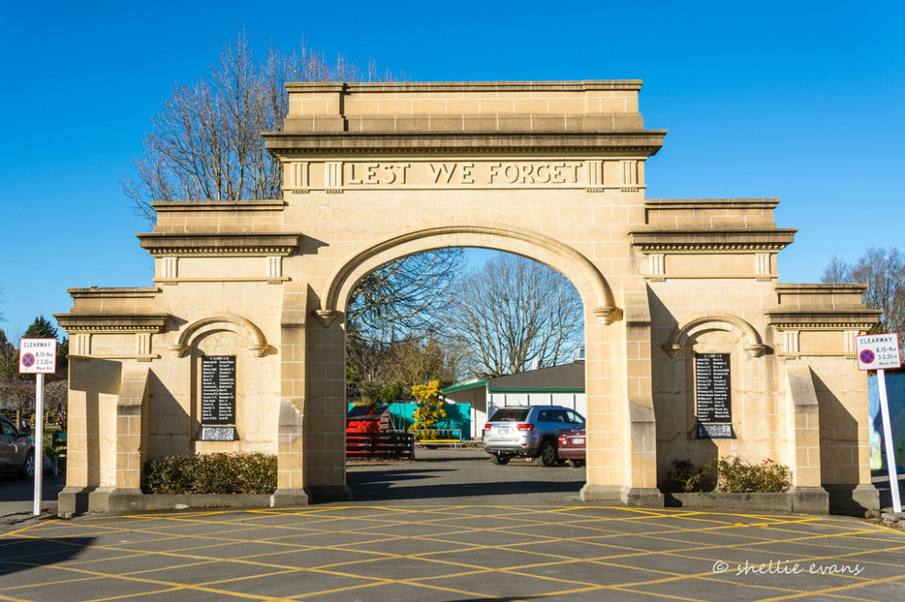
Methven War Memorial. Photo Competition Entrant 2026 | Kirsty Saxon | 22/02/2026 | Kirsty Saxon
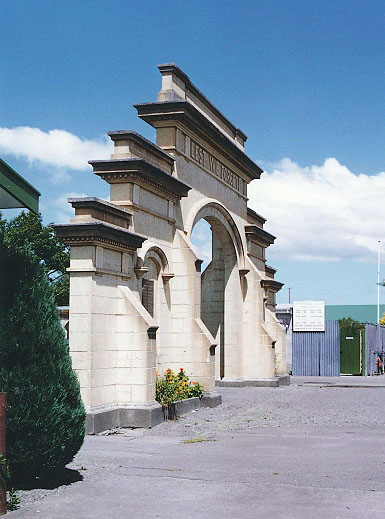
Methven War Memorial. Image included in Field Record Form Collection | Ann McEwan | 16/07/1992 | Heritage New Zealand Pouhere Taonga
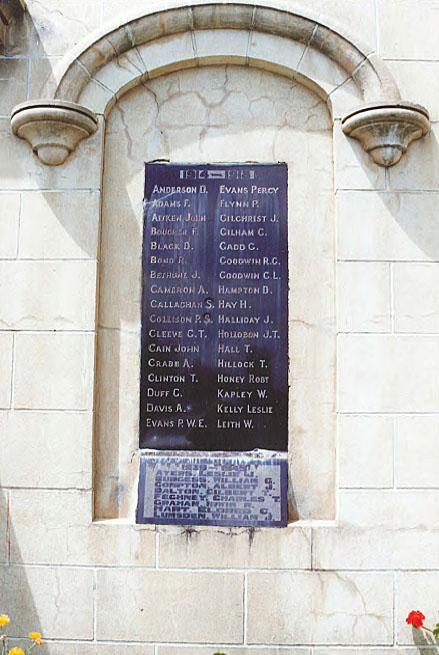
Methven War Memorial. Image included in Field Record Form Collection | Ann McEwan | 16/07/1992 | Heritage New Zealand Pouhere Taonga
Methven War Memorial. Photo Competition Entrant 2026 | Kirsty Saxon | 22/02/2026 | Kirsty Saxon
Methven War Memorial. Image included in Field Record Form Collection | Ann McEwan | 16/07/1992 | Heritage New Zealand Pouhere Taonga
Methven War Memorial. Image included in Field Record Form Collection | Ann McEwan | 16/07/1992 | Heritage New Zealand Pouhere Taonga
