

List Entry Information
Status
Listed
List Entry Status
Historic Place Category 2
Access
Private/No Public Access
List Number
7239
Date Entered
14th July 1995
Date of Effect
14th July 1995
City/District Council
Christchurch City
Region
Canterbury Region
Extent of List Entry
Extent includes the land described as Lot 2 DP 68418 (RT CB39D/1088) (Historic Reserve NZGZ 1996 p.4520), Canterbury Land District, and the building known as St Mary's Convent Chapel thereon, and its fittings and fixtures.
Legal description
Lot 2 DP 68418 (RT CB39D/1088) (Historic Reserve NZ Gazette 1996 p.4520), Canterbury Land District
Status
Listed
List Entry Status
Historic Place Category 2
Access
Private/No Public Access
List Number
7239
Date Entered
14th July 1995
Date of Effect
14th July 1995
City/District Council
Christchurch City
Region
Canterbury Region
Extent of List Entry
Extent includes the land described as Lot 2 DP 68418 (RT CB39D/1088) (Historic Reserve NZGZ 1996 p.4520), Canterbury Land District, and the building known as St Mary's Convent Chapel thereon, and its fittings and fixtures.
Legal description
Lot 2 DP 68418 (RT CB39D/1088) (Historic Reserve NZ Gazette 1996 p.4520), Canterbury Land District
Why is this place significant?
Cultural Significance
This historic place was registered under the Historic Places Act 1993. The following text is from the original Recommendation for Classification report considered by the NZHPT Board at the time of registration. Cultural/Social: St Mary's Convent Chapel has cultural significance because of its association with a religious teaching order (Sisters of Mercy) and its contribution to New Zealand education. It also demonstrates a distinctive way of life characteristic of religious community life. Spiritual: All religious orders set down regular periods for prayer and worship, therefore the chapel played a significant part in the everyday spiritual life of the sisters.
Historic Significance
Historical Significance or Value This historic place was registered under the Historic Places Act 1993. The following text is from the original Recommendation for Classification report considered by the NZHPT Board at the time of registration. Historical: The arrival of the Sisters of Mercy in Christchurch took place during a period of steady consolidation in the Canterbury Catholic community under the leadership of Bishop Grimes. St Marys Parish School and Convent was established in Christchurch in 1894 under Mother Bernard Dixon.
Physical Significance
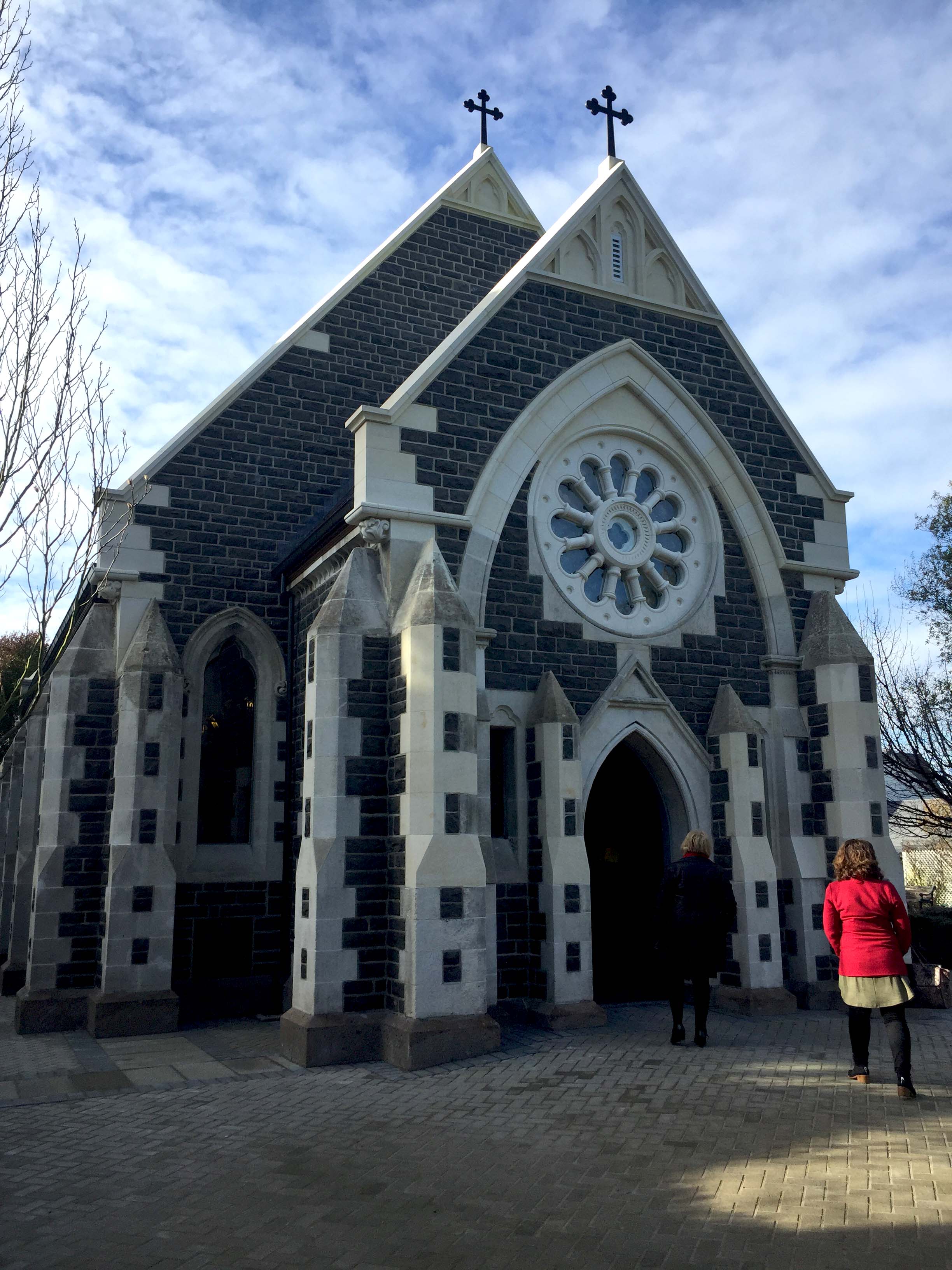
This historic place was registered under the Historic Places Act 1993. The following text is from the original Recommendation for Classification report considered by the NZHPT Board at the time of registration. Aesthetic: The design of St Mary's Convent Chapel presents a clear and competent expression of ecclesiologist principles. The interior is notable for containing a set of Birmingham-made stained glass windows. Architectural: The church architecture of the Luttrell brothers is well known for its high quality. The design of the convent chapel is a well resolved essay in Early English Gothic, employing traditional materials on the exterior.
Why is this place Category 1 / Category 2?
Detail Of Assessed Criteria
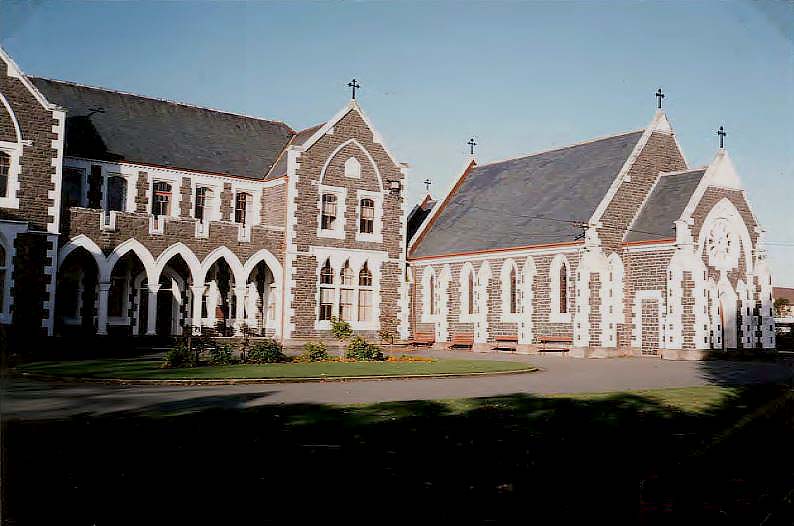
This historic place was registered under the Historic Places Act 1993. The following text is from the original Recommendation for Classification report considered by the NZHPT Board at the time of registration. a) the extent to which the place reflects important or representative aspects of New Zealand history: The chapel, a remnant of the St Mary's Convent, is representative of the endeavours of an order of Roman Catholic nuns, the Sisters of Mercy, who for more than 75 years ran a teaching establishment on the site. During that time the chapel would have represented the spiritual heart of the order's local operations. b) the association of the place with events, persons or ideas of importance in New Zealand history: The chapel is a reminder of the former convent. It has an association with Roman Catholicism in-New Zealand, a specific order (the Sisters of Mercy) and more generally with education, religion, women and welfare history. The degree of the significance is strictly local. e) the community association with, or public esteem for, the place: St Mary's College was concerned with the education of girls for 75 years, and in this respect the place was held in regard by the St Mary's Old Girls' Association. South of the chapel the retirement village of Maryville Courts is occupied by many retired people who signed a petition to save the convent complex. f) the potential of the place for public education: The potential for St Mary's Convent Chapel to provide public education must be considered to be limited, now that the associated school and convent buildings have been demolished. However, as an essential part of a religious school community, it can be seen to have some value on its own as an expression of the values and spiritual discipline expected in a convent school. g) the technical accomplishment or value, or design of the place: The St Mary's Convent Chapel was the first of six churches designed by the Luttrell brothers for the Catholic church. The chapel is a model example of the application of the precepts of the Ecclesiologists to church architecture, and is designed in Early English 13th Century Gothic. It is constructed of Oamaru stone and Hoon Hay basalt. The building shows a clear exterior expression of the sanctuary, nave, choir loft and entrance in the different roof levels and wheel window, while inside the high quality of the Hammerbeam roof can be seen. The external polychromy follows Ecclesiological principles, where structural elements in Oamaru stone are contrasted with the Hoon Hay basalt of the walls. St Mary's chapel is a relatively small and simple church but is distinguished by stained glass windows made by an English firm of which the set in St Mary's is claimed to be the only one in Christchurch. The windows, by the Birmingham firm of John Hardman & Son contribute a degree of rarity to the architectural quality of the chapel. Conclusion St Mary's chapel, is recommended for registration as a Category II as a place of historical and cultural heritage significance and value. It is a well resolved example of Early English Gothic style architecture and is representative of the way of life led by a religious teaching order who resided, worshipped and educated on the site for 75 years.
Why is this place significant?
Cultural Significance
This historic place was registered under the Historic Places Act 1993. The following text is from the original Recommendation for Classification report considered by the NZHPT Board at the time of registration. Cultural/Social: St Mary's Convent Chapel has cultural significance because of its association with a religious teaching order (Sisters of Mercy) and its contribution to New Zealand education. It also demonstrates a distinctive way of life characteristic of religious community life. Spiritual: All religious orders set down regular periods for prayer and worship, therefore the chapel played a significant part in the everyday spiritual life of the sisters.
Historic Significance
Historical Significance or Value This historic place was registered under the Historic Places Act 1993. The following text is from the original Recommendation for Classification report considered by the NZHPT Board at the time of registration. Historical: The arrival of the Sisters of Mercy in Christchurch took place during a period of steady consolidation in the Canterbury Catholic community under the leadership of Bishop Grimes. St Marys Parish School and Convent was established in Christchurch in 1894 under Mother Bernard Dixon.
Physical Significance
This historic place was registered under the Historic Places Act 1993. The following text is from the original Recommendation for Classification report considered by the NZHPT Board at the time of registration. Aesthetic: The design of St Mary's Convent Chapel presents a clear and competent expression of ecclesiologist principles. The interior is notable for containing a set of Birmingham-made stained glass windows. Architectural: The church architecture of the Luttrell brothers is well known for its high quality. The design of the convent chapel is a well resolved essay in Early English Gothic, employing traditional materials on the exterior.
Why is this place Category 1 / Category 2?
Detail Of Assessed Criteria
This historic place was registered under the Historic Places Act 1993. The following text is from the original Recommendation for Classification report considered by the NZHPT Board at the time of registration. a) the extent to which the place reflects important or representative aspects of New Zealand history: The chapel, a remnant of the St Mary's Convent, is representative of the endeavours of an order of Roman Catholic nuns, the Sisters of Mercy, who for more than 75 years ran a teaching establishment on the site. During that time the chapel would have represented the spiritual heart of the order's local operations. b) the association of the place with events, persons or ideas of importance in New Zealand history: The chapel is a reminder of the former convent. It has an association with Roman Catholicism in-New Zealand, a specific order (the Sisters of Mercy) and more generally with education, religion, women and welfare history. The degree of the significance is strictly local. e) the community association with, or public esteem for, the place: St Mary's College was concerned with the education of girls for 75 years, and in this respect the place was held in regard by the St Mary's Old Girls' Association. South of the chapel the retirement village of Maryville Courts is occupied by many retired people who signed a petition to save the convent complex. f) the potential of the place for public education: The potential for St Mary's Convent Chapel to provide public education must be considered to be limited, now that the associated school and convent buildings have been demolished. However, as an essential part of a religious school community, it can be seen to have some value on its own as an expression of the values and spiritual discipline expected in a convent school. g) the technical accomplishment or value, or design of the place: The St Mary's Convent Chapel was the first of six churches designed by the Luttrell brothers for the Catholic church. The chapel is a model example of the application of the precepts of the Ecclesiologists to church architecture, and is designed in Early English 13th Century Gothic. It is constructed of Oamaru stone and Hoon Hay basalt. The building shows a clear exterior expression of the sanctuary, nave, choir loft and entrance in the different roof levels and wheel window, while inside the high quality of the Hammerbeam roof can be seen. The external polychromy follows Ecclesiological principles, where structural elements in Oamaru stone are contrasted with the Hoon Hay basalt of the walls. St Mary's chapel is a relatively small and simple church but is distinguished by stained glass windows made by an English firm of which the set in St Mary's is claimed to be the only one in Christchurch. The windows, by the Birmingham firm of John Hardman & Son contribute a degree of rarity to the architectural quality of the chapel. Conclusion St Mary's chapel, is recommended for registration as a Category II as a place of historical and cultural heritage significance and value. It is a well resolved example of Early English Gothic style architecture and is representative of the way of life led by a religious teaching order who resided, worshipped and educated on the site for 75 years.
Construction Professional
Name
Luttrell, Alfred Edgar And Edward Sidney
Type
Architect
Biography
Alfred (1865-1924) and Sidney (1872-1932) Luttrell established one of New Zealand's foremost Edwardian architectural practices when they arrived in Christchurch in 1902. The brothers had left Australia on the eve of Federation to pursue a more rewarding career in New Zealand. Alfred had been based in Launceston, Tasmania, where he had been the apprentice of Harry Conway. In 1886 he started his own firm. Sidney came into the partnership in 1897. The two men assumed different responsibilities within the firm, with Alfred acting as the principal designer and engineer while Sidney co-ordinated building programmes and dealt with clients. Sidney served his apprenticeship with his brother, and in 1897 they became partners of A. & S. Luttrell. By 1902 they had established themselves in New Zealand, where they were known as S. & A. Luttrell The Luttrells ran their own contracting firm for many years, designing a wide variety of building types throughout the country. They were the unofficial Diocesan architects for the Roman Catholic Church in Christchurch during the second decade of the twentieth century. Their chief contribution to New Zealand architecture was in the introduction of the Chicago "skyscraper" style, as seen in the New Zealand Express Company buildings in Christchurch (1905-7) and Dunedin (1908-10). Alfred's habitual use of concrete construction, both mass and reinforced, is another significant feature of his work. The grandstands at Trentham racecourse are his most important work in reinforced concrete, and reveal Sidney's close involvement with the racing world, which led to numerous commissions for the firm.
Construction Details
Start Year
1910
startYearCirca
Type
Original Construction
Description
Early English 13th Century Gothic design
Construction Materials
Oamaru stone and Hoon Hay basalt
Construction Professional
Name
Luttrell, Alfred Edgar And Edward Sidney
Type
Architect
Biography
Alfred (1865-1924) and Sidney (1872-1932) Luttrell established one of New Zealand's foremost Edwardian architectural practices when they arrived in Christchurch in 1902. The brothers had left Australia on the eve of Federation to pursue a more rewarding career in New Zealand. Alfred had been based in Launceston, Tasmania, where he had been the apprentice of Harry Conway. In 1886 he started his own firm. Sidney came into the partnership in 1897. The two men assumed different responsibilities within the firm, with Alfred acting as the principal designer and engineer while Sidney co-ordinated building programmes and dealt with clients. Sidney served his apprenticeship with his brother, and in 1897 they became partners of A. & S. Luttrell. By 1902 they had established themselves in New Zealand, where they were known as S. & A. Luttrell The Luttrells ran their own contracting firm for many years, designing a wide variety of building types throughout the country. They were the unofficial Diocesan architects for the Roman Catholic Church in Christchurch during the second decade of the twentieth century. Their chief contribution to New Zealand architecture was in the introduction of the Chicago "skyscraper" style, as seen in the New Zealand Express Company buildings in Christchurch (1905-7) and Dunedin (1908-10). Alfred's habitual use of concrete construction, both mass and reinforced, is another significant feature of his work. The grandstands at Trentham racecourse are his most important work in reinforced concrete, and reveal Sidney's close involvement with the racing world, which led to numerous commissions for the firm.
Construction Details
Start Year
1910
startYearCirca
Type
Original Construction
Description
Early English 13th Century Gothic design
Construction Materials
Oamaru stone and Hoon Hay basalt
Historical and Associated Iwi / Hapū / Whānau
Information Sources
Christchurch Press
Jubilee Souvenir
Jubilee Souvenir
McEwan, 1988
Ann McEwan, 'The Architecture of A.E. and E.S. Luttrell in Tasmania and New Zealand', MA thesis, University of Canterbury, 1988
New Zealand Historic Places Trust (NZHPT)
New Zealand Historic Places Trust
New Zealand Tablet
New Zealand Tablet
Progress
Progress
Weekly Press
Weekly Press
Other Information
A copy of the original report is available from the NZHPT Southern region office Please note that entry on the New Zealand Heritage List/Rarangi Korero identifies only the heritage values of the property concerned, and should not be construed as advice on the state of the property, or as a comment of its soundness or safety, including in regard to earthquake risk, safety in the event of fire, or insanitary conditions.
Historical and Associated Iwi / Hapū / Whānau
Information Sources
Christchurch Press
Jubilee Souvenir
Jubilee Souvenir
McEwan, 1988
Ann McEwan, 'The Architecture of A.E. and E.S. Luttrell in Tasmania and New Zealand', MA thesis, University of Canterbury, 1988
New Zealand Historic Places Trust (NZHPT)
New Zealand Historic Places Trust
New Zealand Tablet
New Zealand Tablet
Progress
Progress
Weekly Press
Weekly Press
Other Information
A copy of the original report is available from the NZHPT Southern region office Please note that entry on the New Zealand Heritage List/Rarangi Korero identifies only the heritage values of the property concerned, and should not be construed as advice on the state of the property, or as a comment of its soundness or safety, including in regard to earthquake risk, safety in the event of fire, or insanitary conditions.
Former Usages
General Usage: Religion
Specific Usage: Chapel
Web Links
description: Website for the Rose Historic Chapel (formerly St Mary's Convent Chapel)
Former Usages
General Usage: Religion
Specific Usage: Chapel
Web Links
description: Website for the Rose Historic Chapel (formerly St Mary's Convent Chapel)
