

List Entry Information
Status
Listed
List Entry Status
Historic Place Category 2
Access
Private/No Public Access
List Number
7358
Date Entered
13th December 1996
Date of Effect
13th December 1996
City/District Council
Western Bay of Plenty District
Region
Bay of Plenty Region
Legal description
Lot 1 DPS 82484, Lot 1 DPS 82722 and Sec 10-11 Blk VI Otanewainuku SD (RT SA65b/226), South Auckland Land District
Status
Listed
List Entry Status
Historic Place Category 2
Access
Private/No Public Access
List Number
7358
Date Entered
13th December 1996
Date of Effect
13th December 1996
City/District Council
Western Bay of Plenty District
Region
Bay of Plenty Region
Legal description
Lot 1 DPS 82484, Lot 1 DPS 82722 and Sec 10-11 Blk VI Otanewainuku SD (RT SA65b/226), South Auckland Land District
Why is this place significant?
Historic Significance
Historical Significance or Value This historic place was registered under the Historic Places Act 1993. The following text is from the original Historic Place Assessment Under Section 23 Criteria report considered by the NZHPT Board at the time of registration. Historical: The Omanawa Falls hydro-electric station was built in 1915 and enlarged in 1921 for the Tauranga Borough Council. It was one of the country's earlier provincial municipal power stations and owed much to the enthusiasm of TBC engineer Lloyd Mandeno, a young engineer who would play a significant role in the history of the New Zealand electric power generation industry.
Physical Significance
This historic place was registered under the Historic Places Act 1993. The following text is from the original Historic Place Assessment Under Section 23 Criteria report considered by the NZHPT Board at the time of registration. Technological: Completed in 1915, Omanawa Falls Station was New Zealand's first underground hydro generating station.
Why is this place Category 1 / Category 2?
Detail Of Assessed Criteria
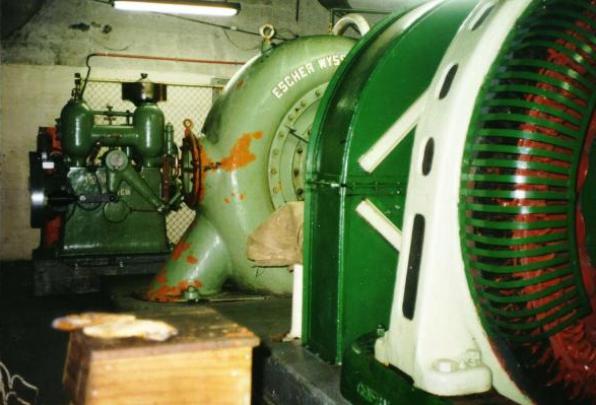
This historic place was registered under the Historic Places Act 1993. The following text is from the original Historic Place Assessment Under Section 23 Criteria report considered by the NZHPT Board at the time of registration. (a) The extent to which the place reflects important or representative aspects of New Zealand history: The Omanawa Falls Power Station, while not a major power generator, is a significant example of the early hydro electric stations built by local authorities during the first decades of the 20th century. It is associated with the early career of distinguished engineer Lloyd Mandeno. (b) The association of the place with events, persons, or ideas of importance in New Zealand history: Events: Little is known apart from the date of construction and alteration. Persons: Omanawa Falls Power Station was designed by H.W. Climie & Sons, about whom little is known. The driving force behind popularising the new method of power generation was Lloyd Mandeno (1888-1913), then a young electrical engineer for the TBC, but someone who was later associated with the development of the electrical power generation industry on a much wider scale. Mandeno, who was awarded the OBE and whose autobiography appeared posthumously in 1975, has been commemorated by the Lloyd Mandeno Power House on the Mangapapa River. The station is also associated with the Tauranga Borough Council. Ideas: The supply of electric power has been an important aspect of New Zealand history. In 1882 the Union Steam Ship Company commissioned the world's first ship fully lit by electric light and Reefton's pioneering power station of 1888 is well-known. The first towns to establish public hydroelectric stations were New Plymouth and Inglewood, which had small units operating in 1905. Omanawa Falls is a tangible expression of the public enterprise demonstrated by local authorities such as the Tauranga Borough Council and which was formalised by the Electric Power Boards Act of 1925. The attached extract from Evelyn Stokes's centennial history of the former Tauranga County Council shows some of the social impact that this technological revolution had on the lives of ordinary people - housewives in particular, but also rural dwellers in the surrounding county. Omanawa Falls provided rural dwellers with electricity at a remarkably early stage. (g) The technical accomplishment or value, or design of the place: DATE: 1915, 1921 DESIGN: There are two parts to this complex: 1. Omanawa generation house, 1915 and 2. Omanawa generation equipment The nominators state that the Omanawa Falls Power Station was New Zealand's first underground hydro generating station, completed in 1915. Omanawa originally housed two 75 kW 400 volt direct-coupled generating sets. The power house consists of an artificial cave excavated out of rock. The nomination form records modifications to the plant and its housing. In 1921 a 600 kW generator was installed at Omanawa and the power-house cave was extended by excavating a transept to house the larger machine. This meant a vaulted roof was constructed, supported by diagonally intersecting concrete arches. The generator is still in operation. This type of complex is comparatively rare. In general, it is increasingly recognised that the technological significance of these kind of remains and structures is high given the important role of the electrical generating industry in New Zealand's development. The Omanawa Falls Power Station plant and generating chamber are modest in scale and rate registration as a Category II structure.
Why is this place significant?
Historic Significance
Historical Significance or Value This historic place was registered under the Historic Places Act 1993. The following text is from the original Historic Place Assessment Under Section 23 Criteria report considered by the NZHPT Board at the time of registration. Historical: The Omanawa Falls hydro-electric station was built in 1915 and enlarged in 1921 for the Tauranga Borough Council. It was one of the country's earlier provincial municipal power stations and owed much to the enthusiasm of TBC engineer Lloyd Mandeno, a young engineer who would play a significant role in the history of the New Zealand electric power generation industry.
Physical Significance
This historic place was registered under the Historic Places Act 1993. The following text is from the original Historic Place Assessment Under Section 23 Criteria report considered by the NZHPT Board at the time of registration. Technological: Completed in 1915, Omanawa Falls Station was New Zealand's first underground hydro generating station.
Why is this place Category 1 / Category 2?
Detail Of Assessed Criteria
This historic place was registered under the Historic Places Act 1993. The following text is from the original Historic Place Assessment Under Section 23 Criteria report considered by the NZHPT Board at the time of registration. (a) The extent to which the place reflects important or representative aspects of New Zealand history: The Omanawa Falls Power Station, while not a major power generator, is a significant example of the early hydro electric stations built by local authorities during the first decades of the 20th century. It is associated with the early career of distinguished engineer Lloyd Mandeno. (b) The association of the place with events, persons, or ideas of importance in New Zealand history: Events: Little is known apart from the date of construction and alteration. Persons: Omanawa Falls Power Station was designed by H.W. Climie & Sons, about whom little is known. The driving force behind popularising the new method of power generation was Lloyd Mandeno (1888-1913), then a young electrical engineer for the TBC, but someone who was later associated with the development of the electrical power generation industry on a much wider scale. Mandeno, who was awarded the OBE and whose autobiography appeared posthumously in 1975, has been commemorated by the Lloyd Mandeno Power House on the Mangapapa River. The station is also associated with the Tauranga Borough Council. Ideas: The supply of electric power has been an important aspect of New Zealand history. In 1882 the Union Steam Ship Company commissioned the world's first ship fully lit by electric light and Reefton's pioneering power station of 1888 is well-known. The first towns to establish public hydroelectric stations were New Plymouth and Inglewood, which had small units operating in 1905. Omanawa Falls is a tangible expression of the public enterprise demonstrated by local authorities such as the Tauranga Borough Council and which was formalised by the Electric Power Boards Act of 1925. The attached extract from Evelyn Stokes's centennial history of the former Tauranga County Council shows some of the social impact that this technological revolution had on the lives of ordinary people - housewives in particular, but also rural dwellers in the surrounding county. Omanawa Falls provided rural dwellers with electricity at a remarkably early stage. (g) The technical accomplishment or value, or design of the place: DATE: 1915, 1921 DESIGN: There are two parts to this complex: 1. Omanawa generation house, 1915 and 2. Omanawa generation equipment The nominators state that the Omanawa Falls Power Station was New Zealand's first underground hydro generating station, completed in 1915. Omanawa originally housed two 75 kW 400 volt direct-coupled generating sets. The power house consists of an artificial cave excavated out of rock. The nomination form records modifications to the plant and its housing. In 1921 a 600 kW generator was installed at Omanawa and the power-house cave was extended by excavating a transept to house the larger machine. This meant a vaulted roof was constructed, supported by diagonally intersecting concrete arches. The generator is still in operation. This type of complex is comparatively rare. In general, it is increasingly recognised that the technological significance of these kind of remains and structures is high given the important role of the electrical generating industry in New Zealand's development. The Omanawa Falls Power Station plant and generating chamber are modest in scale and rate registration as a Category II structure.
Construction Professional
Name
Mandeno, Lloyd
Type
Engineer
Biography
Tauranga Borough Council engineer
Construction Details
Start Year
1915
Type
Original Construction
Construction Professional
Name
Mandeno, Lloyd
Type
Engineer
Biography
Tauranga Borough Council engineer
Construction Details
Start Year
1915
Type
Original Construction
Historical and Associated Iwi / Hapū / Whānau
Other Information
A copy of the original report is available from the NZHPT Northern region office Please note that entry on the New Zealand Heritage List/Rarangi Korero identifies only the heritage values of the property concerned, and should not be construed as advice on the state of the property, or as a comment of its soundness or safety, including in regard to earthquake risk, safety in the event of fire, or insanitary conditions.
Historical and Associated Iwi / Hapū / Whānau
Other Information
A copy of the original report is available from the NZHPT Northern region office Please note that entry on the New Zealand Heritage List/Rarangi Korero identifies only the heritage values of the property concerned, and should not be construed as advice on the state of the property, or as a comment of its soundness or safety, including in regard to earthquake risk, safety in the event of fire, or insanitary conditions.
Current Usages
Uses: Utilities
Specific Usage: Electricity Power Station
Current Usages
Uses: Utilities
Specific Usage: Electricity Power Station
