

Completed in 1919, just ten years after New Zealand's first purpose-built cinema, the Arcadia Picture Theatre in Dannevirke is one of the country's few remaining representatives of the era of the silent film.
In 1912 the first movies shown in Dannevirke were screened and hosted in the Town Hall. When a fire in 1917 destroyed large number of buildings in the town, local businessmen made plans to construct a purpose built picture theatre on the main street on a site formerly occupied by the Bank of New South Wales.
Plans for the cinema were completed for the 'Arcadia Picture Theatre Company', a group of local businessmen, by Jorgensen & Allen, A.A. N.Z.I.A Registered Architects on 8 December 1917. Constructed by J. R. Hamilton under the supervision of A. R. Allen, the building is an early example of the Spanish Mission style that became popular in the Hawke's Bay after the 1931 earthquake. Constructed from fire-proof brick clad in stucco, the key characteristics of the style expressed in this landmark building include a stepped roof line and flat roof, the use of red Marseille tiles, the incorporation of a balcony, symmetrically placed long windows topped by bracketed window hoods, and the cream stucco finish. The interior of the building features elements of the Art Deco style. The auditorium was constructed to hold 818 seats and had a screen measuring 7.3m by 5.5m. The elegant refreshments rooms had seating for 80 persons.
The theatre was closed for the first time for refurbishments after the 1931 earthquake, when it was adapted for 'talkies'. It reopened as the 'De Luxe'. Both the 'flicks' and the refreshment rooms, which were also used to host functions, were a success and endeared the building to the community. The De Luxe continued to run throughout the 1960s, when the introduction of television prompted the closure of many theatres throughout New Zealand. In 1987 a fire prompted its management to adapt the theatre to met contemporary tastes. The auditorium was divided into two, creating a more intimate atmosphere in 1988, and the building was renamed 'The Regent'. The refreshment rooms, which had been extensively damaged in the fire, have since been converted into apartments. The building continues to serve the local community as a movie theatre and, as such, it is New Zealand's only provincial theatre from this era to have remained open continuously other than for refurbishments since its construction.
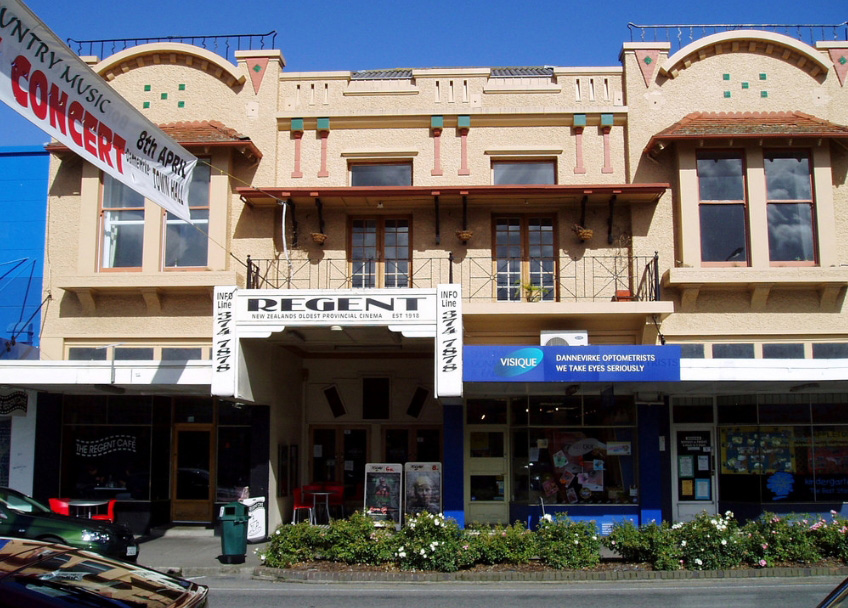
Arcadia Picture Theatre, Dannevirke. CC BY-SA 4.0 Image courtesy of commons.wikimedia.org | Michal Klajban | 10/05/2016 | Michal Klajban - Wikimedia Commons
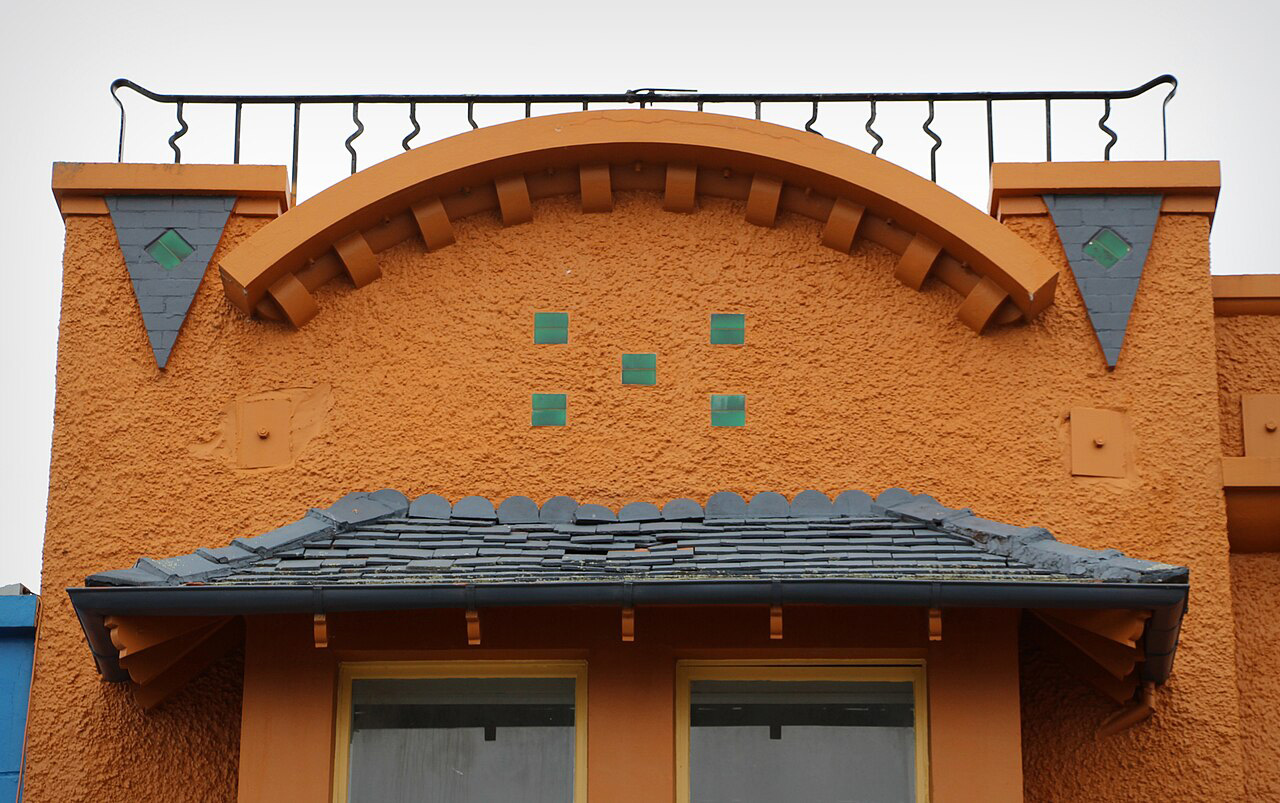
Arcadia Picture Theatre, Dannevirke. CC BY-SA 4.0 Image courtesy of commons.wikimedia.org | Michal Klajban | 10/05/2016 | Michal Klajban - Wikimedia Commons
Arcadia Picture Theatre, Dannevirke. CC BY-SA 4.0 Image courtesy of commons.wikimedia.org | Michal Klajban | 10/05/2016 | Michal Klajban - Wikimedia Commons
Arcadia Picture Theatre, Dannevirke. CC BY-SA 4.0 Image courtesy of commons.wikimedia.org | Michal Klajban | 10/05/2016 | Michal Klajban - Wikimedia Commons
