DonateMembershipVisit Heritage
  • Tūrangawaewae
    Places
  • Tira Māori
    Māori Heritage
  • Poutairangahia
    Archaeology
  • Rauemi
    Resources
  • Mō Tātou
    About Us
  • New Zealand Heritage List
  • Nominate and submit
  • Explore the List
  • National Historic Landmarks
  • Plaques
  • Rainbow List Project
  • Lost heritage
  • Visit Heritage
  • Our properties
  • Turnbull House Project
  • Collections
  • Shop
  • Tohu Whenua
  • Tira Māori
  • Conserving Māori heritage
  • Marae built heritage
  • Māori heritage on the List
  • Hinemihi—Te Hokinga Mai
  • What is archaeology?
  • Is there a site on my property?
  • What are my legal requirements?
  • Affecting an archaeological site
  • Declaring an archaeological site
  • Archaeology FAQs
  • Archaeology Digital Library
  • Archaeology guidelines and templates
  • Resources
  • Funding
  • Publications
  • Sustainable management guides
  • Disaster recovery
  • Podcasts & digital resources
  • Education Hub
  • Conservation plans
  • About
  • Board
  • Māori Heritage Council
  • Senior Staff
  • Offices
  • Contact us
  • Careers
  • Covenants
  • Fast-track
  • Corporate documents
  • Currently consulting on
  • Our submissions
  • News
  • Covid-19 response
Quick links
Rārangi Kōrero | The List
Explore the List
National Historic Landmarks
Ngā Manawhenua o Aotearoa me ōna Kōrero Tūturu
Quick links
Tapuwae
A Vision for Places of Māori Heritage
Funding for Māori Heritage
Resources
Quick links
Archaeological Authority Portal
Applying for an archaeological authority
Archaeology FAQs
Browse the most frequently asked questions about archaeological authorities and the archaeological process.
Quick links
Quick links
News
News Keep up to date with Heritage New Zealand Pouhere Taonga
Membership
Membership Find out more and sign up today
DonateMembershipVisit Heritage
  • Tūrangawaewae
    Places
  • Tira Māori
    Māori Heritage
  • Poutairangahia
    Archaeology
  • Rauemi
    Resources
  • Mō Tātou
    About Us
  • New Zealand Heritage List
  • Nominate and submit
  • Explore the List
  • National Historic Landmarks
  • Plaques
  • Rainbow List Project
  • Lost heritage
  • Visit Heritage
  • Our properties
  • Turnbull House Project
  • Collections
  • Shop
  • Tohu Whenua
  • Tira Māori
  • Conserving Māori heritage
  • Marae built heritage
  • Māori heritage on the List
  • Hinemihi—Te Hokinga Mai
  • What is archaeology?
  • Is there a site on my property?
  • What are my legal requirements?
  • Affecting an archaeological site
  • Declaring an archaeological site
  • Archaeology FAQs
  • Archaeology Digital Library
  • Archaeology guidelines and templates
  • Resources
  • Funding
  • Publications
  • Sustainable management guides
  • Disaster recovery
  • Podcasts & digital resources
  • Education Hub
  • Conservation plans
  • About
  • Board
  • Māori Heritage Council
  • Senior Staff
  • Offices
  • Contact us
  • Careers
  • Covenants
  • Fast-track
  • Corporate documents
  • Currently consulting on
  • Our submissions
  • News
  • Covid-19 response
Quick links
Rārangi Kōrero | The List
Explore the List
National Historic Landmarks
Ngā Manawhenua o Aotearoa me ōna Kōrero Tūturu
Quick links
Tapuwae
A Vision for Places of Māori Heritage
Funding for Māori Heritage
Resources
Quick links
Archaeological Authority Portal
Applying for an archaeological authority
Archaeology FAQs
Browse the most frequently asked questions about archaeological authorities and the archaeological process.
Quick links
Quick links
News
News Keep up to date with Heritage New Zealand Pouhere Taonga
Membership
Membership Find out more and sign up today
  • Places
  • Nominate and submit
  • National Historic Landmarks
  • Places
  • Nominate and submit
  • National Historic Landmarks
  • Tira Māori
  • Conserving Māori heritage
  • Marae built heritage
  • Tira Māori
  • Conserving Māori heritage
  • Marae built heritage
  • Archaeological authorities
  • Archaeology Digital Library
  • Archaeological authorities
  • Archaeology Digital Library
  • All resources
  • Publications
  • Funding
  • All resources
  • Publications
  • Funding
  • FAQs
  • FAQs
Follow us on:
Places
  • Places
  • Nominate and submit
  • National Historic Landmarks
Tira Māori
  • Tira Māori
  • Conserving Māori heritage
  • Marae built heritage
Archaeology
  • Archaeological authorities
  • Archaeology Digital Library
Resources
  • All resources
  • Publications
  • Funding
FAQs
  • FAQs
Follow us on
HomePrivacyTerms and conditionsAbout this site
© Heritage New Zealand Pouhere Taonga 2026.
 
High Court Building

22-24 Waterloo Quadrant, AUCKLAND

Private

Historic Place Category 1

List No. 17

Quick links:
List GalleryLocationDetails
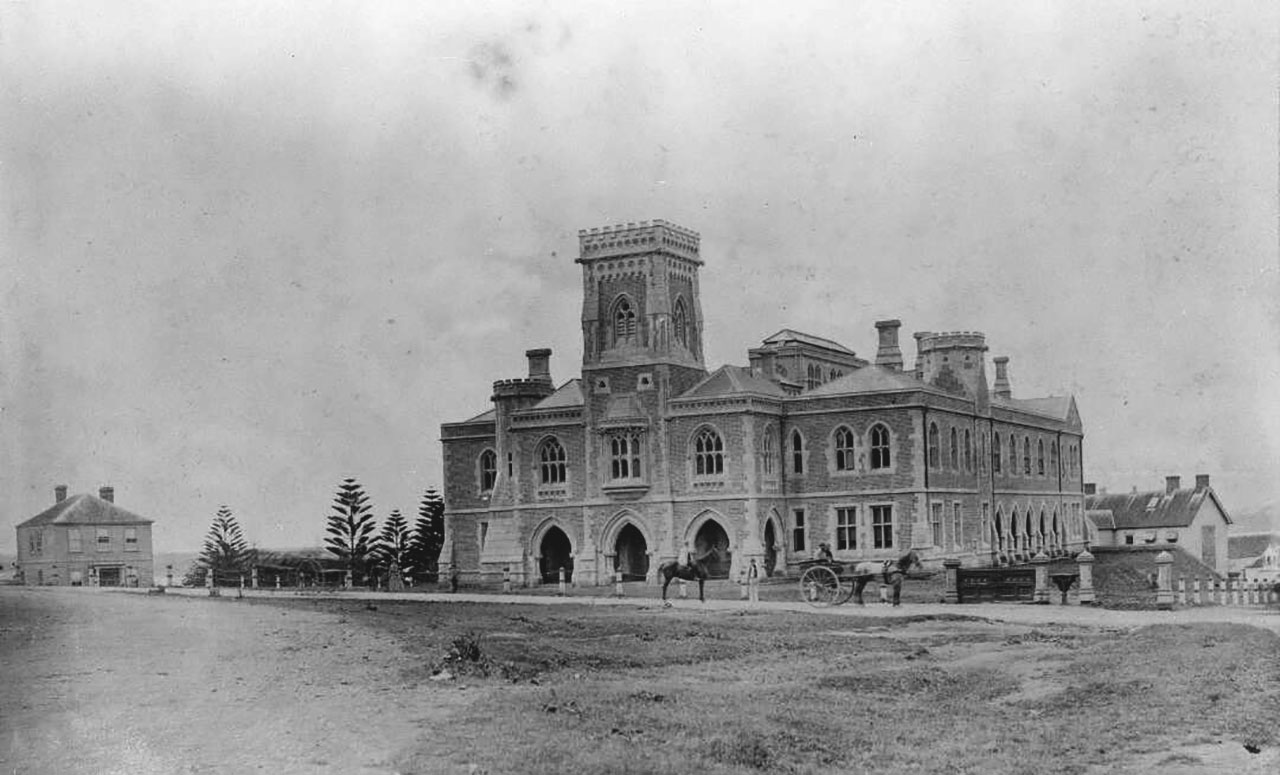
The Supreme Court (now High Court) Building is a powerful example of Gothic Revival architecture, and was one of the most impressive buildings in New Zealand when built. It was constructed in 1865-1868 under the direction of Edward Rumsey, a British-born architect who had trained under Gilbert Scott. The two-storey brick and stone building replaced an earlier courthouse in the commercial sector of colonial Auckland, which had been built of kauri timber. The new structure was erected in a more elevated and prominent position, prestigiously located alongside the now-demolished Provincial Council building and the former Government House. This occurred at a time of uncertainty about Auckland's future, soon after the colonial capital had been moved to Wellington and while the British Army troops at nearby Albert Barracks were being withdrawn.

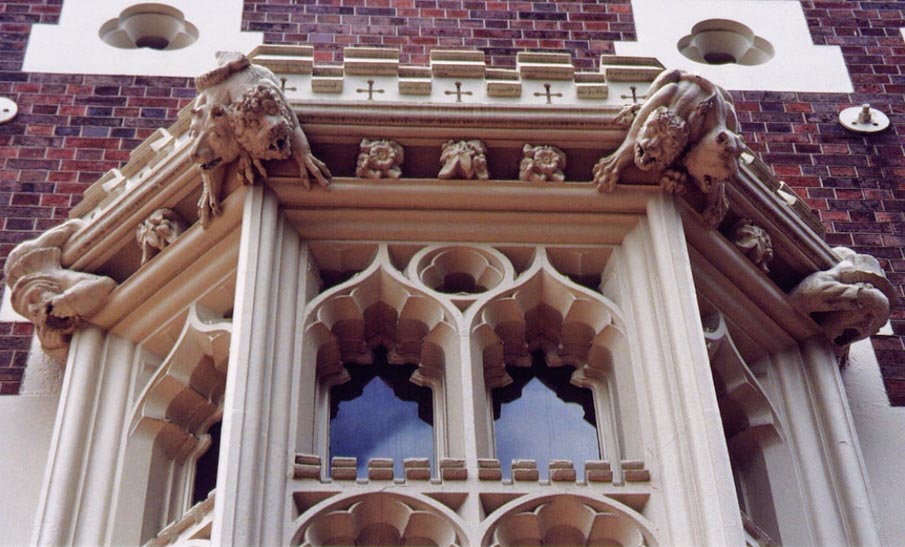
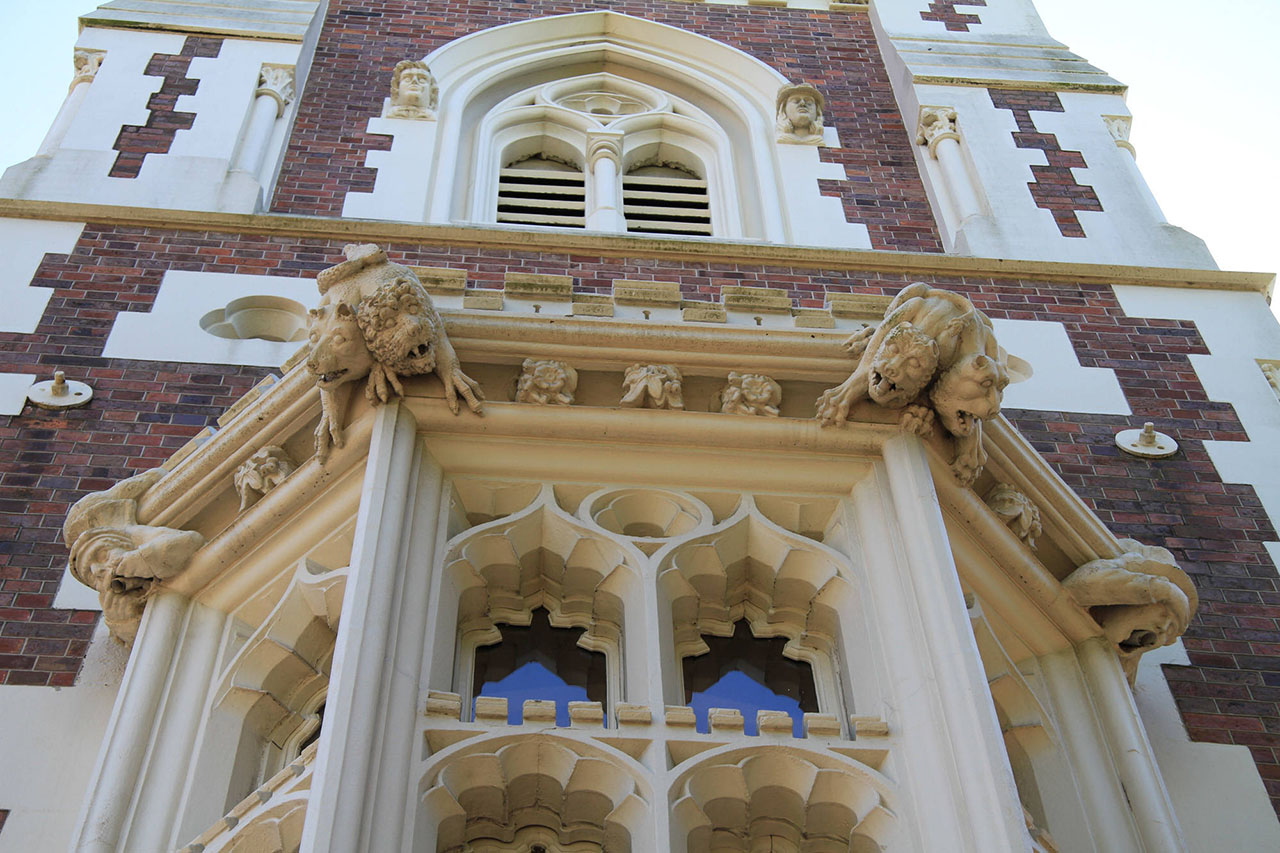
The courthouse was one of the earliest large-scale construction projects in the town, being proclaimed at the time to be the first public building of durable materials erected in Auckland Province. A distinctive Gothic Revival style was employed for its exterior, including a crenellated central tower and pointed-arch arcading. This style was extended to its internal features, contrasting strongly with the classical appearance of earlier structures nearby, including St Andrews Church and the former Government House. Gothic Revival was frequently used in larger judicial buildings during the later colonial period alluding, in part, to the longevity and power of the British justice system through the use of medieval imagery. Extensive carvings by Anton Teutenberg on the main facades of the Auckland courthouse reinforce such notions of authority, with naturalistic depictions of British royalty, local dignitaries and Maori leaders, such as the Ngapuhi chief, Hone Heke (d.1850). The building was extended in 1935-1936, and more extensively in 1988 when part of the original structure was removed to accommodate new facilities. The interior retains its main original courtroom, including its timber panelling and gallery. The courtroom also contains other items of historic value, such as graffiti on the journalists' benches and a trapdoor in the dock for the accused.

The High Court is nationally significant as an early public building of Gothic Revival style, unusual in its scale and level of decoration in 1860s New Zealand. It graphically demonstrates the growing power of the state and legal system on a national level, as well as the local importance placed on law and order as Auckland was undergoing transformation soon after the third New Zealand - or Waikato - War (1863-1864). The building is notable for its almost continuous use as a courthouse and has been closely linked to legal cases of national and international importance. These have included the earliest trial in New Zealand to involve fingerprint evidence, and the trial of those accused of sinking the 'Rainbow Warrior' in 1985. The building reveals much about nineteenth-century life through its appearance and layout, including attitudes to justice, the organisation of legal affairs and relationships between the public and the state. The preserved interiors also demonstrate prevailing fashions for decor and nineteenth-century craft techniques. The Teutenberg carvings have high aesthetic appeal, and form a significant group of early colonial sculptures. The significance of the building is enhanced by its imposing landmark qualities, and by being one of several structures on their original sites in the Waterloo Quadrant and Symonds Street area.
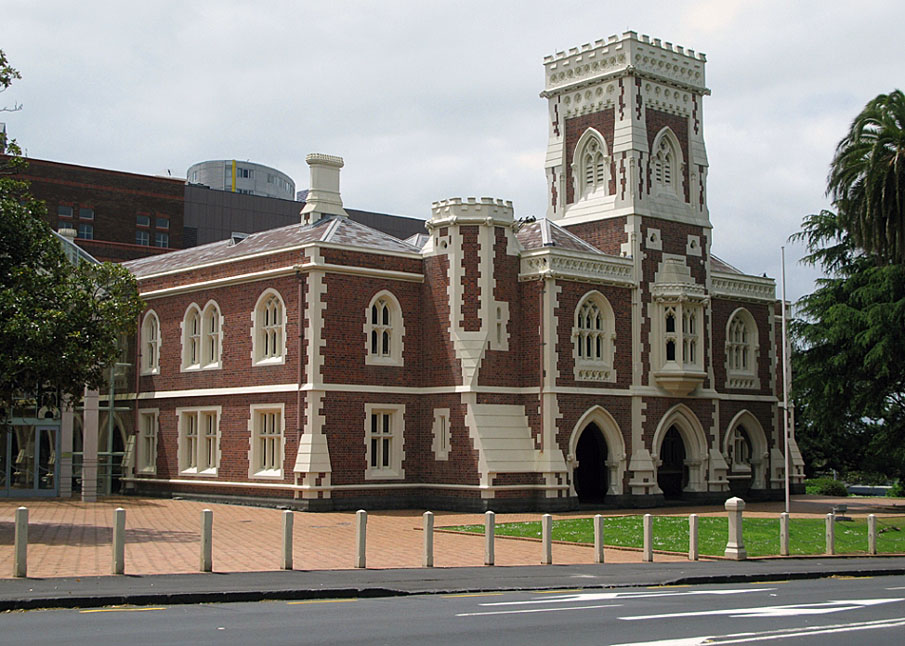
High Court Building, Auckland. Photo Competition Entrant 2026 | David Windleborn | 18/04/2025 | David Windleborn
High Court Building, Auckland. CC BY-NC-ND 2.0 Image courtesy of www.flickr.com | Alexander Glintschert | 18/02/2025 | Alexander Glintschert
High Court Building, Auckland. Details Gargoyles CC BY Brian Cairns Collection Auckland Libraries Ref. 1477-2436 | Brian Cairns | 09/12/2010 | Auckland Libraries
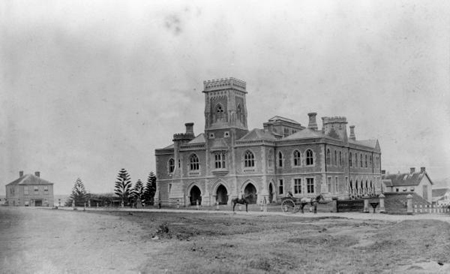
High Court Building, Auckland. Supreme Court House building c.1869 Haines, Bernard Gilpin, b 1842 :Photographs compiled while on active service with the 18th Royal Irish Regiment during the New Zealand Wars. Ref: PA1-f-027-19 | Alexander Turnbull Library, Wellington, New Zealand
High Court Building, Auckland. Photo Competition Entrant 2026 | David Windleborn | 18/04/2025 | David Windleborn
High Court Building, Auckland. CC BY-NC-ND 2.0 Image courtesy of www.flickr.com | Alexander Glintschert | 18/02/2025 | Alexander Glintschert
High Court Building, Auckland. Details Gargoyles CC BY Brian Cairns Collection Auckland Libraries Ref. 1477-2436 | Brian Cairns | 09/12/2010 | Auckland Libraries
High Court Building, Auckland. Supreme Court House building c.1869 Haines, Bernard Gilpin, b 1842 :Photographs compiled while on active service with the 18th Royal Irish Regiment during the New Zealand Wars. Ref: PA1-f-027-19 | Alexander Turnbull Library, Wellington, New Zealand

List Entry Information

Overview

Status
Listed

List Entry Status
Historic Place Category 1

Access
Private/No Public Access

List Number
17

Date Entered
25th November 1982

Date of Effect
25th November 1982

City/District Council
Auckland Council

Region
Auckland Council

Legal description

Pt Allot 13 Sec 12 City of Auckland

Detailed List Entry

Construction Professional

Name

Teutenberg, Anton

Type

Sculptor

Biography

No biography is currently available for this construction professional

Name

Rumsey, Edward

Type

Architect

Biography

Rumsey was an English born architect who had studied under the High Victorian Gothic Revivalist Sir George Gilbert Scott. Rumsey came to New Zealand to supervise the Gothic Revival styled Supreme Court Building, Auckland (1865) which he had designed. He remained in New Zealand for several years, practising in both Auckland and Dunedin. He worked on St Andrew's Anglican Church, Epsom (1867), though the Reverend John Kinder was responsible for the design of this building, and also on the Church of St Peter in the Forest, Bombay (1869) and the much larger St Luke's Church, Oamaru (1865). The design of the Oriental Hotel, Dunedin (1863), has been attributed to him.

Construction Details

Finish Year

1840

Type

Other

Description

Maori pa site

Period

pre-1840

Start Year

1865

Finish Year

1868

Type

Original Construction

Description

Construction of Supreme Court (now High Court)

Start Year

1935

Finish Year

1936

Type

Addition

Description

Law library added

Start Year

1988

Finish Year

1991

Type

Modification

Description

Demolition of law library and rear bay of original courthouse, modification of interior and construction of extensive addition

Notable Features

Registration covers the structure, its fixtures and fittings. It includes recent modifications. The building lies on or close to the site of a Maori pa, Te Reuroa.

Reference

Completion Date

12th November 2001

Report Written By

Martin Jones

Information Sources

Evans, 1975

E.A. Evans, 'The Supreme Court House, Auckland', Buildings Classification Committee Research Report, Wellington, 1975 (held by NZHPT, Auckland)

Stacpoole, 1976

John Stacpoole, Colonial Architecture in New Zealand, Wellington, 1976

Conservation Plan

Conservation Plan

Report Written By

This place was identified as significant under previous legislation with different information requirements. It remains significant under the current legislation. There is opportunity under our legislation and policies to add to this information. Further information about this place may be available from the Northern Regional Office of Heritage New Zealand Pouhere Taonga. Please note that entry on the New Zealand Heritage List/Rarangi Korero identifies only the heritage values of the property concerned, and should not be construed as advice on the state of the property, or as a comment of its soundness or safety, including in regard to earthquake risk, safety in the event of fire, or insanitary conditions.

Further Information

Current Usages

Uses: Law Enforcement

Specific Usage: Courthouse

Former Usages

Themes

Web Links

Overview

Status

Listed

List Entry Status

Historic Place Category 1

Access

Private/No Public Access

List Number

17

Date Entered

25th November 1982

Date of Effect

25th November 1982

City/District Council

Auckland Council

Region

Auckland Council

Legal description

Pt Allot 13 Sec 12 City of Auckland

Status

Listed

List Entry Status

Historic Place Category 1

Access

Private/No Public Access

List Number

17

Date Entered

25th November 1982

Date of Effect

25th November 1982

City/District Council

Auckland Council

Region

Auckland Council

Legal description

Pt Allot 13 Sec 12 City of Auckland

Construction Information

Construction Professional

Name

Teutenberg, Anton

Type

Sculptor

Biography

No biography is currently available for this construction professional

Name

Rumsey, Edward

Type

Architect

Biography

Rumsey was an English born architect who had studied under the High Victorian Gothic Revivalist Sir George Gilbert Scott. Rumsey came to New Zealand to supervise the Gothic Revival styled Supreme Court Building, Auckland (1865) which he had designed. He remained in New Zealand for several years, practising in both Auckland and Dunedin. He worked on St Andrew's Anglican Church, Epsom (1867), though the Reverend John Kinder was responsible for the design of this building, and also on the Church of St Peter in the Forest, Bombay (1869) and the much larger St Luke's Church, Oamaru (1865). The design of the Oriental Hotel, Dunedin (1863), has been attributed to him.

Construction Details

Finish Year

1840

Type

Other

Description

Maori pa site

Period

pre-1840

Start Year

1865

Finish Year

1868

Type

Original Construction

Description

Construction of Supreme Court (now High Court)

Start Year

1935

Finish Year

1936

Type

Addition

Description

Law library added

Start Year

1988

Finish Year

1991

Type

Modification

Description

Demolition of law library and rear bay of original courthouse, modification of interior and construction of extensive addition

Notable Features

Registration covers the structure, its fixtures and fittings. It includes recent modifications. The building lies on or close to the site of a Maori pa, Te Reuroa.

Construction Professional

Name

Teutenberg, Anton

Type

Sculptor

Biography

No biography is currently available for this construction professional

Name

Rumsey, Edward

Type

Architect

Biography

Rumsey was an English born architect who had studied under the High Victorian Gothic Revivalist Sir George Gilbert Scott. Rumsey came to New Zealand to supervise the Gothic Revival styled Supreme Court Building, Auckland (1865) which he had designed. He remained in New Zealand for several years, practising in both Auckland and Dunedin. He worked on St Andrew's Anglican Church, Epsom (1867), though the Reverend John Kinder was responsible for the design of this building, and also on the Church of St Peter in the Forest, Bombay (1869) and the much larger St Luke's Church, Oamaru (1865). The design of the Oriental Hotel, Dunedin (1863), has been attributed to him.

Construction Details

Finish Year

1840

Type

Other

Description

Maori pa site

Period

pre-1840

Start Year

1865

Finish Year

1868

Type

Original Construction

Description

Construction of Supreme Court (now High Court)

Start Year

1935

Finish Year

1936

Type

Addition

Description

Law library added

Start Year

1988

Finish Year

1991

Type

Modification

Description

Demolition of law library and rear bay of original courthouse, modification of interior and construction of extensive addition

Notable Features

Registration covers the structure, its fixtures and fittings. It includes recent modifications. The building lies on or close to the site of a Maori pa, Te Reuroa.

Reference

Historical and Associated Iwi / Hapū / Whānau

Completion Date

12th November 2001

Report Written By

Martin Jones

Information Sources

Evans, 1975

E.A. Evans, 'The Supreme Court House, Auckland', Buildings Classification Committee Research Report, Wellington, 1975 (held by NZHPT, Auckland)

Stacpoole, 1976

John Stacpoole, Colonial Architecture in New Zealand, Wellington, 1976

Conservation Plan

Conservation Plan

Other Information

This place was identified as significant under previous legislation with different information requirements. It remains significant under the current legislation. There is opportunity under our legislation and policies to add to this information. Further information about this place may be available from the Northern Regional Office of Heritage New Zealand Pouhere Taonga. Please note that entry on the New Zealand Heritage List/Rarangi Korero identifies only the heritage values of the property concerned, and should not be construed as advice on the state of the property, or as a comment of its soundness or safety, including in regard to earthquake risk, safety in the event of fire, or insanitary conditions.

Historical and Associated Iwi / Hapū / Whānau

Completion Date

12th November 2001

Report Written By

Martin Jones

Information Sources

Evans, 1975

E.A. Evans, 'The Supreme Court House, Auckland', Buildings Classification Committee Research Report, Wellington, 1975 (held by NZHPT, Auckland)

Stacpoole, 1976

John Stacpoole, Colonial Architecture in New Zealand, Wellington, 1976

Conservation Plan

Conservation Plan

Other Information

This place was identified as significant under previous legislation with different information requirements. It remains significant under the current legislation. There is opportunity under our legislation and policies to add to this information. Further information about this place may be available from the Northern Regional Office of Heritage New Zealand Pouhere Taonga. Please note that entry on the New Zealand Heritage List/Rarangi Korero identifies only the heritage values of the property concerned, and should not be construed as advice on the state of the property, or as a comment of its soundness or safety, including in regard to earthquake risk, safety in the event of fire, or insanitary conditions.

Further Information

Current Usages

Uses: Law Enforcement

Specific Usage: Courthouse

Current Usages

Uses: Law Enforcement

Specific Usage: Courthouse

Location

Loading
Related listings
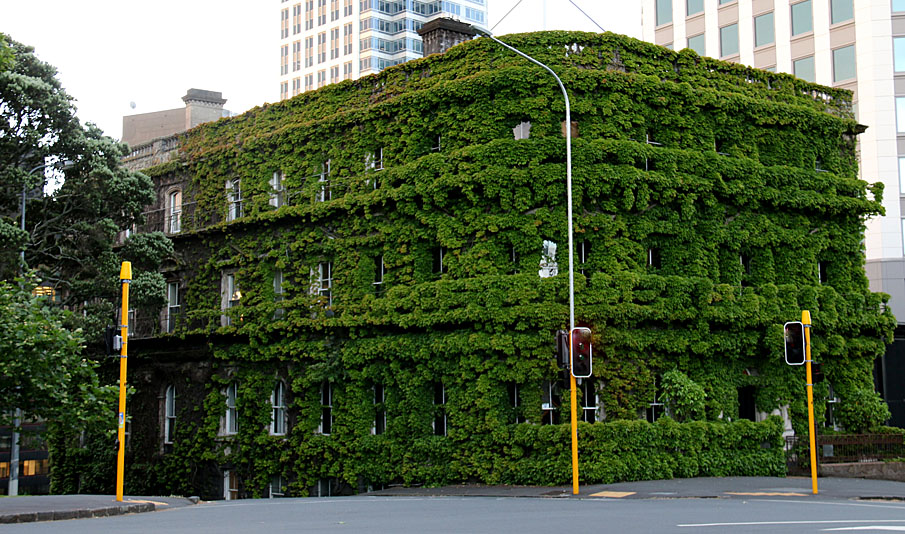
Northern Club Building, Auckland. Image courtesy of www.flickr.com
Northern Club Building
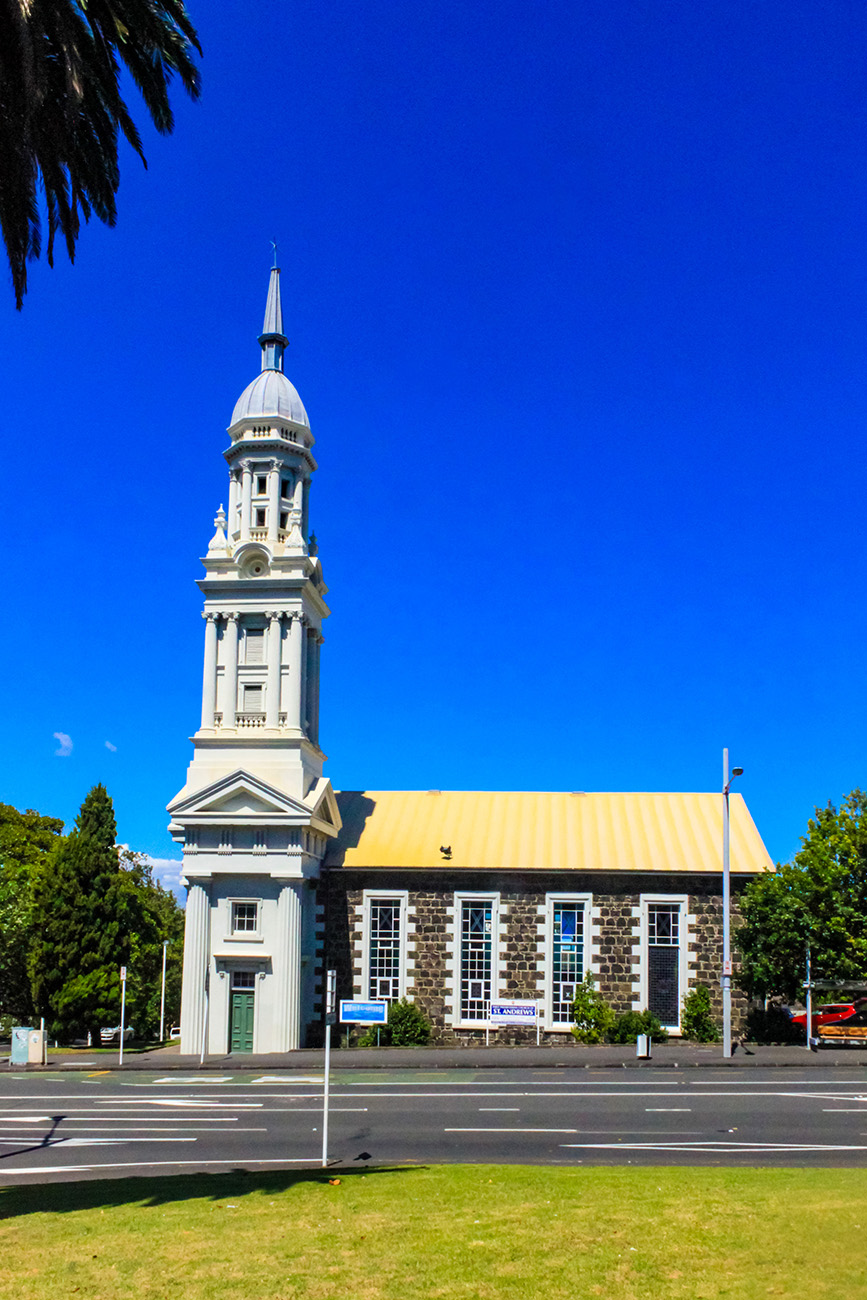
St Andrew's Church (Presbyterian), Auckland. CC BY-NC 2.0 Image courtesy of www.flickr.com
St Andrew's Church (Presbyterian)
St Andrew's Church (Presbyterian), Auckland. CC BY-NC 2.0 Image courtesy of www.flickr.com
St Andrew's Church (Presbyterian)
Northern Club Building, Auckland. Image courtesy of www.flickr.com
Northern Club Building
Stay up to date with Heritage this month