The house at 27-29 Bridge Street in the Central Hawke’s Bay settlement of Ongaonga, built in the 1910s, has historic significance as a representative example of a substantial villa built in a small rural centre supported by a farming hinterland. It reflects the town-founder approach of Hawke’s Bay run-holders and the breaking up of the region’s large pastoral estates in the late nineteenth and early twentieth century, which freed up land for smaller farming operations, fostering the growth of settlements like Ongaonga. The house has representative architectural significance as an intact and late example of the villa, a style soon to be superseded by new forms.
Ongaonga was founded in 1872 by pastoral run-holder Henry Hamilton Bridge on his large estate ‘Fairfield’. 78 town sections and three streets (including one commemorating Bridge) were laid out, and the new town was named after the Ongaonga Stream, which wound through its outskirts. Like in nearby Waipukurau and Waipawa, which were also established by run-holders, the founder Bridge provided community amenities like a school, church and recreation ground. The remainder of Fairfield was subdivided in 1899 and early the following century other large estates in the area were broken up into smaller farms, all of which supported the economy of Ongaonga.
Local farming couple George and Margaret Walker purchased 500 acres of the Fairfield estate from Bridge around 1899 and also acquired town sections in Ongaonga. George Walker immigrated to New Zealand from Scotland in 1869; Margaret came from Ireland in 1872 and they married two years later. The couple bought their first farm at Blackburn near Ongaonga in 1881.
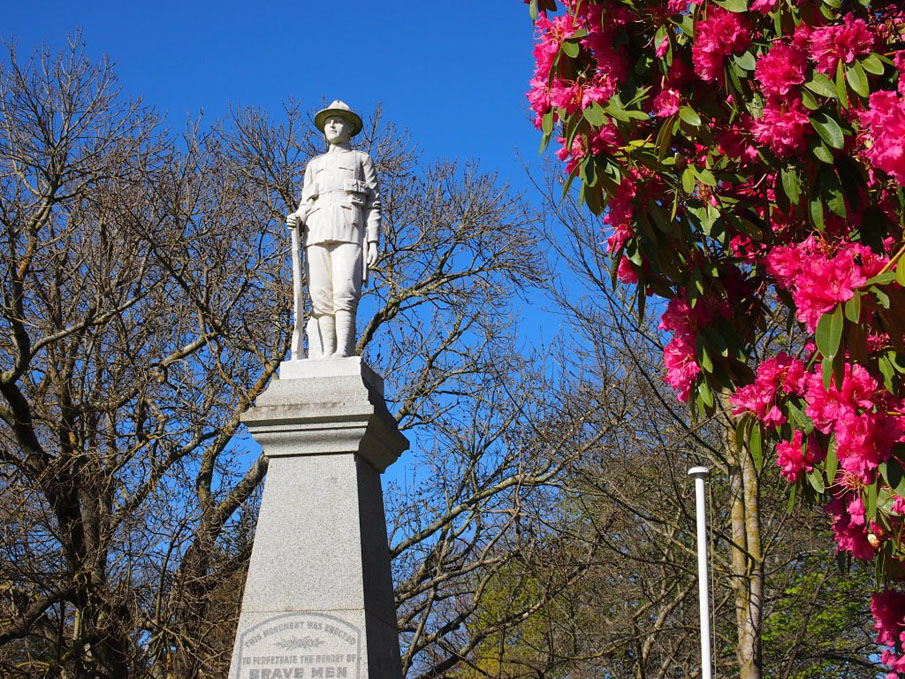
Margaret died in 1911 and George retired from farming at some point in the First World War period (1914-18) and had the house at 27-29 Bridge Street constructed. The stables behind the house are believed to have been built at the same time. The builder is unknown, though a good candidate is the Coles Brothers firm of Ongaonga, which was responsible for many of the area’s buildings. During his retirement in Ongaonga, George was closely involved with community affairs, serving on the committees of the Forest Gate domain and cemetery and the Presbyterian church (for which he built a manse). He also donated land for a war memorial (War Memorial, List No.1958). In his later years he was cared for by his niece Elizabeth Walker and she inherited his property, including the Bridge Street house, after his death in 1922. Until the late 1970s, subsequent owners were also Ongaonga farmers. It remains a private residence.
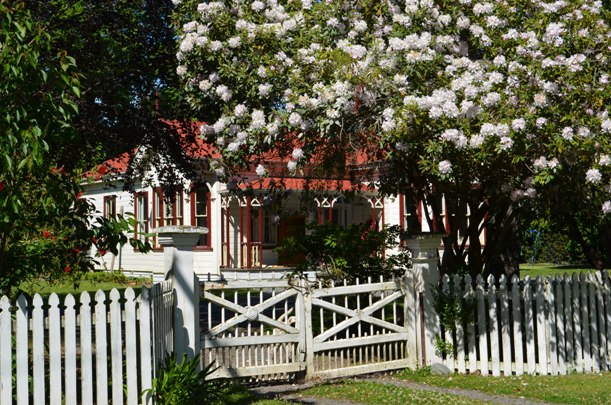
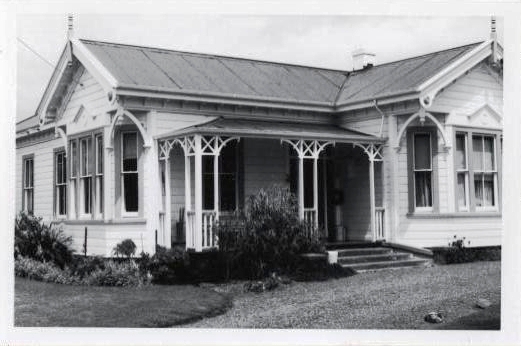
Located within a rural settlement known for its heritage buildings, House is a substantial and intact return bay late-era villa clad in rusticated timber weatherboards. A small verandah supported by balustrades and slim posts with delicate fretwork sits over the front door within the L-shape formed by two bays. These bays have double-hung sash windows, simply-decorated bargeboards and turned finials at the apex. Casement windows and French doors have been installed on the west elevation at an unknown date.
Ongaonga was founded in 1872 by pastoral run-holder Henry Hamilton Bridge on his large estate ‘Fairfield’. 78 town sections and three streets (including one commemorating Bridge) were laid out, and the new town was named after the Ongaonga Stream, which wound through its outskirts. Like in nearby Waipukurau and Waipawa, which were also established by run-holders, the founder Bridge provided community amenities like a school, church and recreation ground. The remainder of Fairfield was subdivided in 1899 and early the following century other large estates in the area were broken up into smaller farms, all of which supported the economy of Ongaonga.
Local farming couple George and Margaret Walker purchased 500 acres of the Fairfield estate from Bridge around 1899 and also acquired town sections in Ongaonga. George Walker immigrated to New Zealand from Scotland in 1869; Margaret came from Ireland in 1872 and they married two years later. The couple bought their first farm at Blackburn near Ongaonga in 1881.
Margaret died in 1911 and George retired from farming at some point in the First World War period (1914-18) and had the house at 27-29 Bridge Street constructed. The stables behind the house are believed to have been built at the same time. The builder is unknown, though a good candidate is the Coles Brothers firm of Ongaonga, which was responsible for many of the area’s buildings. During his retirement in Ongaonga, George was closely involved with community affairs, serving on the committees of the Forest Gate domain and cemetery and the Presbyterian church (for which he built a manse). He also donated land for a war memorial (War Memorial, List No.1958). In his later years he was cared for by his niece Elizabeth Walker and she inherited his property, including the Bridge Street house, after his death in 1922. Until the late 1970s, subsequent owners were also Ongaonga farmers. It remains a private residence.
Located within a rural settlement known for its heritage buildings, House is a substantial and intact return bay late-era villa clad in rusticated timber weatherboards. A small verandah supported by balustrades and slim posts with delicate fretwork sits over the front door within the L-shape formed by two bays. These bays have double-hung sash windows, simply-decorated bargeboards and turned finials at the apex. Casement windows and French doors have been installed on the west elevation at an unknown date.