

Henry Eli White was born in Dunedin. His father initially employed him as a building contractor while Henry attended night school. Following a successful contract to design a huge tunnel from the Waipori River to the city of Dunedin, White received a number of design contracts. In 1900 White received his first contract to design a theatre for John Fuller and Sons in Christchurch. They were to commission White again in the construction of the Edwardian-Baroque styled His Majesty's Theatre, now known as the St James, Wellington. When finished (1912) the latter was the largest theatre in Australasia and the first steel framed reinforced concrete theatre in New Zealand. Of particular note was White's use of the cantilever principle, which allowed the weight of the dress circle and gallery to be transferred through joists to the main steelwork, avoiding the use of columns that would hinder the audience's view of the stage. White's fame spread across the Tasman, where he was commissioned to design a number of theatres, including the State Theatre in Sydney (1929) which is now recognised as one of the finest picture theatres in the world. Throughout his career White was to design 130 theatres. One of the few remaining New Zealand theatres is the Hastings Municipal Theatre.
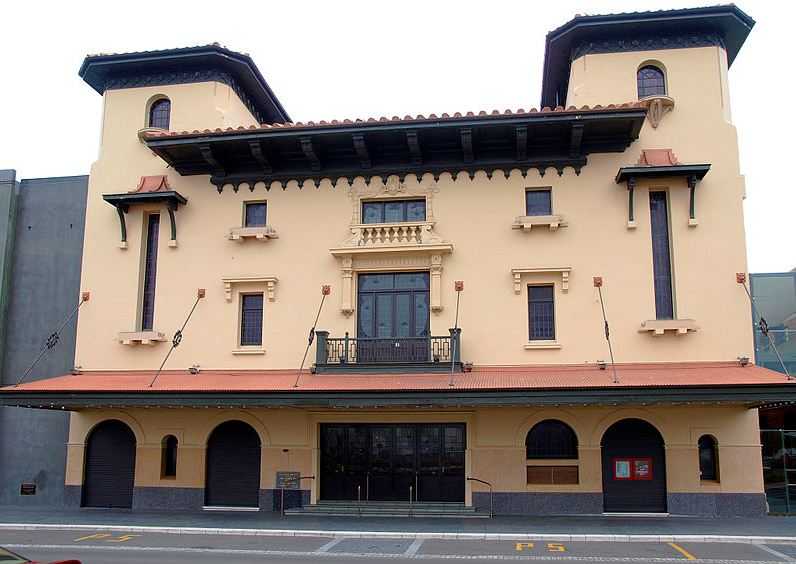
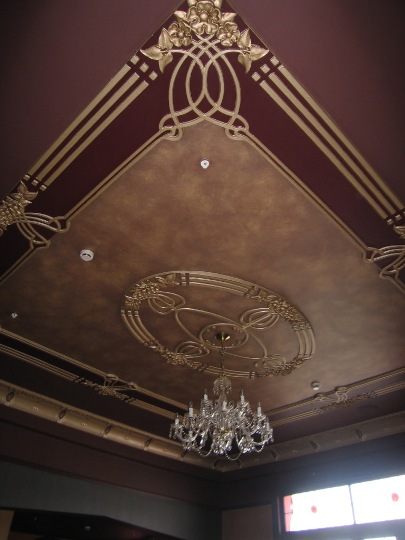
During the late 1900s the Hastings Borough Council began to give consideration building a new town hall for council business and a venue for concerts. The council's first town hall had hosted professional troupes since the 1880s. In 1891 the Town Hall Company was wound up and the Hastings Volunteers leased the hall. The latter renamed the hall the Princess Theatre. The theatre was sold in the 1890s, and from the late 1890s it became a venue for moving pictures. By the early 1900s the theatre was considered a fire risk and too small for travelling troupes. In 1911 the borough council acquired a corner site adjacent to the council buildings. In January 1914 a loan was raised to build both a Council Chambers and theatre. Henry White was chosen by the council to design the theatre. Not long before the tender notice was advertised a petition was raised to change the orientation of the theatre to Hastings Street. This was met with a counter petition in favour of leaving the building as it had originally been planned. The lowest tender of Bull Brothers of Napier (£12,000) was accepted and the foundation stone was laid on 21 April 1915. White's design was for an exterior in the Spanish Mission style, a style of architecture that was to become popular in Hawke's Bay after the 1931 earthquake. Inside White chose an Art Nouveau style, with richly ornate plaster decoration, coloured lead light windows and a magnificent sunburst chandelier. It was a combination of styles that White would again use for the now demolished Midland Hotel, Wellington (1917).
The Hastings Municipal Theatre officially opened on 18 October 1915. The first performance was given by the Operatic Society. Before the building was completed, the Hastings Borough Council had also agreed to lease the rights to show pictures to A. P. McCormack. After six months following the opening of the theatre the Council took over the running of the picture business, and this was later run in conjunction with the 'Cosy Picture Theatre'. The building survived the Hawke's Bay Earthquake in 1931. However, major reconstruction and modification was undertaken to strengthen the building. The local architectural firm of H. G. Davies, A. Garnett, and Eric Phillips drew up the plans for the reconstruction and Fletcher Construction undertook the work. The stage and dressing rooms were rebuilt in reinforced concrete, and the auditorium strengthened. The tower roofs were removed and replaced with a different design.
During 1930s the Municipal Theatre continued to be used as a movie theatre under lease to J. C. Williamson Picture Corporation and Kemball Theatres, which also ran a number of other pictures theatres also leased from the Hastings Borough Council. In 1940 the 'Municipal' was leased to H. B. Amusements Ltd.
In the 1980s and early 1990s the theatre underwent refurbishment. This included alterations to the foyer and the building of a walkway between the theatre and the former Municipal Chambers. Today the (now) Hastings District Council retains ownership of the theatre and it is run in conjunction with facilities in the adjoining building as the 'Hastings Municipal Theatre Complex' - a multipurpose venue comprising of theatre and function rooms.
The Municipal Theatre is an important example of the work of eminent Australasian theatre designer Eli White. It is one of the earliest examples externally of the Spanish Mission style in New Zealand, and a rare example of an Art Nouveau interior. The theatre has played an important part in the life of the Hastings community for much of the twentieth century, and makes a considerable impact on the streetscape.
List Entry Information
Status
Listed
List Entry Status
Historic Place Category 1
Access
Private/No Public Access
List Number
1096
Date Entered
28th June 1990
Date of Effect
28th June 1990
City/District Council
Hastings District
Region
Hawke's Bay Region
Extent of List Entry
Extent includes part of the land described as Lot 3 DP 6499, Pt Lot 152, Lot 153 DEED 83 and Lot 154 DEED 83 Hawkes Bay Land District and the building known as Hastings Municipal Theatre (Former) thereon, and its fittings and fixtures. (Refer to map in Appendix 1 for further information).
Legal description
Lot 3 DP 6499, Pt Lot 152 (RT HB96/284), Lot 153 DEED 83 (RT HB 52/53) and Lot 154 DEED 83 (RT HB 52/54) Hawkes Bay Land District
Location Description
The building sits alongside the former Hastings Municipal Buildings a short distance from the intersection of Hastings Street South and Heretaunga Street East.
Status
Listed
List Entry Status
Historic Place Category 1
Access
Private/No Public Access
List Number
1096
Date Entered
28th June 1990
Date of Effect
28th June 1990
City/District Council
Hastings District
Region
Hawke's Bay Region
Extent of List Entry
Extent includes part of the land described as Lot 3 DP 6499, Pt Lot 152, Lot 153 DEED 83 and Lot 154 DEED 83 Hawkes Bay Land District and the building known as Hastings Municipal Theatre (Former) thereon, and its fittings and fixtures. (Refer to map in Appendix 1 for further information).
Legal description
Lot 3 DP 6499, Pt Lot 152 (RT HB96/284), Lot 153 DEED 83 (RT HB 52/53) and Lot 154 DEED 83 (RT HB 52/54) Hawkes Bay Land District
Location Description
The building sits alongside the former Hastings Municipal Buildings a short distance from the intersection of Hastings Street South and Heretaunga Street East.
Why is this place significant?
Cultural Significance
The Municipal Theatre is a building of great social and cultural significance to the people of Hastings and wider Hawkes Bay. Now showcased as an opera house, it has been the centre of major theatrical and musical performance in Hastings since its construction and together with its long history as a cinema makes it one of the most culturally important buildings in Hastings.
Historic Significance
Historical Significance or Value The Municipal Theatre is one of Hastings' premier historic buildings. Its initial construction was a remarkably bold statement by what was still a small provincial centre. The building has had nearly a century of use, during which time thousands of theatrical and musical performances, movies, meetings, even boxing events have taken place. The building's fortunes have waxed and waned but it has always remained the premier performance venue in Hawkes Bay. The building's historical association with the Municipal Chambers next door is a particularly important one and the two buildings together demonstrate the active role the Hastings City Council has played in civic life.
Physical Significance
The building is nationally important for its architectural quality. The exterior is executed in the Spanish Mission style, while the auditorium is a fine period space, richly ornamented in contrasting styles of Art Nouveau and Art Deco. It is an original and somewhat idiosyncratic design, by an architect, Henry White, who built a significant reputation in Australasia for his ornate, functional and technically advanced theatres. It is now rare as an authentic example of his early work. The Municipal Theatre is prominent in the streetscape, especially because of the two towers; it combines with the Council Chambers alongside and the Wesley Church opposite to make a nodal point in the fabric of the city that stands out for its period and visual interest, and its civic and cultural amenity. Finally, there is technological value in the structure of the building. White was an innovative designer, and the particular problems presented by a large auditorium saw him produce some ground-breaking designs, first seen in the St James Theatre, Wellington (1912). The Municipal Theatre survived the Hawkes Bay earthquake, and was later strengthened, and thus provides technical information on structural design in a highly earthquake-prone part of New Zealand. Because of the survival of much interior fabric, there is technical value in finishes such as those in plaster, tiles, timber and glass.
Why is this place significant?
Cultural Significance
The Municipal Theatre is a building of great social and cultural significance to the people of Hastings and wider Hawkes Bay. Now showcased as an opera house, it has been the centre of major theatrical and musical performance in Hastings since its construction and together with its long history as a cinema makes it one of the most culturally important buildings in Hastings.
Historic Significance
Historical Significance or Value The Municipal Theatre is one of Hastings' premier historic buildings. Its initial construction was a remarkably bold statement by what was still a small provincial centre. The building has had nearly a century of use, during which time thousands of theatrical and musical performances, movies, meetings, even boxing events have taken place. The building's fortunes have waxed and waned but it has always remained the premier performance venue in Hawkes Bay. The building's historical association with the Municipal Chambers next door is a particularly important one and the two buildings together demonstrate the active role the Hastings City Council has played in civic life.
Physical Significance
The building is nationally important for its architectural quality. The exterior is executed in the Spanish Mission style, while the auditorium is a fine period space, richly ornamented in contrasting styles of Art Nouveau and Art Deco. It is an original and somewhat idiosyncratic design, by an architect, Henry White, who built a significant reputation in Australasia for his ornate, functional and technically advanced theatres. It is now rare as an authentic example of his early work. The Municipal Theatre is prominent in the streetscape, especially because of the two towers; it combines with the Council Chambers alongside and the Wesley Church opposite to make a nodal point in the fabric of the city that stands out for its period and visual interest, and its civic and cultural amenity. Finally, there is technological value in the structure of the building. White was an innovative designer, and the particular problems presented by a large auditorium saw him produce some ground-breaking designs, first seen in the St James Theatre, Wellington (1912). The Municipal Theatre survived the Hawkes Bay earthquake, and was later strengthened, and thus provides technical information on structural design in a highly earthquake-prone part of New Zealand. Because of the survival of much interior fabric, there is technical value in finishes such as those in plaster, tiles, timber and glass.
Construction Professional
Name
White, Henry Eli (1876-1952)
Type
Architect
Biography
White was the son of a Dunedin building contractor and spent his early years learning a wide range of trades including bricklaying, plumbing, carpentry, joinery and painting. His first major project was in 1908, a tunnel on the Waipori River hydro-electric scheme. He developed a fascination with theatre design and educated himself in its principles while also attending Art School night classes. With the contract to build His Majesty's Theatre, Wellington, for (Sir) Benjamin Fuller in 1912, White moved his thriving practice to that city where he also built the Midland Hotel. White's reputation as a popular and innovative theatre designer grew to the extent that he became one of the most prominent in Australasia. He was to design over 130 theatres as well as a number of commercial buildings. Among his most notable designs were (builder of) The Press Building, Christchurch (1908), architect of His Majesty's Theatre, Wellington (1912), now the St James, and at the time the largest theatre in Australasia, the now demolished Midland Hotel, Wellington, (1916) The Strand, Christchurch (1917), the Tivoli, Brisbane, and his masterpiece, the State Theatre in Sydney. Much loved by audiences for its excessive Art Deco ornamentation, its interior made lavish use of marble, gold and ivory decoration, and featured paintings, sculpture and exotic objects (such as the 'Fujiyama cameo', removed during the Second World War). The Depression marked the end of White's architectural career. He won a competition to design a college at Auckland, but plans were shelved; he closed his office and lost money through farming in New Zealand. By 1937 he had returned to Sydney. Although a cement manufacturing project near Bathurst fell through, dolomite was discovered on the site and during the Second World War his company supplied it for windows and light bulbs made in Australia. White spent much time sailing and big-game fishing. Survived by his wife and two sons, he died on 3 March 1952 at Kings Cross, Sydney, and was cremated with Anglican rites. He had reputedly earned over £1 million in architectural fees, but was not an astute businessman; his estate was sworn for probate at £1147. Source: Registration Report for St Anthony's Convent (Former), Register No. 4345, February 2013. Sour
Construction Details
Start Year
1990
Type
Other
Description
Restoration work completed (Front of House refurbished).
Start Year
1993
Type
Modification
Description
Kitchen and bar upgraded, link created between Theatre and adjacent Municipal Buildings.
Start Year
1994
Type
Modification
Description
Bathrooms, dressing rooms upgraded, sprinkler system/fire escape installed.
Start Year
2002
Type
Modification
Description
Alterations to Theatre (bar installed, stage house and dressing rooms upgraded, access to adjacent Municipal Building created on first floor level, hand line flying system replaced)
Start Year
2004
Type
Modification
Description
Upgrade of and alterations to the Municipal Theatre commence (alterations to foyer, plaza and access points).
Start Year
2006
Type
Other
Description
Refurbishment completed (including re-painting of interior and auditorium ceiling.)
Start Year
1911
Type
Other
Description
Hastings Borough Council purchases half an acre of land on the corner of Hastings and Heretaunga Streets, adjoining the council chambers.
Start Year
1915
Type
Original Construction
Description
Building constructed
Start Year
1931
Type
Modification
Description
Theatre damaged by Hawke's Bay earthquake; Stage and dressing rooms rebuilt in reinforced concrete; auditorium strengthened; each tower roof removed and replaced to a different design.
Start Year
1987
Type
Modification
Description
Restoration work commences.
Construction Materials
Construction details: Structural materials include brick masonry, reinforced con-crete, steel and timber trusses; structural upgrading in reinforced concrete was carried out after the Hawkes Bay earthquake. Roofs are of clay tiles and corru-gated iron. (No original documentation that would give specific structural infor-mation is currently available.)
Notable Features
Art Nouveau interior including fine sunburst chandelier.
Construction Professional
Name
White, Henry Eli (1876-1952)
Type
Architect
Biography
White was the son of a Dunedin building contractor and spent his early years learning a wide range of trades including bricklaying, plumbing, carpentry, joinery and painting. His first major project was in 1908, a tunnel on the Waipori River hydro-electric scheme. He developed a fascination with theatre design and educated himself in its principles while also attending Art School night classes. With the contract to build His Majesty's Theatre, Wellington, for (Sir) Benjamin Fuller in 1912, White moved his thriving practice to that city where he also built the Midland Hotel. White's reputation as a popular and innovative theatre designer grew to the extent that he became one of the most prominent in Australasia. He was to design over 130 theatres as well as a number of commercial buildings. Among his most notable designs were (builder of) The Press Building, Christchurch (1908), architect of His Majesty's Theatre, Wellington (1912), now the St James, and at the time the largest theatre in Australasia, the now demolished Midland Hotel, Wellington, (1916) The Strand, Christchurch (1917), the Tivoli, Brisbane, and his masterpiece, the State Theatre in Sydney. Much loved by audiences for its excessive Art Deco ornamentation, its interior made lavish use of marble, gold and ivory decoration, and featured paintings, sculpture and exotic objects (such as the 'Fujiyama cameo', removed during the Second World War). The Depression marked the end of White's architectural career. He won a competition to design a college at Auckland, but plans were shelved; he closed his office and lost money through farming in New Zealand. By 1937 he had returned to Sydney. Although a cement manufacturing project near Bathurst fell through, dolomite was discovered on the site and during the Second World War his company supplied it for windows and light bulbs made in Australia. White spent much time sailing and big-game fishing. Survived by his wife and two sons, he died on 3 March 1952 at Kings Cross, Sydney, and was cremated with Anglican rites. He had reputedly earned over £1 million in architectural fees, but was not an astute businessman; his estate was sworn for probate at £1147. Source: Registration Report for St Anthony's Convent (Former), Register No. 4345, February 2013. Sour
Construction Details
Start Year
1990
Type
Other
Description
Restoration work completed (Front of House refurbished).
Start Year
1993
Type
Modification
Description
Kitchen and bar upgraded, link created between Theatre and adjacent Municipal Buildings.
Start Year
1994
Type
Modification
Description
Bathrooms, dressing rooms upgraded, sprinkler system/fire escape installed.
Start Year
2002
Type
Modification
Description
Alterations to Theatre (bar installed, stage house and dressing rooms upgraded, access to adjacent Municipal Building created on first floor level, hand line flying system replaced)
Start Year
2004
Type
Modification
Description
Upgrade of and alterations to the Municipal Theatre commence (alterations to foyer, plaza and access points).
Start Year
2006
Type
Other
Description
Refurbishment completed (including re-painting of interior and auditorium ceiling.)
Start Year
1911
Type
Other
Description
Hastings Borough Council purchases half an acre of land on the corner of Hastings and Heretaunga Streets, adjoining the council chambers.
Start Year
1915
Type
Original Construction
Description
Building constructed
Start Year
1931
Type
Modification
Description
Theatre damaged by Hawke's Bay earthquake; Stage and dressing rooms rebuilt in reinforced concrete; auditorium strengthened; each tower roof removed and replaced to a different design.
Start Year
1987
Type
Modification
Description
Restoration work commences.
Construction Materials
Construction details: Structural materials include brick masonry, reinforced con-crete, steel and timber trusses; structural upgrading in reinforced concrete was carried out after the Hawkes Bay earthquake. Roofs are of clay tiles and corru-gated iron. (No original documentation that would give specific structural infor-mation is currently available.)
Notable Features
Art Nouveau interior including fine sunburst chandelier.
The Municipal Theatre, Hastings, is one of the last remaining theatres in New Zealand built by Henry Eli White (1877-1952). It is also one of the earliest buildings designed in New Zealand using the Spanish Mission style, and the lavish Art Nouveau interior is also important, being probably the largest and most complete example of its type in New Zealand. Henry Eli White was born in Dunedin. His father initially employed him as a building contractor while Henry attended night school. Following a successful contract to design a huge tunnel from the Waipori River to the city of Dunedin, White received a number of design contracts. In 1900 White received his first contract to design a theatre for John Fuller and Sons in Christchurch. They were to commission White again in the construction of the Edwardian-Baroque styled His Majesty's Theatre, now known as the St James, Wellington (Category I his-toric place, Register No. 3639). When finished (1912) the latter was the largest theatre in Australasia and the first steel framed reinforced concrete theatre in New Zealand. Of particular note was White's use of the cantilever principle, which allowed the weight of the dress circle and gallery to be transferred through joists to the main steelwork, avoiding the use of columns that would hinder the audience's view of the stage. White's fame spread across the Tasman, where he was commissioned to design a number of theatres, including the State Theatre in Sydney (1929) which is now recognised as one of the finest picture theatres in the world. Throughout his career White was to design 130 theatres. One of the few remaining New Zealand theatres is the former Hastings Municipal Theatre. During the 1900s the Hastings Borough Council began to give consideration to building a new town hall for council business and a venue for concerts. The Council's first town hall had hosted professional troupes since the 1880s. In 1891 the Town Hall Company was wound up and the Hastings Volunteers leased the hall. The latter renamed the hall the Princess Theatre. The theatre was sold in the 1890s, and from the late 1890s it became a venue for moving pictures. By the early 1900s the theatre was considered a fire risk and too small for travelling troupes. In 1911 the Borough Council acquired a site on the corner of Hastings Street South and Heretaunga Street North, adjacent to the Council buildings. Two sec-tions of land were acquired, for £1400 and £1762-10 respectively. In January 1914 a loan of £29,300 was raised to build both a Council Chambers and thea-tre. Henry White was chosen by the Council to design the theatre. Not long be-fore the tender notice was advertised a petition was raised to change the orien-tation of the theatre to Hastings Street. This was met with a counter petition in favour of leaving the building as it had originally been planned facing Here-taunga Street. The former won out. The decision to build theatre with a capacity of 1300 in a town with only 7000 inhabitants represented a considerable vote of confidence in the venture, as well as the town's future. The lowest tender of Bull Brothers of Napier (£12,000) was accepted and the foundation stone was laid on 21 April 1915. White's design was for an exterior in the Spanish Mission style, a style of architecture that was to become popular in Hawke's Bay after the 1931 earthquake. Inside White chose an Art Nouveau style, with richly ornate plaster decoration, coloured lead light windows and a magnificent sunburst chandelier. It was a combination of styles that White would again use for the now demolished Midland Hotel, Wellington (1917). In the end, the theatre cost just under £16,000 and although the construction proceeded satisfactorily, the absence of White, who was by then domiciled in Sydney and came over infrequently, did not sit well with the Council. White had a site repre-sentative, a Mr Simpson, but this did not assuage the Council, which also criticised White for not favouring New Zealand firms in tenders for fittings. The Hastings Municipal Theatre officially opened on 18 October 1915, despite not being quite finished. The first performance was given by the Hastings Operatic Society. Before the building was completed, the Hastings Borough Council had also agreed to lease the rights to show pictures to A. P. McCormack on nights when the theatre was not required for other purposes. Six months after the opening of the theatre the Council took over the running of the picture business, and this was later run in conjunction with the 'Cosy Picture Theatre'. The building was used for more than just theatrical and musical performances and movies. In a now celebrated event, Jerry Monahon fought Pat Gleeson in the theatre on 26 April 1922. The building survived the Hawke's Bay Earthquake in 1931. However, major re-construction and modification was undertaken to strengthen the building. The local architectural firm of Davies Garnett and Phillips drew up the plans for the reconstruction and Fletcher Construction undertook the work. The stage and dressing rooms were rebuilt in reinforced concrete, and the auditorium strength-ened. The tower roofs were removed and replaced with a different design. During 1930s the Municipal Theatre continued to be used as a movie theatre under lease to J. C. Williamson Picture Corporation and Kemball Theatres, which also ran a number of other pictures theatres leased from the Hastings Borough Council. In 1940 the 'Municipal' was leased to H. B. Amusements Ltd. In the late 1980s and early 1990s the theatre underwent considerable refurbishment. This included alterations to the Front of House, kitchen and bar and the building of a walkway between the theatre and the former Municipal Chambers. In 1994, bathrooms and dressings rooms were upgraded and a sprinkler system and fire escape installed. The theatre was run in conjunction with the facilities in the adjoining building as the 'Hastings Municipal Theatre Complex', a multi-purpose venue comprising of theatre and function rooms. In 2002, work began on more changes, with the installation of a bar, upgrading of the stage house and dressing rooms, access to adjacent Municipal Building created on first floor level, and the hand line flying system replaced. In 2004 work began on restoring and upgrading the theatre proper with modernising of the backstage facilities and then the restoration and upgrading of the auditorium. The centrepiece of this was a new painted auditorium ceiling, designed by artists Roz Paterson and Tina Carter, who were part of a team of five painters that undertook the painting. This new work was intended to weave the stylistic strands of the building together in one artistic piece. In addition, a new plaza and foyer addition was constructed on a vacant site to the immediate west of the theatre. The cost of all this work was met by the Council, central government and community fundraising. The work on the theatre was finished in early 2006 and the building was reopened by Prime Minister Helen Clark on 24 March 2006.
The Municipal Theatre, Hastings, is one of the last remaining theatres in New Zealand built by Henry Eli White (1877-1952). It is also one of the earliest buildings designed in New Zealand using the Spanish Mission style, and the lavish Art Nouveau interior is also important, being probably the largest and most complete example of its type in New Zealand. Henry Eli White was born in Dunedin. His father initially employed him as a building contractor while Henry attended night school. Following a successful contract to design a huge tunnel from the Waipori River to the city of Dunedin, White received a number of design contracts. In 1900 White received his first contract to design a theatre for John Fuller and Sons in Christchurch. They were to commission White again in the construction of the Edwardian-Baroque styled His Majesty's Theatre, now known as the St James, Wellington (Category I his-toric place, Register No. 3639). When finished (1912) the latter was the largest theatre in Australasia and the first steel framed reinforced concrete theatre in New Zealand. Of particular note was White's use of the cantilever principle, which allowed the weight of the dress circle and gallery to be transferred through joists to the main steelwork, avoiding the use of columns that would hinder the audience's view of the stage. White's fame spread across the Tasman, where he was commissioned to design a number of theatres, including the State Theatre in Sydney (1929) which is now recognised as one of the finest picture theatres in the world. Throughout his career White was to design 130 theatres. One of the few remaining New Zealand theatres is the former Hastings Municipal Theatre. During the 1900s the Hastings Borough Council began to give consideration to building a new town hall for council business and a venue for concerts. The Council's first town hall had hosted professional troupes since the 1880s. In 1891 the Town Hall Company was wound up and the Hastings Volunteers leased the hall. The latter renamed the hall the Princess Theatre. The theatre was sold in the 1890s, and from the late 1890s it became a venue for moving pictures. By the early 1900s the theatre was considered a fire risk and too small for travelling troupes. In 1911 the Borough Council acquired a site on the corner of Hastings Street South and Heretaunga Street North, adjacent to the Council buildings. Two sec-tions of land were acquired, for £1400 and £1762-10 respectively. In January 1914 a loan of £29,300 was raised to build both a Council Chambers and thea-tre. Henry White was chosen by the Council to design the theatre. Not long be-fore the tender notice was advertised a petition was raised to change the orien-tation of the theatre to Hastings Street. This was met with a counter petition in favour of leaving the building as it had originally been planned facing Here-taunga Street. The former won out. The decision to build theatre with a capacity of 1300 in a town with only 7000 inhabitants represented a considerable vote of confidence in the venture, as well as the town's future. The lowest tender of Bull Brothers of Napier (£12,000) was accepted and the foundation stone was laid on 21 April 1915. White's design was for an exterior in the Spanish Mission style, a style of architecture that was to become popular in Hawke's Bay after the 1931 earthquake. Inside White chose an Art Nouveau style, with richly ornate plaster decoration, coloured lead light windows and a magnificent sunburst chandelier. It was a combination of styles that White would again use for the now demolished Midland Hotel, Wellington (1917). In the end, the theatre cost just under £16,000 and although the construction proceeded satisfactorily, the absence of White, who was by then domiciled in Sydney and came over infrequently, did not sit well with the Council. White had a site repre-sentative, a Mr Simpson, but this did not assuage the Council, which also criticised White for not favouring New Zealand firms in tenders for fittings. The Hastings Municipal Theatre officially opened on 18 October 1915, despite not being quite finished. The first performance was given by the Hastings Operatic Society. Before the building was completed, the Hastings Borough Council had also agreed to lease the rights to show pictures to A. P. McCormack on nights when the theatre was not required for other purposes. Six months after the opening of the theatre the Council took over the running of the picture business, and this was later run in conjunction with the 'Cosy Picture Theatre'. The building was used for more than just theatrical and musical performances and movies. In a now celebrated event, Jerry Monahon fought Pat Gleeson in the theatre on 26 April 1922. The building survived the Hawke's Bay Earthquake in 1931. However, major re-construction and modification was undertaken to strengthen the building. The local architectural firm of Davies Garnett and Phillips drew up the plans for the reconstruction and Fletcher Construction undertook the work. The stage and dressing rooms were rebuilt in reinforced concrete, and the auditorium strength-ened. The tower roofs were removed and replaced with a different design. During 1930s the Municipal Theatre continued to be used as a movie theatre under lease to J. C. Williamson Picture Corporation and Kemball Theatres, which also ran a number of other pictures theatres leased from the Hastings Borough Council. In 1940 the 'Municipal' was leased to H. B. Amusements Ltd. In the late 1980s and early 1990s the theatre underwent considerable refurbishment. This included alterations to the Front of House, kitchen and bar and the building of a walkway between the theatre and the former Municipal Chambers. In 1994, bathrooms and dressings rooms were upgraded and a sprinkler system and fire escape installed. The theatre was run in conjunction with the facilities in the adjoining building as the 'Hastings Municipal Theatre Complex', a multi-purpose venue comprising of theatre and function rooms. In 2002, work began on more changes, with the installation of a bar, upgrading of the stage house and dressing rooms, access to adjacent Municipal Building created on first floor level, and the hand line flying system replaced. In 2004 work began on restoring and upgrading the theatre proper with modernising of the backstage facilities and then the restoration and upgrading of the auditorium. The centrepiece of this was a new painted auditorium ceiling, designed by artists Roz Paterson and Tina Carter, who were part of a team of five painters that undertook the painting. This new work was intended to weave the stylistic strands of the building together in one artistic piece. In addition, a new plaza and foyer addition was constructed on a vacant site to the immediate west of the theatre. The cost of all this work was met by the Council, central government and community fundraising. The work on the theatre was finished in early 2006 and the building was reopened by Prime Minister Helen Clark on 24 March 2006.
Description: The Hastings Municipal Theatre is a major civic building in the Spanish Mission style. This is evidenced in the highly ornamented front elevation to Hastings Street South, which features wide overhanging eaves, tiled roofs, window hoods on brackets of several types, semi-circular openings below the verandah and in the towers, and two central balconies, embellished with balustrading and corbels; there are two windows that are no more than long thin slots, rising through two floors and capped with hoods held on curved brackets. Wall surfaces are otherwise plain plaster. It is a busy façade, with the openings of various shapes arranged symmetrically about the central entrance into the foyer and the balconies above. Two square towers are powerful defining elements - their scale and solidity give the building an impressive and substantial character. The style does not carry through to the interior, where ornate plaster work in various Classically-inspired decorative motifs decorates the auditorium, along with the flowing lines of Art Nouveau and the jazzy geometric shapes of the central 'sunburst' light fitting. The building is thus an intriguing stylistic mix. In a bold decision, the major up-grading of the facilities that was completed in 2006 saw a modern addition made to the south side of the building to provide a large foyer space and plaza; this has enhanced the usefulness of the Municipal Theatre, giving a generous space where the original foyer was somewhat cramped. A new figurative mural was painted on the dome of the auditorium ceiling, an obviously modern work but one respectful of the space that it dominates.
Description: The Hastings Municipal Theatre is a major civic building in the Spanish Mission style. This is evidenced in the highly ornamented front elevation to Hastings Street South, which features wide overhanging eaves, tiled roofs, window hoods on brackets of several types, semi-circular openings below the verandah and in the towers, and two central balconies, embellished with balustrading and corbels; there are two windows that are no more than long thin slots, rising through two floors and capped with hoods held on curved brackets. Wall surfaces are otherwise plain plaster. It is a busy façade, with the openings of various shapes arranged symmetrically about the central entrance into the foyer and the balconies above. Two square towers are powerful defining elements - their scale and solidity give the building an impressive and substantial character. The style does not carry through to the interior, where ornate plaster work in various Classically-inspired decorative motifs decorates the auditorium, along with the flowing lines of Art Nouveau and the jazzy geometric shapes of the central 'sunburst' light fitting. The building is thus an intriguing stylistic mix. In a bold decision, the major up-grading of the facilities that was completed in 2006 saw a modern addition made to the south side of the building to provide a large foyer space and plaza; this has enhanced the usefulness of the Municipal Theatre, giving a generous space where the original foyer was somewhat cramped. A new figurative mural was painted on the dome of the auditorium ceiling, an obviously modern work but one respectful of the space that it dominates.
Historical and Associated Iwi / Hapū / Whānau
Completion Date
4th July 2008
Report Written By
Michael Kelly; Chris Cochran
Information Sources
Boyd, 1984
Mary Boyd, City of the Plains, A History of Hastings, Wellington, 1984
Shaw, P., 1991
Peter Shaw, New Zealand Architecture: From Polynesian Beginnings to 1990, Auckland, Hodder & Stoughton, 1991.
Wright, 2001 (3)
Matthew Wright, Town and Country: The History of Hastings and District, Hastings, 2001.
New Zealand Architect
New Zealand Architect
Other Information
NZIA Local Architecture Award Winners 2009, Category: Public Architecture and Heritage A fully referenced registration report is available from the NZHPT Central region office Please note that entry on the New Zealand Heritage List/Rarangi Korero identifies only the heritage values of the property concerned, and should not be construed as advice on the state of the property, or as a comment of its soundness or safety, including in regard to earthquake risk, safety in the event of fire, or insanitary conditions.
Historical and Associated Iwi / Hapū / Whānau
Completion Date
4th July 2008
Report Written By
Michael Kelly; Chris Cochran
Information Sources
Boyd, 1984
Mary Boyd, City of the Plains, A History of Hastings, Wellington, 1984
Shaw, P., 1991
Peter Shaw, New Zealand Architecture: From Polynesian Beginnings to 1990, Auckland, Hodder & Stoughton, 1991.
Wright, 2001 (3)
Matthew Wright, Town and Country: The History of Hastings and District, Hastings, 2001.
New Zealand Architect
New Zealand Architect
Other Information
NZIA Local Architecture Award Winners 2009, Category: Public Architecture and Heritage A fully referenced registration report is available from the NZHPT Central region office Please note that entry on the New Zealand Heritage List/Rarangi Korero identifies only the heritage values of the property concerned, and should not be construed as advice on the state of the property, or as a comment of its soundness or safety, including in regard to earthquake risk, safety in the event of fire, or insanitary conditions.
Current Usages
Uses: Civic Facilities
Specific Usage: Opera House
Former Usages
General Usage: Civic Facilities
Specific Usage: Theatre
Current Usages
Uses: Civic Facilities
Specific Usage: Opera House
Former Usages
General Usage: Civic Facilities
Specific Usage: Theatre
Location
Stay up to date with Heritage this month
