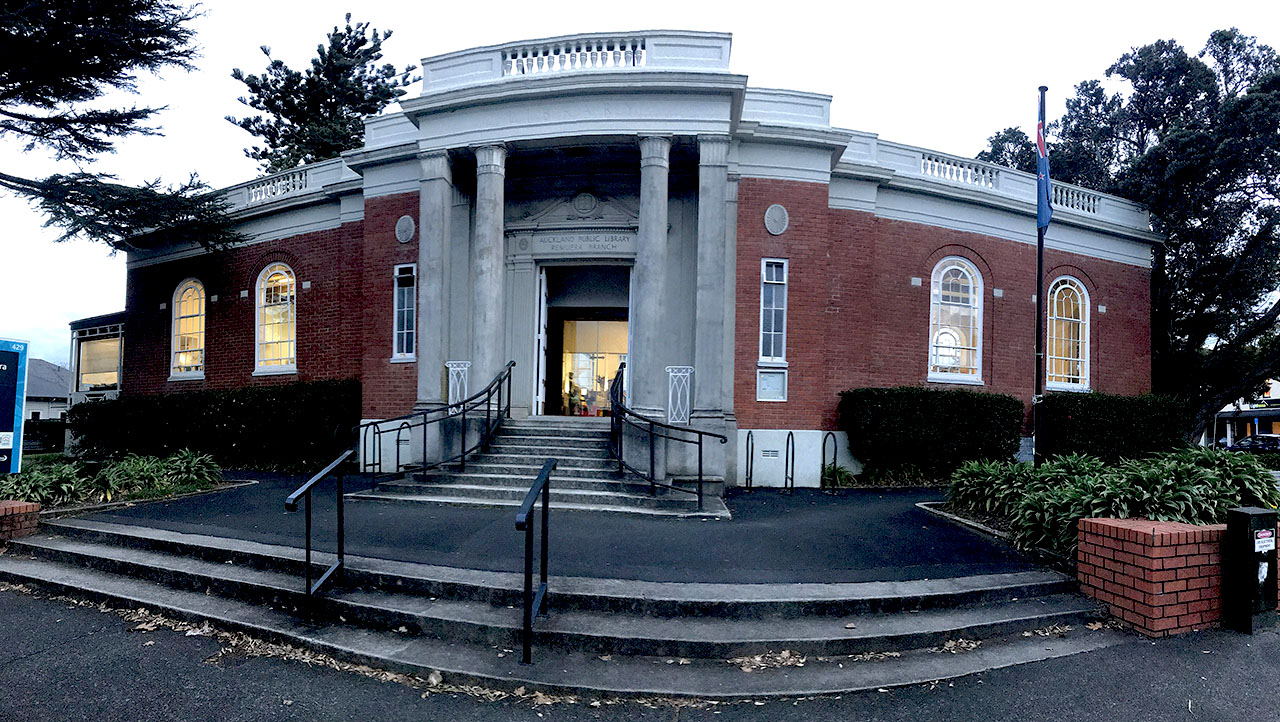
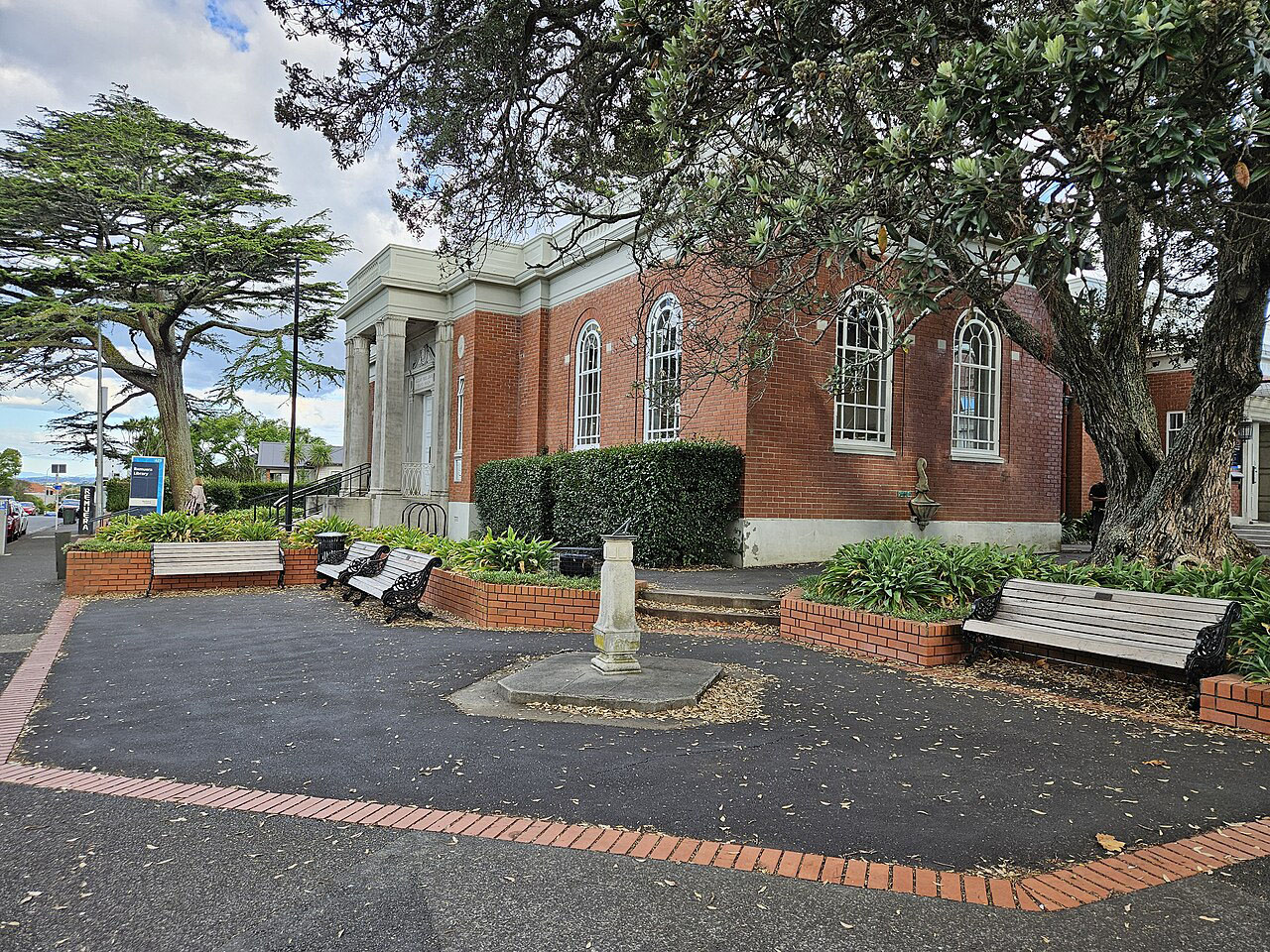
The Remuera Public Library is nationally significant as one of the first buildings in the country to have been awarded a gold medal by the New Zealand Institute of Architects. A notable landmark on a prominent corner in the centre of Remuera, it is also considered to be one of Auckland’s most distinguished suburban structures. Built in 1926, the library is an impressive example of Neo-Georgian architecture designed by W.H. Gummer and Reginald Ford, one of New Zealand’s leading architectural practices of the period. Reflecting the importance of libraries as places of self-improvement in the early twentieth century and particularly the expansion of Auckland’s library system, it has close links with other individuals of national and regional importance including the notable feminist Ellen Melville. It has also served as an important gathering place for the local community since it was constructed.
During the pre- and early colonial periods, the name Remuera (Remuwera) was associated with a pā on Mt Hobson and surrounding lands. By the early twentieth century, Remuera had become one of Auckland’s most exclusive suburbs. In 1915, Auckland City Council opened a public library in the area, reflecting the Council’s cultural leadership during its expansion of the Auckland Public Library service following the amalgamation of a number of local boards with the Council. In 1925, Sir James Gunson, the Mayor of Auckland, recommended that a new purpose-built library be erected in Remuera as part of a scheme to provide all suburban centres in Auckland with libraries containing lending, reference and lecture facilities. The Council approved borrowing £12,000 for the project, and engaged Gummer and Ford, the architectural firm that had recently designed the Grey Lynn library, to design the new structure. Gummer and Ford (established in 1923) was New Zealand’s most prominent architectural practice in the 1920s, designing some of the most significant commercial and public buildings in Auckland and other centres. In September 1925, the Council accepted the tender of Philcox and Son for construction.
The Remuera Library was opened by city councillor, Ellen Melville in 1926. A key figure in the revival of the New Zealand feminist movement in the twentieth century, Melville had been the first woman in the country to be elected to a city council. As Head of the Council’s Library Committee, she is credited with invigorating Auckland’s library system. At the well-attended opening ceremony, Melville mentioned the role of suburban libraries in providing a ‘great educational force in the life of the community’.
The Remuera Library is a single-storey, red-brick building designed in the classical tradition, with a Neo-Georgian character displaying American colonial influences. The rectangular plan had a strong axial arrangement, with the library occupying the north-south axis and the lecture hall occupying the east-west alignment. The building incorporates strong eaves lines, finely divided arched and square headed windows, a projecting columned portico at the library entrance and a pergola at the hall entrance. The open-plan layout of the library followed a standard plan stipulated by the Council, and was considered innovative at the time. Gummer and Ford were awarded a New Zealand Institute of Architects (NZIA) Gold Medal for the design.
Throughout the 1930s and 1940s, Remuera Library and its hall served as a hub for community events. Internal changes were made in 1958, and in 1961 the wall between the hall and library was removed, new windows were installed and the balcony was enclosed. In 2002, the earlier modifications were removed, a mezzanine was installed in the stage area of the hall and the east balcony re-clad. This work, undertaken by City Design, won an NZIA Resene Local Award for Architecture in the Heritage and Conservation Division in 2004. Landscape improvements were carried out between 2003 and 2005. Today, the library remains an important example of Neo-Georgian architecture and a focal point for the Remuera community.
During the pre- and early colonial periods, the name Remuera (Remuwera) was associated with a pā on Mt Hobson and surrounding lands. By the early twentieth century, Remuera had become one of Auckland’s most exclusive suburbs. In 1915, Auckland City Council opened a public library in the area, reflecting the Council’s cultural leadership during its expansion of the Auckland Public Library service following the amalgamation of a number of local boards with the Council. In 1925, Sir James Gunson, the Mayor of Auckland, recommended that a new purpose-built library be erected in Remuera as part of a scheme to provide all suburban centres in Auckland with libraries containing lending, reference and lecture facilities. The Council approved borrowing £12,000 for the project, and engaged Gummer and Ford, the architectural firm that had recently designed the Grey Lynn library, to design the new structure. Gummer and Ford (established in 1923) was New Zealand’s most prominent architectural practice in the 1920s, designing some of the most significant commercial and public buildings in Auckland and other centres. In September 1925, the Council accepted the tender of Philcox and Son for construction.
The Remuera Library was opened by city councillor, Ellen Melville in 1926. A key figure in the revival of the New Zealand feminist movement in the twentieth century, Melville had been the first woman in the country to be elected to a city council. As Head of the Council’s Library Committee, she is credited with invigorating Auckland’s library system. At the well-attended opening ceremony, Melville mentioned the role of suburban libraries in providing a ‘great educational force in the life of the community’.
The Remuera Library is a single-storey, red-brick building designed in the classical tradition, with a Neo-Georgian character displaying American colonial influences. The rectangular plan had a strong axial arrangement, with the library occupying the north-south axis and the lecture hall occupying the east-west alignment. The building incorporates strong eaves lines, finely divided arched and square headed windows, a projecting columned portico at the library entrance and a pergola at the hall entrance. The open-plan layout of the library followed a standard plan stipulated by the Council, and was considered innovative at the time. Gummer and Ford were awarded a New Zealand Institute of Architects (NZIA) Gold Medal for the design.
Throughout the 1930s and 1940s, Remuera Library and its hall served as a hub for community events. Internal changes were made in 1958, and in 1961 the wall between the hall and library was removed, new windows were installed and the balcony was enclosed. In 2002, the earlier modifications were removed, a mezzanine was installed in the stage area of the hall and the east balcony re-clad. This work, undertaken by City Design, won an NZIA Resene Local Award for Architecture in the Heritage and Conservation Division in 2004. Landscape improvements were carried out between 2003 and 2005. Today, the library remains an important example of Neo-Georgian architecture and a focal point for the Remuera community.