The Albert Barracks Wall is a remnant of the defensive circuit around Albert Barracks, a major British military fortification overlooking colonial Auckland. Construction of the masonry wall began in late 1846 and continued until at least 1850. Encompassing an area of more than 9 hectares, or 22 acres, the completed fortification was roughly octagonal in plan. It originally enclosed a parade ground, accommodation blocks and other buildings. The barracks were constructed to reassure the local population after the first New Zealand - or Northern - War (1845-1846), at which time the Pakeha settlement at Kororareka/Russell was attacked and burnt to the ground. The garrison of some 900 troops also provided a valuable economic stimulus to the region through their regular wages. The wall was built by a paid Maori workforce and military personnel, partly because of a labour shortage in the settler community. Construction was supervised by George Graham, clerk of works for the Royal Engineers and a prominent early citizen.
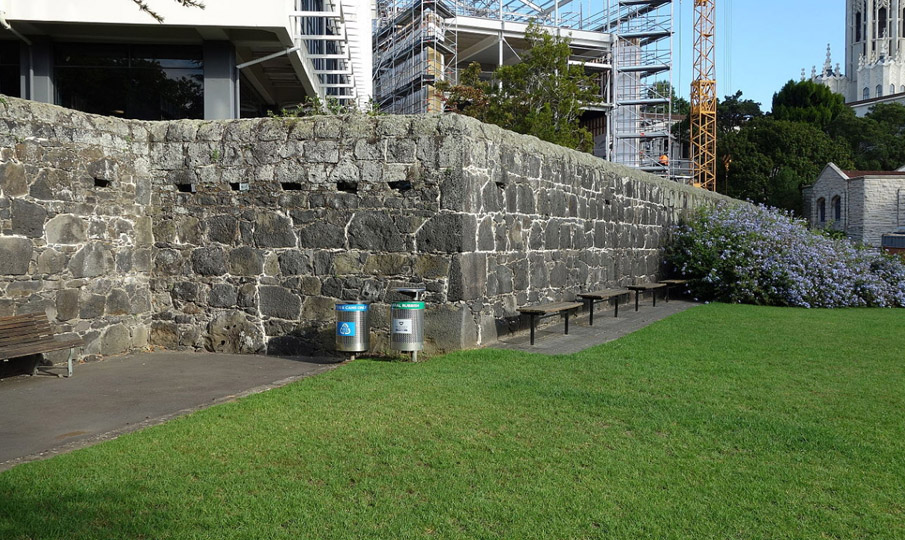
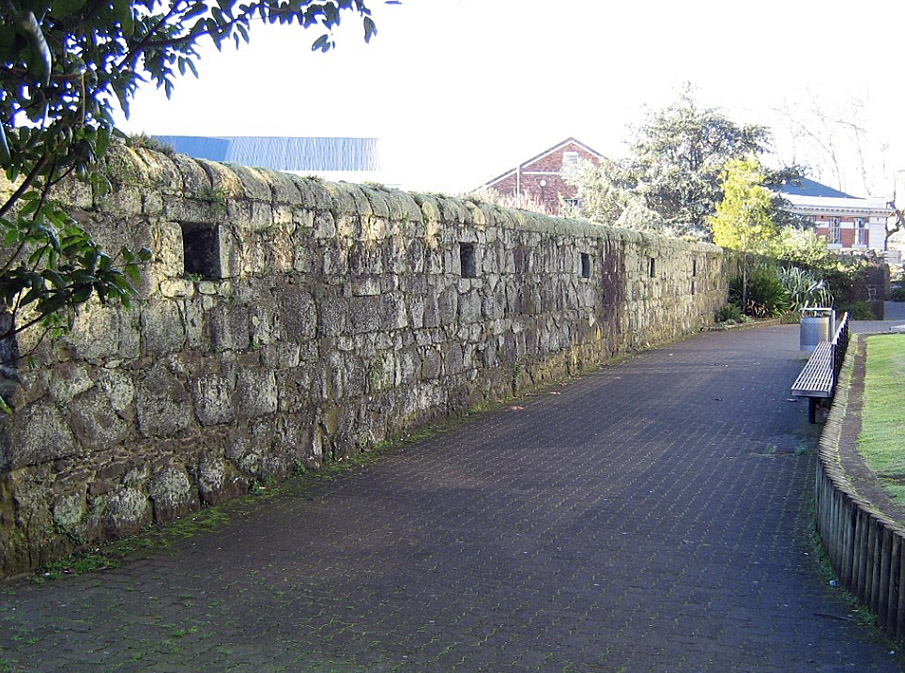
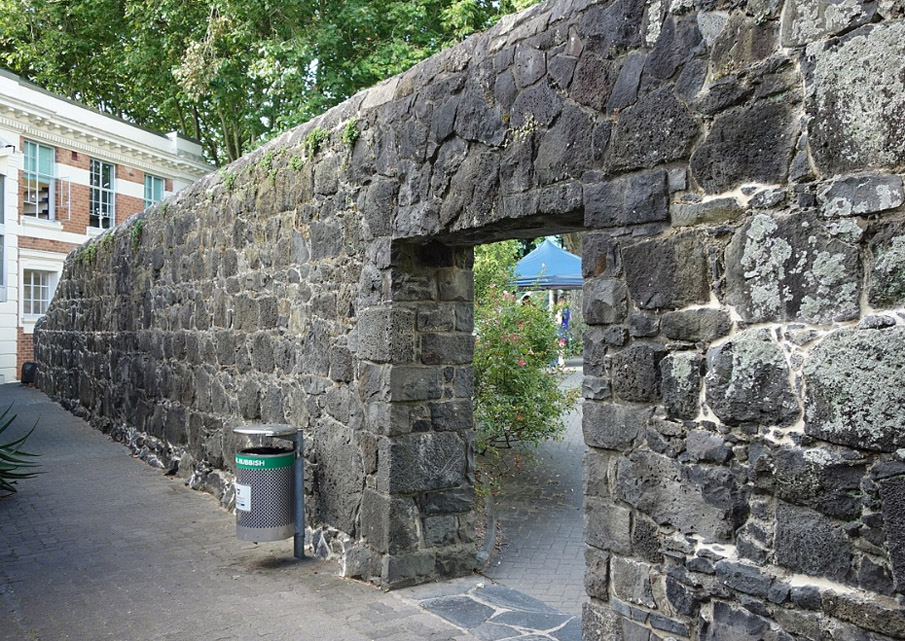
Surviving to a length of some 85 m and to its full original height, the wall is the only standing remnant of the barracks site. It consists of large basalt masonry bonded with lime mortar, and contains small rectangular apertures - gun loops - at regular intervals, including several in a flanking angle to provide flanking fire. Largely dismantled after the barracks were abandoned in 1870, the existing length of wall was retained as a property boundary to the garden of the former Government House. Its recognition as an historic monument had occurred by 1915, when the Auckland Civic League erected a plaque commemorating the contribution made by Maori to its construction. This was installed when many Maori soldiers were fighting alongside Pakeha on behalf of the British Empire in the First World War. A further part of the wall was demolished for the construction of the former University Arts Building in the 1920s, and the plaque damaged during land rights protests fifty years later. It was removed before 1984, when the surviving section of wall was restored by the University of Auckland.
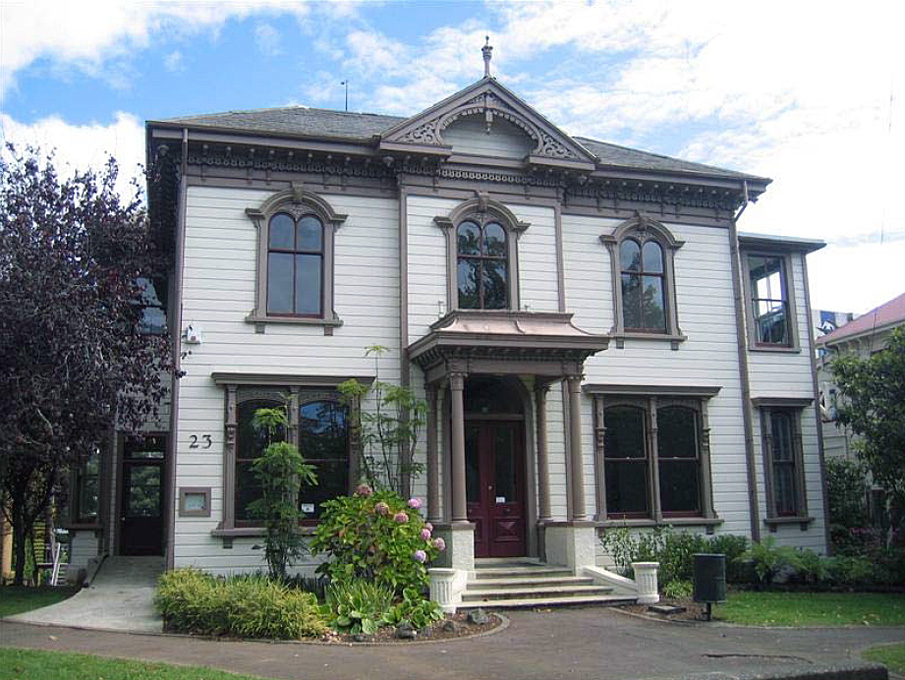
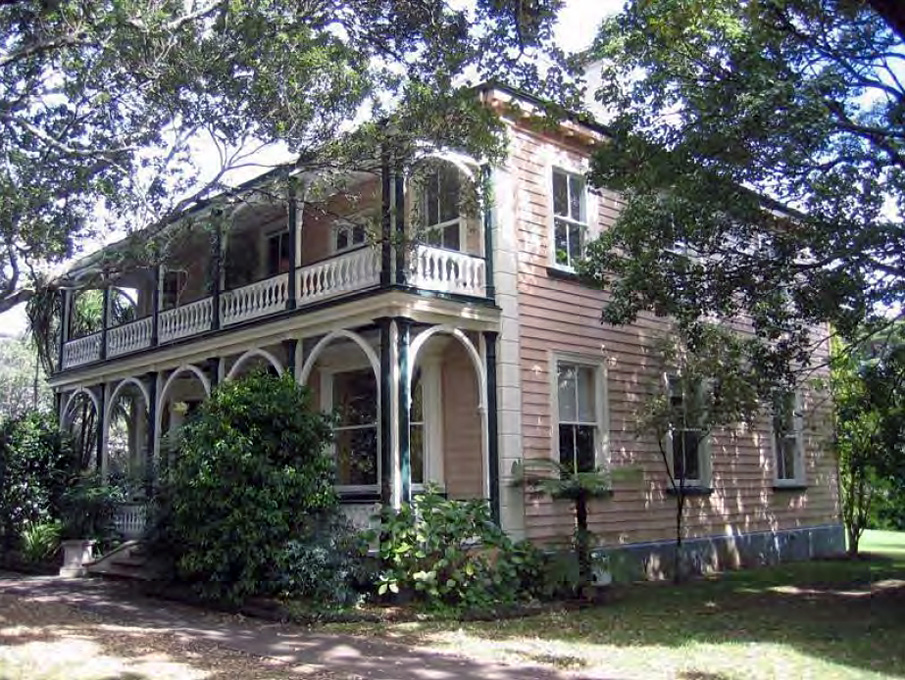
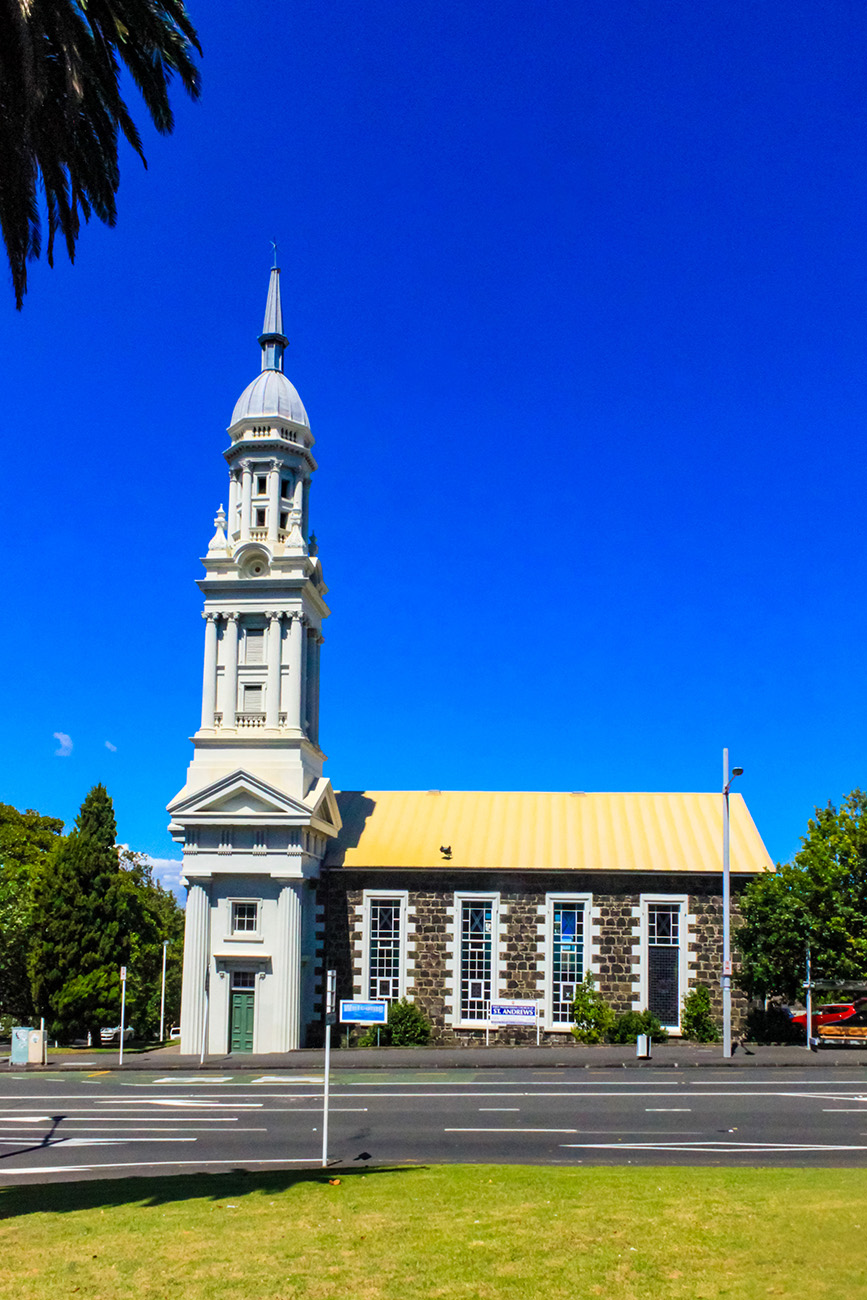
The Albert Barracks Wall has national and international significance as the oldest intact stretch of British military architecture in New Zealand, reflecting mid-nineteenth century ideas on defence and the garrisoning of military personnel. It is an important reminder of the role played by British troops in the colonisation of the country, including their contribution to the economy and social life of the early capital. It is of considerable value for its association with relationships between Maori and Pakeha, both during the early colonial period and in later years. The wall is significant as the oldest stone structure known to survive in central Auckland, and as an early example of a recognised historic monument. The structure is additionally important as part of a wider historical and archaeological landscape, being associated with other early colonial buildings in the Symonds Street and Princes Street area, including St Andrew's Church and the former Government House.