

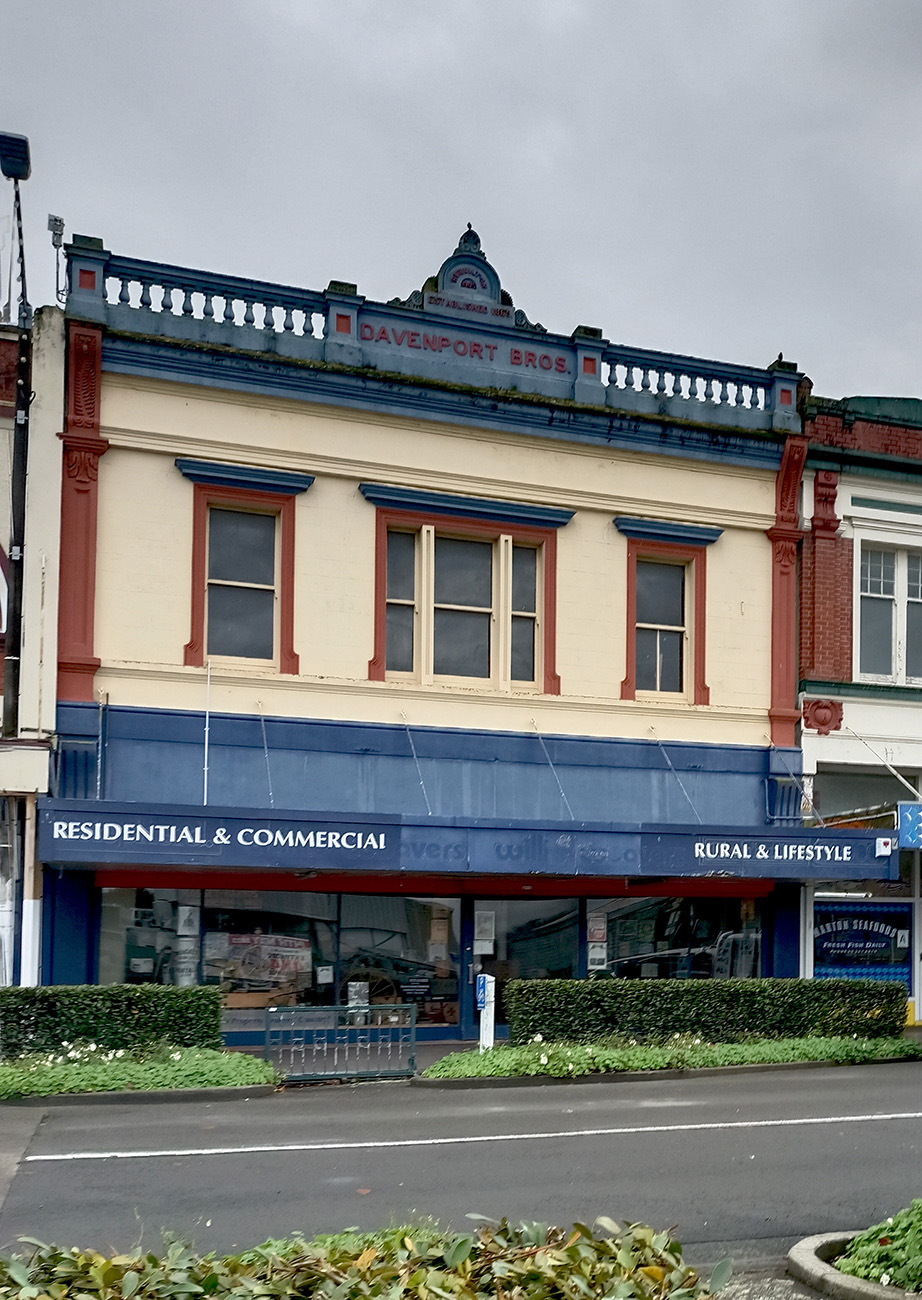
The building was constructed for storekeeper brothers, Samuel Johnson (1858-1931) and German Morton (1863-1934) Davenport, who purchased the property in 1895. There had been a shop on the site from 1868, and in 1905 the Davenports added a two storey brick building at the northeast of their site (312 Broadway). From their premises they sold general household merchandise, clothing, and groceries. In mid 1913 they expanded their holdings by building a larger commercial building occupying the corner site on the remainder of the land, and abutting the 1905 building.
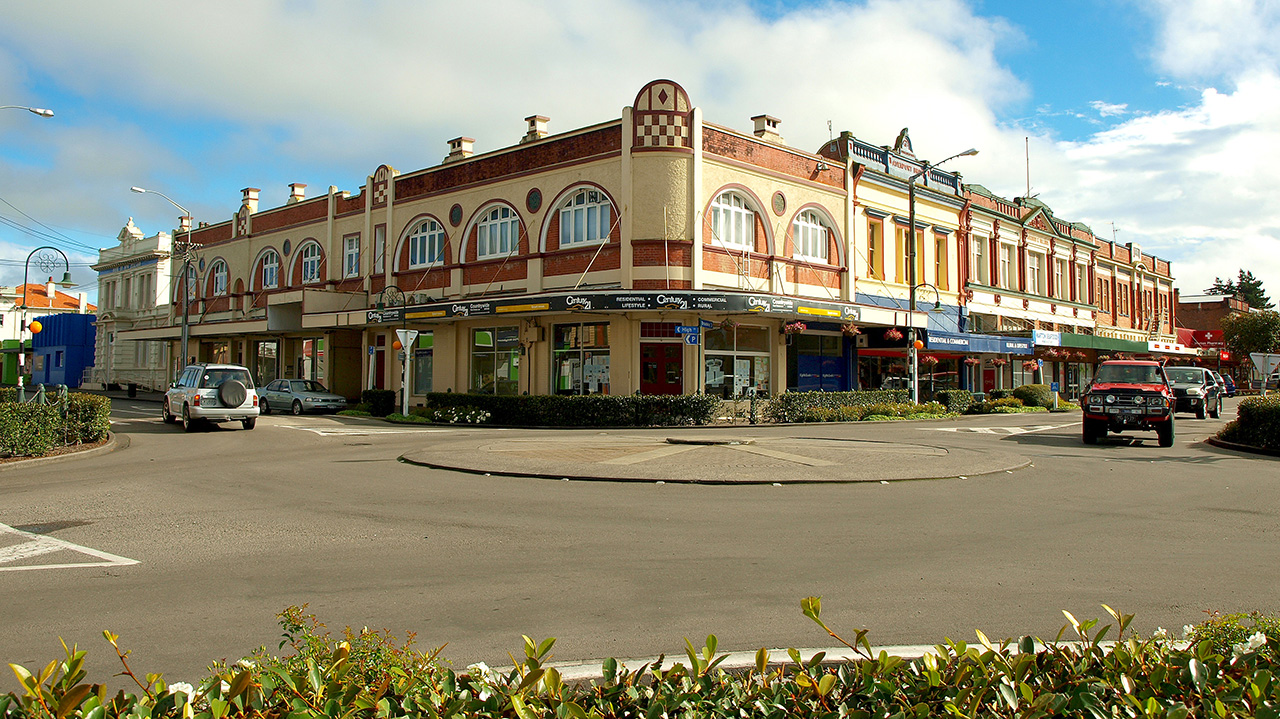
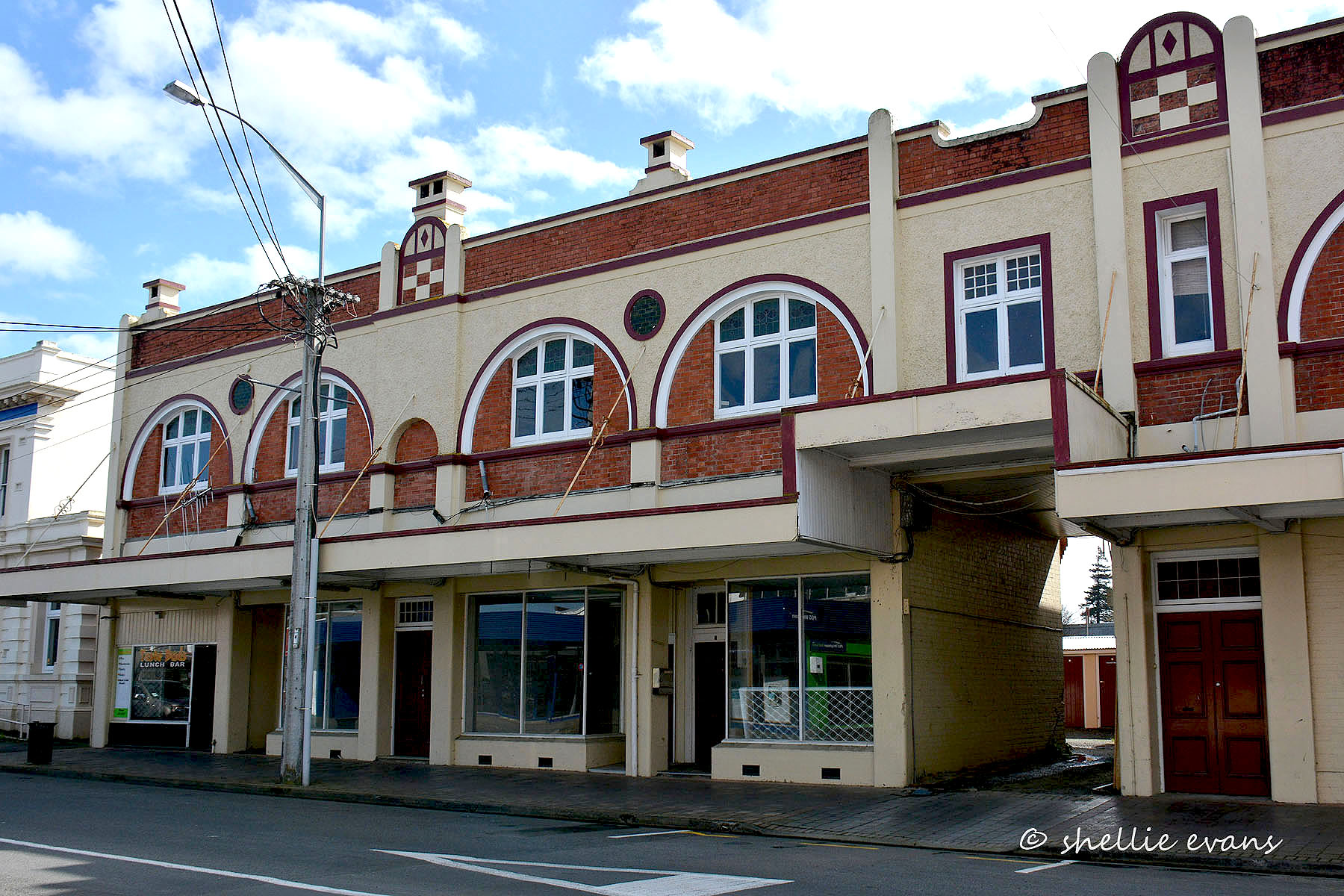
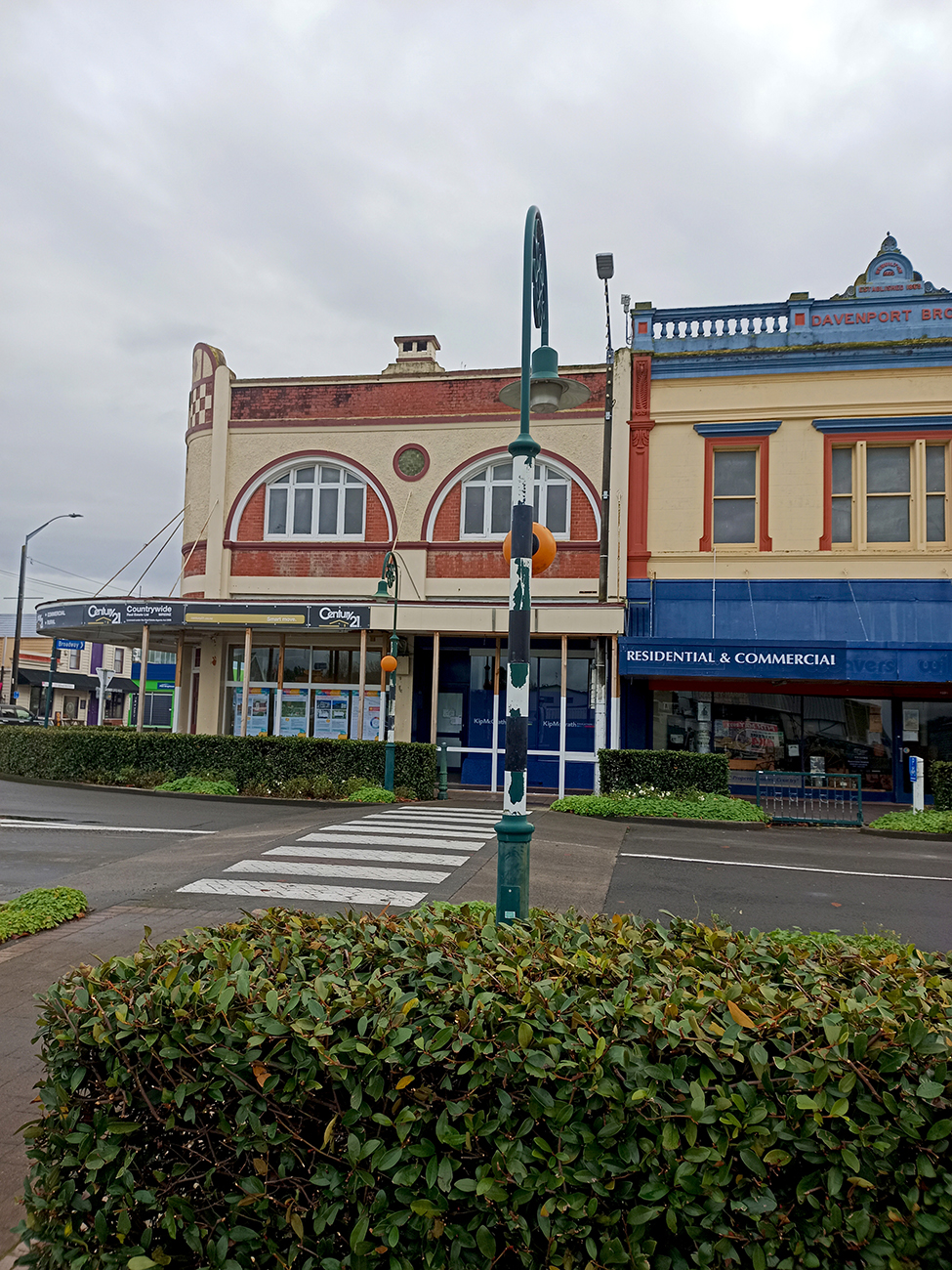
Constructed in two stages - the Broadway and High Street corner first and then extending further along High Street - the building was completed by early 1914. There were different construction companies for the two sections: local company Haddock and Hassell were followed by well-known Wanganui builders, Russell and Bignell. The building was designed with six ground level shops and offices and Marton Cosmopolitan Club rooms upstairs. The upper façade is two-toned with concrete areas referencing a Classical arcade, complete with spandrels, and above is a plain brick parapet punctuated by a corner arched pediment and two smaller equivalents on High Street. The arcade’s pilasters carry through to the concrete lower level and large shop display windows and accessways are interspersed between them. The verandahs were part of Hood’s design and had areas of green tilework below.
Hood, just beginning his career, was on the way to becoming a notable and longstanding local architect. At this stage he was Feilding-based, but later moved to Palmerston North where he designed buildings such as the Coronation Building (1937) and Broadway Chambers (1936) in central Palmerston North, the Feilding Jockey Club (List no. 1223), as well as many other Manawatu and Rangitikei commercial and residential buildings.
The Cosmopolitan Club formed at the same time as the Davenport Building was being planned, and the second stage of the building project was designed with their needs in mind. At some stage after the Club vacated in 1924 part of the upper level spaces were converted into flats. The Davenports owned the building until 1948 when it was sold to Marjorie Maude, who in turn owned the property for nearly three decades. Over the twentieth century various changes were made to interior of the building, as well as some shop-front alterations.
List Entry Information
Status
Listed
List Entry Status
Historic Place Category 2
Access
Private/No Public Access
List Number
1243
Date Entered
2nd July 1982
Date of Effect
2nd July 1982
City/District Council
Rangitīkei District
Region
Horizons (Manawatū-Whanganui) Region
Extent of List Entry
Extent includes the land described as Pt Lot 1 AP 3126 and Lot 2 DP 6521 (RT WN550/60), Wellington Land District and the building known as Davenport Building thereon.
Legal description
Pt Lot 1 AP 3126 and Lot 2 DP 6521 (RT WN550/60), Wellington Land District [Note: the RT cites the appellation as 'Pt Sec 17 Rangitikei Agricultural Reserve and being Lot 2 DP 6521 and being Pt Lot 1 AP 3126']
Status
Listed
List Entry Status
Historic Place Category 2
Access
Private/No Public Access
List Number
1243
Date Entered
2nd July 1982
Date of Effect
2nd July 1982
City/District Council
Rangitīkei District
Region
Horizons (Manawatū-Whanganui) Region
Extent of List Entry
Extent includes the land described as Pt Lot 1 AP 3126 and Lot 2 DP 6521 (RT WN550/60), Wellington Land District and the building known as Davenport Building thereon.
Legal description
Pt Lot 1 AP 3126 and Lot 2 DP 6521 (RT WN550/60), Wellington Land District [Note: the RT cites the appellation as 'Pt Sec 17 Rangitikei Agricultural Reserve and being Lot 2 DP 6521 and being Pt Lot 1 AP 3126']
Construction Professional
Name
Hood, Robin
Type
Architect
Biography
Robin Hood was born in Dunedin in 1885 and then moved to the Manawatu around 1908. He was an architect based in Feilding from 1908 - 1920, and then in Palmerston North from 1920 - 1950. Among his known designs are the office building for future mayor Edmund Goodbehere at 71 Kimbolton St, Feilding.
Name
Russell & Bignell
Type
Builder
Biography
No biography is currently available for this construction professional
Name
Haddock and Hassell
Type
Builder
Biography
No biography is currently available for this construction professional
Construction Details
Type
Original Construction
Description
Portion of the building fronting Broadway constructed
Period
mid-1913
Type
Addition
Description
Portion of the building fronting High Street constructed
Period
late-1913
Start Year
1972
Type
Modification
Description
Part of first floor converted to flats
Notable Features
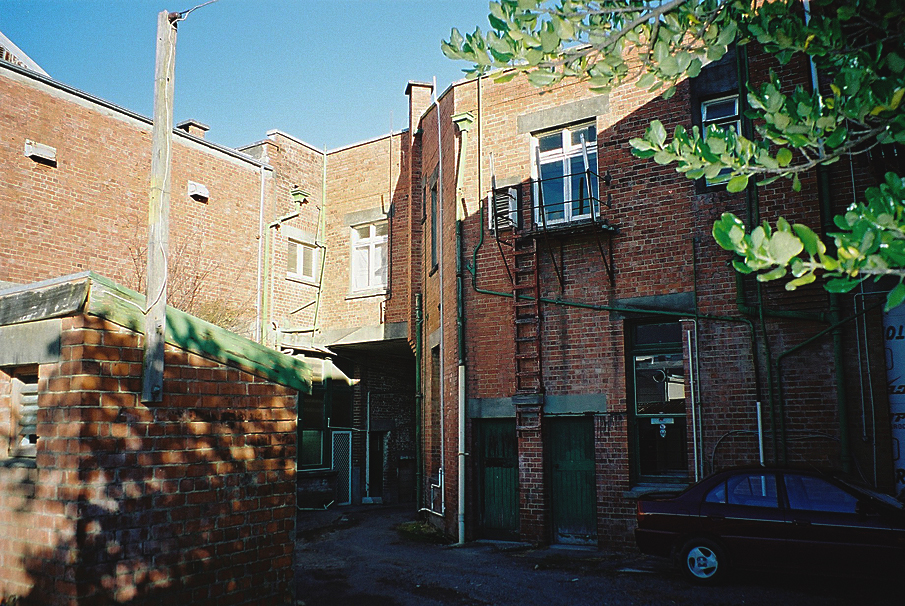
Elements comprising the street elevations are the most significant including: brickwork rough cast cement render tiled roundels tiled shopfronts timber window and door joinery stained glass timber framed verandah with metal supports pressed metal ceilings over shop entries concrete and brick chimneys Although not visible from the street the rear elevations, toilet block and roof are also of significance.
Construction Professional
Name
Hood, Robin
Type
Architect
Biography
Robin Hood was born in Dunedin in 1885 and then moved to the Manawatu around 1908. He was an architect based in Feilding from 1908 - 1920, and then in Palmerston North from 1920 - 1950. Among his known designs are the office building for future mayor Edmund Goodbehere at 71 Kimbolton St, Feilding.
Name
Russell & Bignell
Type
Builder
Biography
No biography is currently available for this construction professional
Name
Haddock and Hassell
Type
Builder
Biography
No biography is currently available for this construction professional
Construction Details
Type
Original Construction
Description
Portion of the building fronting Broadway constructed
Period
mid-1913
Type
Addition
Description
Portion of the building fronting High Street constructed
Period
late-1913
Start Year
1972
Type
Modification
Description
Part of first floor converted to flats
Notable Features
Elements comprising the street elevations are the most significant including: brickwork rough cast cement render tiled roundels tiled shopfronts timber window and door joinery stained glass timber framed verandah with metal supports pressed metal ceilings over shop entries concrete and brick chimneys Although not visible from the street the rear elevations, toilet block and roof are also of significance.
Historical and Associated Iwi / Hapū / Whānau
Completion Date
31st July 2014
Report Written By
Karen Astwood
Other Information
This place was identified as significant under previous legislation with different information requirements. It remains significant under the current legislation. There is opportunity under our legislation and policies to add to this information. Further information about this place may be available from the Central Regional Office of Heritage New Zealand Pouhere Taonga. A fully referenced upgrade report is available on request from the Central Regional Office of Heritage New Zealand. Please note that entry on the New Zealand Heritage List/Rarangi Korero identifies only the heritage values of the property concerned, and should not be construed as advice on the state of the property, or as a comment of its soundness or safety, including in regard to earthquake risk, safety in the event of fire, or insanitary conditions.
Historical and Associated Iwi / Hapū / Whānau
Completion Date
31st July 2014
Report Written By
Karen Astwood
Other Information
This place was identified as significant under previous legislation with different information requirements. It remains significant under the current legislation. There is opportunity under our legislation and policies to add to this information. Further information about this place may be available from the Central Regional Office of Heritage New Zealand Pouhere Taonga. A fully referenced upgrade report is available on request from the Central Regional Office of Heritage New Zealand. Please note that entry on the New Zealand Heritage List/Rarangi Korero identifies only the heritage values of the property concerned, and should not be construed as advice on the state of the property, or as a comment of its soundness or safety, including in regard to earthquake risk, safety in the event of fire, or insanitary conditions.
Current Usages
Uses: Trade
Specific Usage: Office building/Offices
Uses: Trade
Specific Usage: Shop
Former Usages
General Usage: Accommodation
Specific Usage: Complex of flats
General Usage: Civic Facilities
Specific Usage: Club rooms/building
Current Usages
Uses: Trade
Specific Usage: Office building/Offices
Uses: Trade
Specific Usage: Shop
Former Usages
General Usage: Accommodation
Specific Usage: Complex of flats
General Usage: Civic Facilities
Specific Usage: Club rooms/building
Location
Stay up to date with Heritage this month
