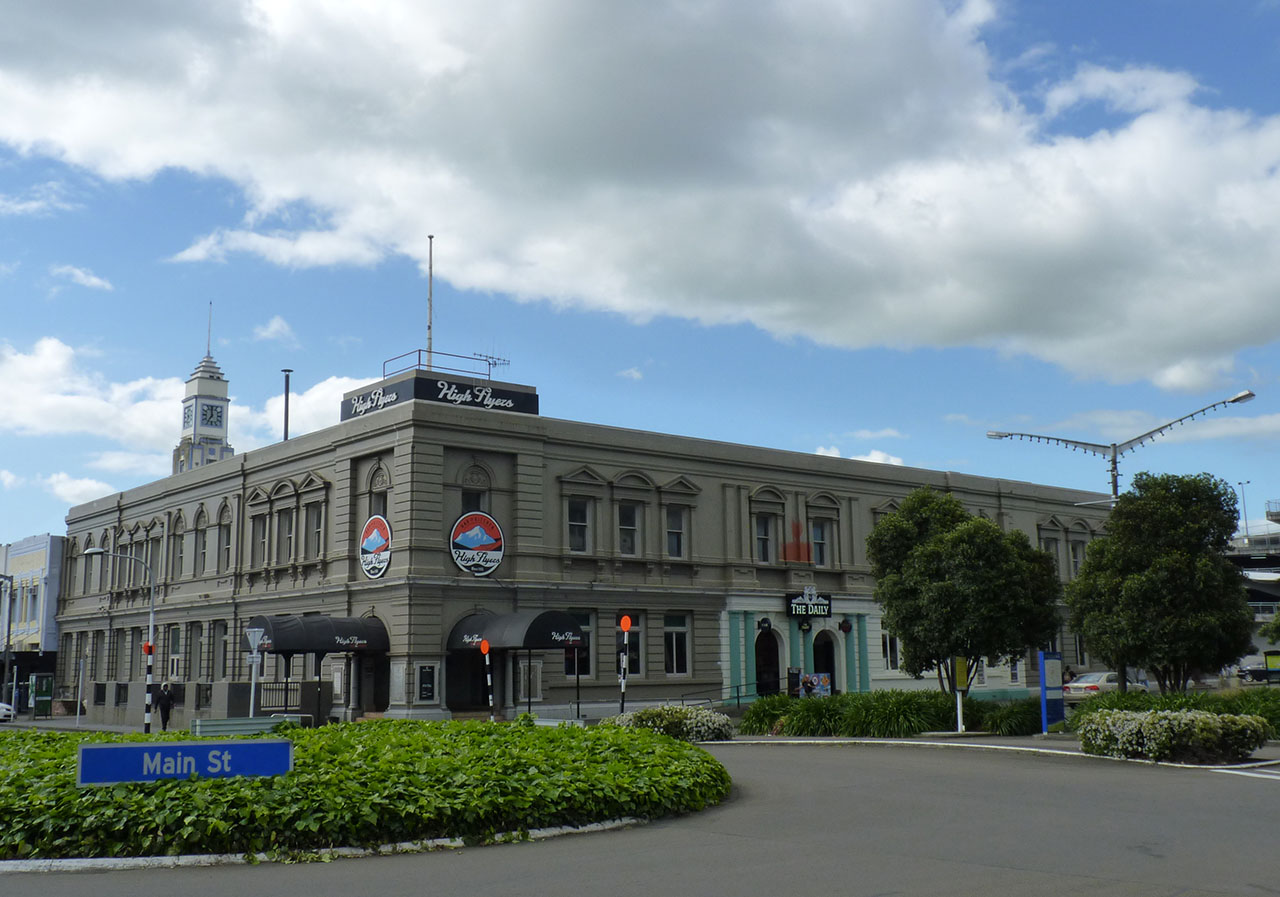
Built in 1905 on a prominent location on The Square in Palmerston North, the former Chief Post Office is a significant work by architect Joshua Charlesworth and remains a landmark building that reflects the city’s importance in the region.
Palmerston North’s first purpose-built post office was located in a modest, single-story structure in The Square from 1875. Telegraphic communication was opened between Palmerston North and Foxton in 1875, resulting in a telegraph station installed at the post office. Within five years, this building’s facilities were too small and in 1880 the Post Office moved to the railway station. In the same year, the telegraph line was extended through the Manawatu Gorge, placing Palmerston North in contact with towns as far north as Russell and as far south as Bluff. Nine years later, in 1889, a new, wooden post office was built on the corner of Main Street and The Square. This building remained in service until the turn of the century when the population growth of Palmerston North meant another new and much larger building was needed. The Wairarapa Daily Times reported that there was such growth in correspondence posted and delivered, considerable increase of postal and telegraph revenue and the continued growth of business and the changes involved in the working arrangements had necessitated a new building at Palmerston North.
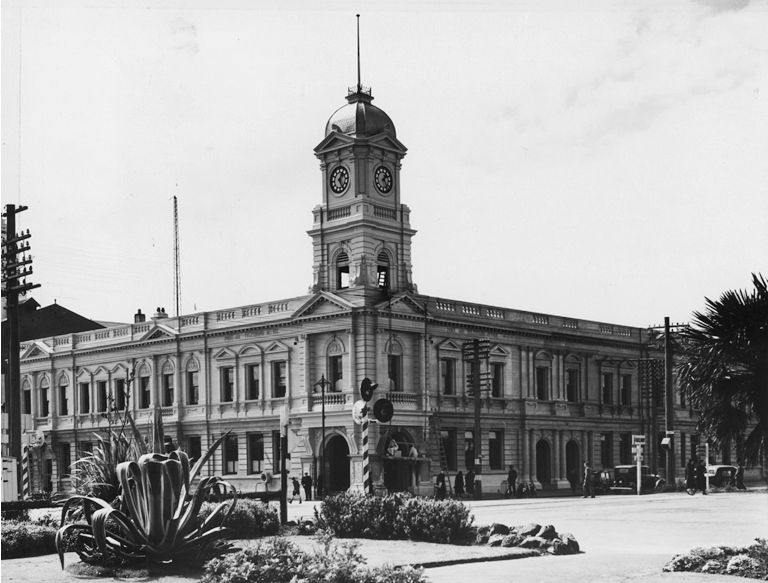
Work on the new post office began in 1905. It occupied the site of the former 1889 post office, which was moved further down Main Street to accommodate the new building. It was designed by Joshua Charlesworth an architect who designed many institutional buildings including the Wellington Town Hall (1901) and seventeen branch banks for the Bank of New Zealand. Charlesworth was a life member and vice-president (1909-10) of the New Zealand Institute of Architects. The style of the new post office was Edwardian Baroque; the building displaying typical features such as an asymmetrical tower, under which is a loggia, Classical string course, parapets, cornices and windows with pedimented head. The prominent feature of the tower was the four-faced clock with chimes which was named after a Rangitane chief, Kerei te Panau. The building was opened in February 1906 by Sir Joseph Ward in the presence of a large crowd. Sir Joseph Ward stated that the construction of buildings like the Post Office reflected the ‘the very solid progress that continued to be made in Palmerston North’. Palmerston North had reached a population of ‘fifty or sixty thousand’ at the time and reference was made in Sir Joseph Ward’s speech to his and others’ expectation that the city (and the Post Office) would continue to grow.
Sir Joseph Ward’s expectations were soon met. In the early 1920s and again in 1937 the building was extended towards Broadway and up Main Street, the architectural features of the additions largely matched the original. By 1925 the Palmerston North Post Office was proclaimed to be ranked as a ‘chief post office’, with the district now covered by the new chief office extended from Manakau in the south, to Bulls and Greatford in the north, to Akitio in the west and Dannevirke in the north-east.
Following an earthquake in 1942 the buildings principal feature, the tower, was removed, along with other substantial embellishments to the facade. The Post Office tower had quickly became a favoured position for photographers to take panoramas of the flat city and had featured in many photographs of Palmerston North’s inner city. Funded by a bequest from local businessman and philanthropist Arthur Hopwood, the tower clock and chimes were housed in a new clock tower erected in The Square in 1957.
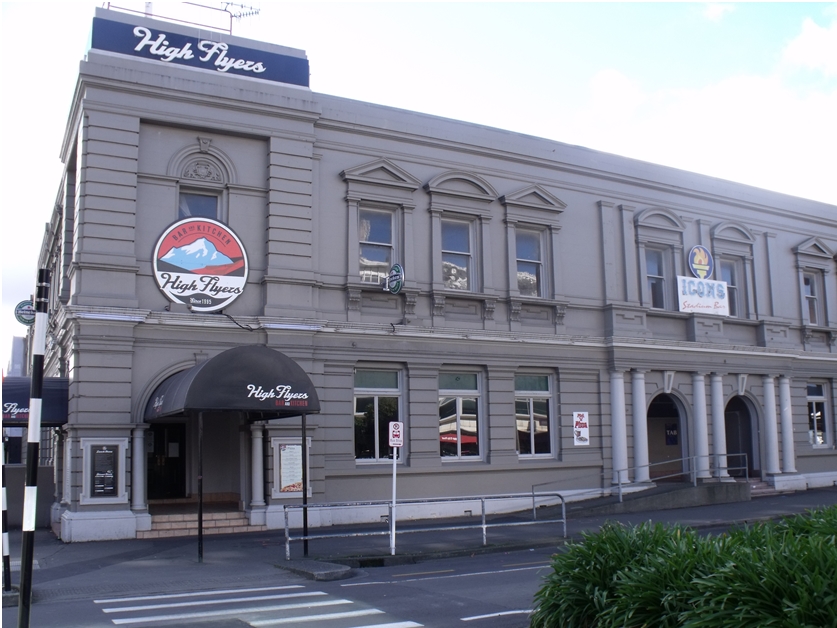
The building served as the city’s main post office until 1988, when the public postal system was corporatized. The building is currently used as a restaurant and bar and has seen the addition of two new exterior doors at the front of building to provide access to and from a new outdoor decking area.
The former Chief Post Office continues to dominate the eastern side of The Square and remains a significant landmark in Palmerston North. Its imposing appearance reflects the importance of the postal service as a state-run network for public welfare and communication and its former role as centre for regional communication. It has historical associations with the New Zealand Postal Service, and is a significant example of the work of architect Joshua Charlesworth.
Palmerston North’s first purpose-built post office was located in a modest, single-story structure in The Square from 1875. Telegraphic communication was opened between Palmerston North and Foxton in 1875, resulting in a telegraph station installed at the post office. Within five years, this building’s facilities were too small and in 1880 the Post Office moved to the railway station. In the same year, the telegraph line was extended through the Manawatu Gorge, placing Palmerston North in contact with towns as far north as Russell and as far south as Bluff. Nine years later, in 1889, a new, wooden post office was built on the corner of Main Street and The Square. This building remained in service until the turn of the century when the population growth of Palmerston North meant another new and much larger building was needed. The Wairarapa Daily Times reported that there was such growth in correspondence posted and delivered, considerable increase of postal and telegraph revenue and the continued growth of business and the changes involved in the working arrangements had necessitated a new building at Palmerston North.
Work on the new post office began in 1905. It occupied the site of the former 1889 post office, which was moved further down Main Street to accommodate the new building. It was designed by Joshua Charlesworth an architect who designed many institutional buildings including the Wellington Town Hall (1901) and seventeen branch banks for the Bank of New Zealand. Charlesworth was a life member and vice-president (1909-10) of the New Zealand Institute of Architects. The style of the new post office was Edwardian Baroque; the building displaying typical features such as an asymmetrical tower, under which is a loggia, Classical string course, parapets, cornices and windows with pedimented head. The prominent feature of the tower was the four-faced clock with chimes which was named after a Rangitane chief, Kerei te Panau. The building was opened in February 1906 by Sir Joseph Ward in the presence of a large crowd. Sir Joseph Ward stated that the construction of buildings like the Post Office reflected the ‘the very solid progress that continued to be made in Palmerston North’. Palmerston North had reached a population of ‘fifty or sixty thousand’ at the time and reference was made in Sir Joseph Ward’s speech to his and others’ expectation that the city (and the Post Office) would continue to grow.
Sir Joseph Ward’s expectations were soon met. In the early 1920s and again in 1937 the building was extended towards Broadway and up Main Street, the architectural features of the additions largely matched the original. By 1925 the Palmerston North Post Office was proclaimed to be ranked as a ‘chief post office’, with the district now covered by the new chief office extended from Manakau in the south, to Bulls and Greatford in the north, to Akitio in the west and Dannevirke in the north-east.
Following an earthquake in 1942 the buildings principal feature, the tower, was removed, along with other substantial embellishments to the facade. The Post Office tower had quickly became a favoured position for photographers to take panoramas of the flat city and had featured in many photographs of Palmerston North’s inner city. Funded by a bequest from local businessman and philanthropist Arthur Hopwood, the tower clock and chimes were housed in a new clock tower erected in The Square in 1957.
The building served as the city’s main post office until 1988, when the public postal system was corporatized. The building is currently used as a restaurant and bar and has seen the addition of two new exterior doors at the front of building to provide access to and from a new outdoor decking area.
The former Chief Post Office continues to dominate the eastern side of The Square and remains a significant landmark in Palmerston North. Its imposing appearance reflects the importance of the postal service as a state-run network for public welfare and communication and its former role as centre for regional communication. It has historical associations with the New Zealand Postal Service, and is a significant example of the work of architect Joshua Charlesworth.