Quick links


Quick links
Quick links
Quick links
Quick links
Quick links
Orsini's Restaurant (Former)
201 Cuba Street, Te Aro, WELLINGTON
Private
Historic Place Category 2
List No. 1412
Quick links:
List GalleryLocationDetails
201 Cuba Street, Te Aro, WELLINGTON
Private
Historic Place Category 2
List No. 1412
List Entry Information
Status
Listed
List Entry Status
Historic Place Category 2
Access
Private/No Public Access
List Number
1412
Date Entered
25th November 1982
Date of Effect
25th November 1982
City/District Council
Wellington City
Region
Wellington Region
Extent of List Entry
Extent includes the land described as Pt Sec 128 City of Wellington (RT WN115/37), Wellington Land District, and the building known as Orsini’s Restaurant (Former) thereon.
Legal description
Pt Sec 128 City of Wellington (RT WN115/37), Wellington Land District
Status
Listed
List Entry Status
Historic Place Category 2
Access
Private/No Public Access
List Number
1412
Date Entered
25th November 1982
Date of Effect
25th November 1982
City/District Council
Wellington City
Region
Wellington Region
Extent of List Entry
Extent includes the land described as Pt Sec 128 City of Wellington (RT WN115/37), Wellington Land District, and the building known as Orsini’s Restaurant (Former) thereon.
Legal description
Pt Sec 128 City of Wellington (RT WN115/37), Wellington Land District
Construction Professional
Name
McKay and MacGregor
Type
Architectural Partnership
Biography
Name
J Moffat
Type
Builder
Biography
Construction Details
Start Year
1958
Type
Modification
Description
Conversion to restaurant
Start Year
1962
Type
Addition
Description
Addition to building at back.
Start Year
1966
Type
Modification
Start Year
1997
Type
Modification
Description
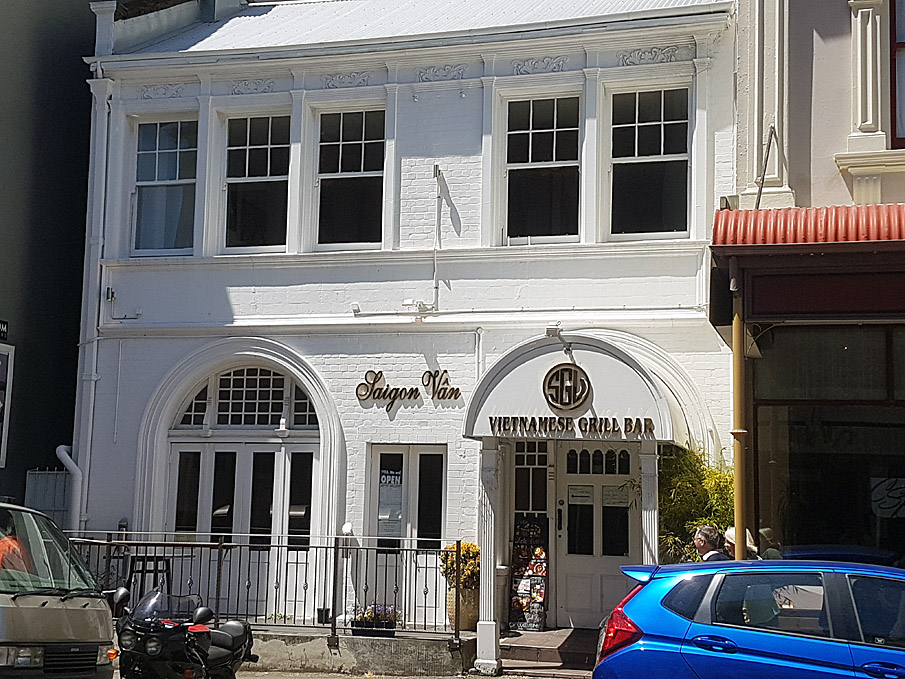
Conversion of arch-headed window to French doors and addition of modern square door to centre of façade. Construction of picket fence around yard.
Start Year
2003
Type
Refurbishment/renovation
Description
Restaurant Refit
Start Year
2008
Type
Refurbishment/renovation
Description
Restaurant Refit
Type
Modification
Description
High crude brick fence constructed around yard.
Start Year
2010
Type
Modification
Description
Brick fence replaced with wrought-iron fencing.
Start Year
1901
startYearCirca
Type
Original Construction
Description
Stripped classical
Construction Materials
Brick (plastered); two storey
Notable Features
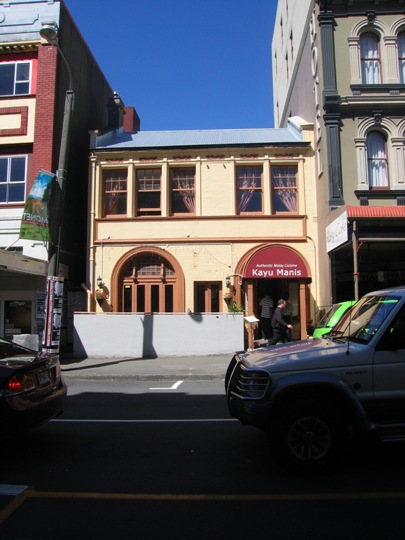
Double-hung sash windows , frieze with a simple decorative moulding at the top of the façade
Construction Professional
Name
McKay and MacGregor
Type
Architectural Partnership
Biography
Name
J Moffat
Type
Builder
Biography
Construction Details
Start Year
1958
Type
Modification
Description
Conversion to restaurant
Start Year
1962
Type
Addition
Description
Addition to building at back.
Start Year
1966
Type
Modification
Start Year
1997
Type
Modification
Description
Conversion of arch-headed window to French doors and addition of modern square door to centre of façade. Construction of picket fence around yard.
Start Year
2003
Type
Refurbishment/renovation
Description
Restaurant Refit
Start Year
2008
Type
Refurbishment/renovation
Description
Restaurant Refit
Type
Modification
Description
High crude brick fence constructed around yard.
Start Year
2010
Type
Modification
Description
Brick fence replaced with wrought-iron fencing.
Start Year
1901
startYearCirca
Type
Original Construction
Description
Stripped classical
Construction Materials
Brick (plastered); two storey
Notable Features
Double-hung sash windows , frieze with a simple decorative moulding at the top of the façade
Historical and Associated Iwi / Hapū / Whānau
Completion Date
12th July 2024
Report Written By
Brie Gullery
Information Sources
Clayton, Fowler and Kennedy, 1980
Pauline Clayton, Michael Fowler and Jeff Kennedy, Eating Houses in Wellington, Anchor Communications Ltd, Wellington, 1980, p. 8-11. Accessed via Wellington City Recollect, https://wellington.recollect.co.nz/nodes/view/8928
Wellington City Council, Jun 2012
Wellington City Council, ‘Downes Building (Former)’ Heritage Inventory Report, Jun 2012, https://www.wellingtoncityheritage.org.nz/buildings/1-150/89-2-downes-building?q=.
Other Information
This place was identified as significant under previous legislation with different information requirements. It remains significant under the current legislation. There is opportunity under our legislation and policies to add to this information. Further information about this place may be available from the Central Regional Office of Heritage New Zealand Pouhere Taonga. A fully referenced copy of the Upgrade Report is available upon request from the Central Regional Office of Heritage New Zealand Pouhere Taonga Disclaimer Please note that entry on the New Zealand Heritage List/Rarangi Korero identifies only the heritage values of the property concerned, and should not be construed as advice on the state of the property, or as a comment of its soundness or safety, including in regard to earthquake risk, safety in the event of fire, or insanitary conditions. Archaeological sites are protected by the Heritage New Zealand Pouhere Taonga Act 2014, regardless of whether they are entered on the New Zealand Heritage List/Rarangi Korero or not. Archaeological sites include ‘places associated with pre-1900 human activity, where there may be evidence relating to the history of New Zealand’. This List entry report should not be read as a statement on whether or not the archaeological provisions of the Act apply to the property (s) concerned. Please contact your local Heritage New Zealand office for archaeological advice
Historical and Associated Iwi / Hapū / Whānau
Completion Date
12th July 2024
Report Written By
Brie Gullery
Information Sources
Clayton, Fowler and Kennedy, 1980
Pauline Clayton, Michael Fowler and Jeff Kennedy, Eating Houses in Wellington, Anchor Communications Ltd, Wellington, 1980, p. 8-11. Accessed via Wellington City Recollect, https://wellington.recollect.co.nz/nodes/view/8928
Wellington City Council, Jun 2012
Wellington City Council, ‘Downes Building (Former)’ Heritage Inventory Report, Jun 2012, https://www.wellingtoncityheritage.org.nz/buildings/1-150/89-2-downes-building?q=.
Other Information
This place was identified as significant under previous legislation with different information requirements. It remains significant under the current legislation. There is opportunity under our legislation and policies to add to this information. Further information about this place may be available from the Central Regional Office of Heritage New Zealand Pouhere Taonga. A fully referenced copy of the Upgrade Report is available upon request from the Central Regional Office of Heritage New Zealand Pouhere Taonga Disclaimer Please note that entry on the New Zealand Heritage List/Rarangi Korero identifies only the heritage values of the property concerned, and should not be construed as advice on the state of the property, or as a comment of its soundness or safety, including in regard to earthquake risk, safety in the event of fire, or insanitary conditions. Archaeological sites are protected by the Heritage New Zealand Pouhere Taonga Act 2014, regardless of whether they are entered on the New Zealand Heritage List/Rarangi Korero or not. Archaeological sites include ‘places associated with pre-1900 human activity, where there may be evidence relating to the history of New Zealand’. This List entry report should not be read as a statement on whether or not the archaeological provisions of the Act apply to the property (s) concerned. Please contact your local Heritage New Zealand office for archaeological advice
Current Usages
Uses: Trade
Specific Usage: Restaurant/cafe/tearoom
Former Usages
General Usage: Accommodation
Specific Usage: Boarding/ Guest House
General Usage: Health
Specific Usage: Dentist Surgery/ Dental Clinic
Themes
Rainbow List
Current Usages
Uses: Trade
Specific Usage: Restaurant/cafe/tearoom
Former Usages
General Usage: Accommodation
Specific Usage: Boarding/ Guest House
General Usage: Health
Specific Usage: Dentist Surgery/ Dental Clinic
Themes
Rainbow List
Location
Get the latest heritage news, features and events delivered
straight to your inbox.