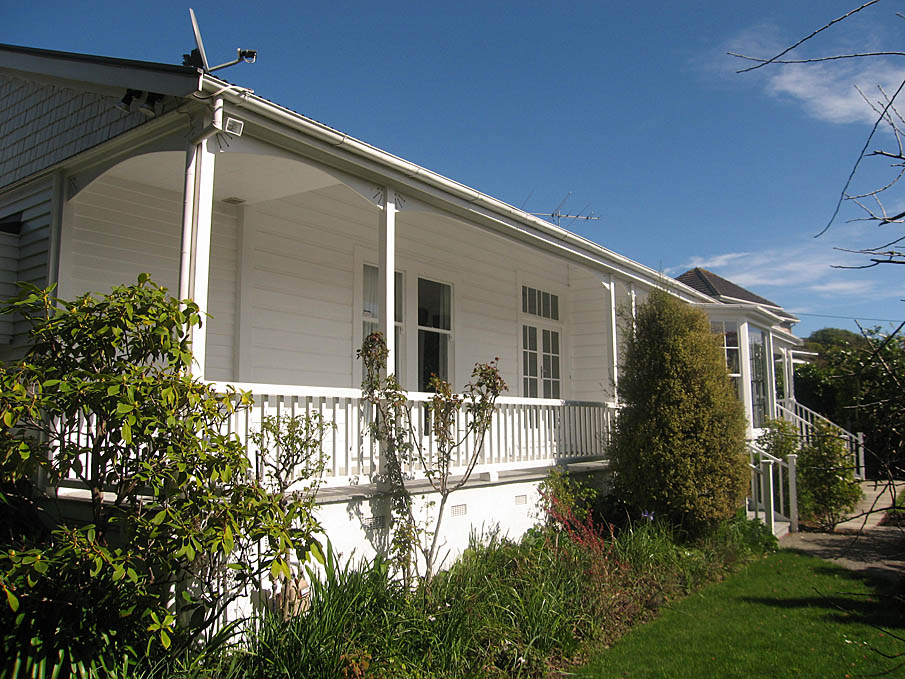
‘Puketiro’, designed by prominent architect Frederick de Jersey Clere for J H Richardson and built in 1896, is among the earliest houses in New Zealand with features common to the Californian Bungalow style. Josephus Richardson, a Government Insurance Commissioner, bought the 3½ acre section in November 1893. The house remained in the Richardson family until 1952. The section was originally part of Section 1, Porirua District owned by Charles Clifford.
The design was unusual and innovative for its time. It has elements of the Californian Bungalow style (the low pitched roofs, veranda, plain decoration, and wooden shingles in the gable ends). It does not have a central passage down the middle of the house and also lacks the exuberant decoration of the Victorian villa. It is of timber construction – totara weatherboards with rimu linings and matai floors. Clere’s ecclesiastic influence was evident in the hall with its exposed framework and beaded edged boarding. The house had many features in common with the nearby house designed by Clere and Richmond in 1893 (Register No. 2903).
Substantial changes have been made over the years to the internal layout, especially to the back half of the house. In the 1950s the kitchen was converted to a bathroom and pantry, the study became the kitchen and the outhouse was demolished for a new garage and drive. In 1995 some of the property was subdivided to provide funds for a refurbishment of the house and further alterations were made in 2002, including extending the height of the roof above the second-floor loft. The house is on two levels, with a large attic space accessed via a main staircase behind the entrance hall (added in 2002 – prior to that there was a spiral staircase) and there is also an unusually narrow staircase that is probably original.
Puketiro’s architectural significance comes from its well-known architect (Frederick de Jersey Clere (1856–1952)) and for being among the earliest houses in New Zealand with features of the Californian Bungalow style. Ashford lists architects George Goldsbro and Samuel Hurst Seager as the designers of the first New Zealand bungalows – Goldsbro’s ‘Rothesay’ in Mt Eden Road, Auckland, built in 1897 and Seager’s bungalow in the Cashmere hills, Christchurch, built in 1898 for John MacMillan Brown, university professor (Register No. 3674, Category 1). Puketiro was built slightly earlier than these and while it has double-hung sash windows rather than casement windows (a typical bungalow feature) it nevertheless has other elements of the bungalow style.
The design was unusual and innovative for its time. It has elements of the Californian Bungalow style (the low pitched roofs, veranda, plain decoration, and wooden shingles in the gable ends). It does not have a central passage down the middle of the house and also lacks the exuberant decoration of the Victorian villa. It is of timber construction – totara weatherboards with rimu linings and matai floors. Clere’s ecclesiastic influence was evident in the hall with its exposed framework and beaded edged boarding. The house had many features in common with the nearby house designed by Clere and Richmond in 1893 (Register No. 2903).
Substantial changes have been made over the years to the internal layout, especially to the back half of the house. In the 1950s the kitchen was converted to a bathroom and pantry, the study became the kitchen and the outhouse was demolished for a new garage and drive. In 1995 some of the property was subdivided to provide funds for a refurbishment of the house and further alterations were made in 2002, including extending the height of the roof above the second-floor loft. The house is on two levels, with a large attic space accessed via a main staircase behind the entrance hall (added in 2002 – prior to that there was a spiral staircase) and there is also an unusually narrow staircase that is probably original.
Puketiro’s architectural significance comes from its well-known architect (Frederick de Jersey Clere (1856–1952)) and for being among the earliest houses in New Zealand with features of the Californian Bungalow style. Ashford lists architects George Goldsbro and Samuel Hurst Seager as the designers of the first New Zealand bungalows – Goldsbro’s ‘Rothesay’ in Mt Eden Road, Auckland, built in 1897 and Seager’s bungalow in the Cashmere hills, Christchurch, built in 1898 for John MacMillan Brown, university professor (Register No. 3674, Category 1). Puketiro was built slightly earlier than these and while it has double-hung sash windows rather than casement windows (a typical bungalow feature) it nevertheless has other elements of the bungalow style.
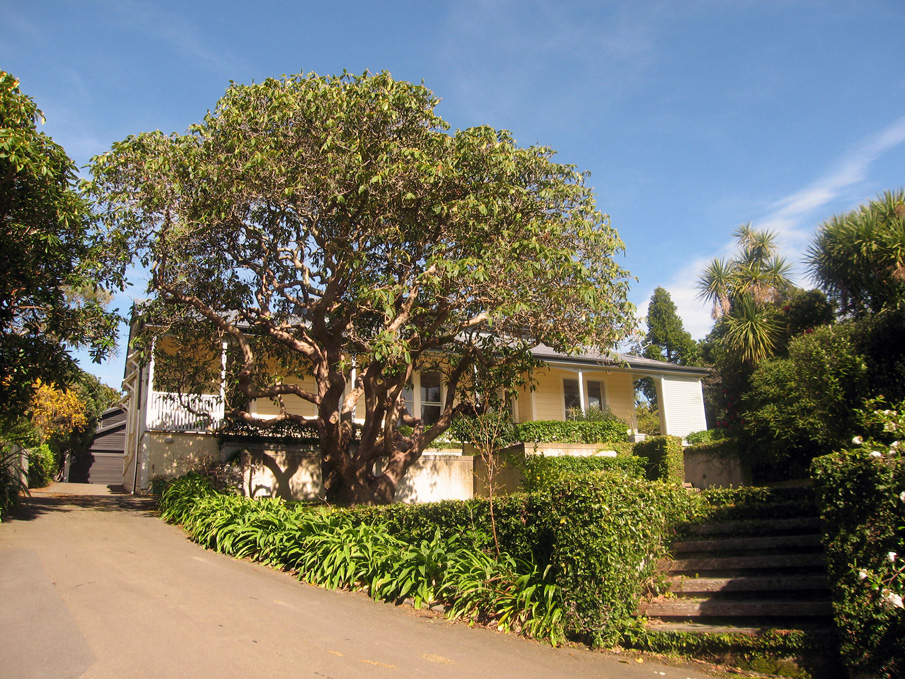
Puketiro | Vivienne Morrell | 05/09/2012 | Heritage New Zealand Pouhere Taonga
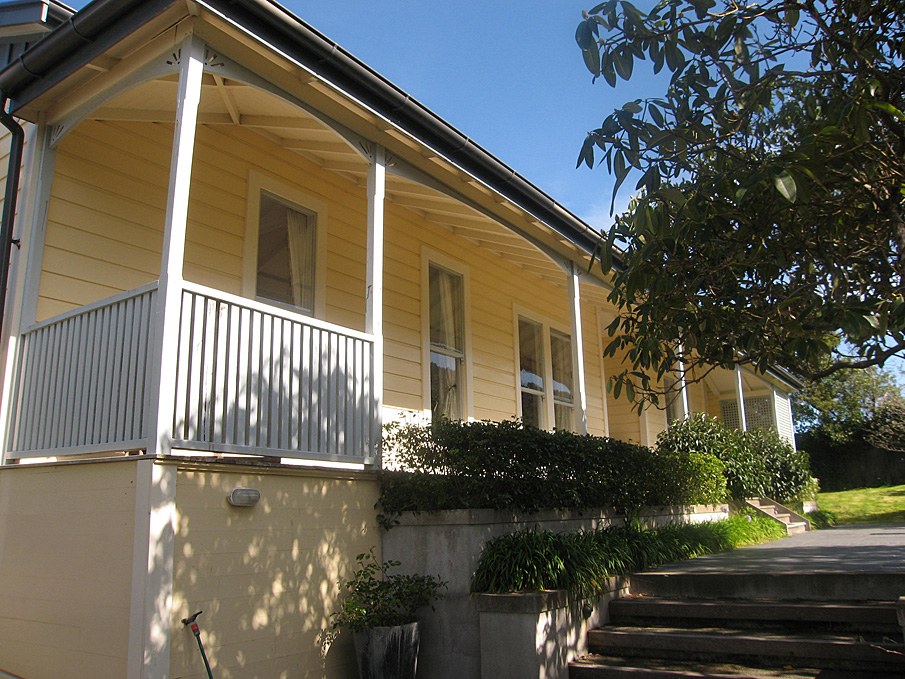
Puketiro | Vivienne Morrell | 05/09/2012 | Heritage New Zealand Pouhere Taonga
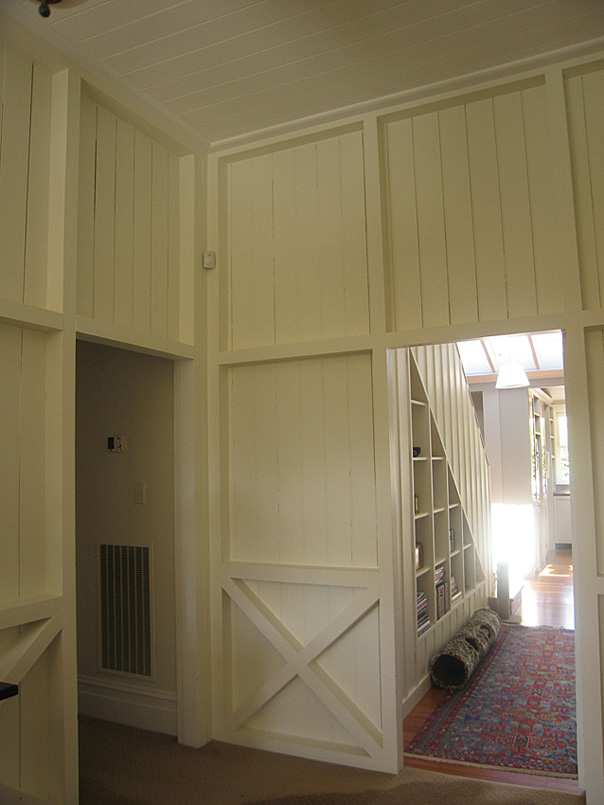
Puketiro. Interior: front hall showing cross-bracing | Vivienne Morrell | 05/09/2012 | Heritage New Zealand Pouhere Taonga
Puketiro | Vivienne Morrell | 05/09/2012 | Heritage New Zealand Pouhere Taonga
Puketiro | Vivienne Morrell | 05/09/2012 | Heritage New Zealand Pouhere Taonga
Puketiro. Interior: front hall showing cross-bracing | Vivienne Morrell | 05/09/2012 | Heritage New Zealand Pouhere Taonga