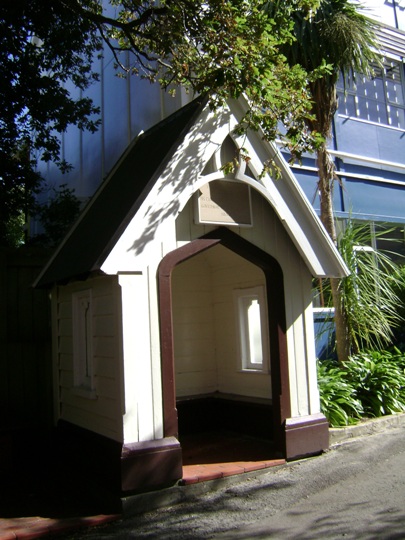
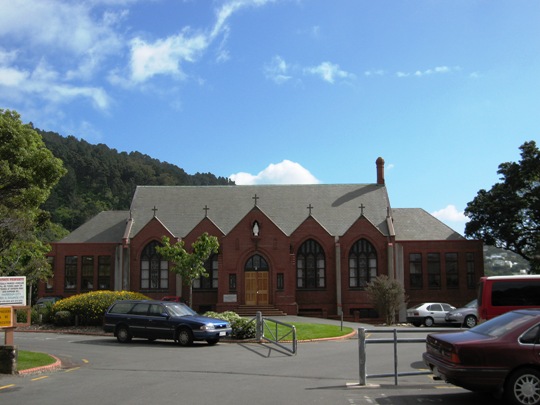
Located within the grounds of the present day St Mary’s College in Thorndon, the shelter porch is all that remains of the former St Joseph’s Providence, a charity school that was founded in 1850 with the intention of providing education for Māori girls. Closely aligned with the Sisters of Mercy, the Providence played both an important role in the history of Roman Catholicism and education in Wellington.
In 1849 the College of Propaganda in Rome resolved a dispute that had arisen in New Zealand between missionaries of the Society of Mary (also known as Marists) and Bishop Jean Baptiste François Pompallier by dividing New Zealand into two dioceses. While the northern diocese would remain centred in Auckland, the new southern diocese was to be administered from Wellington, with the Marist, Philippe Viard as its Vicar Apostolic.
Although the settlement of Wellington had a sizeable Catholic population there were no Catholic schools prior to Viard’s arrival in 1850. Accompanying him were four young women from whom he had received annual religious vows. Upon arrival Viard purchased two town acres in the Thorndon area on Golder’s Hill between Hawkestone Street and Hill Street and a third acre was donated by Lord Petre. Along with a bishop’s residence, a convent school named St Mary’s was opened on the site on 8 September 1850. A boy’s school was also built on the same property and opened on 1 May 1851.
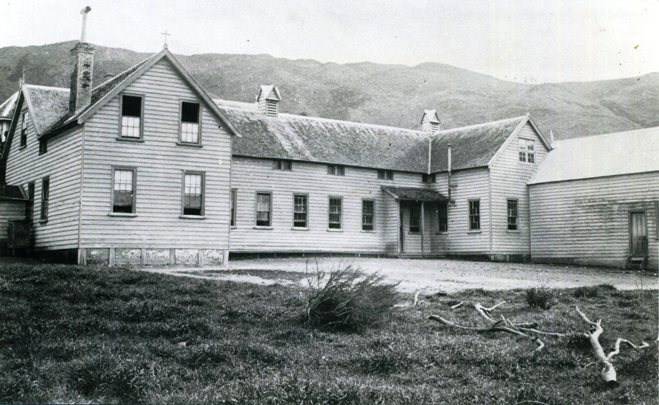
Concerned by the plight of local Māori, Viard raised the issue of providing their education with Governor George Grey, who responded by offering his support for a college for Māori girls. The Governor covered not only the purchase of another section but also the cost of materials required for the Providence’s construction. Designed by Thomas Henry Fitzgerald and named after St Joseph, the Providence opened on 8 September 1852. Constructed from timber and two storeys high, the Providence consisted of eighteen bedrooms and its furniture was provided by the Governor’s wife. Initially it housed thirteen Māori girls and was staffed by Mother Cecilia McCann and two assistants.
The Providence underwent much hardship during its early years. The replacement of Governor Grey by General Wynyard meant that funding became uncertain. This was made even more difficult when the Government declared that it would only support secular schools. Matters became worse when a measles epidemic struck Wellington, killing two of the girls at the Providence. With some Māori starting to fear the Providence as a result of the epidemic, attendance began to decline. Then, in 1855, an 8.2 earthquake struck Wellington, causing aftershocks which continued for eleven months. Terrified, the girls and the Sisters would often flee from the Providence as soon as the rumbling started. In the aftermath of the earthquake the number of Sisters at the Providence began to decline, with the last of the original four, Teresa, dying in 1860.
Overworked and short of staff, Viard eventually wrote to Mother Cecilia Maher of the Sisters of Mercy in Auckland asking if she would send assistance. With Bishop Pompallier’s permission she consented and in 1861 three Sisters of the Congregation arrived in Wellington.
Despite the additional support, life was still hard for the Sisters. They had no income other than that which was obtained through school fees and this hardly covered the extra cost of repairs that were needed for the building. Along with teaching, their days were often taken up by lengthy domestic chores. The regulations of religious life also meant that there was very little contact with outside visitors.
In 1880 Parliament passed an Act which placed orphanages in the control of the Education Department. These orphanages were to provide their residents with not only an education but also a trade. As a result the Providence came to be known as St Joseph’s Industrial School.
By 1890 the original Providence building was considered too small to serve its purpose and a new building was proposed. The community responded by offering its support with both funding and labour, with some men volunteering to work additional hours in order to help lay the groundwork. When it opened in 1892 the newly built Providence had the capacity to house one hundred students.
The turn of the twentieth century saw the Providence being forced to undergo quarantine when in 1900 ten girls fell ill with scarlet fever. By 1910 an increase in student numbers meant that the Thorndon location was no longer practicable. In response to this the students were moved to a new location in Upper Hutt. The Providence building then became the boarding school for St Mary’s College. It continued in this role until 1976 when plans for a new administration block, coupled with a shortage of Sisters, meant that the boarding school was forced to close.
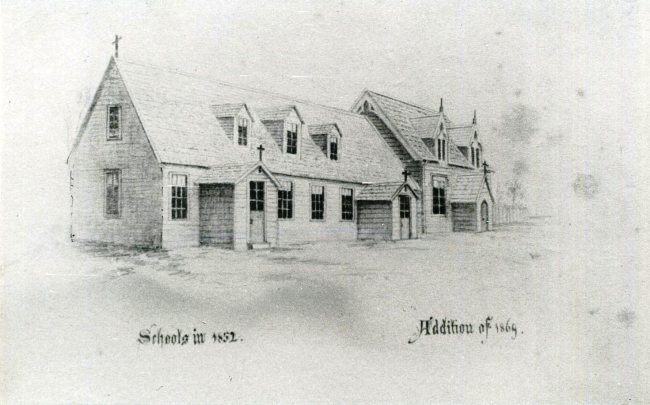
Although the building was demolished, a covered porch was left standing. Based on an historical sketch, the wooden shelter appears to have been the entrance to an extension made to the original Providence in 1869, as its steep roof and carved gable match those of the extension. Having survived both the refurbishment of the 1890s and the demolition, the shelter remains as a reminder to the hardship and sacrifices endured by the Sisters of Mercy in their efforts to assist the early community of Wellington.
In 1849 the College of Propaganda in Rome resolved a dispute that had arisen in New Zealand between missionaries of the Society of Mary (also known as Marists) and Bishop Jean Baptiste François Pompallier by dividing New Zealand into two dioceses. While the northern diocese would remain centred in Auckland, the new southern diocese was to be administered from Wellington, with the Marist, Philippe Viard as its Vicar Apostolic.
Although the settlement of Wellington had a sizeable Catholic population there were no Catholic schools prior to Viard’s arrival in 1850. Accompanying him were four young women from whom he had received annual religious vows. Upon arrival Viard purchased two town acres in the Thorndon area on Golder’s Hill between Hawkestone Street and Hill Street and a third acre was donated by Lord Petre. Along with a bishop’s residence, a convent school named St Mary’s was opened on the site on 8 September 1850. A boy’s school was also built on the same property and opened on 1 May 1851.
Concerned by the plight of local Māori, Viard raised the issue of providing their education with Governor George Grey, who responded by offering his support for a college for Māori girls. The Governor covered not only the purchase of another section but also the cost of materials required for the Providence’s construction. Designed by Thomas Henry Fitzgerald and named after St Joseph, the Providence opened on 8 September 1852. Constructed from timber and two storeys high, the Providence consisted of eighteen bedrooms and its furniture was provided by the Governor’s wife. Initially it housed thirteen Māori girls and was staffed by Mother Cecilia McCann and two assistants.
The Providence underwent much hardship during its early years. The replacement of Governor Grey by General Wynyard meant that funding became uncertain. This was made even more difficult when the Government declared that it would only support secular schools. Matters became worse when a measles epidemic struck Wellington, killing two of the girls at the Providence. With some Māori starting to fear the Providence as a result of the epidemic, attendance began to decline. Then, in 1855, an 8.2 earthquake struck Wellington, causing aftershocks which continued for eleven months. Terrified, the girls and the Sisters would often flee from the Providence as soon as the rumbling started. In the aftermath of the earthquake the number of Sisters at the Providence began to decline, with the last of the original four, Teresa, dying in 1860.
Overworked and short of staff, Viard eventually wrote to Mother Cecilia Maher of the Sisters of Mercy in Auckland asking if she would send assistance. With Bishop Pompallier’s permission she consented and in 1861 three Sisters of the Congregation arrived in Wellington.
Despite the additional support, life was still hard for the Sisters. They had no income other than that which was obtained through school fees and this hardly covered the extra cost of repairs that were needed for the building. Along with teaching, their days were often taken up by lengthy domestic chores. The regulations of religious life also meant that there was very little contact with outside visitors.
In 1880 Parliament passed an Act which placed orphanages in the control of the Education Department. These orphanages were to provide their residents with not only an education but also a trade. As a result the Providence came to be known as St Joseph’s Industrial School.
By 1890 the original Providence building was considered too small to serve its purpose and a new building was proposed. The community responded by offering its support with both funding and labour, with some men volunteering to work additional hours in order to help lay the groundwork. When it opened in 1892 the newly built Providence had the capacity to house one hundred students.
The turn of the twentieth century saw the Providence being forced to undergo quarantine when in 1900 ten girls fell ill with scarlet fever. By 1910 an increase in student numbers meant that the Thorndon location was no longer practicable. In response to this the students were moved to a new location in Upper Hutt. The Providence building then became the boarding school for St Mary’s College. It continued in this role until 1976 when plans for a new administration block, coupled with a shortage of Sisters, meant that the boarding school was forced to close.
Although the building was demolished, a covered porch was left standing. Based on an historical sketch, the wooden shelter appears to have been the entrance to an extension made to the original Providence in 1869, as its steep roof and carved gable match those of the extension. Having survived both the refurbishment of the 1890s and the demolition, the shelter remains as a reminder to the hardship and sacrifices endured by the Sisters of Mercy in their efforts to assist the early community of Wellington.