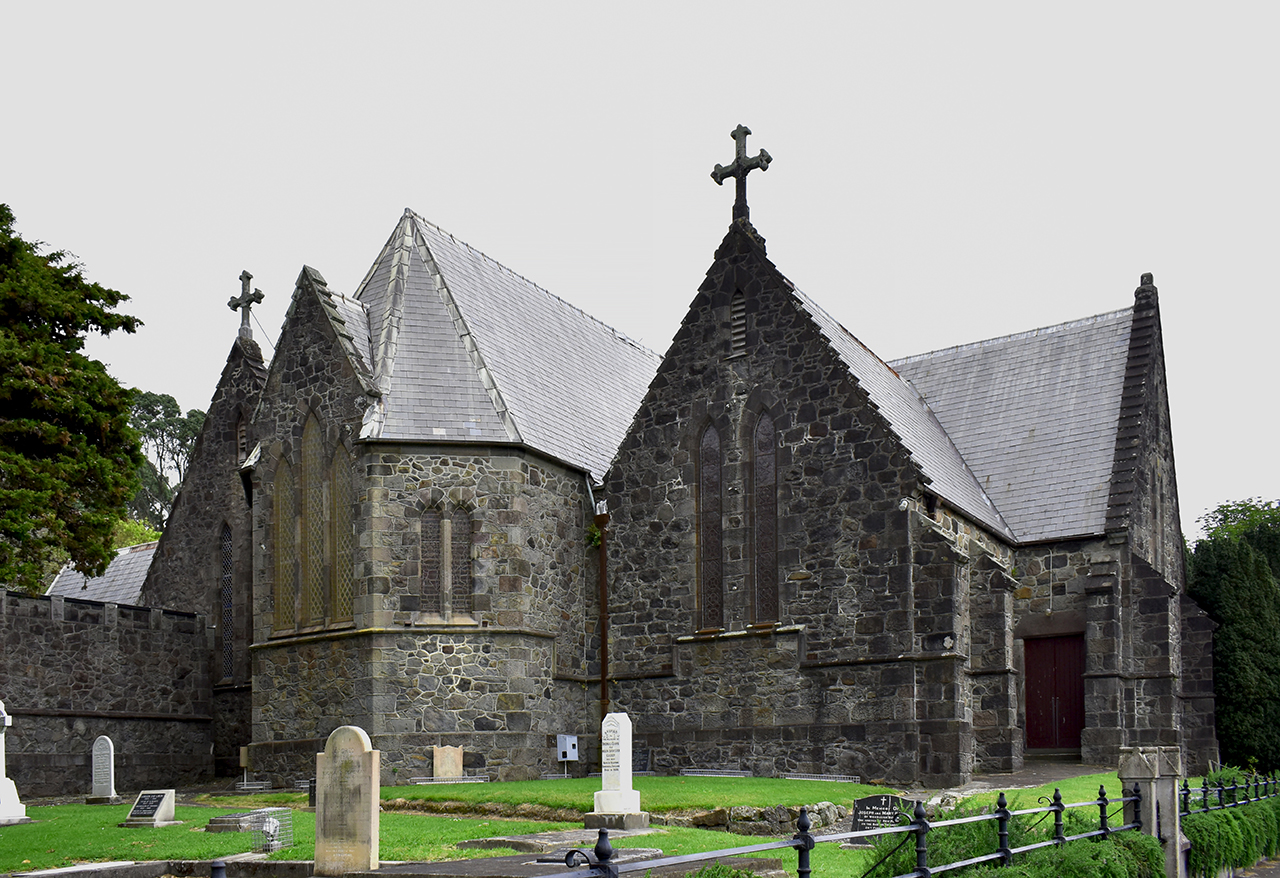
Taranaki Cathedral Church of St Mary (Anglican), built in 1845, stands on the hillside of Pūkākā, a site first settled by Te Ātiawa, which was an important pā by the early eighteenth century. Designed by Reverend Frederick Thatcher, St Mary’s Church is a fine example of Gothic Revival architecture adapted for colonial New Zealand, featuring textured stone walls, steeply pitched gabled roofs, and pointed lancet windows emphasising verticality. During the 1850s and 1860s, as tensions over land escalated, Pūkākā was reshaped into a military stronghold, and the church played a significant role in the conflict as the settlement around it became a defended centre for sheltering colonial troops and settlers. The last troops departed in 1870, and St Mary’s became known as the ‘Garrison Church’. It was consecrated as a Cathedral in 2010.
Taranaki has been the home of Māori for centuries, with whakapapa linking people to the landscape through the ancestral narrative of Te Kāhui Maunga, who travelled through the central North Island and settled on the western coastline. Their descendants form the eight iwi collectively known as Ngā iwi o Taranaki, who had established distinct identities, relationships, and strong connections to the whenua by the sixteenth century and who are mana whenua in and around present-day New Plymouth. Traditional pā and kāinga occupied strategic sites such as Puke Ariki in central New Plymouth. Traditional alliances and conflicts were profoundly disrupted in the early nineteenth century by the introduction of European muskets, marking the start of the Musket Wars, which caused widespread upheaval, displacement, and population decline in Taranaki.
European engagement in the New Plymouth area began in the 1820s, when Pākehā traders established a trading post at Ngāmotu (the site of modern New Plymouth), engaging with Te Ātiawa in flax and whaling commerce. Planned colonial settlement commenced in 1841–42 when the Plymouth Company brought immigrants from Devon and Cornwall to Taranaki and laid out the town of New Plymouth. Tensions over land ownership escalated in the late 1850s, particularly around the contested Waitara block, drawing Māori and colonial authorities into the First Taranaki War in 1860. Throughout the nineteenth century, European settlement expanded modestly amid intermittent conflict but eventually post-war growth established New Plymouth as a port and service centre for pastoral farming. By 1885, transport links such as a rail connection to Wellington underscored its growing economic role in the region.
In 1842, Bishop George Selwyn, seeking to establish an Anglican presence in Taranaki, acquired land at the base of Pūkākā through his relationship with the Plymouth Company and a Crown grant. This was part of a pattern of broad, complex interactions over land and settlement in Taranaki, which saw Māori land interests increasingly challenged by colonial processes. In 1843, William Bolland was appointed to serve both Māori and European parishioners across a vast parish, in which nearly half of the recorded births, deaths, and marriages were Māori. Bolland oversaw the building of the church, using stone from the Kawaroa Reef and Huatoki River. The foundation stone was laid on Lady Day, 25 March 1845.
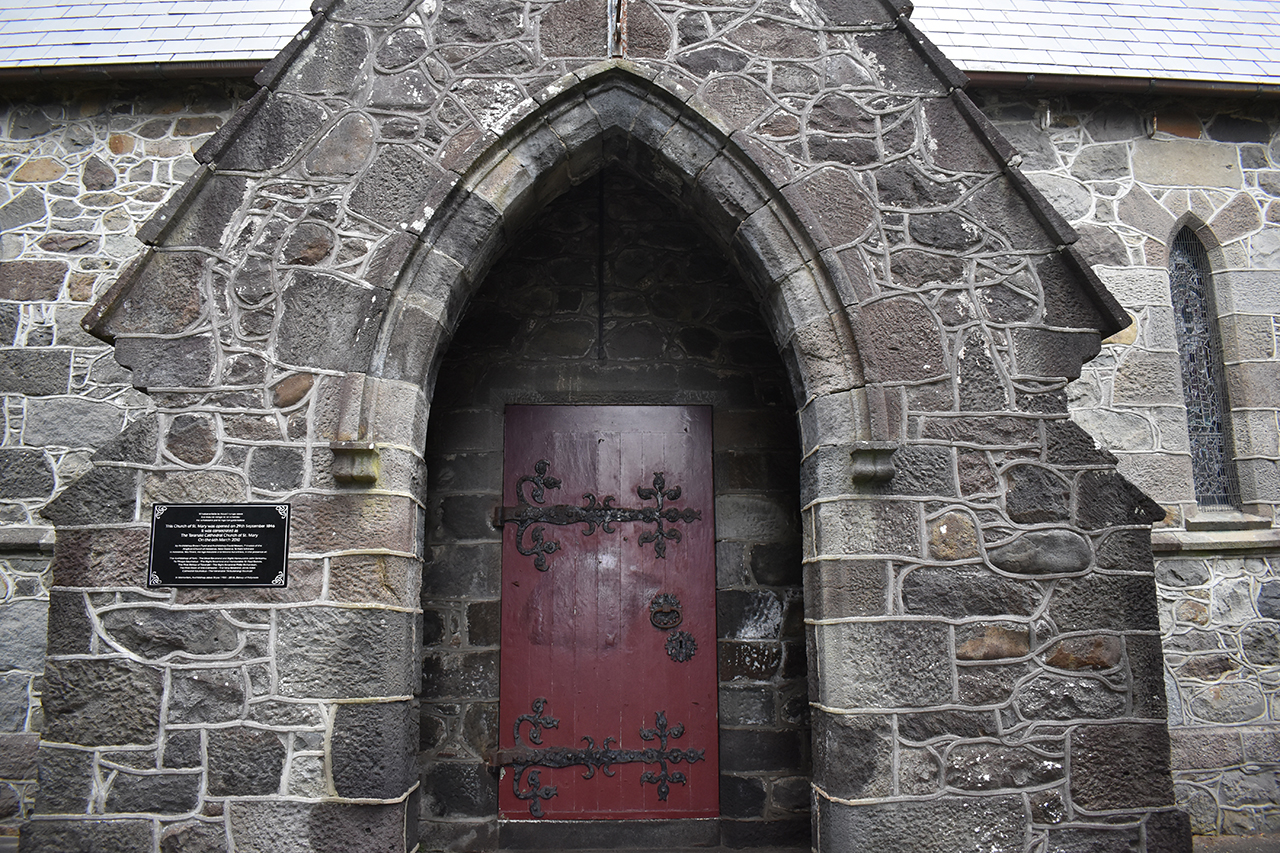
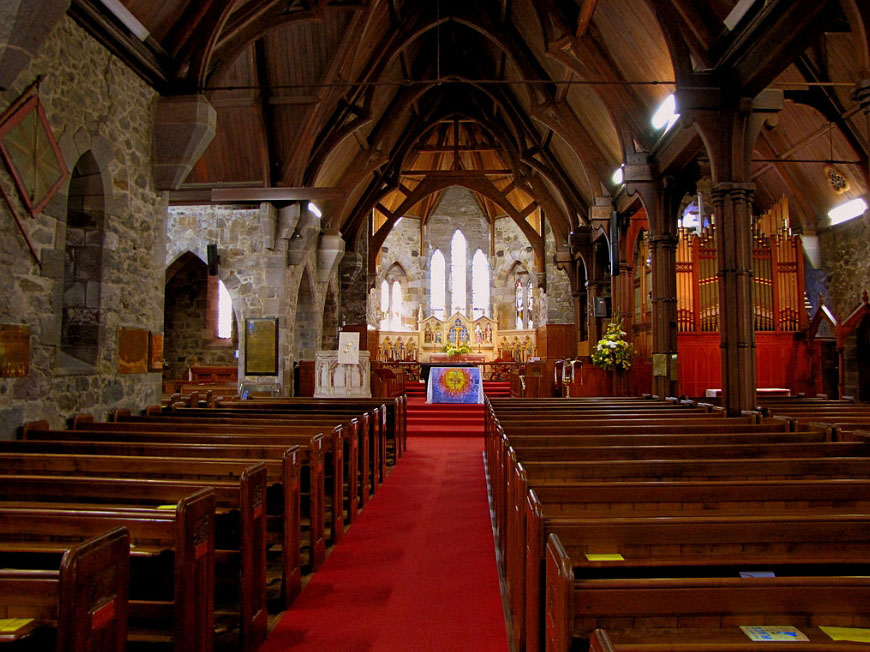
Thatcher’s design of steeply pitched gabled roofs and pointed lancet windows also featured shallow buttresses that provided structural support and articulated the long walls. The gabled ends, each crowned with a cross, defined the nave and transepts, while the recessed, simply framed main entrance reflected Thatcher’s restrained approach. The church lacked towers or elaborate spires, consistent with both its scale and the practical considerations of mid nineteenth-century colonial construction. The building was added to in stages across the nineteenth and twentieth centuries, enlarging the church by extending the nave, chancel, apse and transepts. Each successive addition was blended sympathetically with the original church design.
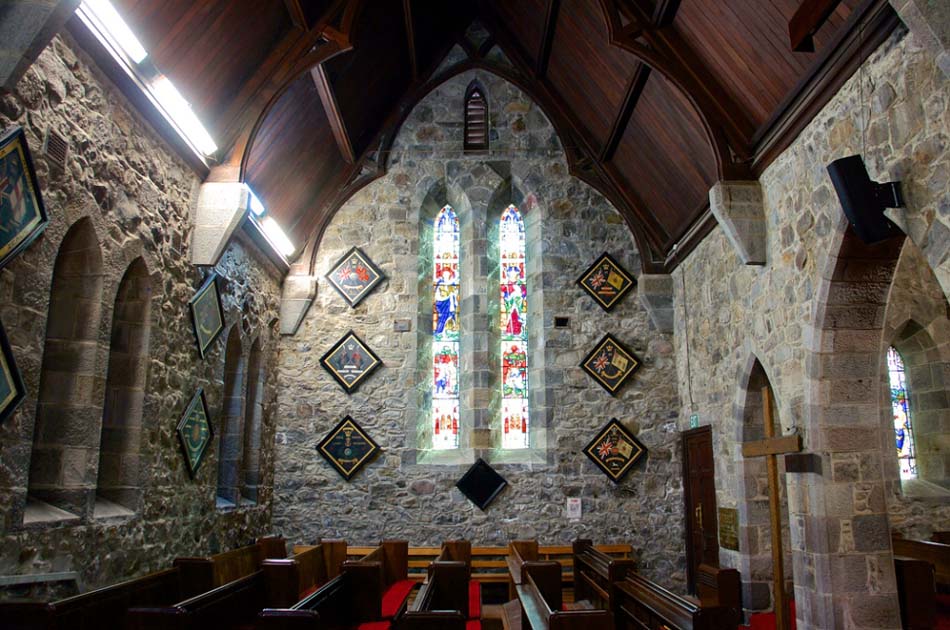
St Mary’s has a complex and layered history. Following the outbreak of the First Taranaki War in March 1860, Pūkākā became a major imperial military base, and St Mary’s increasingly shifted from serving both Māori and settlers to supporting the garrison, including providing storage for military supplies. After the troops’ departure in 1870, the later installation of regimental hatchments reinforced St Mary’s identity for a time as the ‘Garrison Church’. However, this militarised role was at odds with the earlier ministry of William Bolland, and later, that of Archdeacon Henry Govett, who had both sought to foster better understanding between Māori and settlers. Both spoke te reo Māori, and following the Battle of Mahoetahi in November 1860, in which Ngāti Hauā leader Wetini Taiporutu and several rangatira were killed, Archdeacon Govett arranged for their burial in the church grounds.
The later twentieth century, and the first quarter of the twenty-first century, has seen a move towards reconciliation. A carved memorial was unveiled in 1972 as a symbol of peace, and in 2013 the military hatchments were permanently removed from the church. In 2023, Te Whare Hononga (the house that binds) was opened next to the church for events and activities connected with education and reconciliation. The design and purpose of Te Whare Hononga is a partnership between St Mary’s and Ngāti Te Whiti, reflecting the desire for meeting and uniting within the whenua.
Taranaki has been the home of Māori for centuries, with whakapapa linking people to the landscape through the ancestral narrative of Te Kāhui Maunga, who travelled through the central North Island and settled on the western coastline. Their descendants form the eight iwi collectively known as Ngā iwi o Taranaki, who had established distinct identities, relationships, and strong connections to the whenua by the sixteenth century and who are mana whenua in and around present-day New Plymouth. Traditional pā and kāinga occupied strategic sites such as Puke Ariki in central New Plymouth. Traditional alliances and conflicts were profoundly disrupted in the early nineteenth century by the introduction of European muskets, marking the start of the Musket Wars, which caused widespread upheaval, displacement, and population decline in Taranaki.
European engagement in the New Plymouth area began in the 1820s, when Pākehā traders established a trading post at Ngāmotu (the site of modern New Plymouth), engaging with Te Ātiawa in flax and whaling commerce. Planned colonial settlement commenced in 1841–42 when the Plymouth Company brought immigrants from Devon and Cornwall to Taranaki and laid out the town of New Plymouth. Tensions over land ownership escalated in the late 1850s, particularly around the contested Waitara block, drawing Māori and colonial authorities into the First Taranaki War in 1860. Throughout the nineteenth century, European settlement expanded modestly amid intermittent conflict but eventually post-war growth established New Plymouth as a port and service centre for pastoral farming. By 1885, transport links such as a rail connection to Wellington underscored its growing economic role in the region.
In 1842, Bishop George Selwyn, seeking to establish an Anglican presence in Taranaki, acquired land at the base of Pūkākā through his relationship with the Plymouth Company and a Crown grant. This was part of a pattern of broad, complex interactions over land and settlement in Taranaki, which saw Māori land interests increasingly challenged by colonial processes. In 1843, William Bolland was appointed to serve both Māori and European parishioners across a vast parish, in which nearly half of the recorded births, deaths, and marriages were Māori. Bolland oversaw the building of the church, using stone from the Kawaroa Reef and Huatoki River. The foundation stone was laid on Lady Day, 25 March 1845.
Thatcher’s design of steeply pitched gabled roofs and pointed lancet windows also featured shallow buttresses that provided structural support and articulated the long walls. The gabled ends, each crowned with a cross, defined the nave and transepts, while the recessed, simply framed main entrance reflected Thatcher’s restrained approach. The church lacked towers or elaborate spires, consistent with both its scale and the practical considerations of mid nineteenth-century colonial construction. The building was added to in stages across the nineteenth and twentieth centuries, enlarging the church by extending the nave, chancel, apse and transepts. Each successive addition was blended sympathetically with the original church design.
St Mary’s has a complex and layered history. Following the outbreak of the First Taranaki War in March 1860, Pūkākā became a major imperial military base, and St Mary’s increasingly shifted from serving both Māori and settlers to supporting the garrison, including providing storage for military supplies. After the troops’ departure in 1870, the later installation of regimental hatchments reinforced St Mary’s identity for a time as the ‘Garrison Church’. However, this militarised role was at odds with the earlier ministry of William Bolland, and later, that of Archdeacon Henry Govett, who had both sought to foster better understanding between Māori and settlers. Both spoke te reo Māori, and following the Battle of Mahoetahi in November 1860, in which Ngāti Hauā leader Wetini Taiporutu and several rangatira were killed, Archdeacon Govett arranged for their burial in the church grounds.
The later twentieth century, and the first quarter of the twenty-first century, has seen a move towards reconciliation. A carved memorial was unveiled in 1972 as a symbol of peace, and in 2013 the military hatchments were permanently removed from the church. In 2023, Te Whare Hononga (the house that binds) was opened next to the church for events and activities connected with education and reconciliation. The design and purpose of Te Whare Hononga is a partnership between St Mary’s and Ngāti Te Whiti, reflecting the desire for meeting and uniting within the whenua.