

The Langridge Run was taken up by Thomas Ward in 1851 and after a short time was bought by W.H. Eyes who then sold it to the brothers, Alexander Binning Monro and George Hoome Monro, in 1853.
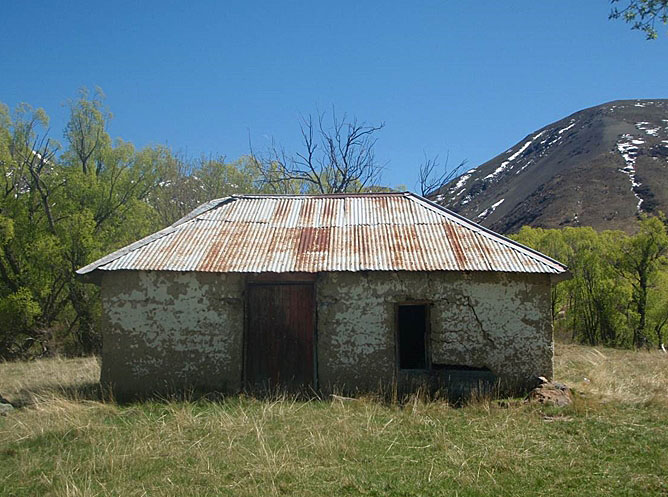
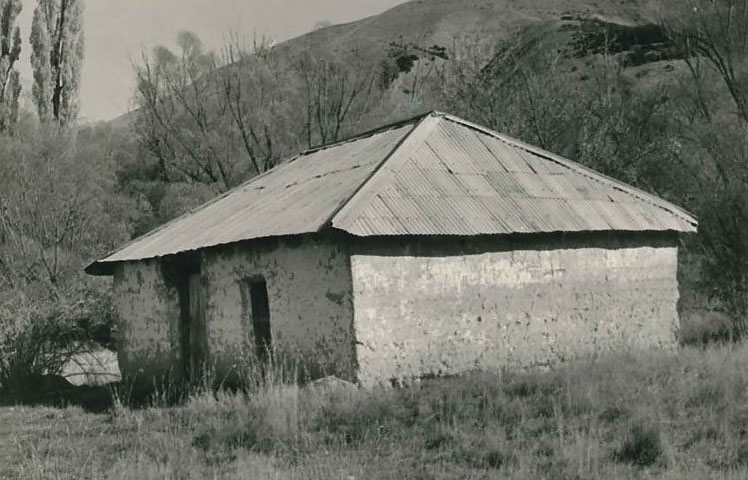
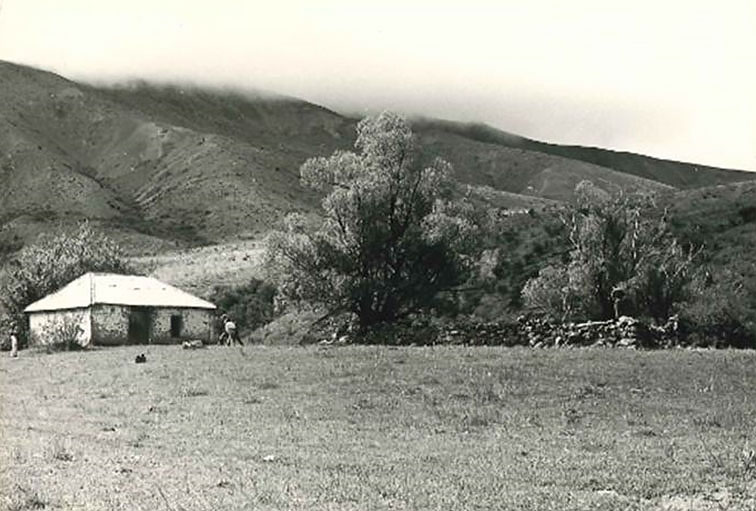
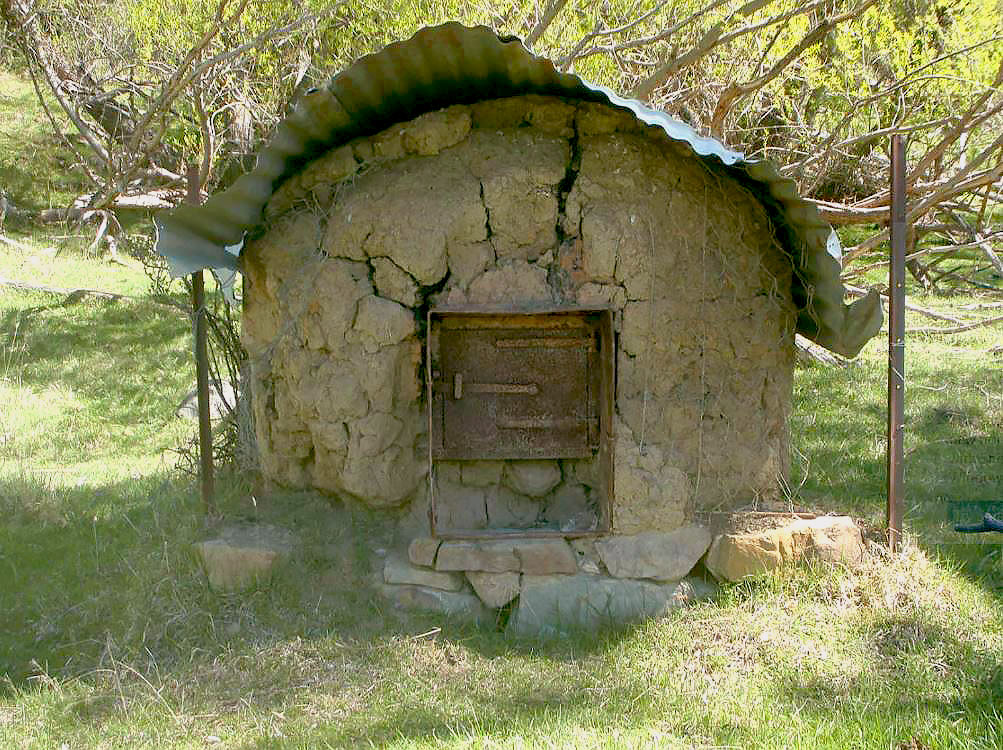
Built during the Monros time, the stable is of cob construction, a ‘major feature of New Zealand vernacular architecture’ the designs and techniques of which were brought to New Zealand by settlers from certain regions of England and Ireland. The stable building is constructed of materials that were available including stones, birch wood for the roof structure and cob – usually a wet mix of clay, straw and animal dung, that sets hard as it dries. The walls were formed in layers without moulds or framework and built on a base of stones. Initially the structure was topped with a thatched roof that hung over the ends but this was replaced by corrugated iron which also became a ‘prominent vernacular feature.’ The interior of the roof is lined with tongue and groove timber and the stable has a timber door. Birch branches were used for window and door lintels during construction and the cob was cut out when it was dry. The exterior walls are finished in lime plaster to keep them watertight.
The Monro brothers got into financial trouble after purchasing more land from the Crown. They paid off the debts and A.B. Monro held Langridge until his death in 1892. In 1899 the Langridge Run was sold to Rudolph Walker and Edward Thompson. At that time the Run consisted of 7,138 acres freehold, 24,400 acres leasehold and carried 7,490 sheep. The land was transferred to Margaret Agnes Shirtliff, wife of John William Shirtliff, sheep farmer, in 1924. A fee simple title to a number of parcels including Section 9, Langridge Run District of Awatere, was created in 1930. The landholding was transferred to Margaret Helen van Asch, daughter of the Shirtliffs, who had married Ian Tasman van Asch. The van Asch’s sold the 96,000 acre Muller Station, which included the Langridge Station freehold, in 1965. Muller Station has been farmed by Steve and Mary Satterthwaite since 1980.
The Langridge Station stable is part of a significant cultural landscape that represents the pastoral heritage of New Zealand sheep stations. Cob was an important construction method in the rural South Island high country. The concentration of this building type along the Awatere Valley has created a network of regionally significant structures that are an integral part of a special cultural heritage landscape. The building and structures are a tangible legacy of pioneering farmers and farm workers in the area. They are entered on the New Zealand Heritage List and include the Mt Gladstone Station Cob Homestead (List No.2936), Mt Gladstone Cuddy (List No.1491), Accommodation House (Former) (List No.2924), Molesworth Station Large Cob Homestead (List No. 1492), Molesworth Station Cob Cottage (List No.1492) and Langridge Station Cob Oven (List No. 1488).
List Entry Information
Status
Listed
List Entry Status
Historic Place Category 2
Access
Private/No Public Access
List Number
1488
Date Entered
25th November 1982
Date of Effect
25th November 1982
City/District Council
Marlborough District
Region
Marlborough Region
Extent of List Entry
Extent includes part of the land described as Pt Sec 9 Langridge Run, Awatere District (RT MB2A/694), Marlborough Land District and the building known as the Langridge Station Stable thereon. Refer to the extent map tabled at the Heritage New Zealand Board meeting on 23 October 2014.
Legal description
Pt Sec 9 Langridge Run, Awatere District (RT MB2A/694), Marlborough Land District
Status
Listed
List Entry Status
Historic Place Category 2
Access
Private/No Public Access
List Number
1488
Date Entered
25th November 1982
Date of Effect
25th November 1982
City/District Council
Marlborough District
Region
Marlborough Region
Extent of List Entry
Extent includes part of the land described as Pt Sec 9 Langridge Run, Awatere District (RT MB2A/694), Marlborough Land District and the building known as the Langridge Station Stable thereon. Refer to the extent map tabled at the Heritage New Zealand Board meeting on 23 October 2014.
Legal description
Pt Sec 9 Langridge Run, Awatere District (RT MB2A/694), Marlborough Land District
Construction Materials
Cob, birch, corrugated iron
Construction Materials
Cob, birch, corrugated iron
Historical and Associated Iwi / Hapū / Whānau
Public NZAA Number
O30/9
Completion Date
3rd September 2014
Report Written By
Natasha Naus
Information Sources
Salmond, 1986
Jeremy Salmond, Old New Zealand Houses 1800-1940, Auckland, 1986, Reed Methuen
Ward, 1986
Tessa Ward, ‘Forgotten Earth Relics of Early Settlement’, Historic Places in New Zealand, Number 15, Dec 1986
Other Information
This place was identified as significant under previous legislation with different information requirements. It remains significant under the current legislation. There is opportunity under our legislation and policies to add to this information. Further information about this place may be available from the Central Regional Office of Heritage New Zealand Pouhere Taonga. A fully referenced upgrade report is available on request from the Central Regional Office of Heritage New Zealand. Please note that entry on the New Zealand Heritage List/Rarangi Korero identifies only the heritage values of the property concerned, and should not be construed as advice on the state of the property, or as a comment of its soundness or safety, including in regard to earthquake risk, safety in the event of fire, or insanitary conditions.
Historical and Associated Iwi / Hapū / Whānau
Public NZAA Number
O30/9
Completion Date
3rd September 2014
Report Written By
Natasha Naus
Information Sources
Salmond, 1986
Jeremy Salmond, Old New Zealand Houses 1800-1940, Auckland, 1986, Reed Methuen
Ward, 1986
Tessa Ward, ‘Forgotten Earth Relics of Early Settlement’, Historic Places in New Zealand, Number 15, Dec 1986
Other Information
This place was identified as significant under previous legislation with different information requirements. It remains significant under the current legislation. There is opportunity under our legislation and policies to add to this information. Further information about this place may be available from the Central Regional Office of Heritage New Zealand Pouhere Taonga. A fully referenced upgrade report is available on request from the Central Regional Office of Heritage New Zealand. Please note that entry on the New Zealand Heritage List/Rarangi Korero identifies only the heritage values of the property concerned, and should not be construed as advice on the state of the property, or as a comment of its soundness or safety, including in regard to earthquake risk, safety in the event of fire, or insanitary conditions.
Former Usages
General Usage: Agriculture
Specific Usage: Stables
Former Usages
General Usage: Agriculture
Specific Usage: Stables
Location
Related listings
Stay up to date with Heritage this month
