

List Entry Information
Status
Listed
List Entry Status
Historic Place Category 1
Access
Private/No Public Access
List Number
150
Date Entered
21st September 1989
Date of Effect
21st September 1989
City/District Council
South Taranaki District
Region
Taranaki Region
Extent of List Entry
Extent includes the land described as Lot 2 DP 359792 (RT 243181), Taranaki Land District and the building known as St George's Church (Anglican) and its fittings and fixtures.
Legal description
Lot 2 DP 359792 (RT 243181), Taranaki Land District
Status
Listed
List Entry Status
Historic Place Category 1
Access
Private/No Public Access
List Number
150
Date Entered
21st September 1989
Date of Effect
21st September 1989
City/District Council
South Taranaki District
Region
Taranaki Region
Extent of List Entry
Extent includes the land described as Lot 2 DP 359792 (RT 243181), Taranaki Land District and the building known as St George's Church (Anglican) and its fittings and fixtures.
Legal description
Lot 2 DP 359792 (RT 243181), Taranaki Land District
Why is this place significant?
Historic Significance
Historical Significance or Value This historic place was registered under the Historic Places Act 1980. This report includes the text from the original Building Classification Committee report considered by the NZHPT Board at the time of registration. St George's Parish is the oldest between Wanganui and Hawera and dates back to 1871 when the first church was erected. The present church was erected in 1885 and many of the windows and furnishings were given by local parishioners. The church remains one of Taranaki's oldest and most distinguished churches.
Physical Significance
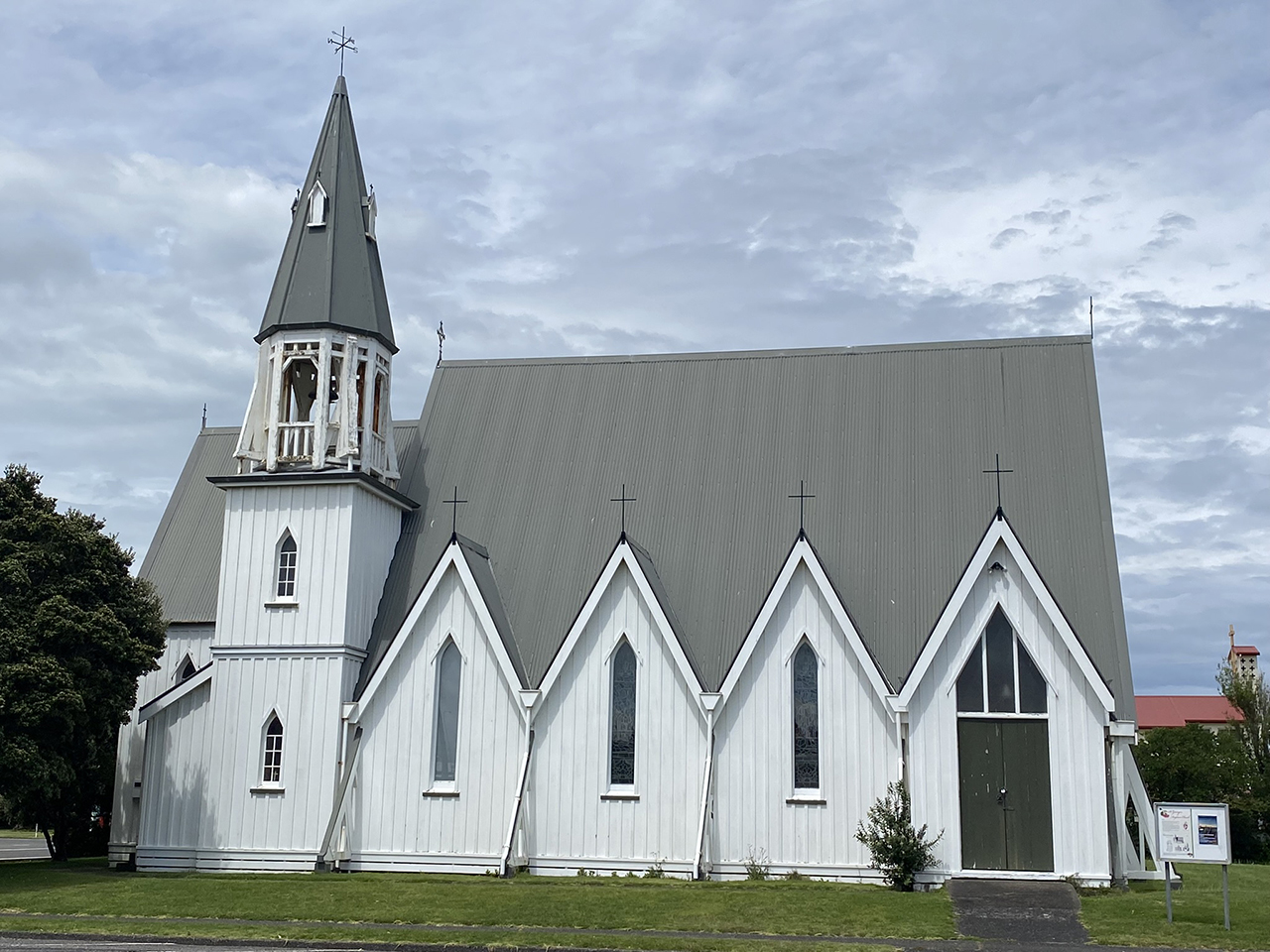
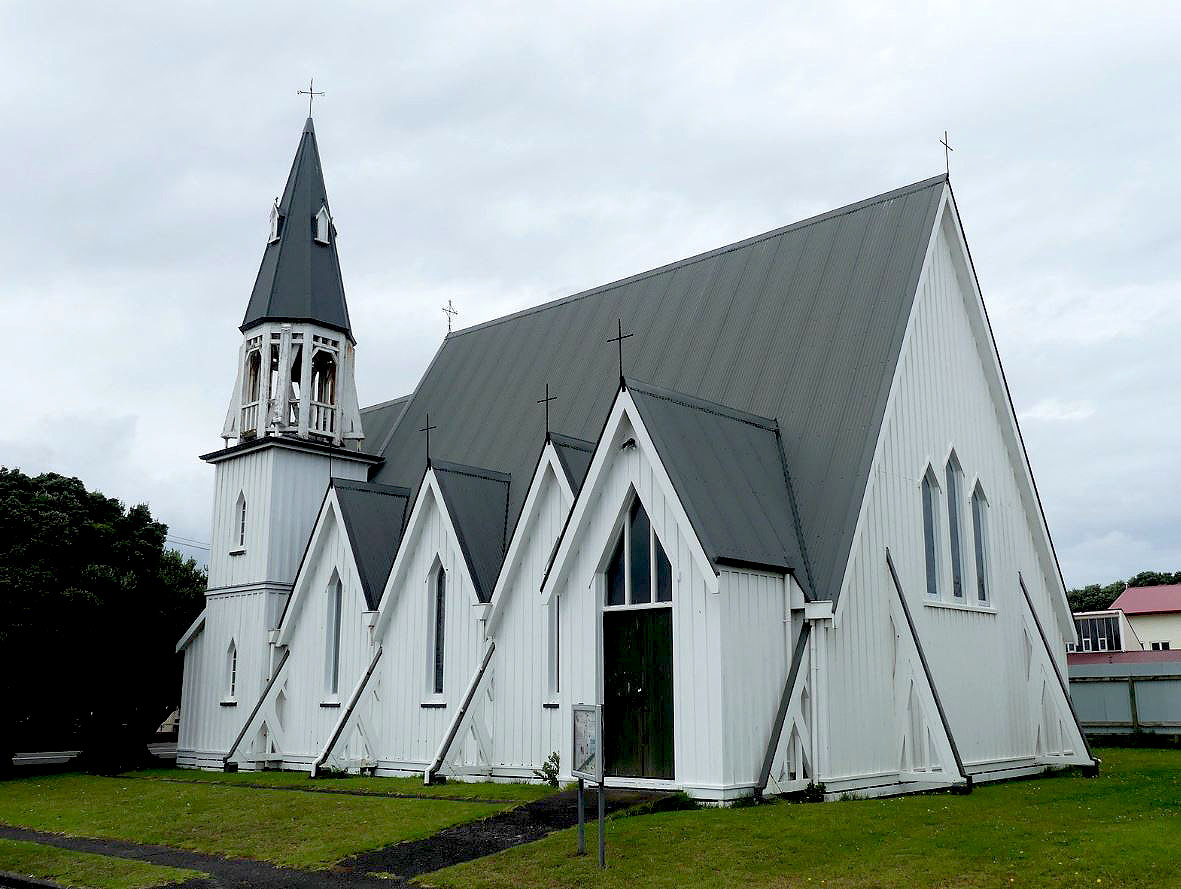
This historic place was registered under the Historic Places Act 1980. This report includes the text from the original Building Classification Committee report considered by the NZHPT Board at the time of registration. ARCHITECTURAL SIGNIFICANCE: This is one of the best of New Zealand's many wooden churches. Clere was one of this country's pre-eminent architects and this most original church was a major contribution to local and national ecclesiastical design. Clere's handling of the exterior and interior was both skilful and delicate and is in the fine tradition of wooden Gothic design in New Zealand initiated by Bishop Selwyn. TOWNSCAPE/LANDMARK SIGNIFICANCE: The repetitive gable design and corner siting near the west end of the main street gives it considerable visual prominence.
Why is this place significant?
Historic Significance
Historical Significance or Value This historic place was registered under the Historic Places Act 1980. This report includes the text from the original Building Classification Committee report considered by the NZHPT Board at the time of registration. St George's Parish is the oldest between Wanganui and Hawera and dates back to 1871 when the first church was erected. The present church was erected in 1885 and many of the windows and furnishings were given by local parishioners. The church remains one of Taranaki's oldest and most distinguished churches.
Physical Significance
This historic place was registered under the Historic Places Act 1980. This report includes the text from the original Building Classification Committee report considered by the NZHPT Board at the time of registration. ARCHITECTURAL SIGNIFICANCE: This is one of the best of New Zealand's many wooden churches. Clere was one of this country's pre-eminent architects and this most original church was a major contribution to local and national ecclesiastical design. Clere's handling of the exterior and interior was both skilful and delicate and is in the fine tradition of wooden Gothic design in New Zealand initiated by Bishop Selwyn. TOWNSCAPE/LANDMARK SIGNIFICANCE: The repetitive gable design and corner siting near the west end of the main street gives it considerable visual prominence.
Construction Professional
Name
Clere, Frederick De Jersey
Type
Architect
Biography
Clere (1856-1952) was born in Lancashire, the son of an Anglican clergyman, and was articled to Edmund Scott, an ecclesiastical architect of Brighton. He then became chief assistant to R J Withers, a London architect. Clere came to New Zealand in 1877, practising first in Feilding and then in Wanganui. He later came to Wellington and practised there for 58 years. He was elected a Fellow of the Royal Institute of British Architects in 1886 and held office for 50 years as one of four honorary secretaries in the Empire. In 1883 he was appointed Diocesan Architect of the Anglican Church; he designed more than 100 churches while he held this position. Clere was a pioneer in reinforced concrete construction; the outstanding example of his work with this material is the Church of St Mary of the Angels (1922), Wellington. As well as being pre-eminent in church design, Clere was responsible for many domestic and commercial buildings including Wellington's Harbour Board Offices and Bond Store (1891) and Overton in Marton. Clere was also involved in the design of large woolsheds in Hawkes Bay and Wairarapa. He was active in the formation of the New Zealand Institute of Architects and served on their council for many years. He was a member of the Wellington City Council until 1895, and from 1900 a member of the Wellington Diocesan Synod and the General Synod. He was also a member of the New Zealand Academy of Fine Arts.
Construction Details
Start Year
1885
Type
Original Construction
Start Year
1956
Type
Modification
Description
The timber cladding was replaced by asbestos cement with a consequent loss of texture.
Start Year
2004
startYearCirca
Finish Year
2010
finishYearCirca
Type
Other
Description
Restoration programme completed. [This included the reinstatement of the timber cladding.]
Start Year
2004
Type
Other
Description
Bell tower and steeple damaged in storm.
Construction Materials
The foundations and framing are timber. Externally it is clad in vertical board and batten and internally in tongue and groove. The roof is covered with corrugated iron.
Notable Features
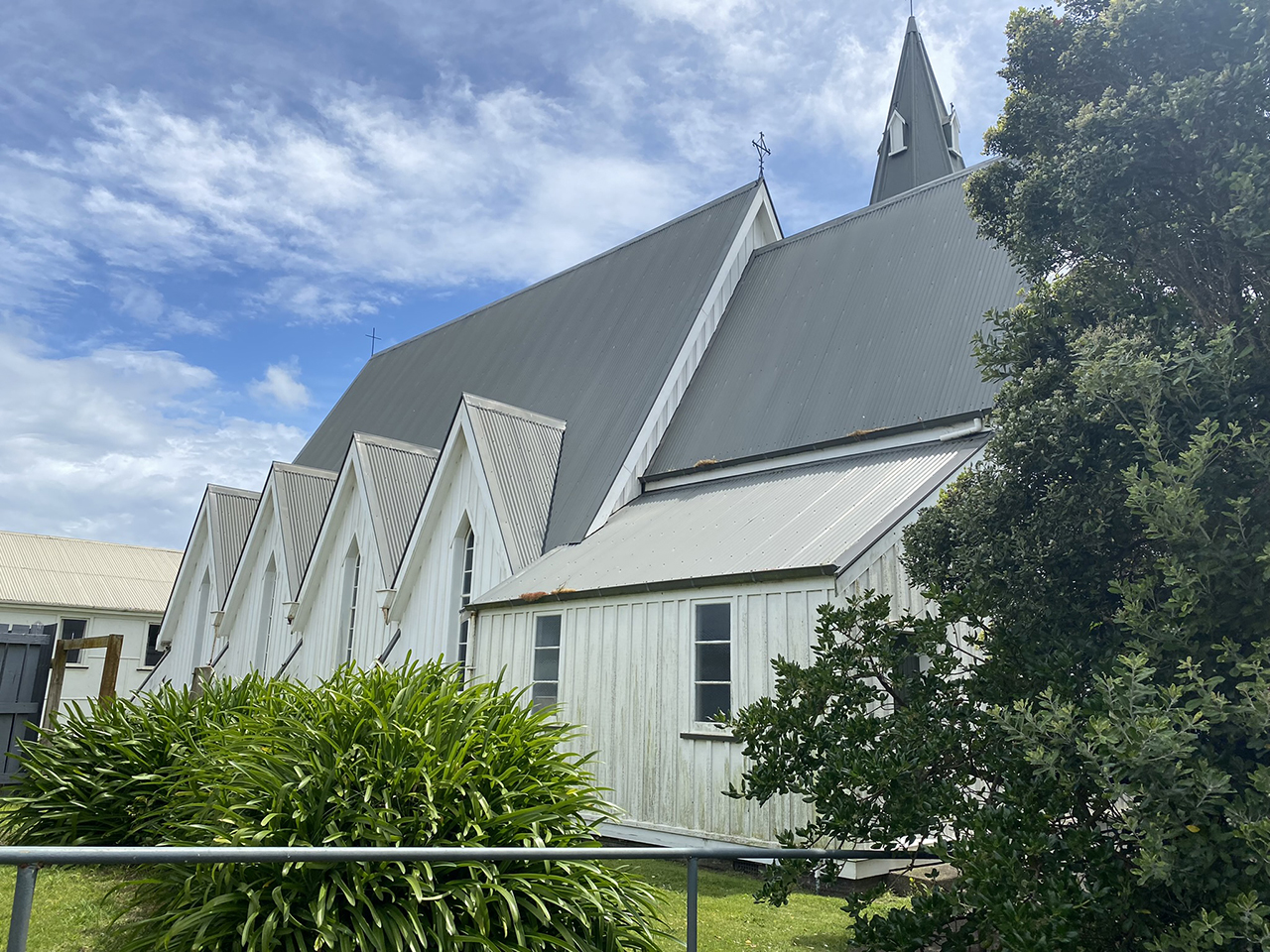
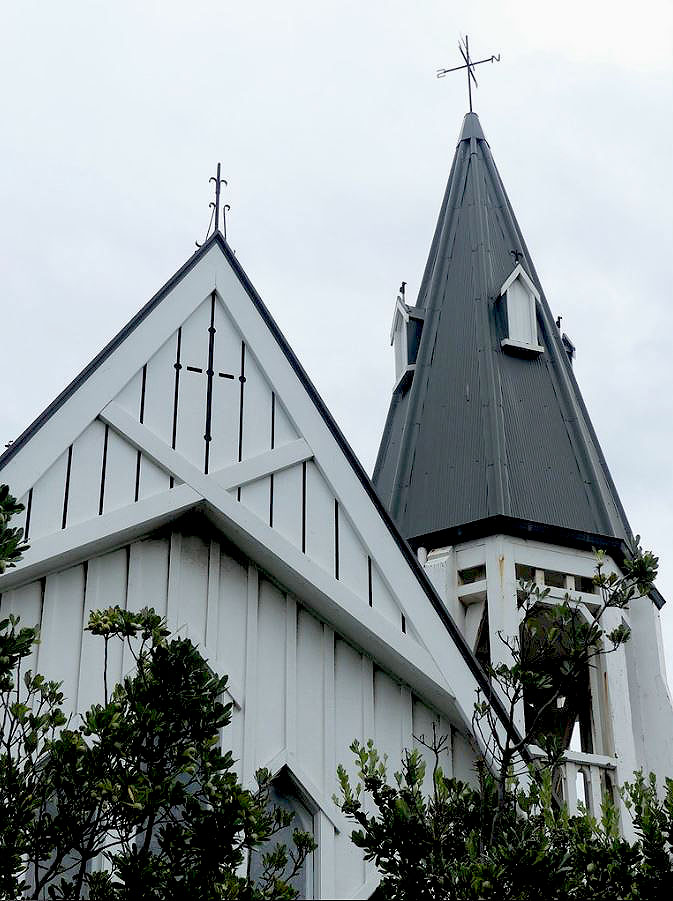
Eight stained glass windows of 1880/90 and 1920, [with two additional windows donated by parishioners in in 1957 and 1963, both made by W.A.Raffill and Sons in Dunedin]. Brass lectern imported from England 1885 Oamaru stone font - gifted in 1885 Original timber pews - some bearing 'free' signs The belfry The repetitive gables
Construction Professional
Name
Clere, Frederick De Jersey
Type
Architect
Biography
Clere (1856-1952) was born in Lancashire, the son of an Anglican clergyman, and was articled to Edmund Scott, an ecclesiastical architect of Brighton. He then became chief assistant to R J Withers, a London architect. Clere came to New Zealand in 1877, practising first in Feilding and then in Wanganui. He later came to Wellington and practised there for 58 years. He was elected a Fellow of the Royal Institute of British Architects in 1886 and held office for 50 years as one of four honorary secretaries in the Empire. In 1883 he was appointed Diocesan Architect of the Anglican Church; he designed more than 100 churches while he held this position. Clere was a pioneer in reinforced concrete construction; the outstanding example of his work with this material is the Church of St Mary of the Angels (1922), Wellington. As well as being pre-eminent in church design, Clere was responsible for many domestic and commercial buildings including Wellington's Harbour Board Offices and Bond Store (1891) and Overton in Marton. Clere was also involved in the design of large woolsheds in Hawkes Bay and Wairarapa. He was active in the formation of the New Zealand Institute of Architects and served on their council for many years. He was a member of the Wellington City Council until 1895, and from 1900 a member of the Wellington Diocesan Synod and the General Synod. He was also a member of the New Zealand Academy of Fine Arts.
Construction Details
Start Year
1885
Type
Original Construction
Start Year
1956
Type
Modification
Description
The timber cladding was replaced by asbestos cement with a consequent loss of texture.
Start Year
2004
startYearCirca
Finish Year
2010
finishYearCirca
Type
Other
Description
Restoration programme completed. [This included the reinstatement of the timber cladding.]
Start Year
2004
Type
Other
Description
Bell tower and steeple damaged in storm.
Construction Materials
The foundations and framing are timber. Externally it is clad in vertical board and batten and internally in tongue and groove. The roof is covered with corrugated iron.
Notable Features
Eight stained glass windows of 1880/90 and 1920, [with two additional windows donated by parishioners in in 1957 and 1963, both made by W.A.Raffill and Sons in Dunedin]. Brass lectern imported from England 1885 Oamaru stone font - gifted in 1885 Original timber pews - some bearing 'free' signs The belfry The repetitive gables
This historic place was registered under the Historic Places Act 1980. This report includes the text from the original Building Classification Committee report considered by the NZHPT Board at the time of registration. Information in square brackets indicate modifications made after the paper was considered by the NZHPT Board. ARCHITECTURAL DESCRIPTION (STYLE): This church is Gothic in style but with interesting and distinctive variations. The robust, unusual, ridge to ground A-frame design is repeated over the building and echoed in the lancet windows. The vertical board and batten cladding is reminiscent of Selwyn churches and overall the building owes much to Ecclesiological architecture. The delightful tower and belfry next to the chancel complements well the main body of the church. The exterior walls are simply buttressed and accentuate the vertical lines of the church. The interior is a particularly fine Gothic space. The stained wooden walls and framing and stained-glass windows combine to create a warm intimacy. MODIFICATIONS: Date unknown: An unsympathetic addition of a choir vestry on the southeast corner
This historic place was registered under the Historic Places Act 1980. This report includes the text from the original Building Classification Committee report considered by the NZHPT Board at the time of registration. Information in square brackets indicate modifications made after the paper was considered by the NZHPT Board. ARCHITECTURAL DESCRIPTION (STYLE): This church is Gothic in style but with interesting and distinctive variations. The robust, unusual, ridge to ground A-frame design is repeated over the building and echoed in the lancet windows. The vertical board and batten cladding is reminiscent of Selwyn churches and overall the building owes much to Ecclesiological architecture. The delightful tower and belfry next to the chancel complements well the main body of the church. The exterior walls are simply buttressed and accentuate the vertical lines of the church. The interior is a particularly fine Gothic space. The stained wooden walls and framing and stained-glass windows combine to create a warm intimacy. MODIFICATIONS: Date unknown: An unsympathetic addition of a choir vestry on the southeast corner
Historical and Associated Iwi / Hapū / Whānau
Completion Date
18th April 1989
Information Sources
Baker and Leslie, 1981
Mrs M. Leslie and Mr. G.L Baker, 'Patea', 1981
Patea Mail
Patea Mail
Other Information
A copy of this report is available from the NZHPT Central Region office Please note that entry on the New Zealand Heritage List/Rarangi Korero identifies only the heritage values of the property concerned, and should not be construed as advice on the state of the property, or as a comment of its soundness or safety, including in regard to earthquake risk, safety in the event of fire, or insanitary conditions.
Historical and Associated Iwi / Hapū / Whānau
Completion Date
18th April 1989
Information Sources
Baker and Leslie, 1981
Mrs M. Leslie and Mr. G.L Baker, 'Patea', 1981
Patea Mail
Patea Mail
Other Information
A copy of this report is available from the NZHPT Central Region office Please note that entry on the New Zealand Heritage List/Rarangi Korero identifies only the heritage values of the property concerned, and should not be construed as advice on the state of the property, or as a comment of its soundness or safety, including in regard to earthquake risk, safety in the event of fire, or insanitary conditions.
Current Usages
Uses: Religion
Specific Usage: Church
Former Usages
General Usage: Religion
Specific Usage: Church
Current Usages
Uses: Religion
Specific Usage: Church
Former Usages
General Usage: Religion
Specific Usage: Church
Location
Sign up to hear more
Get the latest heritage news, features and events delivered
straight to your inbox.
