DonateSupporterVisit Heritage
  • Tūrangawaewae
    Places
  • Tira Māori
    Māori Heritage
  • Poutairangahia
    Archaeology
  • Rauemi
    Resources
  • Mō Tātou
    About Us
  • New Zealand Heritage List
  • Nominate and submit
  • Explore the List
  • National Historic Landmarks
  • Plaques
  • Rainbow List Project
  • Lost heritage
  • Visit Heritage
  • Our properties
  • Turnbull House Project
  • Collections
  • Shop
  • Tohu Whenua
  • Tira Māori
  • Conserving Māori heritage
  • Marae built heritage
  • Māori heritage on the List
  • Hinemihi—Te Hokinga Mai
  • What is archaeology?
  • Is there a site on my property?
  • What are my legal requirements?
  • Affecting an archaeological site
  • Declaring an archaeological site
  • Archaeology FAQs
  • Archaeology Digital Library
  • Archaeology guidelines and templates
  • Resources
  • Funding
  • Publications
  • Sustainable management guides
  • Disaster recovery
  • Podcasts & digital resources
  • Education Hub
  • Conservation plans
  • About
  • Board
  • Māori Heritage Council
  • Senior Staff
  • Offices
  • Contact us
  • Careers
  • Covenants
  • Fast-track
  • Corporate documents
  • Currently consulting on
  • Our submissions
  • News
  • Covid-19 response
Quick links
Rārangi Kōrero | The List
Explore the List
National Historic Landmarks
Ngā Manawhenua o Aotearoa me ōna Kōrero Tūturu
Quick links
Tapuwae
A Vision for Places of Māori Heritage
Funding for Māori Heritage
Resources
Quick links
Archaeological Authority Portal
Applying for an archaeological authority
Archaeology FAQs
Browse the most frequently asked questions about archaeological authorities and the archaeological process.
Quick links
Quick links
Contact us
Offices
DonateSupporterVisit Heritage
  • Tūrangawaewae
    Places
  • Tira Māori
    Māori Heritage
  • Poutairangahia
    Archaeology
  • Rauemi
    Resources
  • Mō Tātou
    About Us
  • New Zealand Heritage List
  • Nominate and submit
  • Explore the List
  • National Historic Landmarks
  • Plaques
  • Rainbow List Project
  • Lost heritage
  • Visit Heritage
  • Our properties
  • Turnbull House Project
  • Collections
  • Shop
  • Tohu Whenua
  • Tira Māori
  • Conserving Māori heritage
  • Marae built heritage
  • Māori heritage on the List
  • Hinemihi—Te Hokinga Mai
  • What is archaeology?
  • Is there a site on my property?
  • What are my legal requirements?
  • Affecting an archaeological site
  • Declaring an archaeological site
  • Archaeology FAQs
  • Archaeology Digital Library
  • Archaeology guidelines and templates
  • Resources
  • Funding
  • Publications
  • Sustainable management guides
  • Disaster recovery
  • Podcasts & digital resources
  • Education Hub
  • Conservation plans
  • About
  • Board
  • Māori Heritage Council
  • Senior Staff
  • Offices
  • Contact us
  • Careers
  • Covenants
  • Fast-track
  • Corporate documents
  • Currently consulting on
  • Our submissions
  • News
  • Covid-19 response
Quick links
Rārangi Kōrero | The List
Explore the List
National Historic Landmarks
Ngā Manawhenua o Aotearoa me ōna Kōrero Tūturu
Quick links
Tapuwae
A Vision for Places of Māori Heritage
Funding for Māori Heritage
Resources
Quick links
Archaeological Authority Portal
Applying for an archaeological authority
Archaeology FAQs
Browse the most frequently asked questions about archaeological authorities and the archaeological process.
Quick links
Quick links
Contact us
Offices
  • Places
  • Nominate and submit
  • National Historic Landmarks
  • Places
  • Nominate and submit
  • National Historic Landmarks
  • Tira Māori
  • Conserving Māori heritage
  • Marae built heritage
  • Tira Māori
  • Conserving Māori heritage
  • Marae built heritage
  • Archaeological authorities
  • Archaeology Digital Library
  • Archaeological authorities
  • Archaeology Digital Library
  • All resources
  • Publications
  • Funding
  • All resources
  • Publications
  • Funding
  • FAQs
  • FAQs
Follow us on:
Places
  • Places
  • Nominate and submit
  • National Historic Landmarks
Tira Māori
  • Tira Māori
  • Conserving Māori heritage
  • Marae built heritage
Archaeology
  • Archaeological authorities
  • Archaeology Digital Library
Resources
  • All resources
  • Publications
  • Funding
FAQs
  • FAQs
Follow us on
HomePrivacyTerms and conditionsAbout this site
© Heritage New Zealand Pouhere Taonga 2026.
 
St Joseph's Church (Catholic)

5050 Whanganui River Road, JERUSALEM / HIRUHARAMA

Private

Historic Place Category 1

List No. 161

Quick links:
List GalleryLocationDetails
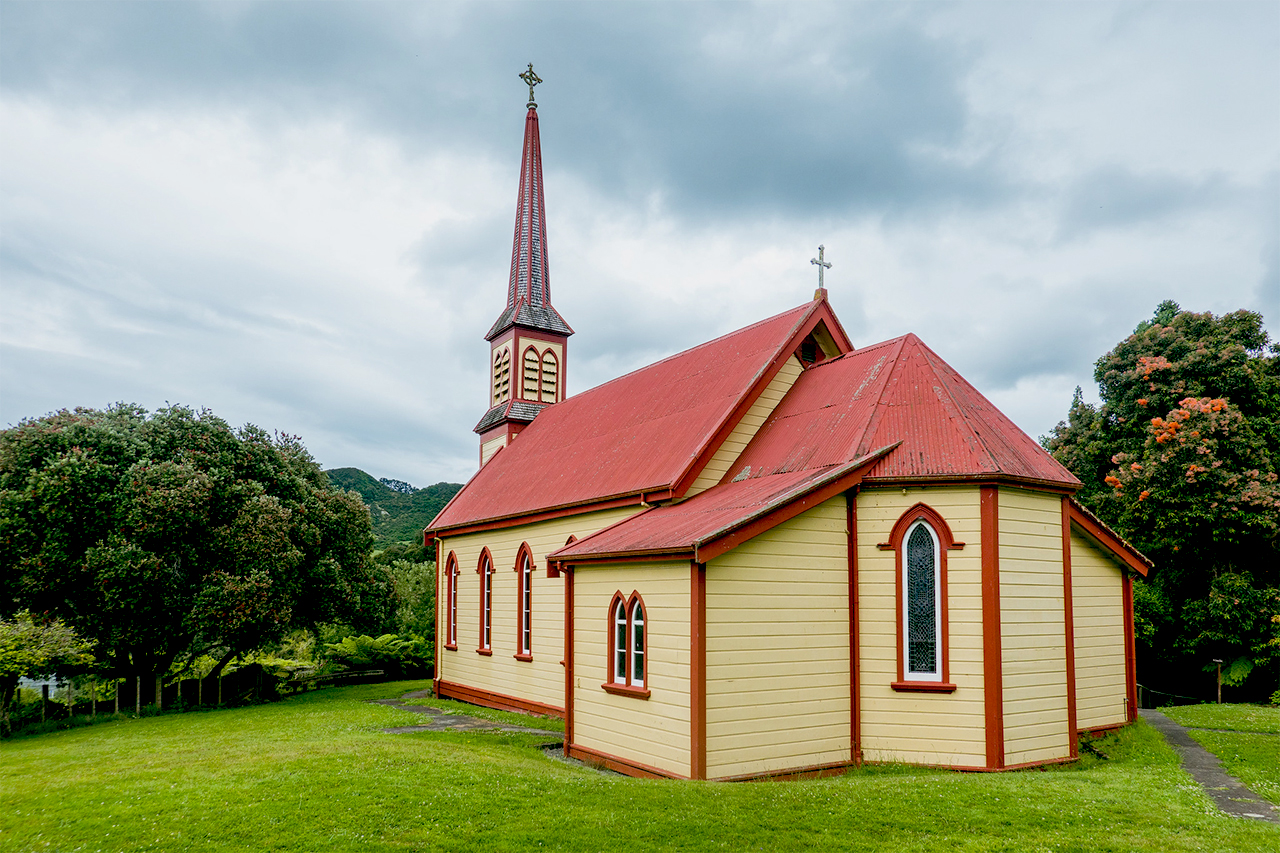
St Joseph's Church, built in 1893, is part of the second Catholic Maori mission station established on the Whanganui River. It is closely associated with the religious order, the Daughters of Our Lady of Compassion and its founder Mother Mary Joseph Aubert (1835-1926). It is also associated with James K. Baxter (1926-1972), one of New Zealand's finest poets. In the early 1880s, partly due to the request of the local Ngati Hau to have their own priest, the site of Jerusalem (Hiruharama) was chosen by the Catholic Church in New Zealand as the spearhead of a rejuvenated Maori mission. The new mission was begun in 1883, and was led by the Marist missionary Father Christophe Soulas. Assisting him was Sister Mary Aubert and, for the first year, three sisters of St Joseph's of Nazareth. The first church (attributed to architect Thomas Turnbull), also known as St Joseph's (Hato Hohepa), was built on the site by local Maori in 1885, but was burnt down in 1888 by an irate Pakeha. At Jerusalem, Aubert was able to further develop her interest in traditional Maori medicine, producing her remedies for sale to support the mission. Aubert also founded a home to care for destitute and orphaned children. In 1892 (now) Mother Aubert founded the Daughters of Our Lady of Compassion, New Zealand's first indigenous religious order. The present church was erected at this time, with construction completed by April 1893.

The second St Joseph's was built in a simple Gothic revival style. Also by architect Thomas Turnbull, the design was not as elaborate as that of the previous church but its location on the hill above the settlement formed a striking landmark overlooking the Whanganui River. Its construction was largely funded by the efforts of Soulas and Aubert. Aubert and some of her fellow sisters undertook a journey around the country, often walking long distances, asking for donations to support the Jerusalem mission and raise money for the construction of the church.

Mother Aubert and three of her sisters left Jerusalem in 1899 to extend their work among the poor of Wellington, but the main Maori Mission remained. The school established by the mission was eventually closed in 1969. That same year the poet and social activist James K. Baxter, drawn by the blend of Maoritanga and Catholicism, established an alternative community at Jerusalem. Baxter, a devout Catholic convert, was known as Hemi at the settlement. The commune became the focus of adverse publicity and he left in September 1971. Baxter's experiences of Jerusalem were recorded in his books, Jerusalem Sonnets (1970), and Jerusalem Daybook (1971). Baxter returned to Jerusalem for a short time in 1972, but left for Auckland in August. It was during this later period that he completed his last book, Autumn Sonnets (1972). He died in October 1972, and was buried [on tribal land] at Jerusalem with a full Maori tangi - a rare honor for a Pakeha.

St Joseph's Church, Jerusalem, has great national and international significance. It is closely associated with the establishment of New Zealand's first indigenous religious order, the Daughters of Our Lady of Compassion and particularly its founder Mother Mary Aubert. St Joseph's remains a well-known and much loved landmark on the Whanganui River. The Sisters of Compassion, as they are more commonly known, have retained a strong presence in the Maori community, and the church is still used by the Order for services.
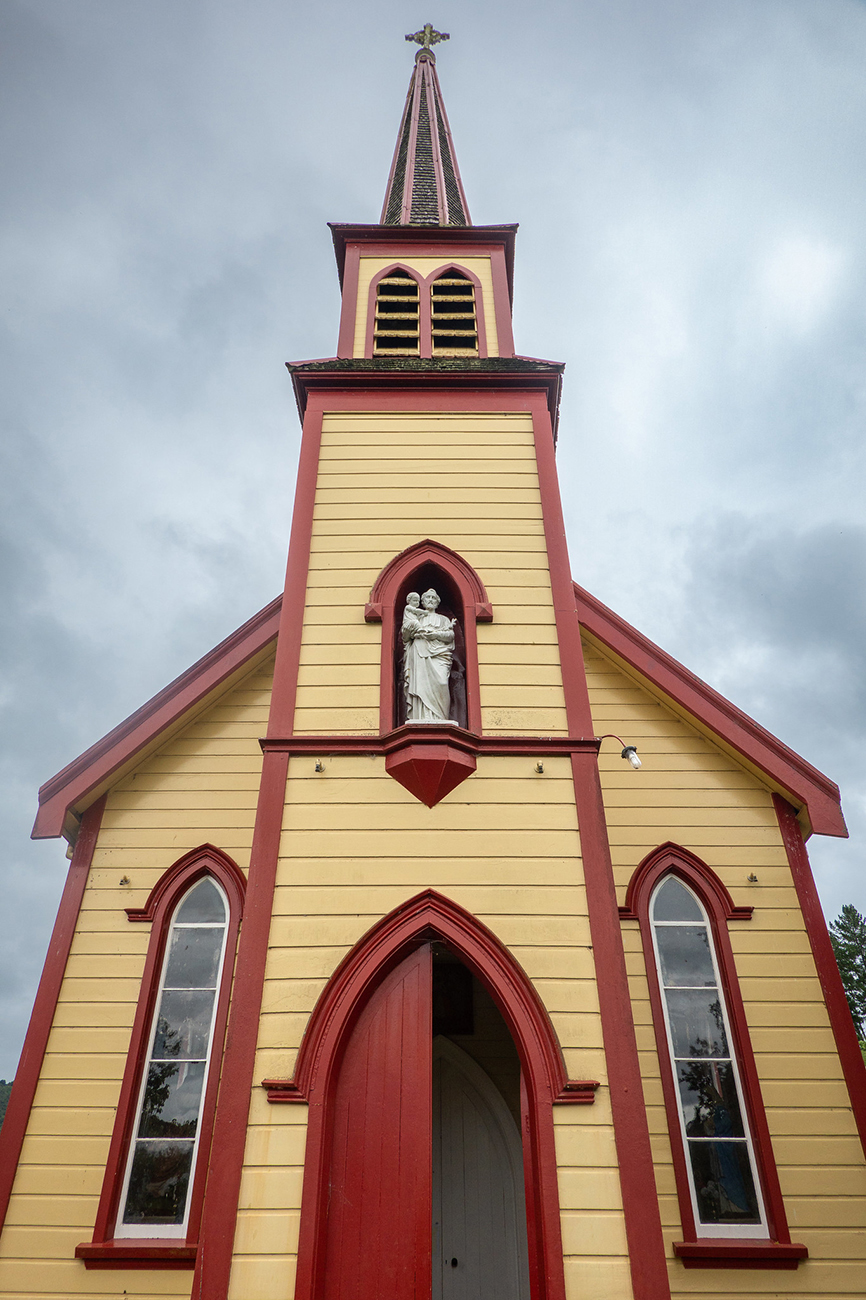
St Joseph's Church (Catholic), Jerusalem / Hiruharama. CC BY-NC-SA 2.0 Image courtesy of www.flickr.com | Nick Thompson | 06/01/2023 | Nick Thompson
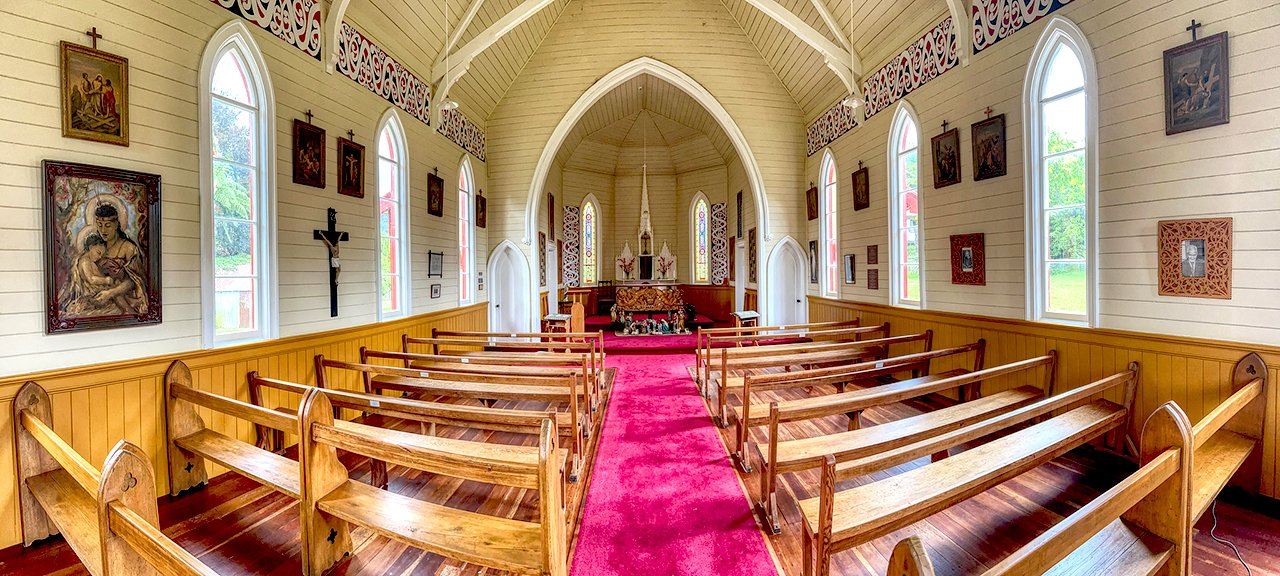
St Joseph's Church (Catholic), Jerusalem / Hiruharama. Interior CC BY-NC-SA 2.0 Image courtesy of www.flickr.com | Nick Thompson | 06/01/2023 | Nick Thompson
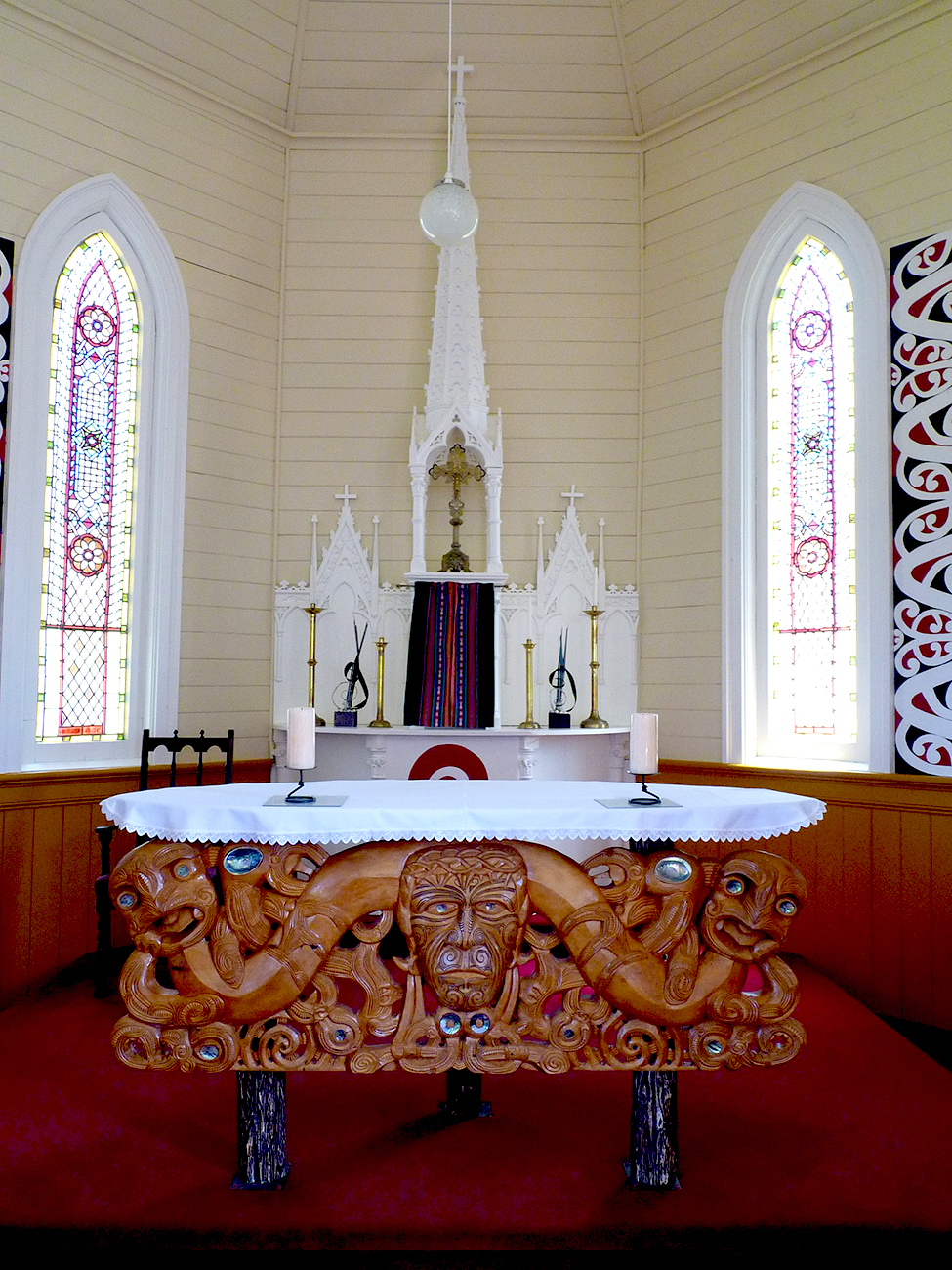
St Joseph's Church (Catholic), Jerusalem / Hiruharama. Altar detail CC BY-NC-SA 4.0 Image courtesy of commons.wikimedia.org | Michal Klajban | 18/01/2015 | Michal Klajban - Wikimedia Commons
St Joseph's Church (Catholic), Jerusalem / Hiruharama. CC BY-NC-SA 2.0 Image courtesy of www.flickr.com | Nick Thompson | 06/01/2023 | Nick Thompson
St Joseph's Church (Catholic), Jerusalem / Hiruharama. Interior CC BY-NC-SA 2.0 Image courtesy of www.flickr.com | Nick Thompson | 06/01/2023 | Nick Thompson
St Joseph's Church (Catholic), Jerusalem / Hiruharama. Altar detail CC BY-NC-SA 4.0 Image courtesy of commons.wikimedia.org | Michal Klajban | 18/01/2015 | Michal Klajban - Wikimedia Commons

List Entry Information

Overview

Status
Listed

List Entry Status
Historic Place Category 1

Access
Private/No Public Access

List Number
161

Date Entered
2nd April 1985

Date of Effect
2nd April 1985

City/District Council
Whanganui District

Region
Horizons (Manawatū-Whanganui) Region

Extent of List Entry

Extent of registration includes the land described as Ikaroa 1 Block (RT WN29D/363), Wellington Land District, and the building thereon known as St Joseph's Church (Catholic) and its fixtures and fittings

Legal description

Ikaroa 1 Block (RT WN29D/363), Wellington Land District

Detailed List Entry

Construction Professional

Name

Messrs Bett & McFadgen

Type

Builder

Biography

No biography is currently available for this construction professional

Name

Turnbull, Thomas

Type

Architect

Biography

Thomas Turnbull (1824-1907) was born and educated in Scotland and trained under David Bryce, Her Majesty's Architect. He travelled to Melbourne in 1851 and after nine years there moved to San Francisco. He arrived in New Zealand in 1871 and soon established a thriving business. His son William, a distinguished architect in his own right, became a partner in the firm in 1891. Turnbull was a member of the Royal Institute of British Architects. He was a pioneer in the design of buildings to withstand earthquakes and he was responsible for breaking down prejudice against the use of permanent materials for building construction. He specialised in masonry construction for commercial purposes but was also responsible for some fine houses. Among his most important buildings were the Willis Street churches of St Peter (1879) and St John (1885), the former National Mutual Building (1883-84), the General Assembly Library (1899) and the former Bank of New Zealand Head Office (1901), all in Wellington.

Construction Details

Start Year

1892

Finish Year

1893

Type

Original Construction

Construction Materials

Timber construction on wooden piles with corrugated iron roof.

Reference

Completion Date

13th December 2001

Report Written By

Helen McCracken

Information Sources

Dictionary of New Zealand Biography

Dictionary of New Zealand Biography

Munro, 1997

Jessie Munro, The Story of Suzanne Aubert, Auckland, 1997

Report Written By

This place was identified as significant under previous legislation with different information requirements. It remains significant under the current legislation. There is opportunity under our legislation and policies to add to this information. Further information about this place may be available from the Central Regional Office of Heritage New Zealand Pouhere Taonga. Please note that entry on the New Zealand Heritage List/Rarangi Korero identifies only the heritage values of the property concerned, and should not be construed as advice on the state of the property, or as a comment of its soundness or safety, including in regard to earthquake risk, safety in the event of fire, or insanitary conditions.

Further Information

Current Usages

Uses: Religion

Specific Usage: Church

Former Usages

General Usage:: Religion

Specific Usage: Church

Themes

Web Links

Overview

Status

Listed

List Entry Status

Historic Place Category 1

Access

Private/No Public Access

List Number

161

Date Entered

2nd April 1985

Date of Effect

2nd April 1985

City/District Council

Whanganui District

Region

Horizons (Manawatū-Whanganui) Region

Extent of List Entry

Extent of registration includes the land described as Ikaroa 1 Block (RT WN29D/363), Wellington Land District, and the building thereon known as St Joseph's Church (Catholic) and its fixtures and fittings

Legal description

Ikaroa 1 Block (RT WN29D/363), Wellington Land District

Status

Listed

List Entry Status

Historic Place Category 1

Access

Private/No Public Access

List Number

161

Date Entered

2nd April 1985

Date of Effect

2nd April 1985

City/District Council

Whanganui District

Region

Horizons (Manawatū-Whanganui) Region

Extent of List Entry

Extent of registration includes the land described as Ikaroa 1 Block (RT WN29D/363), Wellington Land District, and the building thereon known as St Joseph's Church (Catholic) and its fixtures and fittings

Legal description

Ikaroa 1 Block (RT WN29D/363), Wellington Land District

Construction Information

Construction Professional

Name

Messrs Bett & McFadgen

Type

Builder

Biography

No biography is currently available for this construction professional

Name

Turnbull, Thomas

Type

Architect

Biography

Thomas Turnbull (1824-1907) was born and educated in Scotland and trained under David Bryce, Her Majesty's Architect. He travelled to Melbourne in 1851 and after nine years there moved to San Francisco. He arrived in New Zealand in 1871 and soon established a thriving business. His son William, a distinguished architect in his own right, became a partner in the firm in 1891. Turnbull was a member of the Royal Institute of British Architects. He was a pioneer in the design of buildings to withstand earthquakes and he was responsible for breaking down prejudice against the use of permanent materials for building construction. He specialised in masonry construction for commercial purposes but was also responsible for some fine houses. Among his most important buildings were the Willis Street churches of St Peter (1879) and St John (1885), the former National Mutual Building (1883-84), the General Assembly Library (1899) and the former Bank of New Zealand Head Office (1901), all in Wellington.

Construction Details

Start Year

1892

Finish Year

1893

Type

Original Construction

Construction Materials

Timber construction on wooden piles with corrugated iron roof.

Construction Professional

Name

Messrs Bett & McFadgen

Type

Builder

Biography

No biography is currently available for this construction professional

Name

Turnbull, Thomas

Type

Architect

Biography

Thomas Turnbull (1824-1907) was born and educated in Scotland and trained under David Bryce, Her Majesty's Architect. He travelled to Melbourne in 1851 and after nine years there moved to San Francisco. He arrived in New Zealand in 1871 and soon established a thriving business. His son William, a distinguished architect in his own right, became a partner in the firm in 1891. Turnbull was a member of the Royal Institute of British Architects. He was a pioneer in the design of buildings to withstand earthquakes and he was responsible for breaking down prejudice against the use of permanent materials for building construction. He specialised in masonry construction for commercial purposes but was also responsible for some fine houses. Among his most important buildings were the Willis Street churches of St Peter (1879) and St John (1885), the former National Mutual Building (1883-84), the General Assembly Library (1899) and the former Bank of New Zealand Head Office (1901), all in Wellington.

Construction Details

Start Year

1892

Finish Year

1893

Type

Original Construction

Construction Materials

Timber construction on wooden piles with corrugated iron roof.

Reference

Historical and Associated Iwi / Hapū / Whānau

Completion Date

13th December 2001

Report Written By

Helen McCracken

Information Sources

Dictionary of New Zealand Biography

Dictionary of New Zealand Biography

Munro, 1997

Jessie Munro, The Story of Suzanne Aubert, Auckland, 1997

Other Information

This place was identified as significant under previous legislation with different information requirements. It remains significant under the current legislation. There is opportunity under our legislation and policies to add to this information. Further information about this place may be available from the Central Regional Office of Heritage New Zealand Pouhere Taonga. Please note that entry on the New Zealand Heritage List/Rarangi Korero identifies only the heritage values of the property concerned, and should not be construed as advice on the state of the property, or as a comment of its soundness or safety, including in regard to earthquake risk, safety in the event of fire, or insanitary conditions.

Historical and Associated Iwi / Hapū / Whānau

Completion Date

13th December 2001

Report Written By

Helen McCracken

Information Sources

Dictionary of New Zealand Biography

Dictionary of New Zealand Biography

Munro, 1997

Jessie Munro, The Story of Suzanne Aubert, Auckland, 1997

Other Information

This place was identified as significant under previous legislation with different information requirements. It remains significant under the current legislation. There is opportunity under our legislation and policies to add to this information. Further information about this place may be available from the Central Regional Office of Heritage New Zealand Pouhere Taonga. Please note that entry on the New Zealand Heritage List/Rarangi Korero identifies only the heritage values of the property concerned, and should not be construed as advice on the state of the property, or as a comment of its soundness or safety, including in regard to earthquake risk, safety in the event of fire, or insanitary conditions.

Further Information

Current Usages

Uses: Religion

Specific Usage: Church

Former Usages

General Usage: Religion

Specific Usage: Church

Current Usages

Uses: Religion

Specific Usage: Church

Former Usages

General Usage: Religion

Specific Usage: Church

Location

Loading
Related listings
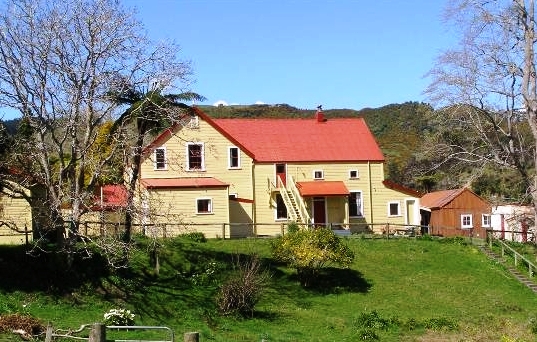
St Joseph's Convent (Catholic), Jerusalem / Hiruharma
St Joseph's Convent (Catholic)
St Joseph's Convent (Catholic), Jerusalem / Hiruharma
St Joseph's Convent (Catholic)
Sign up to hear more

Get the latest heritage news, features and events delivered
straight to your inbox.

Subscribe