DonateMembershipVisit Heritage
  • Tūrangawaewae
    Places
  • Tira Māori
    Māori Heritage
  • Poutairangahia
    Archaeology
  • Rauemi
    Resources
  • Mō Tātou
    About Us
  • New Zealand Heritage List
  • Nominate and submit
  • Explore the List
  • National Historic Landmarks
  • Plaques
  • Rainbow List Project
  • Lost heritage
  • Visit Heritage
  • Our properties
  • Turnbull House Project
  • Collections
  • Shop
  • Tohu Whenua
  • Tira Māori
  • Conserving Māori heritage
  • Marae built heritage
  • Māori heritage on the List
  • Hinemihi—Te Hokinga Mai
  • What is archaeology?
  • Is there a site on my property?
  • What are my legal requirements?
  • Affecting an archaeological site
  • Declaring an archaeological site
  • Archaeology FAQs
  • Archaeology Digital Library
  • Archaeology guidelines and templates
  • Resources
  • Funding
  • Publications
  • Sustainable management guides
  • Disaster recovery
  • Podcasts & digital resources
  • Education Hub
  • Conservation plans
  • About
  • Board
  • Māori Heritage Council
  • Senior Staff
  • Offices
  • Contact us
  • Careers
  • Covenants
  • Fast-track
  • Corporate documents
  • Currently consulting on
  • Our submissions
  • News
  • Covid-19 response
Quick links
Rārangi Kōrero | The List
Explore the List
National Historic Landmarks
Ngā Manawhenua o Aotearoa me ōna Kōrero Tūturu
Quick links
Tapuwae
A Vision for Places of Māori Heritage
Funding for Māori Heritage
Resources
Quick links
Archaeological Authority Portal
Applying for an archaeological authority
Archaeology FAQs
Browse the most frequently asked questions about archaeological authorities and the archaeological process.
Quick links
Quick links
News
News Keep up to date with Heritage New Zealand Pouhere Taonga
Membership
Membership Find out more and sign up today
DonateMembershipVisit Heritage
  • Tūrangawaewae
    Places
  • Tira Māori
    Māori Heritage
  • Poutairangahia
    Archaeology
  • Rauemi
    Resources
  • Mō Tātou
    About Us
  • New Zealand Heritage List
  • Nominate and submit
  • Explore the List
  • National Historic Landmarks
  • Plaques
  • Rainbow List Project
  • Lost heritage
  • Visit Heritage
  • Our properties
  • Turnbull House Project
  • Collections
  • Shop
  • Tohu Whenua
  • Tira Māori
  • Conserving Māori heritage
  • Marae built heritage
  • Māori heritage on the List
  • Hinemihi—Te Hokinga Mai
  • What is archaeology?
  • Is there a site on my property?
  • What are my legal requirements?
  • Affecting an archaeological site
  • Declaring an archaeological site
  • Archaeology FAQs
  • Archaeology Digital Library
  • Archaeology guidelines and templates
  • Resources
  • Funding
  • Publications
  • Sustainable management guides
  • Disaster recovery
  • Podcasts & digital resources
  • Education Hub
  • Conservation plans
  • About
  • Board
  • Māori Heritage Council
  • Senior Staff
  • Offices
  • Contact us
  • Careers
  • Covenants
  • Fast-track
  • Corporate documents
  • Currently consulting on
  • Our submissions
  • News
  • Covid-19 response
Quick links
Rārangi Kōrero | The List
Explore the List
National Historic Landmarks
Ngā Manawhenua o Aotearoa me ōna Kōrero Tūturu
Quick links
Tapuwae
A Vision for Places of Māori Heritage
Funding for Māori Heritage
Resources
Quick links
Archaeological Authority Portal
Applying for an archaeological authority
Archaeology FAQs
Browse the most frequently asked questions about archaeological authorities and the archaeological process.
Quick links
Quick links
News
News Keep up to date with Heritage New Zealand Pouhere Taonga
Membership
Membership Find out more and sign up today
  • Places
  • Nominate and submit
  • National Historic Landmarks
  • Places
  • Nominate and submit
  • National Historic Landmarks
  • Tira Māori
  • Conserving Māori heritage
  • Marae built heritage
  • Tira Māori
  • Conserving Māori heritage
  • Marae built heritage
  • Archaeological authorities
  • Archaeology Digital Library
  • Archaeological authorities
  • Archaeology Digital Library
  • All resources
  • Publications
  • Funding
  • All resources
  • Publications
  • Funding
  • FAQs
  • FAQs
Follow us on:
Places
  • Places
  • Nominate and submit
  • National Historic Landmarks
Tira Māori
  • Tira Māori
  • Conserving Māori heritage
  • Marae built heritage
Archaeology
  • Archaeological authorities
  • Archaeology Digital Library
Resources
  • All resources
  • Publications
  • Funding
FAQs
  • FAQs
Follow us on
HomePrivacyTerms and conditionsAbout this site
© Heritage New Zealand Pouhere Taonga 2026.
 
St Cuthbert's Church (Anglican)

15 Elizabeth Street, COLLINGWOOD

Private

Historic Place Category 1

List No. 1626

Quick links:
List GalleryLocationDetails
Overlooking the Aorere River is St Cuthbert's Church, designed by renowned surveyor and explorer Thomas Brunner (1821-1874), and built in 1873 to serve the small mining community of Collingwood. Now the oldest remaining building in Collingwood, it was the first and only purpose-built church erected after the whare that had served Anglican Maori from Tomatea Pa from 1843.

Until the late 1850s, Collingwood was ministered by travelling missionaries. In 1857 gold was discovered in the Aorere Valley and the town of Collingwood swelled with an influx of miners. Concerned that the crowded area was without permanent religious ministration, the first Bishop of Nelson, Edmund Hobhouse (1817-1904), appointed his former curate, the Reverend R. H. Codrington, to the Golden Bay goldfields. Codrington, who later became a prominent scholar in Melanesian languages, advocated for the erection of a permanent church and acquired the land on which St Cuthbert's Church now stands. Despite the establishment of a building fund by Codrington's successor Reverend Halcombe, the gold rush was short lived and little progress was made on the church. Halcombe learned Te Reo Maori and held services in the whare and schoolhouse. The next vicar Reverend Richard Gaskin, considered a new church to be essential. His death by drowning in 1872 inspired the community to complete the church out of respect for his memory.

Thomas Brunner, who had trained in Oxford, England as an architect and surveyor, designed St Cuthbert's Church shortly before his death in 1874. It was the second church Brunner had designed. However, Brunner is best remembered for his epic explorations into the Nelson region and the West Coast in the 1840s, for which he was awarded a medal from the Royal Geographical Society in 1850.

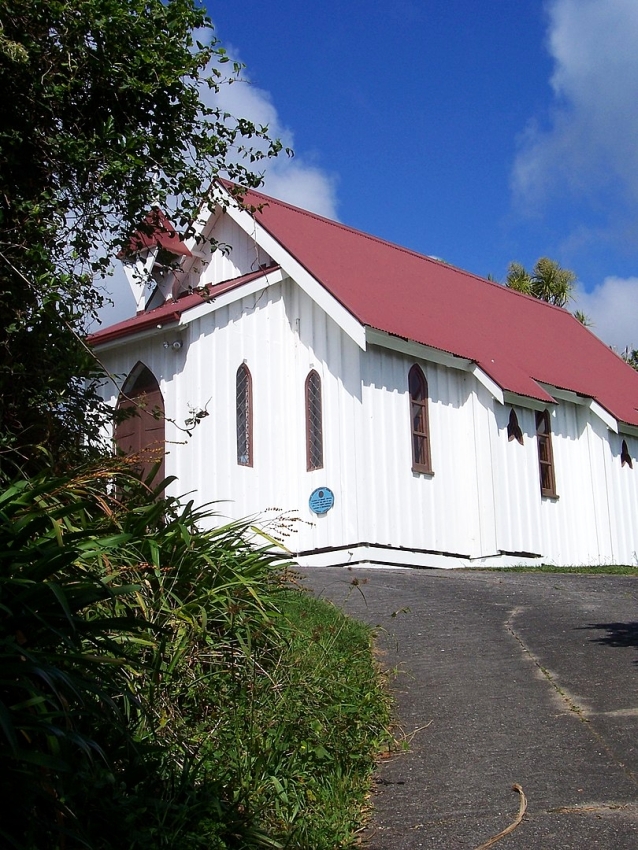
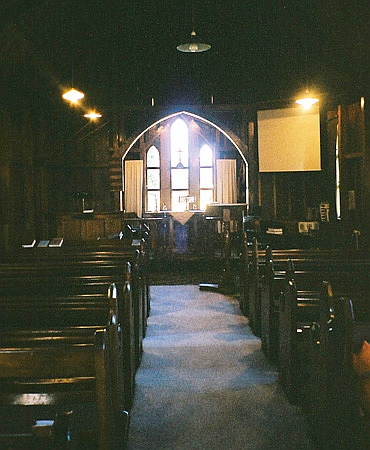
Built of pit-sawn timber in the English Gothic style that has inspired the design of churches throughout New Zealand, St Cuthbert's Church is a simple, lean-to structure with a small turret bell tower that holds the first bell to be cast in Nelson. The church is based on a simple rectangular plan, although two small bays project from each side of the nave and add interest to the building. The lancet windows at the west end of the church and trefoils on the side walls were donated by the then Bishop of Nelson, Andrew Suter. The steeply pitched roof was covered with shingles that remain underneath their modern, corrugated iron covering. The interior features exposed timber framing.

Constructed by a Mr Grange for £140, St Cuthbert's was described as 'one of the best-built churches in the diocese' upon its completion in 1873. The opening of the church was delayed by the discovery that Bishop Suter had inaccurately surveyed the land on which the church stood and the congregation's desire to reduce the £90 debt on the building. Although no records of the dedication have been found, it is believed that St Cuthbert's was opened before the end of 1873. The church remains close to its original condition and, despite the removal of the vicar to the larger settlement of Takaka in 1973, St Cuthbert's continues to be the focal point of the Anglican community in Collingwood.

St Cuthbert's Church has national significance as a rare example of the architectural skill of Thomas Brunner and the building stands as a memorial to this important surveyor. It is of historical interest for its intimate association with people responsible for the widespread development and strengthening of the Anglican Church in New Zealand and is a reflection of the progress made in the Golden Bay area. St Cuthbert's has technological importance as an example of early timber construction. As the custodian of the first bell cast in Nelson, it reflects the development of industry in the region. It has strong spiritual significance as an enduring place of worship and is a continuing symbol of the Anglican Church in Collingwood. The church is also related to the gold rushes that were a phenomenon of late nineteenth century New Zealand and, as such, provides insight into the ancillary activities that accompanied gold mining. It dates from early period of New Zealand history and, as the oldest building remaining in Collingwood, is of considerable local value.
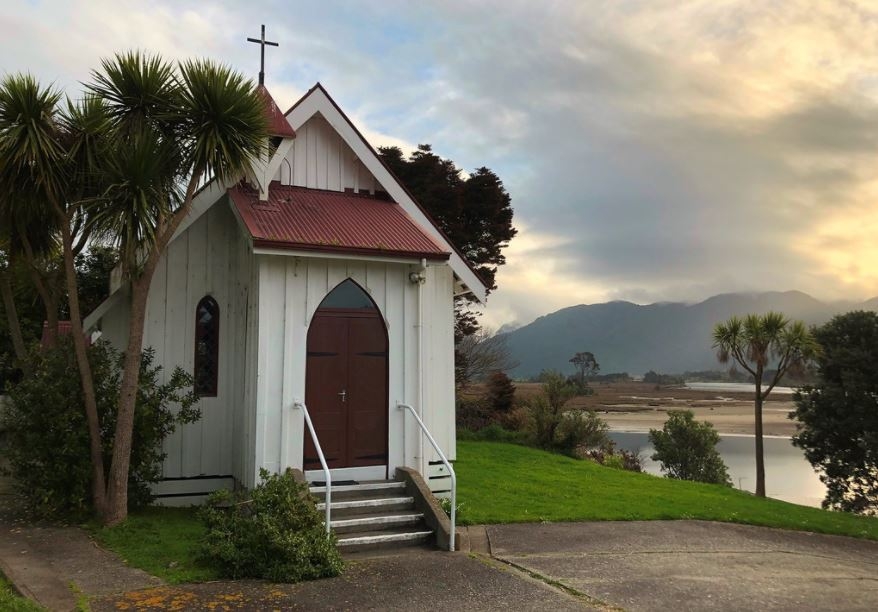
St Cuthbert's Church (Anglican), Collingwood. Image courtesy of www.flickr.com | PhilBee NZ - Phil Braithwaite | 01/08/2020 | Phil Braithwaite
St Cuthbert's Church (Anglican), Collingwood. CC BY-SA 2.0 Image courtesy of commons.wikimedia.org | dws~11 | 25/05/2004 | dws~11 - Wikimedia Commons
St Cuthbert's Church (Anglican), Collingwood. Interior | Rebecca O'Brien | 02/02/2003 | Heritage New Zealand
St Cuthbert's Church (Anglican), Collingwood. Image courtesy of www.flickr.com | PhilBee NZ - Phil Braithwaite | 01/08/2020 | Phil Braithwaite
St Cuthbert's Church (Anglican), Collingwood. CC BY-SA 2.0 Image courtesy of commons.wikimedia.org | dws~11 | 25/05/2004 | dws~11 - Wikimedia Commons
St Cuthbert's Church (Anglican), Collingwood. Interior | Rebecca O'Brien | 02/02/2003 | Heritage New Zealand

List Entry Information

Overview

Status
Listed

List Entry Status
Historic Place Category 1

Access
Private/No Public Access

List Number
1626

Date Entered
14th February 1991

Date of Effect
14th February 1991

City/District Council
Tasman District

Region
Tasman Region

Legal description

Lot 1 DP 18207 (RT NL12A/928), Nelson Land District

Detailed List Entry
Significance

Historic Significance

Historical Significance or Value This historic place was registered under the Historic Places Act 1980. The following text is from the original Building Classification Committee report considered by the NZHPT Board at the time of registration: St Cuthbert's Church has served the Anglican community of Collingwood and the surrounding area for 117 years (1873-1990). It was designed by Thomas Brunner, architect and surveyor, who is one of New Zealand's most famous nineteenth century explorers.

Physical Significance

This historic place was registered under the Historic Places Act 1980. The following text is from the original Building Classification Committee report considered by the NZHPT Board at the time of registration: ARCHITECTURAL QUALITY: St Cuthbert's Church is a fine example of the small wooden Gothic Revival churches built throughout New Zealand in the second half of last century. Well maintained and largely original, it is the oldest building in Collingwood. TOWNSCAPE/LANDMARK VALUE: Although sited on a rise above Collingwood, St Cuthbert's visual prominence is masked by surrounding trees.

Construction Professional

Name

P. Graham and Son

Type

Builder

Biography

P. Graham and Son of Christchurch.

Name

Brunner, Thomas

Type

Architect

Biography

Brunner (1821-74) was born at Oxford and on leaving school at the age of fifteen worked for an Oxford architect and surveyor. Arriving in New Zealand in 1841 he was employed by the New Zealand Company, Nelson, initially as a surveying "improver" (apprentice) and then as Assistant Surveyor. He undertook major exploration of the Nelson and West Coast regions, with his epic journey of the West Coast lasting 550 days from 1846-48. The publication of his account of this journey earned him the award of a medal of the Royal Geographical Society. In 1849, unable to find employment in Nelson, Brunner took up the post of Clerk of Works to the Canterbury Association. He returned to Nelson, and in 1851 became Surveyor of Crown Lands. By 1856 he was Chief Surveyor and Commissioner of Public Works and Commissioner of Native Reserves. He retired from this employment in 1869. In retirement he was responsible for the design of St Cuthbert's Church, Collingwood.

Construction Details

Start Year

1982

Type

Restoration

Description

Restoration and repairs

Start Year

1873

Type

Original Construction

Start Year

1890

Type

Modification

Description

Re-roofed with corrugated iron

Type

Modification

Description

Front steps replaced in concrete

Start Year

1978

Type

Modification

Description

Church doors replaced

Start Year

1993

Type

Modification

Description

re-piled

Start Year

2002

Type

Modification

Description

Corrugated iron replaced

Construction Materials

Lean-to structure of pit-sawn timber with a small turret bell tower and a corrugated iron roof. Vertical board and battern cladding used on the nave. The interior features exposed wood framing, rafters and scissor bracing. The walls and ceilings are lined with tongue and groove sarking.

Notable Features

The church bell, which was the first to be cast in Nelson The original shingles, extant over the entire roof and visible under the corrugated iron above the sanctuary Windows gifted by Bishop Suter Interior woodwork.

Historical Narrative

This historic place was registered under the Historic Places Act 1980. The following text is from the original Building Classification Committee report considered by the NZHPT Board at the time of registration: DESCRIPTION: The first resident minister in the missionary district of Golden Bay, Reverend R H Codrington, was appointed in 1860. Land on which to build a church was secured that same year, but services were held at a large whare and later at the old Collingwood schoolhouse. Reverend C H J Halcombe was appointed to the parish in 1861 and by the time he left the district in 1871 a building fund had reached about £183. In 1872 Richard Gaskin, a 31 year old student from Bishopdale College, was then appointed to the parish but he was drowned nine months later, on 24 September 1872 and a replacement minister was not appointed for two years. Gaskin had worked towards the construction of the church and tenders had been called in the month of his death. Much timber was pitsawn, and the doors and windows were donated by Bishop Suter. When the building was completed it was discovered that it had been sited partly on church ground and partly on the adjoining section. The opening of the building was postponed until the church was able to purchase the strip of land on to which the building encroached. No records have been found concerning the dedication of the building but this apparently took place late in 1873. Thomas Brunner who trained as an architect and surveyor, designed St Cuthbert's in his retirement. Brunner is best known for his exploration of Nelson and the West Coast and particularly for his journey to the south of Hokitika in 1846.

Physical Description

This historic place was registered under the Historic Places Act 1980. The following text is from the original Building Classification Committee report considered by the NZHPT Board at the time of registration: ARCHITECTURAL DESCRIPTION: This small wooden Gothic Revival church has an entry porch which is a lean-to structure, with a small square turret bell tower surmounted by a plain cross. The double doors have a single arched window above. The chancel is gabled and has three plain lancet windows at the west end with a lead-lighted trefoil window on each of the side walls. A gabled vestry on the south side of the nave has decorative detailing in the eaves. Its wall cladding differs from that of the main structure of the church. The nave is a simple gabled structure with vertical board and batten cladding. Two small bays project from each side of the nave, roofed by a continuous projection of the main roof. Each bay has a trefoil window. Elsewhere lancet windows, some leaded, are used. The interior has exposed wall framing, rafters and scissor bracing. Walls and ceiling are lined with tongue-and-groove sarking. A pointed archway and communion rail separates the chancel from the nave. MODIFICATIONS: 1890: Re-roofed with corrugated iron. Date Unknown: Front Steps replaced in concrete.

Reference

Completion Date

28th February 2003

Report Written By

Rebecca O'Brien

Information Sources

Ault, 1958

H. Ault, The Nelson Narrative; The Story of the Church of England in the Diocese of Nelson, New Zealand, Nelson, 1958

Bowman, 1999

Ian Bowman, 'St Cuthbert's Collingwood; A Cyclical Preventative Maintenance Plan', 1999, NZHPT Library, Wellington

Furkert, 1953

Frederick William Furkert, Early New Zealand Engineers, Wellington, 1953

Golden Bay Times and Argus

Golden Bay Times and Argus

Land Information New Zealand (LINZ)

Land Information New Zealand

McGill, 1997

David McGill and Grant Sheehan, Landmarks: Notable Historic Buildings of New Zealand, Auckland, 1997

Nelson Evening Mail

Nelson Evening Mail

Newport, 1971

J. Newport, Collingwood; A History of the Area from the Earliest Days to 1912, Christchurch, 1971

St Cuthbert's Parish, 1998

St Cuthbert's Parish, St Cuthbert's 125th Anniversary Celebration, 6 December 1998, NZHPT File 12004-115

Temple, 1985

P. Temple, New Zealand Explorers; Great Journeys of Discovery, Christchurch, 1985

Colonist

The Colonist

Porter, 1983

Frances Porter (ed), Historic Buildings of Dunedin, South Island, Methuen, Auckland, 1983.

Report Written By

A fully referenced version of this report is available from the NZHPT Central Region office This historic place was registered under the Historic Places Act 1980. This report includes the text from the original Building Classification Committee report considered by the NZHPT Board at the time of registration. Please note that entry on the New Zealand Heritage List/Rarangi Korero identifies only the heritage values of the property concerned, and should not be construed as advice on the state of the property, or as a comment of its soundness or safety, including in regard to earthquake risk, safety in the event of fire, or insanitary conditions.

Further Information

Current Usages

Uses: Religion

Specific Usage: Church

Former Usages

General Usage:: Religion

Specific Usage: Church

Themes

Web Links

Overview

Status

Listed

List Entry Status

Historic Place Category 1

Access

Private/No Public Access

List Number

1626

Date Entered

14th February 1991

Date of Effect

14th February 1991

City/District Council

Tasman District

Region

Tasman Region

Legal description

Lot 1 DP 18207 (RT NL12A/928), Nelson Land District

Status

Listed

List Entry Status

Historic Place Category 1

Access

Private/No Public Access

List Number

1626

Date Entered

14th February 1991

Date of Effect

14th February 1991

City/District Council

Tasman District

Region

Tasman Region

Legal description

Lot 1 DP 18207 (RT NL12A/928), Nelson Land District

Significance

Why is this place significant?

Historic Significance

Historical Significance or Value This historic place was registered under the Historic Places Act 1980. The following text is from the original Building Classification Committee report considered by the NZHPT Board at the time of registration: St Cuthbert's Church has served the Anglican community of Collingwood and the surrounding area for 117 years (1873-1990). It was designed by Thomas Brunner, architect and surveyor, who is one of New Zealand's most famous nineteenth century explorers.

Physical Significance

This historic place was registered under the Historic Places Act 1980. The following text is from the original Building Classification Committee report considered by the NZHPT Board at the time of registration: ARCHITECTURAL QUALITY: St Cuthbert's Church is a fine example of the small wooden Gothic Revival churches built throughout New Zealand in the second half of last century. Well maintained and largely original, it is the oldest building in Collingwood. TOWNSCAPE/LANDMARK VALUE: Although sited on a rise above Collingwood, St Cuthbert's visual prominence is masked by surrounding trees.

Why is this place significant?

Historic Significance

Historical Significance or Value This historic place was registered under the Historic Places Act 1980. The following text is from the original Building Classification Committee report considered by the NZHPT Board at the time of registration: St Cuthbert's Church has served the Anglican community of Collingwood and the surrounding area for 117 years (1873-1990). It was designed by Thomas Brunner, architect and surveyor, who is one of New Zealand's most famous nineteenth century explorers.

Physical Significance

This historic place was registered under the Historic Places Act 1980. The following text is from the original Building Classification Committee report considered by the NZHPT Board at the time of registration: ARCHITECTURAL QUALITY: St Cuthbert's Church is a fine example of the small wooden Gothic Revival churches built throughout New Zealand in the second half of last century. Well maintained and largely original, it is the oldest building in Collingwood. TOWNSCAPE/LANDMARK VALUE: Although sited on a rise above Collingwood, St Cuthbert's visual prominence is masked by surrounding trees.

Construction Information

Construction Professional

Name

P. Graham and Son

Type

Builder

Biography

P. Graham and Son of Christchurch.

Name

Brunner, Thomas

Type

Architect

Biography

Brunner (1821-74) was born at Oxford and on leaving school at the age of fifteen worked for an Oxford architect and surveyor. Arriving in New Zealand in 1841 he was employed by the New Zealand Company, Nelson, initially as a surveying "improver" (apprentice) and then as Assistant Surveyor. He undertook major exploration of the Nelson and West Coast regions, with his epic journey of the West Coast lasting 550 days from 1846-48. The publication of his account of this journey earned him the award of a medal of the Royal Geographical Society. In 1849, unable to find employment in Nelson, Brunner took up the post of Clerk of Works to the Canterbury Association. He returned to Nelson, and in 1851 became Surveyor of Crown Lands. By 1856 he was Chief Surveyor and Commissioner of Public Works and Commissioner of Native Reserves. He retired from this employment in 1869. In retirement he was responsible for the design of St Cuthbert's Church, Collingwood.

Construction Details

Start Year

1982

Type

Restoration

Description

Restoration and repairs

Start Year

1873

Type

Original Construction

Start Year

1890

Type

Modification

Description

Re-roofed with corrugated iron

Type

Modification

Description

Front steps replaced in concrete

Start Year

1978

Type

Modification

Description

Church doors replaced

Start Year

1993

Type

Modification

Description

re-piled

Start Year

2002

Type

Modification

Description

Corrugated iron replaced

Construction Materials

Lean-to structure of pit-sawn timber with a small turret bell tower and a corrugated iron roof. Vertical board and battern cladding used on the nave. The interior features exposed wood framing, rafters and scissor bracing. The walls and ceilings are lined with tongue and groove sarking.

Notable Features

The church bell, which was the first to be cast in Nelson The original shingles, extant over the entire roof and visible under the corrugated iron above the sanctuary Windows gifted by Bishop Suter Interior woodwork.

Construction Professional

Name

P. Graham and Son

Type

Builder

Biography

P. Graham and Son of Christchurch.

Name

Brunner, Thomas

Type

Architect

Biography

Brunner (1821-74) was born at Oxford and on leaving school at the age of fifteen worked for an Oxford architect and surveyor. Arriving in New Zealand in 1841 he was employed by the New Zealand Company, Nelson, initially as a surveying "improver" (apprentice) and then as Assistant Surveyor. He undertook major exploration of the Nelson and West Coast regions, with his epic journey of the West Coast lasting 550 days from 1846-48. The publication of his account of this journey earned him the award of a medal of the Royal Geographical Society. In 1849, unable to find employment in Nelson, Brunner took up the post of Clerk of Works to the Canterbury Association. He returned to Nelson, and in 1851 became Surveyor of Crown Lands. By 1856 he was Chief Surveyor and Commissioner of Public Works and Commissioner of Native Reserves. He retired from this employment in 1869. In retirement he was responsible for the design of St Cuthbert's Church, Collingwood.

Construction Details

Start Year

1982

Type

Restoration

Description

Restoration and repairs

Start Year

1873

Type

Original Construction

Start Year

1890

Type

Modification

Description

Re-roofed with corrugated iron

Type

Modification

Description

Front steps replaced in concrete

Start Year

1978

Type

Modification

Description

Church doors replaced

Start Year

1993

Type

Modification

Description

re-piled

Start Year

2002

Type

Modification

Description

Corrugated iron replaced

Construction Materials

Lean-to structure of pit-sawn timber with a small turret bell tower and a corrugated iron roof. Vertical board and battern cladding used on the nave. The interior features exposed wood framing, rafters and scissor bracing. The walls and ceilings are lined with tongue and groove sarking.

Notable Features

The church bell, which was the first to be cast in Nelson The original shingles, extant over the entire roof and visible under the corrugated iron above the sanctuary Windows gifted by Bishop Suter Interior woodwork.

Historical Narrative

This historic place was registered under the Historic Places Act 1980. The following text is from the original Building Classification Committee report considered by the NZHPT Board at the time of registration: DESCRIPTION: The first resident minister in the missionary district of Golden Bay, Reverend R H Codrington, was appointed in 1860. Land on which to build a church was secured that same year, but services were held at a large whare and later at the old Collingwood schoolhouse. Reverend C H J Halcombe was appointed to the parish in 1861 and by the time he left the district in 1871 a building fund had reached about £183. In 1872 Richard Gaskin, a 31 year old student from Bishopdale College, was then appointed to the parish but he was drowned nine months later, on 24 September 1872 and a replacement minister was not appointed for two years. Gaskin had worked towards the construction of the church and tenders had been called in the month of his death. Much timber was pitsawn, and the doors and windows were donated by Bishop Suter. When the building was completed it was discovered that it had been sited partly on church ground and partly on the adjoining section. The opening of the building was postponed until the church was able to purchase the strip of land on to which the building encroached. No records have been found concerning the dedication of the building but this apparently took place late in 1873. Thomas Brunner who trained as an architect and surveyor, designed St Cuthbert's in his retirement. Brunner is best known for his exploration of Nelson and the West Coast and particularly for his journey to the south of Hokitika in 1846.

This historic place was registered under the Historic Places Act 1980. The following text is from the original Building Classification Committee report considered by the NZHPT Board at the time of registration: DESCRIPTION: The first resident minister in the missionary district of Golden Bay, Reverend R H Codrington, was appointed in 1860. Land on which to build a church was secured that same year, but services were held at a large whare and later at the old Collingwood schoolhouse. Reverend C H J Halcombe was appointed to the parish in 1861 and by the time he left the district in 1871 a building fund had reached about £183. In 1872 Richard Gaskin, a 31 year old student from Bishopdale College, was then appointed to the parish but he was drowned nine months later, on 24 September 1872 and a replacement minister was not appointed for two years. Gaskin had worked towards the construction of the church and tenders had been called in the month of his death. Much timber was pitsawn, and the doors and windows were donated by Bishop Suter. When the building was completed it was discovered that it had been sited partly on church ground and partly on the adjoining section. The opening of the building was postponed until the church was able to purchase the strip of land on to which the building encroached. No records have been found concerning the dedication of the building but this apparently took place late in 1873. Thomas Brunner who trained as an architect and surveyor, designed St Cuthbert's in his retirement. Brunner is best known for his exploration of Nelson and the West Coast and particularly for his journey to the south of Hokitika in 1846.

Physical Description

This historic place was registered under the Historic Places Act 1980. The following text is from the original Building Classification Committee report considered by the NZHPT Board at the time of registration: ARCHITECTURAL DESCRIPTION: This small wooden Gothic Revival church has an entry porch which is a lean-to structure, with a small square turret bell tower surmounted by a plain cross. The double doors have a single arched window above. The chancel is gabled and has three plain lancet windows at the west end with a lead-lighted trefoil window on each of the side walls. A gabled vestry on the south side of the nave has decorative detailing in the eaves. Its wall cladding differs from that of the main structure of the church. The nave is a simple gabled structure with vertical board and batten cladding. Two small bays project from each side of the nave, roofed by a continuous projection of the main roof. Each bay has a trefoil window. Elsewhere lancet windows, some leaded, are used. The interior has exposed wall framing, rafters and scissor bracing. Walls and ceiling are lined with tongue-and-groove sarking. A pointed archway and communion rail separates the chancel from the nave. MODIFICATIONS: 1890: Re-roofed with corrugated iron. Date Unknown: Front Steps replaced in concrete.

This historic place was registered under the Historic Places Act 1980. The following text is from the original Building Classification Committee report considered by the NZHPT Board at the time of registration: ARCHITECTURAL DESCRIPTION: This small wooden Gothic Revival church has an entry porch which is a lean-to structure, with a small square turret bell tower surmounted by a plain cross. The double doors have a single arched window above. The chancel is gabled and has three plain lancet windows at the west end with a lead-lighted trefoil window on each of the side walls. A gabled vestry on the south side of the nave has decorative detailing in the eaves. Its wall cladding differs from that of the main structure of the church. The nave is a simple gabled structure with vertical board and batten cladding. Two small bays project from each side of the nave, roofed by a continuous projection of the main roof. Each bay has a trefoil window. Elsewhere lancet windows, some leaded, are used. The interior has exposed wall framing, rafters and scissor bracing. Walls and ceiling are lined with tongue-and-groove sarking. A pointed archway and communion rail separates the chancel from the nave. MODIFICATIONS: 1890: Re-roofed with corrugated iron. Date Unknown: Front Steps replaced in concrete.

Reference

Historical and Associated Iwi / Hapū / Whānau

Completion Date

28th February 2003

Report Written By

Rebecca O'Brien

Information Sources

Ault, 1958

H. Ault, The Nelson Narrative; The Story of the Church of England in the Diocese of Nelson, New Zealand, Nelson, 1958

Bowman, 1999

Ian Bowman, 'St Cuthbert's Collingwood; A Cyclical Preventative Maintenance Plan', 1999, NZHPT Library, Wellington

Furkert, 1953

Frederick William Furkert, Early New Zealand Engineers, Wellington, 1953

Golden Bay Times and Argus

Golden Bay Times and Argus

Land Information New Zealand (LINZ)

Land Information New Zealand

McGill, 1997

David McGill and Grant Sheehan, Landmarks: Notable Historic Buildings of New Zealand, Auckland, 1997

Nelson Evening Mail

Nelson Evening Mail

Newport, 1971

J. Newport, Collingwood; A History of the Area from the Earliest Days to 1912, Christchurch, 1971

St Cuthbert's Parish, 1998

St Cuthbert's Parish, St Cuthbert's 125th Anniversary Celebration, 6 December 1998, NZHPT File 12004-115

Temple, 1985

P. Temple, New Zealand Explorers; Great Journeys of Discovery, Christchurch, 1985

Colonist

The Colonist

Porter, 1983

Frances Porter (ed), Historic Buildings of Dunedin, South Island, Methuen, Auckland, 1983.

Other Information

A fully referenced version of this report is available from the NZHPT Central Region office This historic place was registered under the Historic Places Act 1980. This report includes the text from the original Building Classification Committee report considered by the NZHPT Board at the time of registration. Please note that entry on the New Zealand Heritage List/Rarangi Korero identifies only the heritage values of the property concerned, and should not be construed as advice on the state of the property, or as a comment of its soundness or safety, including in regard to earthquake risk, safety in the event of fire, or insanitary conditions.

Historical and Associated Iwi / Hapū / Whānau

Completion Date

28th February 2003

Report Written By

Rebecca O'Brien

Information Sources

Ault, 1958

H. Ault, The Nelson Narrative; The Story of the Church of England in the Diocese of Nelson, New Zealand, Nelson, 1958

Bowman, 1999

Ian Bowman, 'St Cuthbert's Collingwood; A Cyclical Preventative Maintenance Plan', 1999, NZHPT Library, Wellington

Furkert, 1953

Frederick William Furkert, Early New Zealand Engineers, Wellington, 1953

Golden Bay Times and Argus

Golden Bay Times and Argus

Land Information New Zealand (LINZ)

Land Information New Zealand

McGill, 1997

David McGill and Grant Sheehan, Landmarks: Notable Historic Buildings of New Zealand, Auckland, 1997

Nelson Evening Mail

Nelson Evening Mail

Newport, 1971

J. Newport, Collingwood; A History of the Area from the Earliest Days to 1912, Christchurch, 1971

St Cuthbert's Parish, 1998

St Cuthbert's Parish, St Cuthbert's 125th Anniversary Celebration, 6 December 1998, NZHPT File 12004-115

Temple, 1985

P. Temple, New Zealand Explorers; Great Journeys of Discovery, Christchurch, 1985

Colonist

The Colonist

Porter, 1983

Frances Porter (ed), Historic Buildings of Dunedin, South Island, Methuen, Auckland, 1983.

Other Information

A fully referenced version of this report is available from the NZHPT Central Region office This historic place was registered under the Historic Places Act 1980. This report includes the text from the original Building Classification Committee report considered by the NZHPT Board at the time of registration. Please note that entry on the New Zealand Heritage List/Rarangi Korero identifies only the heritage values of the property concerned, and should not be construed as advice on the state of the property, or as a comment of its soundness or safety, including in regard to earthquake risk, safety in the event of fire, or insanitary conditions.

Further Information

Current Usages

Uses: Religion

Specific Usage: Church

Former Usages

General Usage: Religion

Specific Usage: Church

Current Usages

Uses: Religion

Specific Usage: Church

Former Usages

General Usage: Religion

Specific Usage: Church

Location

Loading
Stay up to date with Heritage this month