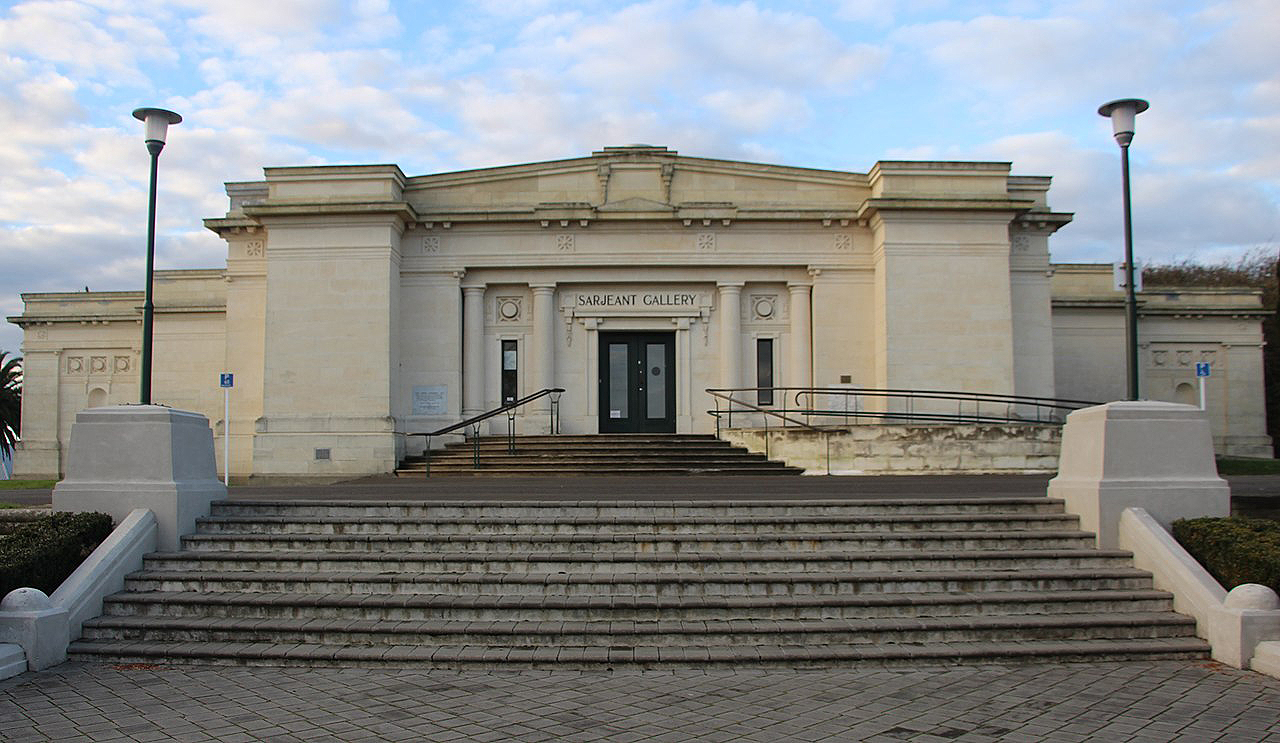
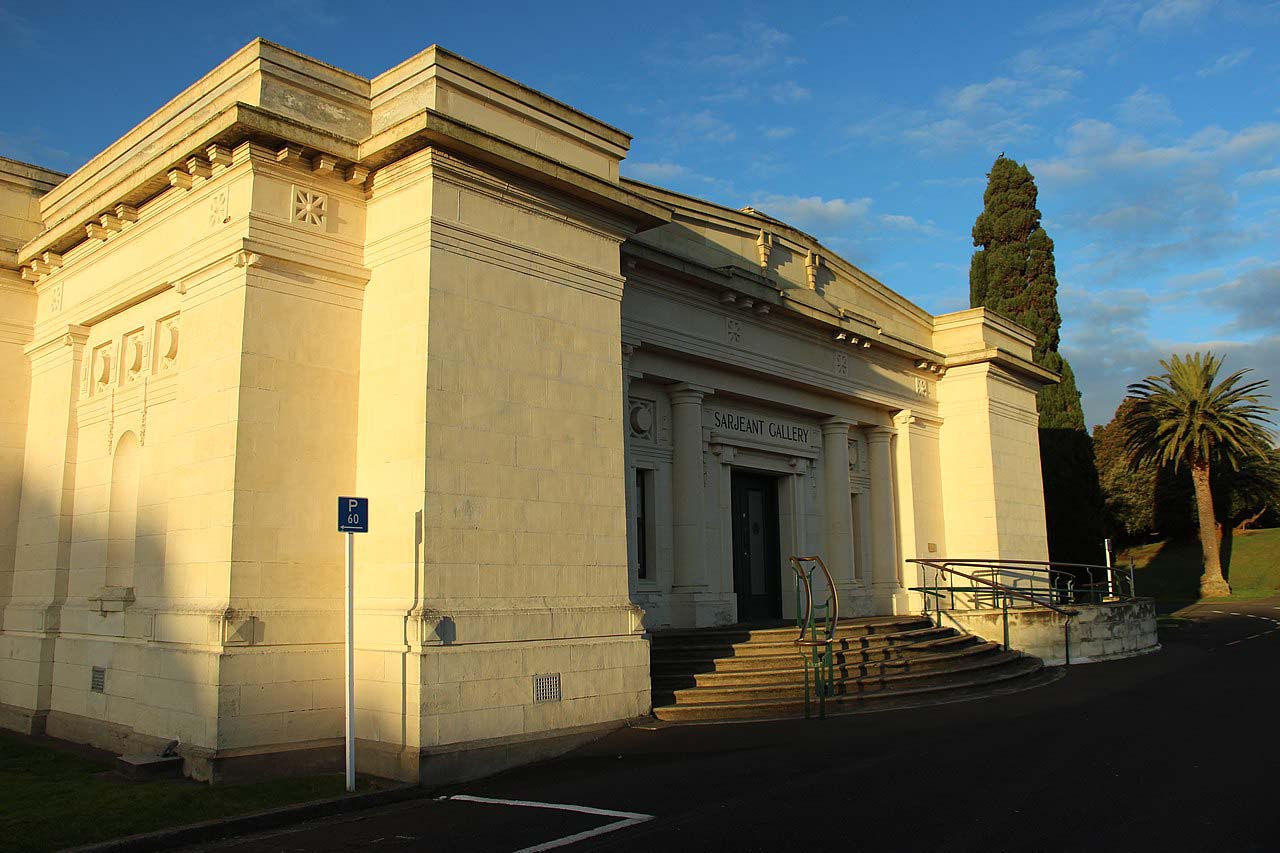
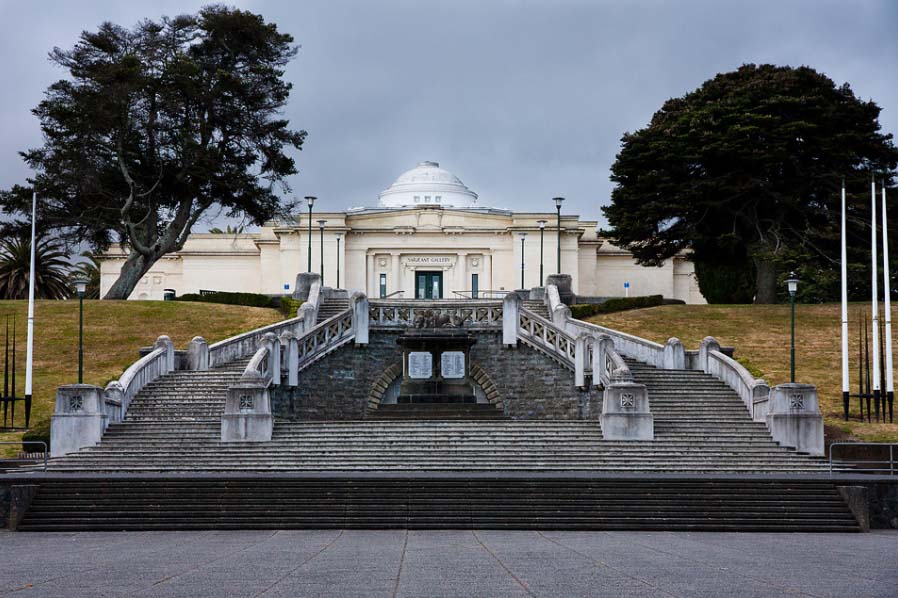
The final design of the gallery, based on a Greek cross, was a reflection of both the architect's vision and the conditions attached to the competition. The latter required that the building be designed in a Classical style, 'drawn in a quiet, dignified simple manner', but with some originality. In Hosie's design, the brick masonry construction faced with Oamaru stone, reinforced concrete floor, and concrete partitions and ceilings helped promote the strength, stability and order, characteristic of the Classical style. The competitors were also asked to incorporate the 'Top-Side-Lighted' method of lighting galleries newly developed by Seager.
The only work of Donald Hosie, the gallery's design reflects the ideas surrounding the way in which art was to be displayed at the beginning of the twentieth century. This includes new ideas for lighting gallery spaces, which were later studied by other architects and incorporated into similar buildings around New Zealand. It is a prominent and distinguished building, which engenders a degree of provincial pride not only for its design but also for its renowned collection of New Zealand art. The building is also significant as it commemorates a notable Wanganui settler, Henry Sarjeant.
List Entry Information
Status
Listed
List Entry Status
Historic Place Category 1
Access
Able to Visit
List Number
167
Date Entered
24th November 1983
Date of Effect
24th November 1983
City/District Council
Whanganui District
Region
Horizons (Manawatū-Whanganui) Region
Legal description
Secs 558, 559, 549 Pt 548 Twn of Wanganui - Queens Park
Status
Listed
List Entry Status
Historic Place Category 1
Access
Able to Visit
List Number
167
Date Entered
24th November 1983
Date of Effect
24th November 1983
City/District Council
Whanganui District
Region
Horizons (Manawatū-Whanganui) Region
Legal description
Secs 558, 559, 549 Pt 548 Twn of Wanganui - Queens Park
Construction Professional
Name
Anscombe, Edmund
Type
Architect
Biography
Anscombe (1874-1948) was born in Sussex and came to New Zealand as a child. He began work as a builder's apprentice in Dunedin and in 1901 went to America to study architecture. He returned to Dunedin in 1907 and designed the School of Mines building for the University of Otago. The success of this design gained him the position of architect to the University. Five of the main University buildings were designed by Anscombe, as well as Otago Girls' High School and several of Dunedin's finest commercial buildings including the Lindo Ferguson Building (1927) and the Haynes building. Anscombe moved to Wellington about 1928 and was known for his work as the designer of the Centennial Exhibition (1939-1940). Anscombe had travelled extensively and had visited major exhibitions in Australia, Germany and America. The practice of Edmund Anscombe and Associates, Architects, had offices in the Dunedin, Wellington and Hawkes Bay districts, and Anscombe's buildings include the Vocational Centre for Disabled Servicemen, Wellington (1943), Sargent Art Gallery, Wanganui, and several blocks of flats including Anscombe Flats, 212 Oriental Parade (1937) and Franconia, 136 The Terrace (1938), both in Wellington. As well as being interested in the housing problem, Anscombe held strong views concerning the industrial advancement of New Zealand. (See also http://www.dnzb.govt.nz/dnzb/ )
Name
Hosie, Donald
Type
Architect
Biography
(1895?-1917)
Construction Details
Start Year
1917
Finish Year
1919
Type
Original Construction
Description
Foundation stone laid September 1917, opened September 1919
Start Year
1967
Type
Modification
Description
Opening between the gallery and the stairs at the north end of the building filled in and glazed doors installed. (Doors from the old Wanganui Council Chambers.)
Start Year
1977
Type
Addition
Description
Basement space extended
Start Year
1978
Type
Addition
Description
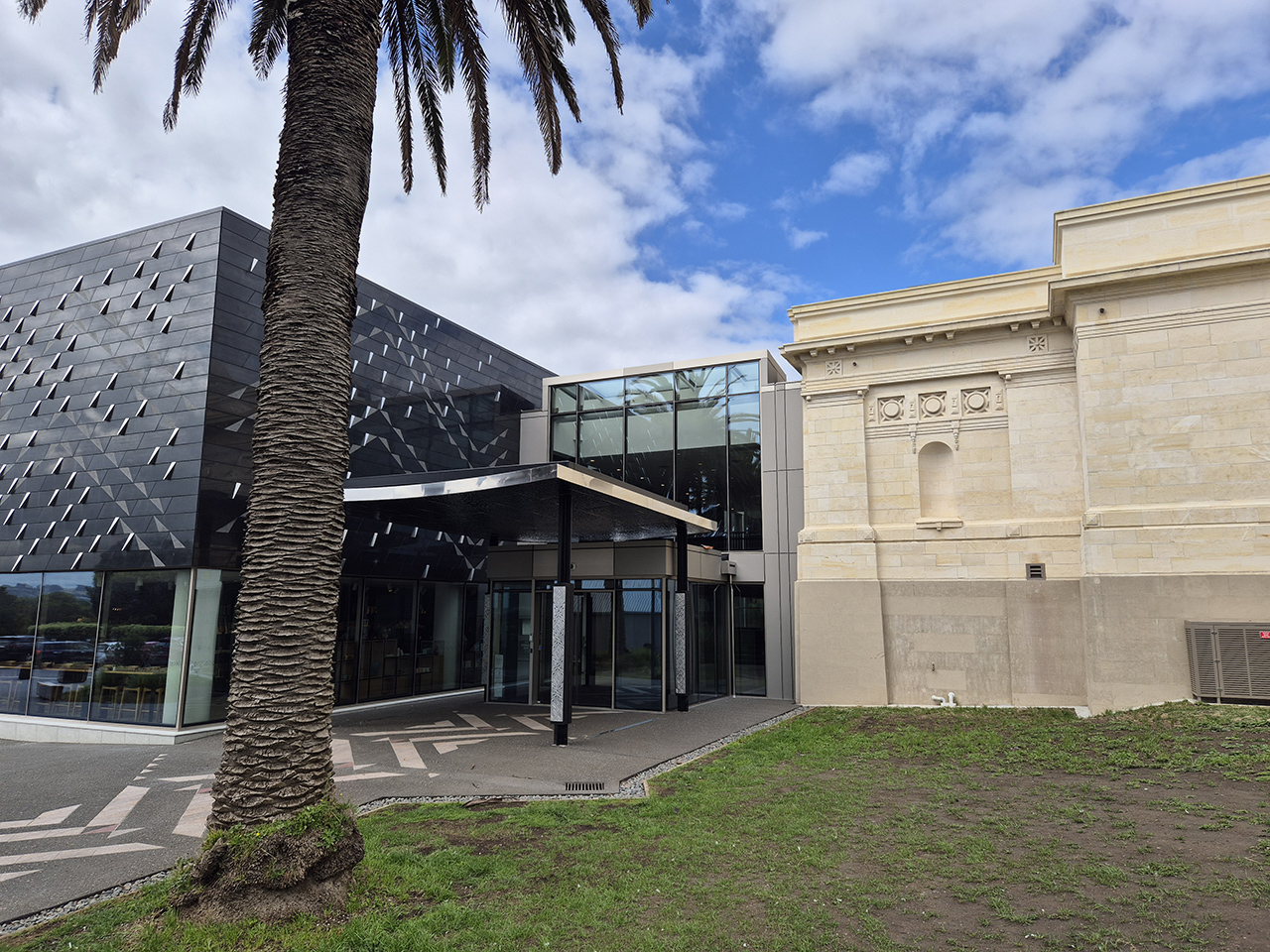
New public toilet and service lift installed in north-western part of the building. Removal of one of the two symmetrical flights of stairs and the original women's locker room
Start Year
1980
Type
Modification
Description
Curator's room made into two offices
Start Year
1984
Finish Year
1985
Type
Addition
Description
Loading bay and workshop built in the north-west corner of the building
Start Year
1985
startYearCirca
Type
Modification
Description
Original men's locker room converted to an office
Start Year
1987
Type
Addition
Description
Stair built from the basement up to the extreme west end of the central wing.
Start Year
1992
Type
Other
Description
Major refurbishment.
Start Year
1996
Type
Modification
Description
Library established in what was once the miniature gallery.
Construction Materials
Brick masonary faced with Oamaru stone, reinforced concrete floors, and concrete partitions and ceilings.
Construction Professional
Name
Anscombe, Edmund
Type
Architect
Biography
Anscombe (1874-1948) was born in Sussex and came to New Zealand as a child. He began work as a builder's apprentice in Dunedin and in 1901 went to America to study architecture. He returned to Dunedin in 1907 and designed the School of Mines building for the University of Otago. The success of this design gained him the position of architect to the University. Five of the main University buildings were designed by Anscombe, as well as Otago Girls' High School and several of Dunedin's finest commercial buildings including the Lindo Ferguson Building (1927) and the Haynes building. Anscombe moved to Wellington about 1928 and was known for his work as the designer of the Centennial Exhibition (1939-1940). Anscombe had travelled extensively and had visited major exhibitions in Australia, Germany and America. The practice of Edmund Anscombe and Associates, Architects, had offices in the Dunedin, Wellington and Hawkes Bay districts, and Anscombe's buildings include the Vocational Centre for Disabled Servicemen, Wellington (1943), Sargent Art Gallery, Wanganui, and several blocks of flats including Anscombe Flats, 212 Oriental Parade (1937) and Franconia, 136 The Terrace (1938), both in Wellington. As well as being interested in the housing problem, Anscombe held strong views concerning the industrial advancement of New Zealand. (See also http://www.dnzb.govt.nz/dnzb/ )
Name
Hosie, Donald
Type
Architect
Biography
(1895?-1917)
Construction Details
Start Year
1917
Finish Year
1919
Type
Original Construction
Description
Foundation stone laid September 1917, opened September 1919
Start Year
1967
Type
Modification
Description
Opening between the gallery and the stairs at the north end of the building filled in and glazed doors installed. (Doors from the old Wanganui Council Chambers.)
Start Year
1977
Type
Addition
Description
Basement space extended
Start Year
1978
Type
Addition
Description
New public toilet and service lift installed in north-western part of the building. Removal of one of the two symmetrical flights of stairs and the original women's locker room
Start Year
1980
Type
Modification
Description
Curator's room made into two offices
Start Year
1984
Finish Year
1985
Type
Addition
Description
Loading bay and workshop built in the north-west corner of the building
Start Year
1985
startYearCirca
Type
Modification
Description
Original men's locker room converted to an office
Start Year
1987
Type
Addition
Description
Stair built from the basement up to the extreme west end of the central wing.
Start Year
1992
Type
Other
Description
Major refurbishment.
Start Year
1996
Type
Modification
Description
Library established in what was once the miniature gallery.
Construction Materials
Brick masonary faced with Oamaru stone, reinforced concrete floors, and concrete partitions and ceilings.
Historical and Associated Iwi / Hapū / Whānau
Completion Date
24th September 2001
Report Written By
Helen McCracken
Information Sources
Cochran, 1998
Chris Cochran, 'Sarjeant Gallery, Queen's Park, Wanganui; Cultural Heritage Assessment', unpublished report prepared for the Sarjeant Gallery Trust Board, December 1998. Copy held at NZHPT.
New Zealand Historic Places
Other Information
This place was identified as significant under previous legislation with different information requirements. It remains significant under the current legislation. There is opportunity under our legislation and policies to add to this information. Further information about this place may be available from the Central Regional Office of Heritage New Zealand Pouhere Taonga. Please note that entry on the New Zealand Heritage List/Rarangi Korero identifies only the heritage values of the property concerned, and should not be construed as advice on the state of the property, or as a comment of its soundness or safety, including in regard to earthquake risk, safety in the event of fire, or insanitary conditions.
Historical and Associated Iwi / Hapū / Whānau
Completion Date
24th September 2001
Report Written By
Helen McCracken
Information Sources
Cochran, 1998
Chris Cochran, 'Sarjeant Gallery, Queen's Park, Wanganui; Cultural Heritage Assessment', unpublished report prepared for the Sarjeant Gallery Trust Board, December 1998. Copy held at NZHPT.
New Zealand Historic Places
Other Information
This place was identified as significant under previous legislation with different information requirements. It remains significant under the current legislation. There is opportunity under our legislation and policies to add to this information. Further information about this place may be available from the Central Regional Office of Heritage New Zealand Pouhere Taonga. Please note that entry on the New Zealand Heritage List/Rarangi Korero identifies only the heritage values of the property concerned, and should not be construed as advice on the state of the property, or as a comment of its soundness or safety, including in regard to earthquake risk, safety in the event of fire, or insanitary conditions.
Current Usages
Uses: Civic Facilities
Specific Usage: Art Gallery
Former Usages
General Usage: Civic Facilities
Specific Usage: Art Gallery
Themes
Rainbow List
Web Links
description:
Current Usages
Uses: Civic Facilities
Specific Usage: Art Gallery
Former Usages
General Usage: Civic Facilities
Specific Usage: Art Gallery
Themes
Rainbow List
Web Links
description:
Stay up to date with Heritage this month


