DonateMembershipVisit Heritage
  • Tūrangawaewae
    Places
  • Tira Māori
    Māori Heritage
  • Poutairangahia
    Archaeology
  • Rauemi
    Resources
  • Mō Tātou
    About Us
  • New Zealand Heritage List
  • Nominate and submit
  • Explore the List
  • National Historic Landmarks
  • Plaques
  • Rainbow List Project
  • Lost heritage
  • Visit Heritage
  • Our properties
  • Turnbull House Project
  • Collections
  • Shop
  • Tohu Whenua
  • Tira Māori
  • Conserving Māori heritage
  • Marae built heritage
  • Māori heritage on the List
  • Hinemihi—Te Hokinga Mai
  • What is archaeology?
  • Is there a site on my property?
  • What are my legal requirements?
  • Affecting an archaeological site
  • Declaring an archaeological site
  • Archaeology FAQs
  • Archaeology Digital Library
  • Archaeology guidelines and templates
  • Resources
  • Funding
  • Publications
  • Sustainable management guides
  • Disaster recovery
  • Podcasts & digital resources
  • Education Hub
  • Conservation plans
  • About
  • Board
  • Māori Heritage Council
  • Senior Staff
  • Offices
  • Contact us
  • Careers
  • Covenants
  • Fast-track
  • Corporate documents
  • Currently consulting on
  • Our submissions
  • News
  • Covid-19 response
Quick links
Rārangi Kōrero | The List
Explore the List
National Historic Landmarks
Ngā Manawhenua o Aotearoa me ōna Kōrero Tūturu
Quick links
Tapuwae
A Vision for Places of Māori Heritage
Funding for Māori Heritage
Resources
Quick links
Archaeological Authority Portal
Applying for an archaeological authority
Archaeology FAQs
Browse the most frequently asked questions about archaeological authorities and the archaeological process.
Quick links
Quick links
News
News Keep up to date with Heritage New Zealand Pouhere Taonga
Membership
Membership Find out more and sign up today
DonateMembershipVisit Heritage
  • Tūrangawaewae
    Places
  • Tira Māori
    Māori Heritage
  • Poutairangahia
    Archaeology
  • Rauemi
    Resources
  • Mō Tātou
    About Us
  • New Zealand Heritage List
  • Nominate and submit
  • Explore the List
  • National Historic Landmarks
  • Plaques
  • Rainbow List Project
  • Lost heritage
  • Visit Heritage
  • Our properties
  • Turnbull House Project
  • Collections
  • Shop
  • Tohu Whenua
  • Tira Māori
  • Conserving Māori heritage
  • Marae built heritage
  • Māori heritage on the List
  • Hinemihi—Te Hokinga Mai
  • What is archaeology?
  • Is there a site on my property?
  • What are my legal requirements?
  • Affecting an archaeological site
  • Declaring an archaeological site
  • Archaeology FAQs
  • Archaeology Digital Library
  • Archaeology guidelines and templates
  • Resources
  • Funding
  • Publications
  • Sustainable management guides
  • Disaster recovery
  • Podcasts & digital resources
  • Education Hub
  • Conservation plans
  • About
  • Board
  • Māori Heritage Council
  • Senior Staff
  • Offices
  • Contact us
  • Careers
  • Covenants
  • Fast-track
  • Corporate documents
  • Currently consulting on
  • Our submissions
  • News
  • Covid-19 response
Quick links
Rārangi Kōrero | The List
Explore the List
National Historic Landmarks
Ngā Manawhenua o Aotearoa me ōna Kōrero Tūturu
Quick links
Tapuwae
A Vision for Places of Māori Heritage
Funding for Māori Heritage
Resources
Quick links
Archaeological Authority Portal
Applying for an archaeological authority
Archaeology FAQs
Browse the most frequently asked questions about archaeological authorities and the archaeological process.
Quick links
Quick links
News
News Keep up to date with Heritage New Zealand Pouhere Taonga
Membership
Membership Find out more and sign up today
  • Places
  • Nominate and submit
  • National Historic Landmarks
  • Places
  • Nominate and submit
  • National Historic Landmarks
  • Tira Māori
  • Conserving Māori heritage
  • Marae built heritage
  • Tira Māori
  • Conserving Māori heritage
  • Marae built heritage
  • Archaeological authorities
  • Archaeology Digital Library
  • Archaeological authorities
  • Archaeology Digital Library
  • All resources
  • Publications
  • Funding
  • All resources
  • Publications
  • Funding
  • FAQs
  • FAQs
Follow us on:
Places
  • Places
  • Nominate and submit
  • National Historic Landmarks
Tira Māori
  • Tira Māori
  • Conserving Māori heritage
  • Marae built heritage
Archaeology
  • Archaeological authorities
  • Archaeology Digital Library
Resources
  • All resources
  • Publications
  • Funding
FAQs
  • FAQs
Follow us on
HomePrivacyTerms and conditionsAbout this site
© Heritage New Zealand Pouhere Taonga 2026.
 
Richmond Lock-up (Former)

15 Oxford Street, Washbourn Gardens, RICHMOND

Private

Historic Place Category 2

List No. 1677

Quick links:
List GalleryLocationDetails
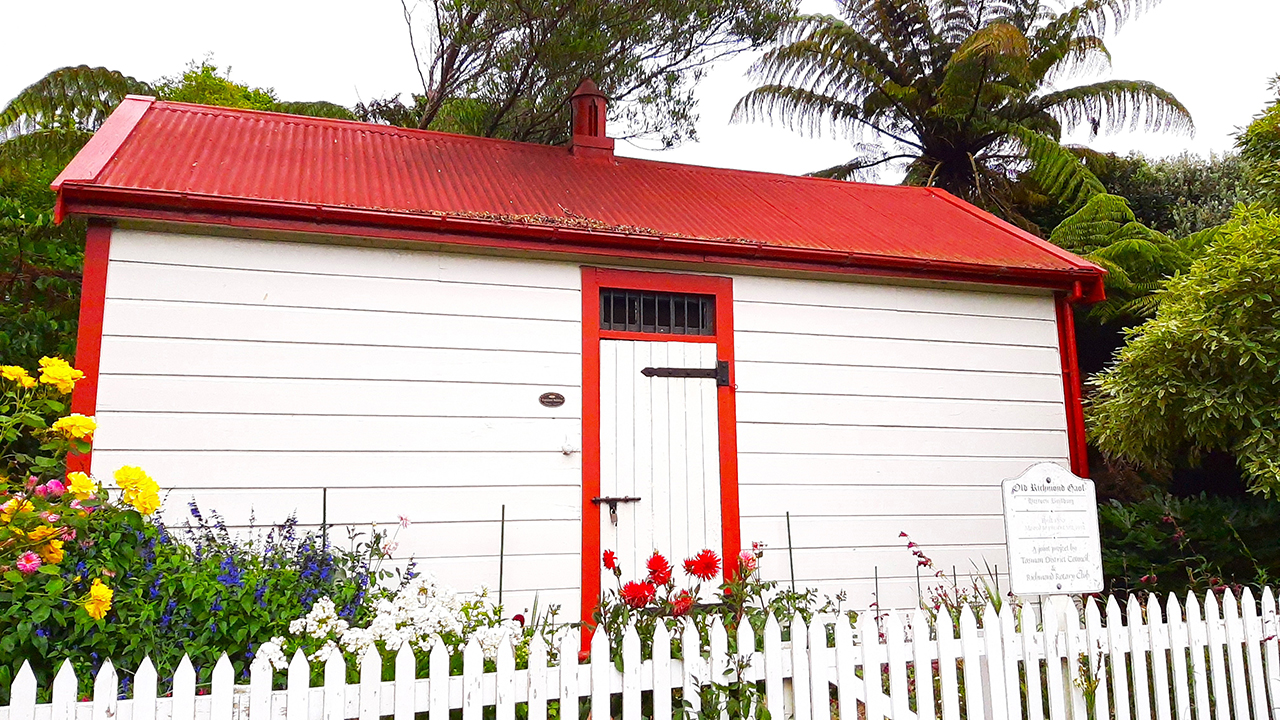
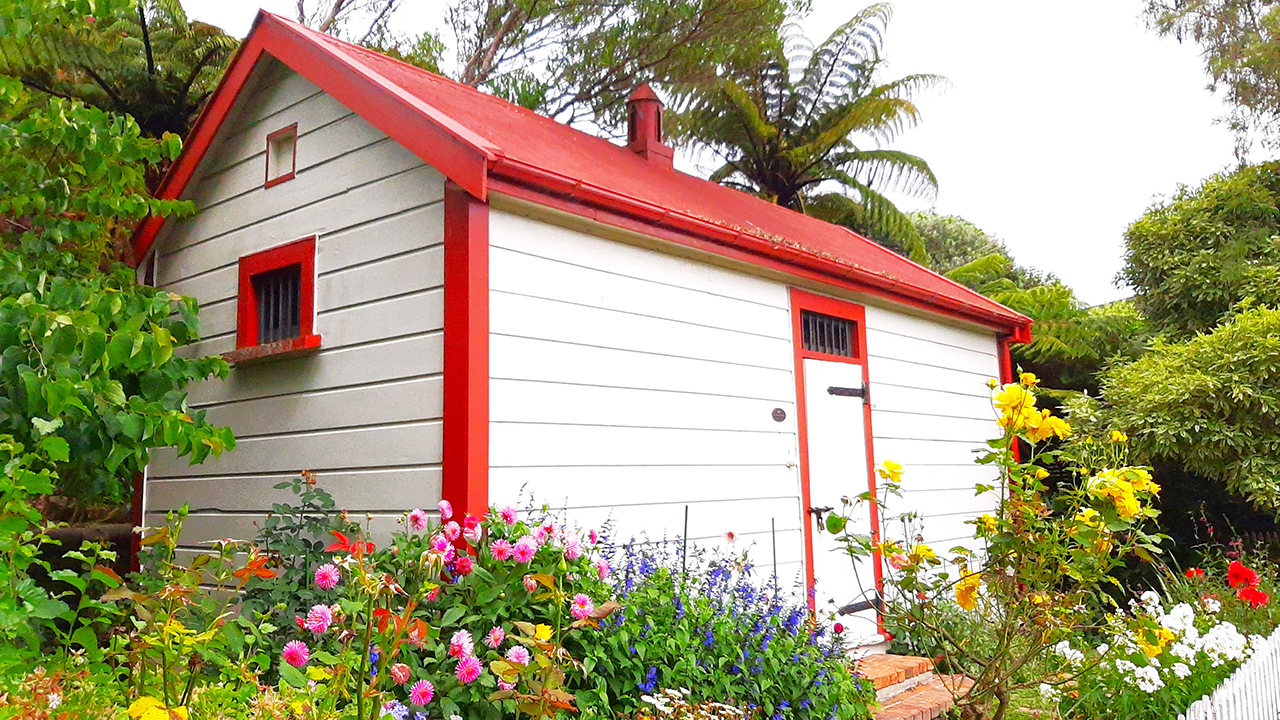
Richmond Lock-up (Former) was built in 1908-1909 as part of the Richmond Police Station on the corner of Wensley Road and Oxford Street and is now located within the nearby Washbourn Gardens. Although relocated, the lock-up retains historical value as an important reminder of the policing history of Richmond and the wider Nelson district.

Te Tau Ihu (Nelson-Marlborough) has a long history of Māori settlement over hundreds of years, reflecting successive waves of migration through to the early 1820s-1830s. The region’s rich and layered Māori history is reflected by the eight recognised iwi – Ngāti Kuia, Ngāti Apa and Rangitāne (Kurahaupō tribes), Ngāti Toarangatira, Ngāti Koata and Ngāti Rārua (Tainui tribes), and Ngāti Tama and Te Ātiawa (Taranaki tribes). Colonial land purchases commenced from 1839 and a New Zealand Company Settlement was established at Whakatū (Nelson), with the first immigrant ships arriving in 1842. Richmond was surveyed that same year, and was initially called Waimea East. Traditional Māori society was irrevocably changed by Colonial settlement, which included the imposition of British laws, the associated establishment of the Colonial police (1840-1860) and introduction of imprisonment as a form of punishment. William Stanton served as Richmond’s first District Constable from 1845 to 1854 and the town’s first lock-up was a small mud hut on the corner of Wensley Road and Crescent Street. A new kauri lock-up was erected on the corner of Wensley Road and Oxford Street in 1860. In April 1908 part of Section 26 Waimea East District on the corner of Wensley Road and Oxford Street was permanently reserved ‘as a site for a public pound, police station, etc’ and the Public Works Department made provision for the construction of a new police station alongside the public pound and lock-up, with the latter building to be removed. Tenders were called in August 1908 and the tender of Messrs Bredbury and Bastin of Nelson was accepted, at the price of £700 10 shillings, with the contract completed in February 1909.

The Richmond Police Station was designed by Government Architect John Campbell, though the lock-up plan is signed by George Vesper Venning who worked under Campbell’s aegis from May 1903 to 1913. It comprised a police residence with attached office/station, outbuilding to the rear (housing a washhouse, coal storage and toilet) and two-cell lock-up and with separate toilet. The two-cell lock-up was a standard design which was used across New Zealand in the early 20th century, a time when public buildings such as police stations ‘were being erected with a renewed Vogelite enthusiasm’. It measured 24 feet (7.3 metres) by 12 feet (3.66 metres) and was clad in weatherboards with a corrugated iron roof topped with a Boyles Ventilator. There were air gratings above the timber entrance door and at either end of the building. Each end elevation had a small window and there was a single window along the rear elevation; all were covered by iron bars. Internally, the lock-up comprised two cells measuring 10 feet 11 inches (3.3 metres) by 8 feet five inches (2.6 metres) with a central entry way that had a desk along the rear elevation.

The lock-up was only used occasionally due to the town’s low crime rate – in general ‘the policeman’s lot in Richmond was a happy one’. In 1956 a new police station with cell block was constructed nearby on Queen Street. The former police station on Oxford Street remained in Crown ownership until it transferred into private ownership in 1959. In 1992 the lock-up was relocated to Washbourn Gardens where it was restored by Richmond Rotary in partnership with Tasman District Council. It currently functions as historical attraction for visitors to the gardens.
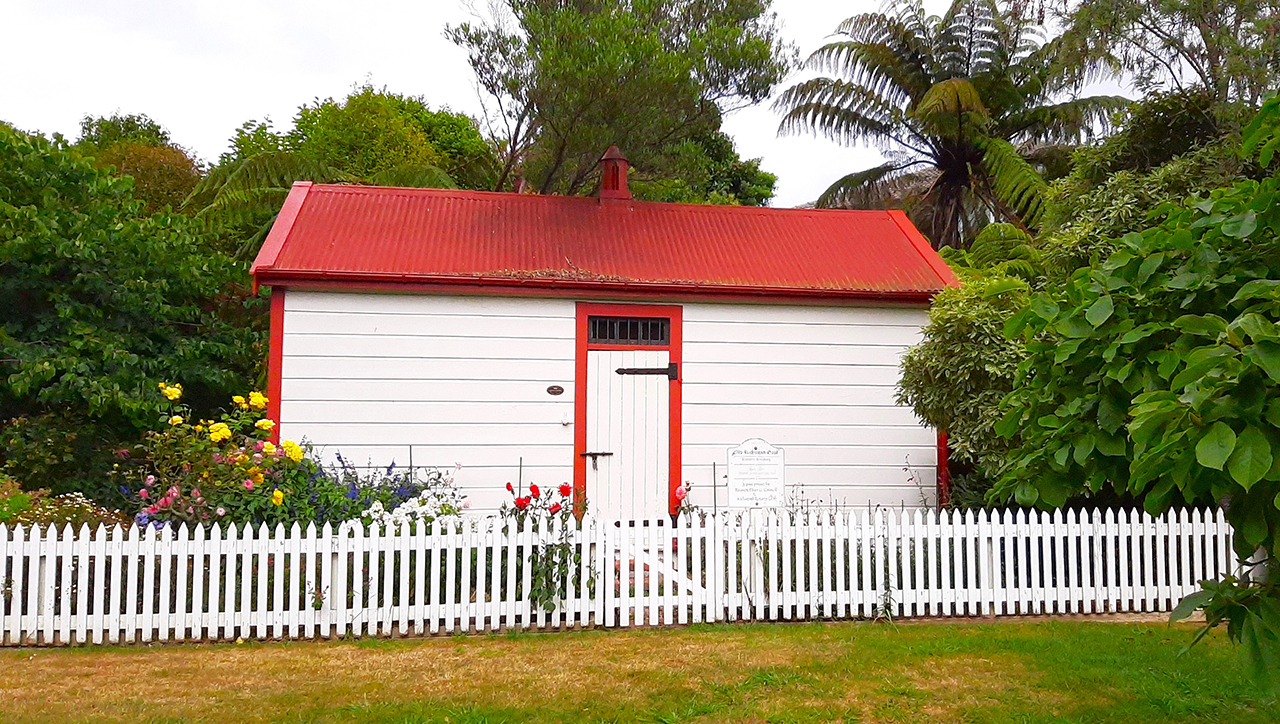
Richmond Lock-up (Former), Richmond | Hanna Westley | 04/01/2023 | Heritage New Zealand Pouhere Taonga

List Entry Information

Overview

Status
Listed

List Entry Status
Historic Place Category 2

Access
Private/No Public Access

List Number
1677

Date Entered
25th November 1982

Date of Effect
25th November 1982

City/District Council
Tasman District

Region
Tasman Region

Extent of List Entry

Extent includes part of the land described as Pt Sec 11 Sec 26 Waimea East District (RT NL9/49), Nelson Land District and the building known as Richmond Lock-up (Former) thereon, as enclosed by the picket fence. Refer to the extent map tabled at the Rārangi Kōrero Committee meeting on 5 August 2022.

Legal description

Pt Sec 11 Sec 26 Waimea East District (RT NL9/49), Nelson Land District

Detailed List Entry

Construction Professional

Name

Venning, George Vasper

Type

Architect

Biography

No biography is currently available for this construction professional

Name

Campbell, John

Type

Architect

Biography

John Campbell (1857-1942) served his articles under John Gordon (c1835-1912) in Glasgow. He arrived in Dunedin in 1882 and after a brief period as a draughtsman with Mason and Wales joined the Dunedin branch of the Public Works Department in 1883. His first known work, an unbuilt design for the Dunedin Railway Station, reveals an early interest in Baroque architecture. In November 1888 Campbell was transferred to Wellington where in 1889 he took up the position of draughtsman in charge of the Public Buildings Division of the Public Works Department. He remained in charge of the design of government buildings throughout New Zealand until his retirement in 1922, becoming in 1909 the first person to hold the position of Government Architect. Government architecture designed under his aegis evidences a change in style from Queen Anne to Edwardian Baroque. His best-known Queen Anne design is the Dunedin Police Station (1895-8), modelled on Richard Norman Shaw's New Scotland Yard (1887-90). Among his most exuberant Edwardian Baroque buildings is the Public Trust Office, Wellington (1905-09). Although Campbell designed the Dunedin Law Courts (1899-1902) in the Gothic style with a Scottish Baronial inflection, he established Edwardian Baroque as the government style for police stations, courthouses and post offices throughout New Zealand. In 1911 Campbell won the nation-wide architectural competition for the design of Parliament Buildings, Wellington. Although only partially completed, Parliament House is the crowning achievement of Campbell's career.

Construction Details

Start Year

1908

Type

Original Construction

Start Year

1992

Type

Relocation

Description

relocated to Washbourn Gardens

Reference

Completion Date

7th June 2022

Report Written By

Joanna Barnes-Wylie

Report Written By

This place was identified as significant under previous legislation with different information requirements. It remains significant under the current legislation. There is opportunity under our legislation and policies to add to this information. Further information about this place may be available from the Central Regional Office of Heritage New Zealand Pouhere Taonga. A fully referenced copy of the upgrade report is available on request from the Central Regional Office of Heritage New Zealand Pouhere Taonga Please note that entry on the New Zealand Heritage List/Rarangi Korero identifies only the heritage values of the property concerned, and should not be construed as advice on the state of the property, or as a comment of its soundness or safety, including in regard to earthquake risk, safety in the event of fire, or insanitary conditions.

Further Information

Current Usages

Uses: Civic Facilities

Specific Usage: Historic Property

Former Usages

General Usage:: Accommodation

Specific Usage: Shed/store - Residential out-building

General Usage:: Law Enforcement

Specific Usage: Gaol/Lock-up

Themes

Web Links

Overview

Status

Listed

List Entry Status

Historic Place Category 2

Access

Private/No Public Access

List Number

1677

Date Entered

25th November 1982

Date of Effect

25th November 1982

City/District Council

Tasman District

Region

Tasman Region

Extent of List Entry

Extent includes part of the land described as Pt Sec 11 Sec 26 Waimea East District (RT NL9/49), Nelson Land District and the building known as Richmond Lock-up (Former) thereon, as enclosed by the picket fence. Refer to the extent map tabled at the Rārangi Kōrero Committee meeting on 5 August 2022.

Legal description

Pt Sec 11 Sec 26 Waimea East District (RT NL9/49), Nelson Land District

Status

Listed

List Entry Status

Historic Place Category 2

Access

Private/No Public Access

List Number

1677

Date Entered

25th November 1982

Date of Effect

25th November 1982

City/District Council

Tasman District

Region

Tasman Region

Extent of List Entry

Extent includes part of the land described as Pt Sec 11 Sec 26 Waimea East District (RT NL9/49), Nelson Land District and the building known as Richmond Lock-up (Former) thereon, as enclosed by the picket fence. Refer to the extent map tabled at the Rārangi Kōrero Committee meeting on 5 August 2022.

Legal description

Pt Sec 11 Sec 26 Waimea East District (RT NL9/49), Nelson Land District

Construction Information

Construction Professional

Name

Venning, George Vasper

Type

Architect

Biography

No biography is currently available for this construction professional

Name

Campbell, John

Type

Architect

Biography

John Campbell (1857-1942) served his articles under John Gordon (c1835-1912) in Glasgow. He arrived in Dunedin in 1882 and after a brief period as a draughtsman with Mason and Wales joined the Dunedin branch of the Public Works Department in 1883. His first known work, an unbuilt design for the Dunedin Railway Station, reveals an early interest in Baroque architecture. In November 1888 Campbell was transferred to Wellington where in 1889 he took up the position of draughtsman in charge of the Public Buildings Division of the Public Works Department. He remained in charge of the design of government buildings throughout New Zealand until his retirement in 1922, becoming in 1909 the first person to hold the position of Government Architect. Government architecture designed under his aegis evidences a change in style from Queen Anne to Edwardian Baroque. His best-known Queen Anne design is the Dunedin Police Station (1895-8), modelled on Richard Norman Shaw's New Scotland Yard (1887-90). Among his most exuberant Edwardian Baroque buildings is the Public Trust Office, Wellington (1905-09). Although Campbell designed the Dunedin Law Courts (1899-1902) in the Gothic style with a Scottish Baronial inflection, he established Edwardian Baroque as the government style for police stations, courthouses and post offices throughout New Zealand. In 1911 Campbell won the nation-wide architectural competition for the design of Parliament Buildings, Wellington. Although only partially completed, Parliament House is the crowning achievement of Campbell's career.

Construction Details

Start Year

1908

Type

Original Construction

Start Year

1992

Type

Relocation

Description

relocated to Washbourn Gardens

Construction Professional

Name

Venning, George Vasper

Type

Architect

Biography

No biography is currently available for this construction professional

Name

Campbell, John

Type

Architect

Biography

John Campbell (1857-1942) served his articles under John Gordon (c1835-1912) in Glasgow. He arrived in Dunedin in 1882 and after a brief period as a draughtsman with Mason and Wales joined the Dunedin branch of the Public Works Department in 1883. His first known work, an unbuilt design for the Dunedin Railway Station, reveals an early interest in Baroque architecture. In November 1888 Campbell was transferred to Wellington where in 1889 he took up the position of draughtsman in charge of the Public Buildings Division of the Public Works Department. He remained in charge of the design of government buildings throughout New Zealand until his retirement in 1922, becoming in 1909 the first person to hold the position of Government Architect. Government architecture designed under his aegis evidences a change in style from Queen Anne to Edwardian Baroque. His best-known Queen Anne design is the Dunedin Police Station (1895-8), modelled on Richard Norman Shaw's New Scotland Yard (1887-90). Among his most exuberant Edwardian Baroque buildings is the Public Trust Office, Wellington (1905-09). Although Campbell designed the Dunedin Law Courts (1899-1902) in the Gothic style with a Scottish Baronial inflection, he established Edwardian Baroque as the government style for police stations, courthouses and post offices throughout New Zealand. In 1911 Campbell won the nation-wide architectural competition for the design of Parliament Buildings, Wellington. Although only partially completed, Parliament House is the crowning achievement of Campbell's career.

Construction Details

Start Year

1908

Type

Original Construction

Start Year

1992

Type

Relocation

Description

relocated to Washbourn Gardens

Reference

Historical and Associated Iwi / Hapū / Whānau

Completion Date

7th June 2022

Report Written By

Joanna Barnes-Wylie

Other Information

This place was identified as significant under previous legislation with different information requirements. It remains significant under the current legislation. There is opportunity under our legislation and policies to add to this information. Further information about this place may be available from the Central Regional Office of Heritage New Zealand Pouhere Taonga. A fully referenced copy of the upgrade report is available on request from the Central Regional Office of Heritage New Zealand Pouhere Taonga Please note that entry on the New Zealand Heritage List/Rarangi Korero identifies only the heritage values of the property concerned, and should not be construed as advice on the state of the property, or as a comment of its soundness or safety, including in regard to earthquake risk, safety in the event of fire, or insanitary conditions.

Historical and Associated Iwi / Hapū / Whānau

Completion Date

7th June 2022

Report Written By

Joanna Barnes-Wylie

Other Information

This place was identified as significant under previous legislation with different information requirements. It remains significant under the current legislation. There is opportunity under our legislation and policies to add to this information. Further information about this place may be available from the Central Regional Office of Heritage New Zealand Pouhere Taonga. A fully referenced copy of the upgrade report is available on request from the Central Regional Office of Heritage New Zealand Pouhere Taonga Please note that entry on the New Zealand Heritage List/Rarangi Korero identifies only the heritage values of the property concerned, and should not be construed as advice on the state of the property, or as a comment of its soundness or safety, including in regard to earthquake risk, safety in the event of fire, or insanitary conditions.

Further Information

Current Usages

Uses: Civic Facilities

Specific Usage: Historic Property

Former Usages

General Usage: Accommodation

Specific Usage: Shed/store - Residential out-building

General Usage: Law Enforcement

Specific Usage: Gaol/Lock-up

Current Usages

Uses: Civic Facilities

Specific Usage: Historic Property

Former Usages

General Usage: Accommodation

Specific Usage: Shed/store - Residential out-building

General Usage: Law Enforcement

Specific Usage: Gaol/Lock-up

Location

Loading
Stay up to date with Heritage this month