

Following the discovery of gold on the West Coast in 1864 miners flocked to the area. A great number of these, possibly over a quarter, were Irish Catholics and they were rapidly followed by priests to care for their spiritual needs. The first Catholic Church in Westland was St Mary's in Hokitika which opened in December 1865. (The present church replaced it in1914. ) St Patrick's Church in Ross, completed in 1866 is the oldest surviving church in Westland . In Greymouth the first Mass was celebrated in a store in 1864 and on 10 December 1865 a small timber church was completed, with a school alongside it. It was located near the river and was frequently flooded, the major flood of 1872 having a devastating impact on the developing town.
With the education of Catholic children a priority, the Sisters of Mercy founded their Greymouth Convent in 1882. A decade later the first Marist Brothers also established a school here. Marist Brothers, a non-ordained religious group founded in France in 1836, had established a base in Australia and first sent three Brothers to set up a school in Wellington in 1876. Further Brothers, including New Zealanders, were trained in Sydney and they founded schools around New Zealand. The 1892 Greymouth school was the fifth educational institution they founded. The location of these schools was initially in rough timber buildings in various locations around the town's centre.
By 1887, with support of a now substantial congregation, it was decided to build a church from more permanent materials. The esteemed architect Francis William Petre was chosen as designer of a concrete Gothic Revival style church on a more elevated site in Chapel Street. A large block of slightly elevated land was leased from the Maori owners, Mawhera Incorporation, and other buildings were soon clustered around the church. The importance of the Catholic Church in the community was demonstrated by the substantial and architecturally distinctive buildings which graced the town. The dominating landscape feature was the church with its tall spire and the large convent complex fronting Tainui Street made a major contribution to the impressive grouping.
A significant addition to this group was the presbytery. When completed in 1914 it replaced an earlier building that had been described just seven years before as 'a fine presbytery'. Mainly responsible for initiating the construction of its replacement was the Very Reverend Dean Denis Patrick Carew, born Tipperary Ireland in 1849 and appointed the Greymouth parish priest in 1884.
Christchurch architects Sidney (1872-1932) and Alfred (1865-1924) Luttrell who founded their Christchurch firm in 1902, designed the new presbytery and supervised its construction. Regarded as the unofficial architects for the Canterbury Catholic diocese, the Luttrell Brothers also designed the St Mary's Church in Hokitika about the same time. By this date they were highly regarded, undertaking many domestic as well as commercial commissions. This is an example of the middle range in size and grandeur of the houses they built.
The opening ceremony was performed on Sunday, 15th March 1914 by His Lordship Bishop Grimes, Bishop of Christchurch. During his visit the Bishop also laid the foundation stone of the new Hokitika church. A newspaper report on the presbytery opening described it as follows:
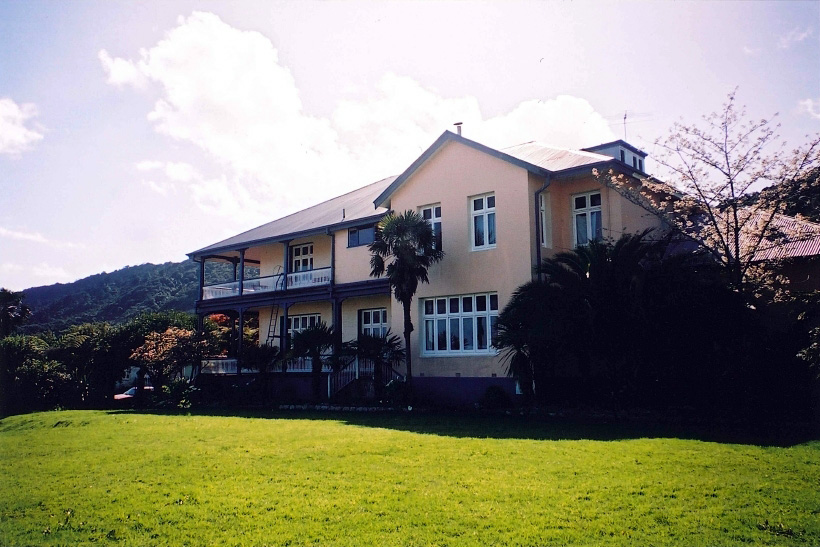
-a handsome brick building two storeys high. It covers a ground space 105ft by 50ft and contains twelve lofty rooms on each floor and under the apex of the roof is a large room 57ft by 20ft. Especial care has been taken to provide for ample ventilation. The interior wood-work is of beautiful marked rimu supplied by Stratford, Blair and Co's factory. The furniture is all strong and serviceable and meant for use and not for mere ornament. There is a large verandah in front of the building, and from a balcony a splendid view is obtainable. The whole of the additions to the church as well as the construction of the presbytery were carried out by Messrs Luttrell Bros, Christchurch, to whom every credit is due for the way they carried out their work.
In addition to the parish priest, two or three curates lived in the presbytery. The female housekeeper might live in or out. Others who would stay there included visitors such as bishops, apprentice priests and relatives of the resident clergy. The parish was served by a number of notable priests apart from Very Reverend Dean Dennis Carew who served the parish from 1884 until 1917, a period of 33 years only exceeded by the Rt Rev, Monsignor James Long who was resident in the presbytery from 1921 to 1963. Another distinguished priest who later occupied the presbytery was Rt Rev Barry Jones, now the Bishop of Canterbury. During the 1950s there were usually two curates, but over the following decades with a declining congregation this was reduced until there was just one parish priest, covering a wider area.
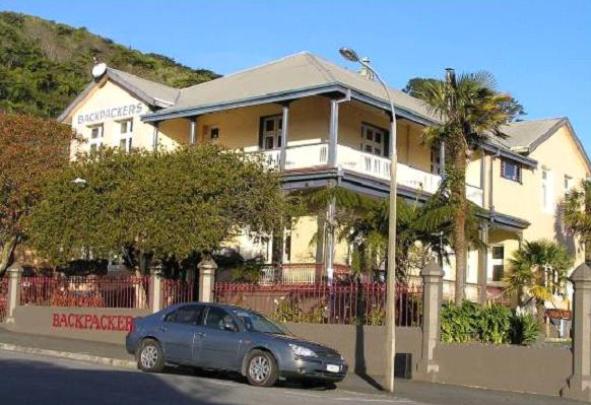
In 1989 the presbytery was sold because the decision had been made to build a new church on freehold land in High Street, some distance away. Having suffered earthquake damage, the structural condition of the adjacent nineteenth century church was considered beyond upgrading to meet current building codes as well as the parish's contemporary needs. This factor combined with increased costs for leasing the land and the fact that the parish centre no longer needed to be close to Greymouth's town centre. The church was demolished in 1994 after careful removal of a large stained glass window which has been included as a principal feature of the new building. A new presbytery stands alongside the church while the old building has been very well adapted for a compatible use as the Noah's Ark backpackers' hostel. The deserted convent building was demolished in the early 1990s, its steps remaining as part of the large new Polytechnic complex built on the site. A modern Catholic primary school building behind the former presbytery is a reminder of the strong Catholic focus this town block once had, while the many visitors to the hostel can enjoy the ambience of what was once the local priests' fine residence.
The former presbytery is part of the once extensive Catholic precinct, which was dominated by St Patrick's Church, formerly sited alongside it. Registered Category I, the church was demolished in 1994. It was described in a contemporary report as 'an excellent specimen of the Gothic style of architecture, extremely beautiful both inside and outside'. Nearby was the convent. The primary school remains in modern buildings fronting Alexander Street. This wider historical and cultural complex once occupied most of the block and the Presbytery now remains as the dominating feature. The grouping illustrated the former strength of the Roman Catholic denomination in the district.
List Entry Information
Status
Listed
List Entry Status
Historic Place Category 2
Access
Private/No Public Access
List Number
1694
Date Entered
4th April 2008
Date of Effect
4th April 2008
City/District Council
Grey District
Region
West Coast Region
Extent of List Entry
Extent includes the land described as Lot 3 DP 2780 (RTs WS5B/497 and 159758), Westland Land District and the building known as St Patrick’s Presbytery (Former) thereon.
Legal description
Lot 3 DP 2780 (RTs WS5B/497 and 159758), Westland Land District
Status
Listed
List Entry Status
Historic Place Category 2
Access
Private/No Public Access
List Number
1694
Date Entered
4th April 2008
Date of Effect
4th April 2008
City/District Council
Grey District
Region
West Coast Region
Extent of List Entry
Extent includes the land described as Lot 3 DP 2780 (RTs WS5B/497 and 159758), Westland Land District and the building known as St Patrick’s Presbytery (Former) thereon.
Legal description
Lot 3 DP 2780 (RTs WS5B/497 and 159758), Westland Land District
Why is this place significant?
Historic Significance
Historical Significance or Value The presbytery has historic significance. The West Coast had a large Roman Catholic population from the time of the first gold rush in 1864 and construction of such an imposing presbytery half a century later emphasised the strength of the denomination in the area. It remains as a representation of the past landmark grouping with the former St Patrick's Church.
Physical Significance
ARCHITECTURAL SIGNIFANCE OR VALUE: The former Catholic Presbytery in Chapel Street, Greymouth has architectural significance. It was designed by the prominent Christchurch architectural firm, the Luttrell Brothers (Sidney and Alfred Luttrell) which was also responsible for St Mary's Church (Catholic) in Hokitika and some of New Zealand's earliest reinforced concrete buildings. A former Greymouth architect, Russell King, has recalled that as a trainee he was told that the presbytery was one of the best examples of its kind in the country. The presbytery formerly stood alongside the former St Patrick's Church (1888), designed by the renowned Dunedin architect Francis William Petre. The Luttrell brothers, who were also building contractors, built the presbytery and carried out extensions to the church about the same time. A newspaper report on the opening of the presbytery noted, 'The Roman Catholic community and the citizens in general have every reason to feel proud of the magnificent church and Presbytery that now form such an imposing part of the architecture of Greymouth'.
Why is this place Category 1 / Category 2?
Detail Of Assessed Criteria
Category of historic place (section 23(2)) Criteria: a, b and g. a) The extent to which the place reflects important or representative aspects of New Zealand history The former Presbytery reflects an important aspect of West Coast history, namely the development of religious life in the region and the prominence of the Roman Catholic faith. This is also a major aspect of New Zealand religious history as the West Coast gold rushes, in particular, attracted many Irish Catholics who would go on to be members of congregations in other parts of the country. b) The association of the place with events, persons or ideas of importance in New Zealand history. The building has an important association with the architects, Luttrell Brothers, who became unofficial diocesan architects for the Catholic Church in Canterbury and prominent nationally. It also has associations with prominent church people such as the Very Rev. Dean Denis Patrick Carew S.M., who was Greymouth parish priest for more than 30 years, brought the Marist Brothers to the area and was responsible for having the presbytery built. Other prominent figures were the Rt. Rev. Monsignor James Long who headed the parish for 42 years (1921-1963) and a more recent incumbent who became the present Bishop of Canterbury, the Rt Rev Barry Jones. (g) The technical accomplishment or design of the place. The building has significance through the qualities of its design. It is representative of the Luttrell Brothers' design skills and illustrates the type of high status homes built at this period in New Zealand's architectural development. It is a grand, but not ostentatious, large scale home built to provide accommodation, offices and reception rooms to serve as the hub of the large parish. Constructed of high quality materials, with well crafted finishing details, it proclaims the eminence of its occupants and use.
Why is this place significant?
Historic Significance
Historical Significance or Value The presbytery has historic significance. The West Coast had a large Roman Catholic population from the time of the first gold rush in 1864 and construction of such an imposing presbytery half a century later emphasised the strength of the denomination in the area. It remains as a representation of the past landmark grouping with the former St Patrick's Church.
Physical Significance
ARCHITECTURAL SIGNIFANCE OR VALUE: The former Catholic Presbytery in Chapel Street, Greymouth has architectural significance. It was designed by the prominent Christchurch architectural firm, the Luttrell Brothers (Sidney and Alfred Luttrell) which was also responsible for St Mary's Church (Catholic) in Hokitika and some of New Zealand's earliest reinforced concrete buildings. A former Greymouth architect, Russell King, has recalled that as a trainee he was told that the presbytery was one of the best examples of its kind in the country. The presbytery formerly stood alongside the former St Patrick's Church (1888), designed by the renowned Dunedin architect Francis William Petre. The Luttrell brothers, who were also building contractors, built the presbytery and carried out extensions to the church about the same time. A newspaper report on the opening of the presbytery noted, 'The Roman Catholic community and the citizens in general have every reason to feel proud of the magnificent church and Presbytery that now form such an imposing part of the architecture of Greymouth'.
Why is this place Category 1 / Category 2?
Detail Of Assessed Criteria
Category of historic place (section 23(2)) Criteria: a, b and g. a) The extent to which the place reflects important or representative aspects of New Zealand history The former Presbytery reflects an important aspect of West Coast history, namely the development of religious life in the region and the prominence of the Roman Catholic faith. This is also a major aspect of New Zealand religious history as the West Coast gold rushes, in particular, attracted many Irish Catholics who would go on to be members of congregations in other parts of the country. b) The association of the place with events, persons or ideas of importance in New Zealand history. The building has an important association with the architects, Luttrell Brothers, who became unofficial diocesan architects for the Catholic Church in Canterbury and prominent nationally. It also has associations with prominent church people such as the Very Rev. Dean Denis Patrick Carew S.M., who was Greymouth parish priest for more than 30 years, brought the Marist Brothers to the area and was responsible for having the presbytery built. Other prominent figures were the Rt. Rev. Monsignor James Long who headed the parish for 42 years (1921-1963) and a more recent incumbent who became the present Bishop of Canterbury, the Rt Rev Barry Jones. (g) The technical accomplishment or design of the place. The building has significance through the qualities of its design. It is representative of the Luttrell Brothers' design skills and illustrates the type of high status homes built at this period in New Zealand's architectural development. It is a grand, but not ostentatious, large scale home built to provide accommodation, offices and reception rooms to serve as the hub of the large parish. Constructed of high quality materials, with well crafted finishing details, it proclaims the eminence of its occupants and use.
Construction Professional
Name
Luttrell, Alfred Edgar And Edward Sidney
Type
Architect
Biography
Alfred (1865-1924) and Sidney (1872-1932) Luttrell established one of New Zealand's foremost Edwardian architectural practices when they arrived in Christchurch in 1902. The brothers had left Australia on the eve of Federation to pursue a more rewarding career in New Zealand. Alfred had been based in Launceston, Tasmania, where he had been the apprentice of Harry Conway. In 1886 he stared his own firm. His younger brother into partnership in 1897. The two men assumed different responsibilities within the firm, with Alfred acting as the principal designer and engineer while Sidney co-ordinated building programmes and dealt with clients. Sidney served his apprenticeship whit his brother, and in 1897 they became partners of A. & S. Luttrell. By 1902 they had established themselves in New Zealand, where they were known as S. & A. Luttrell The Luttrells ran their own contracting firm for many years, designing a wide variety of building types throughout the country. They were the unofficial Diocesan architects for the Roman Catholic Church in Christchurch during the second decade of the twentieth century. Their chief contribution to New Zealand architecture was in the introduction of the Chicago "skyscraper" style, as seen in the New Zealand Express Company buildings in Christchurch (1905-7) and Dunedin (1908-10). Alfred's habitual use of concrete construction, both mass and reinforced, is another significant feature of his work. The grandstands at Trentham racecourse are his most important work in reinforced concrete, and reveal Sidney's close involvement with the racing world, which led to numerous commissions for the firm.
Construction Details
Start Year
1887
Finish Year
1888
Type
Original Construction
Description
St Patricks Church built.
Start Year
1913
Finish Year
1914
Type
Original Construction
Description
Presbytery built. Formally opened 15th March 1914.
Start Year
1989
Type
Other
Description
Presbytery sold and became backpacker's hostel.
Start Year
1994
Type
Demolished - Other
Description
St Patrick's Church demolished.
Construction Materials
Plastered triple brick on concrete foundation with corrugated iron roof.
Construction Professional
Name
Luttrell, Alfred Edgar And Edward Sidney
Type
Architect
Biography
Alfred (1865-1924) and Sidney (1872-1932) Luttrell established one of New Zealand's foremost Edwardian architectural practices when they arrived in Christchurch in 1902. The brothers had left Australia on the eve of Federation to pursue a more rewarding career in New Zealand. Alfred had been based in Launceston, Tasmania, where he had been the apprentice of Harry Conway. In 1886 he stared his own firm. His younger brother into partnership in 1897. The two men assumed different responsibilities within the firm, with Alfred acting as the principal designer and engineer while Sidney co-ordinated building programmes and dealt with clients. Sidney served his apprenticeship whit his brother, and in 1897 they became partners of A. & S. Luttrell. By 1902 they had established themselves in New Zealand, where they were known as S. & A. Luttrell The Luttrells ran their own contracting firm for many years, designing a wide variety of building types throughout the country. They were the unofficial Diocesan architects for the Roman Catholic Church in Christchurch during the second decade of the twentieth century. Their chief contribution to New Zealand architecture was in the introduction of the Chicago "skyscraper" style, as seen in the New Zealand Express Company buildings in Christchurch (1905-7) and Dunedin (1908-10). Alfred's habitual use of concrete construction, both mass and reinforced, is another significant feature of his work. The grandstands at Trentham racecourse are his most important work in reinforced concrete, and reveal Sidney's close involvement with the racing world, which led to numerous commissions for the firm.
Construction Details
Start Year
1887
Finish Year
1888
Type
Original Construction
Description
St Patricks Church built.
Start Year
1913
Finish Year
1914
Type
Original Construction
Description
Presbytery built. Formally opened 15th March 1914.
Start Year
1989
Type
Other
Description
Presbytery sold and became backpacker's hostel.
Start Year
1994
Type
Demolished - Other
Description
St Patrick's Church demolished.
Construction Materials
Plastered triple brick on concrete foundation with corrugated iron roof.
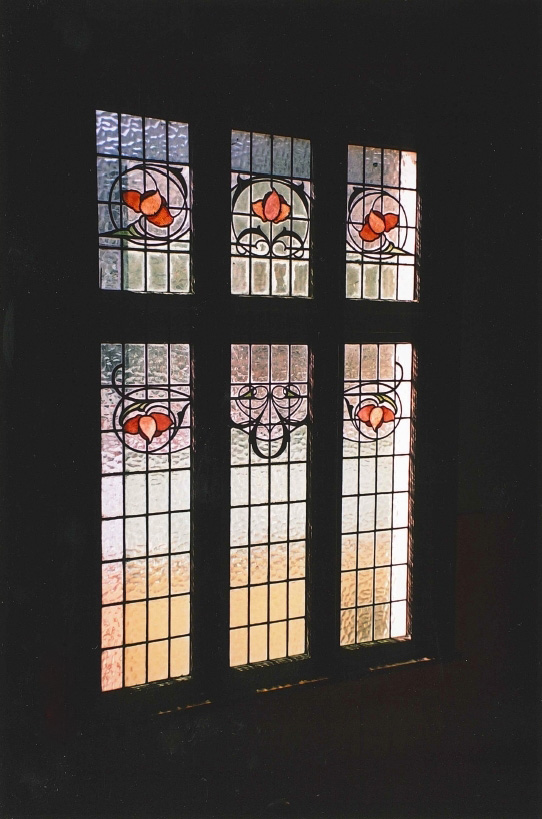
Greymouth's former Roman Catholic Presbytery stands on a moderately sloped site in Chapel Street. Because of its relatively elevated position it has a strong presence in the Greymouth streetscape. There was once a large group of associated buildings in the immediate environs on a single block of leased land. St Patrick's Church stood alongside the presbytery and the convent was around the corner on Tainui Street. With both of those having been demolished the presbytery now has a dominating position. The present modern Catholic school complex is sited nearby on the same block. The building has concrete foundations supporting the triple brick outer and inner walls, stands two storeys high and has a spacious attic beneath a hipped corrugated iron roof. Gabled wings extend from the north-eastern and south-western corners, complemented by verandahs along the northern and western sides on both storeys. These are sheltered under the main roof. Overall dimensions are 32 x 15 metres. An early plan of the building shows two waiting rooms, library, drawing room, dining room, kitchen, scullery, washhouse, pantry and two toilets downstairs and eight upstairs bedrooms as well as the upper and lower verandahs. The interior features rimu timber panelling and retains most of the original fireplaces, covered for safety as chimneys have been removed. The most prominent interior structure is a 270 degree staircase between the two main floors. A smaller flight of stairs gives access to an expansive attic with no ceiling lining. In most respects the building is original. Some planking on the upstairs north verandah has been replaced recently and similar repair and maintenance work is ongoing.
Greymouth's former Roman Catholic Presbytery stands on a moderately sloped site in Chapel Street. Because of its relatively elevated position it has a strong presence in the Greymouth streetscape. There was once a large group of associated buildings in the immediate environs on a single block of leased land. St Patrick's Church stood alongside the presbytery and the convent was around the corner on Tainui Street. With both of those having been demolished the presbytery now has a dominating position. The present modern Catholic school complex is sited nearby on the same block. The building has concrete foundations supporting the triple brick outer and inner walls, stands two storeys high and has a spacious attic beneath a hipped corrugated iron roof. Gabled wings extend from the north-eastern and south-western corners, complemented by verandahs along the northern and western sides on both storeys. These are sheltered under the main roof. Overall dimensions are 32 x 15 metres. An early plan of the building shows two waiting rooms, library, drawing room, dining room, kitchen, scullery, washhouse, pantry and two toilets downstairs and eight upstairs bedrooms as well as the upper and lower verandahs. The interior features rimu timber panelling and retains most of the original fireplaces, covered for safety as chimneys have been removed. The most prominent interior structure is a 270 degree staircase between the two main floors. A smaller flight of stairs gives access to an expansive attic with no ceiling lining. In most respects the building is original. Some planking on the upstairs north verandah has been replaced recently and similar repair and maintenance work is ongoing.
Historical and Associated Iwi / Hapū / Whānau
Completion Date
15th May 2007
Report Written By
Les Wright, Pam Wilson
Information Sources
Cyclopedia of New Zealand, 1906
Cyclopedia Company, Industrial, descriptive, historical, biographical facts, figures, illustrations, Wellington, N.Z, 1897-1908, Vol. 5, Nelson, Marlborough, Westland, 1906
Dictionary of New Zealand Biography
Dictionary of New Zealand Biography
Grey River Argus
Grey River Argus
May, 1962
Philip Ross May. The West Coast Gold Rushes, 1962.
McEwen, 1988
A. McEwan, From cottages to 'skyscrapers': the architecture of A.E. and E.S. Luttrell in Tasmania and New Zealand. M.A. Thesis, University of Canterbury. 1988
O'Malley, 1988
Father M O'Malley, St Patrick's Church, Greymouth. 1978. Revised by Centennial Committee 1988.
Other Information
A fully referenced registration report is available from the NZHPT Southern Region office Please note that entry on the New Zealand Heritage List/Rarangi Korero identifies only the heritage values of the property concerned, and should not be construed as advice on the state of the property, or as a comment of its soundness or safety, including in regard to earthquake risk, safety in the event of fire, or insanitary conditions.
Historical and Associated Iwi / Hapū / Whānau
Completion Date
15th May 2007
Report Written By
Les Wright, Pam Wilson
Information Sources
Cyclopedia of New Zealand, 1906
Cyclopedia Company, Industrial, descriptive, historical, biographical facts, figures, illustrations, Wellington, N.Z, 1897-1908, Vol. 5, Nelson, Marlborough, Westland, 1906
Dictionary of New Zealand Biography
Dictionary of New Zealand Biography
Grey River Argus
Grey River Argus
May, 1962
Philip Ross May. The West Coast Gold Rushes, 1962.
McEwen, 1988
A. McEwan, From cottages to 'skyscrapers': the architecture of A.E. and E.S. Luttrell in Tasmania and New Zealand. M.A. Thesis, University of Canterbury. 1988
O'Malley, 1988
Father M O'Malley, St Patrick's Church, Greymouth. 1978. Revised by Centennial Committee 1988.
Other Information
A fully referenced registration report is available from the NZHPT Southern Region office Please note that entry on the New Zealand Heritage List/Rarangi Korero identifies only the heritage values of the property concerned, and should not be construed as advice on the state of the property, or as a comment of its soundness or safety, including in regard to earthquake risk, safety in the event of fire, or insanitary conditions.
Current Usages
Uses: Accommodation
Specific Usage: Hotel
Former Usages
General Usage: Accommodation
Specific Usage: House
General Usage: Religion
Specific Usage: Vicarage/Manse/Presbytery/Rectory
Web Links
description:
Current Usages
Uses: Accommodation
Specific Usage: Hotel
Former Usages
General Usage: Accommodation
Specific Usage: House
General Usage: Religion
Specific Usage: Vicarage/Manse/Presbytery/Rectory
Web Links
description:
Location
Stay up to date with Heritage this month
