

The Hungerford Mausoleum is in Hokitika's Seaview Cemetery.
The inscription on the main panel reads:
Thomas Walter, died 28th Feb,1873 aged 18 months.
Thomas Walter, died 18th Feb, 1874 aged 10 months
Sons of Thomas Walter Hungerford and Eliza M. Delaney, youngest son of Richard Hungerford and Mary Cranfield Campbell of Corrigan, County Cork, Ireland.
Also interred in this mausoleum- Thomas Knowles only son of Morgal Christian. RVB.
Died April 2nd, aged 53 years. "Not my will but thine be done."
According to cemetery records the mausoleum has just the three occupants, named above. It is a sober reminder of the high rates of infant mortality in colonial New Zealand that the two Thomas Walters died within a year of each other.
[Thomas Walter Hungerford, the father, moved to Greymouth before the second child died, as he had the contract to build the Brunner Railway (1872) and also built/owned the Terminus Hotel (1873) on Mawhera Quay, then later both Greymouth’s breakwaters. He continued working there until the early 1890’s when he went to Newcastle in New South Wales and died in Tasmania in 1908. His eldest son Richard Colin Hungerford, born 1865 also had quite an illustrious career.]
More is known about the third occupant of the mausoleum, Thomas Knowles Christian, who died on April 2, 1878, aged 52. The West Coast Times (3/4/1878) reported:
There are many in this district and in other parts of this colony who will regret to hear of the sudden death of Mr Thomas K. Christian, bailiff of the court here. Mr Christian had only been ailing for a few days. He was attending to his usual avocations last week when he caught a cold, which resulted in inflammation of the lungs. Though he was carefully attended by all available medical aid, he lingered only a short time. Much sympathy has been expressed in town by the friends of the deceased for Mrs Christian's sad and unexpected trail, coming as it has, so quickly after her own severe and protracted illness. As an officer of the Court, M Christian was ever assiduous and obliging, and in his private acquaintanceship, he had formed many warm friends, some of whom had come from Greymouth hearing that that he had been dangerously ill, to render what assistance might be in their power.
The mausoleum, the largest monument in the Hokitika cemetery has intrigued visitors for many years. It was clearly intended to provide for a large number of interments but its many marble panels remain blank.
The inscription on the main panel reads:
Thomas Walter, died 28th Feb,1873 aged 18 months.
Thomas Walter, died 18th Feb, 1874 aged 10 months
Sons of Thomas Walter Hungerford and Eliza M. Delaney, youngest son of Richard Hungerford and Mary Cranfield Campbell of Corrigan, County Cork, Ireland.
Also interred in this mausoleum- Thomas Knowles only son of Morgal Christian. RVB.
Died April 2nd, aged 53 years. "Not my will but thine be done."
According to cemetery records the mausoleum has just the three occupants, named above. It is a sober reminder of the high rates of infant mortality in colonial New Zealand that the two Thomas Walters died within a year of each other.
[Thomas Walter Hungerford, the father, moved to Greymouth before the second child died, as he had the contract to build the Brunner Railway (1872) and also built/owned the Terminus Hotel (1873) on Mawhera Quay, then later both Greymouth’s breakwaters. He continued working there until the early 1890’s when he went to Newcastle in New South Wales and died in Tasmania in 1908. His eldest son Richard Colin Hungerford, born 1865 also had quite an illustrious career.]
More is known about the third occupant of the mausoleum, Thomas Knowles Christian, who died on April 2, 1878, aged 52. The West Coast Times (3/4/1878) reported:
There are many in this district and in other parts of this colony who will regret to hear of the sudden death of Mr Thomas K. Christian, bailiff of the court here. Mr Christian had only been ailing for a few days. He was attending to his usual avocations last week when he caught a cold, which resulted in inflammation of the lungs. Though he was carefully attended by all available medical aid, he lingered only a short time. Much sympathy has been expressed in town by the friends of the deceased for Mrs Christian's sad and unexpected trail, coming as it has, so quickly after her own severe and protracted illness. As an officer of the Court, M Christian was ever assiduous and obliging, and in his private acquaintanceship, he had formed many warm friends, some of whom had come from Greymouth hearing that that he had been dangerously ill, to render what assistance might be in their power.
The mausoleum, the largest monument in the Hokitika cemetery has intrigued visitors for many years. It was clearly intended to provide for a large number of interments but its many marble panels remain blank.
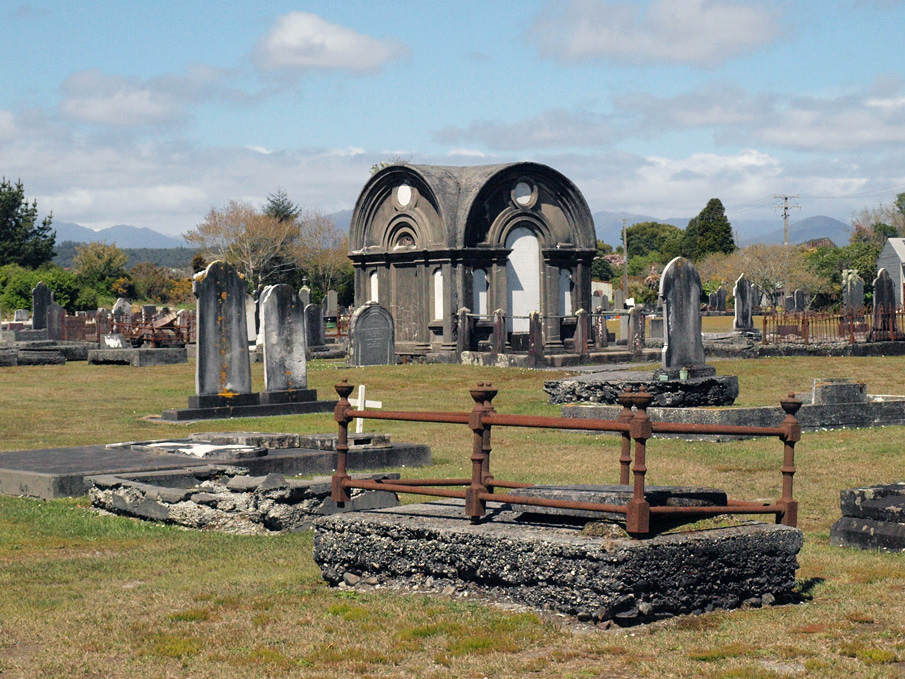
Hungerford Mausoleum, Hokitika. Photo Competition Entrant 2025 | Tracy Griffiths | 14/02/2025 | Tracy Griffiths
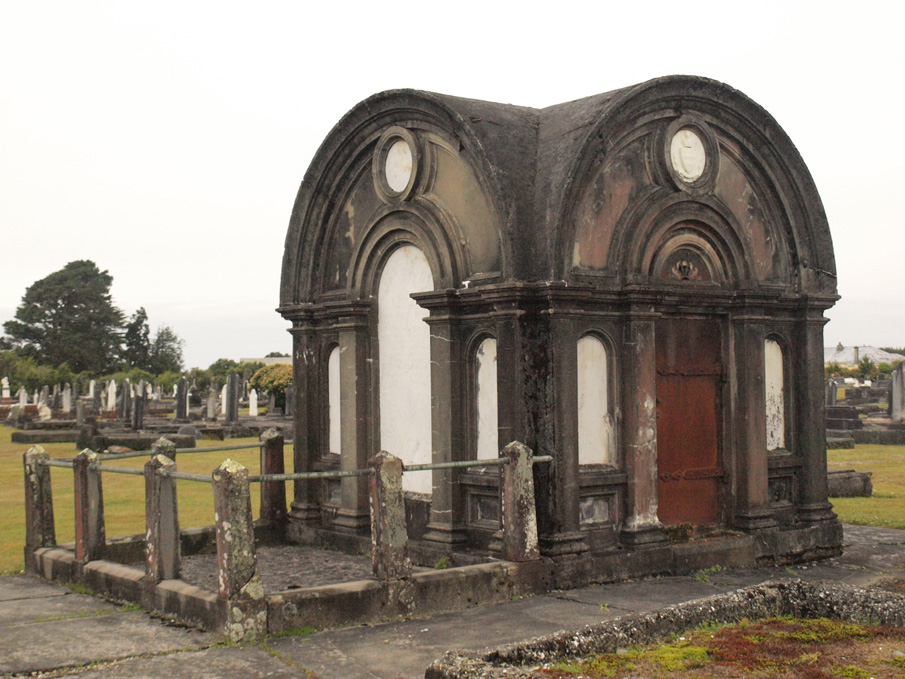
Hungerford Mausoleum, Hokitika. CC BY 4.0 Image courtesy of commons.wikimedia.org | Mike Dickison | 30/08/2020 | Mike Dickison - Wikimedia Commons
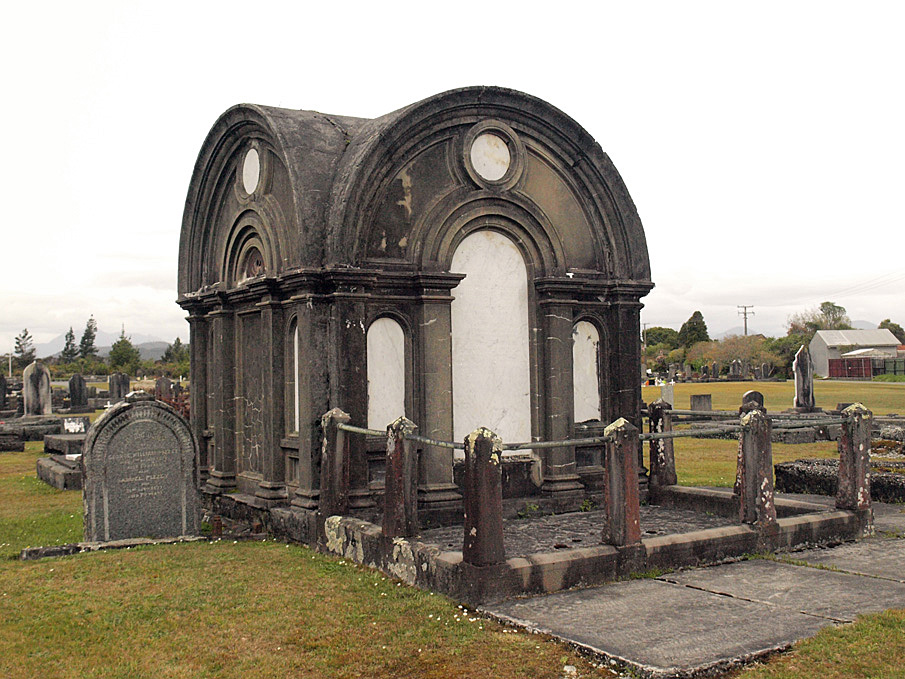
Hungerford Mausoleum, Hokitika | N Jackson | 24/10/2015 | Heritage New Zealand Pouhere Taonga
Hungerford Mausoleum, Hokitika. Photo Competition Entrant 2025 | Tracy Griffiths | 14/02/2025 | Tracy Griffiths
Hungerford Mausoleum, Hokitika. CC BY 4.0 Image courtesy of commons.wikimedia.org | Mike Dickison | 30/08/2020 | Mike Dickison - Wikimedia Commons
Hungerford Mausoleum, Hokitika | N Jackson | 24/10/2015 | Heritage New Zealand Pouhere Taonga
