DonateMembershipVisit Heritage
  • Tūrangawaewae
    Places
  • Tira Māori
    Māori Heritage
  • Poutairangahia
    Archaeology
  • Rauemi
    Resources
  • Mō Tātou
    About Us
  • New Zealand Heritage List
  • Nominate and submit
  • Explore the List
  • National Historic Landmarks
  • Plaques
  • Rainbow List Project
  • Lost heritage
  • Visit Heritage
  • Our properties
  • Turnbull House Project
  • Collections
  • Shop
  • Tohu Whenua
  • Tira Māori
  • Conserving Māori heritage
  • Marae built heritage
  • Māori heritage on the List
  • Hinemihi—Te Hokinga Mai
  • What is archaeology?
  • Is there a site on my property?
  • What are my legal requirements?
  • Affecting an archaeological site
  • Declaring an archaeological site
  • Archaeology FAQs
  • Archaeology Digital Library
  • Archaeology guidelines and templates
  • Resources
  • Funding
  • Publications
  • Sustainable management guides
  • Disaster recovery
  • Podcasts & digital resources
  • Education Hub
  • Conservation plans
  • About
  • Board
  • Māori Heritage Council
  • Senior Staff
  • Offices
  • Contact us
  • Careers
  • Covenants
  • Fast-track
  • Corporate documents
  • Currently consulting on
  • Our submissions
  • News
  • Covid-19 response
Quick links
Rārangi Kōrero | The List
Explore the List
National Historic Landmarks
Ngā Manawhenua o Aotearoa me ōna Kōrero Tūturu
Quick links
Tapuwae
A Vision for Places of Māori Heritage
Funding for Māori Heritage
Resources
Quick links
Archaeological Authority Portal
Applying for an archaeological authority
Archaeology FAQs
Browse the most frequently asked questions about archaeological authorities and the archaeological process.
Quick links
Quick links
News
News Keep up to date with Heritage New Zealand Pouhere Taonga
Membership
Membership Find out more and sign up today
DonateMembershipVisit Heritage
  • Tūrangawaewae
    Places
  • Tira Māori
    Māori Heritage
  • Poutairangahia
    Archaeology
  • Rauemi
    Resources
  • Mō Tātou
    About Us
  • New Zealand Heritage List
  • Nominate and submit
  • Explore the List
  • National Historic Landmarks
  • Plaques
  • Rainbow List Project
  • Lost heritage
  • Visit Heritage
  • Our properties
  • Turnbull House Project
  • Collections
  • Shop
  • Tohu Whenua
  • Tira Māori
  • Conserving Māori heritage
  • Marae built heritage
  • Māori heritage on the List
  • Hinemihi—Te Hokinga Mai
  • What is archaeology?
  • Is there a site on my property?
  • What are my legal requirements?
  • Affecting an archaeological site
  • Declaring an archaeological site
  • Archaeology FAQs
  • Archaeology Digital Library
  • Archaeology guidelines and templates
  • Resources
  • Funding
  • Publications
  • Sustainable management guides
  • Disaster recovery
  • Podcasts & digital resources
  • Education Hub
  • Conservation plans
  • About
  • Board
  • Māori Heritage Council
  • Senior Staff
  • Offices
  • Contact us
  • Careers
  • Covenants
  • Fast-track
  • Corporate documents
  • Currently consulting on
  • Our submissions
  • News
  • Covid-19 response
Quick links
Rārangi Kōrero | The List
Explore the List
National Historic Landmarks
Ngā Manawhenua o Aotearoa me ōna Kōrero Tūturu
Quick links
Tapuwae
A Vision for Places of Māori Heritage
Funding for Māori Heritage
Resources
Quick links
Archaeological Authority Portal
Applying for an archaeological authority
Archaeology FAQs
Browse the most frequently asked questions about archaeological authorities and the archaeological process.
Quick links
Quick links
News
News Keep up to date with Heritage New Zealand Pouhere Taonga
Membership
Membership Find out more and sign up today
  • Places
  • Nominate and submit
  • National Historic Landmarks
  • Places
  • Nominate and submit
  • National Historic Landmarks
  • Tira Māori
  • Conserving Māori heritage
  • Marae built heritage
  • Tira Māori
  • Conserving Māori heritage
  • Marae built heritage
  • Archaeological authorities
  • Archaeology Digital Library
  • Archaeological authorities
  • Archaeology Digital Library
  • All resources
  • Publications
  • Funding
  • All resources
  • Publications
  • Funding
  • FAQs
  • FAQs
Follow us on:
Places
  • Places
  • Nominate and submit
  • National Historic Landmarks
Tira Māori
  • Tira Māori
  • Conserving Māori heritage
  • Marae built heritage
Archaeology
  • Archaeological authorities
  • Archaeology Digital Library
Resources
  • All resources
  • Publications
  • Funding
FAQs
  • FAQs
Follow us on
HomePrivacyTerms and conditionsAbout this site
© Heritage New Zealand Pouhere Taonga 2026.
 
Matapiro Station Homestead

Matapiro Station, 895-905 Matapiro Road, CROWNTHORPE

Private

Historic Place Category 1

List No. 171

Quick links:
List GalleryLocationDetails
The Matapiro Station land was owned by Ngāti Upokoiri who sold the leasehold to a succession of European settlers from 1858. [In 1873 Joseph Rhodes sold the Matapiro run comprising 22, 700 leasehold acres and 15 000 long-woolled sheep along with his Clive property The Grange for £30 000. The properties were purchased by Messrs Thomas Calcutt, Harris and Francis Dyer Rich of Otago. The Grange was subsequently re-sold to Sir George Whitmore and in 1874 Mr Walter Shrimpton of Dunedin (Rich’s son-in-law) bought in to Matapiro Station. Shrimpton was born in Yorkshire, England in 1841 and had emigrated to New Zealand with his family in 1853. The family initially settled in Canterbury and Shrimpton later purchased a farm in Otago before relocating to the Hawke’s Bay. Rich and Shrimpton managed Matapiro in partnership for several years and brought the land under the Land Transfer Act in 1880. Shortly thereafter, Shrimpton became the sole owner of Matapiro.]

Shrimpton was the first to bring hares and greyhounds to Hawke’s Bay and in 1876 he brought red deer from the South Island to Matapiro. The herd thrived but eventually had to be exterminated because they menaced plantations and crops. Shrimpton was also chairman of the Hawke’s Bay County Council (1896-1926) and Hawke’s Bay Hospital Board (1909-34). About 1910 he donated funds to the Napier Hospital for the establishment of the Shrimpton Children's Ward. This was in memory of his son who died at the age of six.

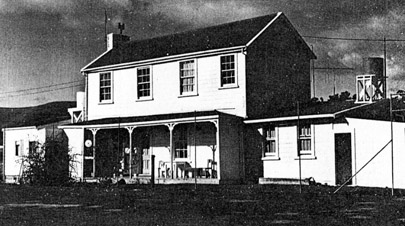
The first homestead at Matapiro Station was built near the river in 1878 on what is now the Omapere property. In 1886 it was sledged up the river and still exists as part of the manager's house and single men's quarters. In the 1880s the present site was chosen for the erection of a new homestead, near the site of the old Te Whakairo carved house. Early photographs show a large single storeyed house set on a terrace. In 1902 Shrimpton decided to enlarge the house. The work was undertaken to the design of C.T. Natusch in stages over the next eight years.

[Matapiro was divided up in the first half of the twentieth century but remained a sizeable property of 1882 hectares.] Shrimpton died in 1936. He was survived by his second wife, Edith, who continued to live at the homestead until her death in 1953. [Thereafter the homestead and gardens were maintained by a series of caretakers living in the rear servants’ quarters, including Shrimpton’s grandson Matt Forde and his wife Val from 1997 to 2004 when the property was sold, ending 130 years of ownership by the Shrimpton family and descendants. It was purchased by Auckland businessman Ken Syminton of Wilson Hellaby Meats and Wilson Foods Ltd.]
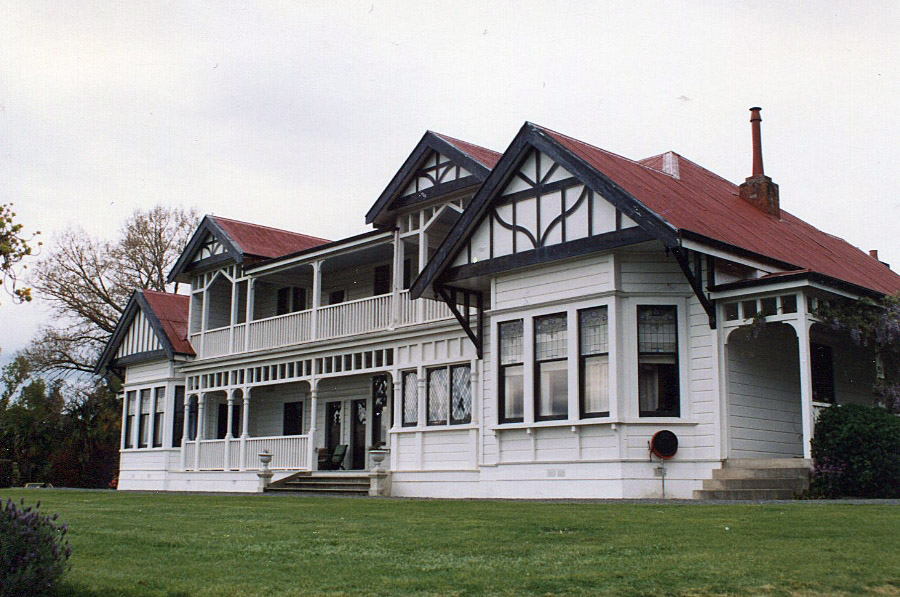
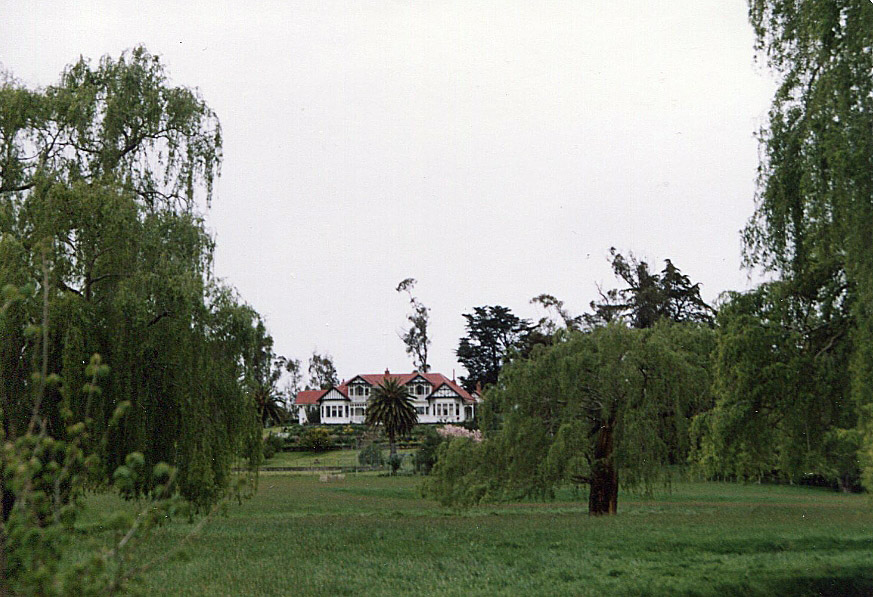
Matapiro Station Homestead. Original image submitted at time of registration | J Gatley | 18/10/1989 | NZHPT Field Record Form Collection
Matapiro Station Homestead. Original image submitted at time of registration | J Catley | 18/10/1989 | NZHPT Field Record Form Collection
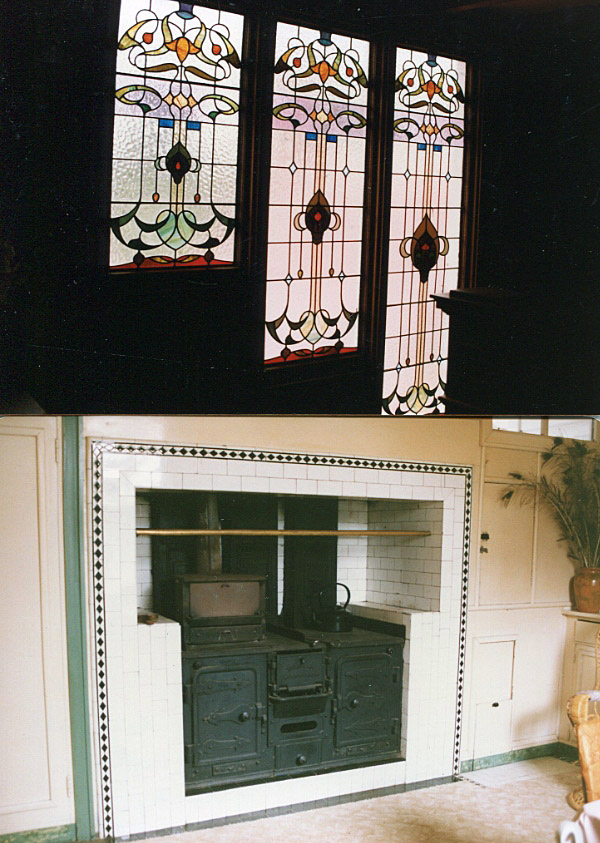
Matapiro Station Homestead interior. Window and coal range. Original image submitted at time of registration | J Gatley | 18/10/1989 | NZHPT Field Record Form Collection
Matapiro Station Homestead. Original image submitted at time of registration | J Gatley | 18/10/1989 | NZHPT Field Record Form Collection
Matapiro Station Homestead. Original image submitted at time of registration | J Catley | 18/10/1989 | NZHPT Field Record Form Collection
Matapiro Station Homestead interior. Window and coal range. Original image submitted at time of registration | J Gatley | 18/10/1989 | NZHPT Field Record Form Collection

List Entry Information

Overview

Status
Listed

List Entry Status
Historic Place Category 1

Access
Private/No Public Access

List Number
171

Date Entered
28th June 1990

Date of Effect
28th June 1990

City/District Council
Hastings District

Region
Hawke's Bay Region

Legal description

Pt Lot 3 DP 103 (RT HB137/193), Hawke’s Bay Land District

Detailed List Entry
Significance

Historic Significance

Historical Significance or Value [Matapiro Station and the homestead erected by Shrimpton in the 1880s had a long association with this prominent Hawke’s Bay citizen and his family in whose hands the station and homestead remained for 130 years].

Physical Significance

ARCHITECTURAL QUALITY: C.T. Natusch was responsible for the design of many large homesteads in Hawkes Bay, Rangitiki, Manawatu and Wanganui. In general they exhibit Elizabethan characteristics such as steep gables, half-timbering, and bay windows, and were large, grand houses. Matapiro Station Homestead is a fine example of Natusch's work. Its final form is the result of substantial additions to an earlier house but it is nevertheless a satisfying, stylistic whole. It is indicative of the scale of housing affordable by station owners in Victorian and Edwardian times. As usual with Natusch, a high standard of finishing work has been obtained. TOWNSCAPE/LANDMARK VALUE: [Sited on a terrace south of Matapiro Road, the house has been somewhat obscured by trees but remains clearly visible from the road. Complemented by a diverse group of buildings some 300 metres to the east, the house is part of a fine complex as well as having considerable landmark quality.]

Construction Professional

Name

Natusch, C.T. & Sons

Type

Architectural Partnership

Biography

Charles Tilleard Natusch (1859-1951) completed his architectural studies in England in 1882, after which he travelled in the United States and Canada. He returned to England in 1883 to become involved in the town planning and development of Southend-on-Sea. He immigrated to New Zealand in 1886 and after a short collaboration with Atkins & Clere, established a practice in Wellington as an architect and quantity surveyor. He then moved to Masterton, Pahiatua and finally to Napier, where he bought the architectural practice of Robert Lamb. From 1908 Natusch worked with his three sons, Aleck, Rene and Stanley. The firm received many domestic commissions from the farming community. Its well known houses include Bushy Park (Kai Iwi), Gwavas (Tikokino), Matapiro (Napier), Maungaraupi (Marton) and Wharerata (Massey University). Following several changes of name and three generations of Natusch architects, the family practice continues today as Natusch Partnership in Napier.

Construction Details

Start Year

1880

Finish Year

1890

Type

Original Construction

Description

1880s

Start Year

1902

Finish Year

1910

Type

Addition

Description

Originally the house was single-storied. Additions include: Two large gables flanking the north façade, the south wing and the entire first floor.

Construction Materials

Timber frame clad with rusticated weatherboards. Corrugated iron roof.

Notable Features

Decorative half-timbering in gable ends. Extensive wood panelling and use of leadlights.

Physical Description

ARCHITECT/ENGINEER/DESIGNER: 1880s portion unknown. 1902-10 additions Charles Tilleard NATUSCH (1859-1952) ARCHITECTURAL DESCRIPTION: Matapiro Station Homestead is a large, two-storeyed house exhibiting an Elizabethan influence. The front facade faces north and has deep verandahs at ground and first floor level. The formal balustrades shade and disguise the informal arrangement of doors and windows behind them. At either end of the first floor verandah is a small gable and these are flanked by larger gables at ground floor level. These large gables have three light bay windows projecting from the main line of the facade. The large rooms within have a stud height greater than elsewhere in the house. The four gable ends are decorated with half-timbering in a variety of designs and it is predominantly this element which gives the house its Elizabethan character. The other three facades are less elaborate but retain the decorative gable ends. [The interior has extensive wood panelling in the dining room, hallways and stairwell. Carefully detailed balustrading and newel posts on the stairs are complemented by coloured leadlights which give an Art Nouveau touch to the decoration. The south wing contains the servants' quarters and service rooms and such items as the original cool range are still in place.] MODIFICATIONS: Originally the house was single-storeyed. Additions, 1902-10, include: - Two large gables flanking the north facade, - The south wing, - The entire first floor. The right hand section of the ground floor verandah has been closed in to form a vestibule. This too was possibly done in the 1902-10 period.

Reference

Information Sources

Fowler, 1971

M Fowler, Country Houses of New Zealand. A H and A W Reed, 1971.

Land Information New Zealand (LINZ)

Land Information New Zealand

MacGregor, 1970

Miriam MacGregor, Early Stations of Hawke's Bay, A.H. & A.W. Reed, Wellington, 1970

New Zealand Listener

New Zealander Listener

Scholefield, 1940

G. H. Scholefield, A Dictionary of New Zealand Biography, Department of Internal Affairs, Wellington, 1940

Thornton, 1986

Geoffrey Thornton, The New Zealand Heritage of Farm Buildings, Auckland, 1986

Castle, 1980

John Castle & Sydney Grant, Hawkes Bay Heritage, Collins, Auckland, 1980

Hodgson, 1979

Terence Hodgson, E.R., Charles Tilleard Natusch, A Folio of Houses, Eastgate, 1979

Report Written By

This historic place was registered under the Historic Places Act 1980. This report includes the text from the original Building Classification Committee report considered by the NZHPT Board at the time of registration. Information in square brackets indicate modifications made after the paper was considered by the NZHPT Board. Please note that entry on the New Zealand Heritage List/Rarangi Korero identifies only the heritage values of the property concerned, and should not be construed as advice on the state of the property, or as a comment of its soundness or safety, including in regard to earthquake risk, safety in the event of fire, or insanitary conditions.

Further Information

Current Usages

Uses: Accommodation

Specific Usage: House

Former Usages

Themes

Web Links

Overview

Status

Listed

List Entry Status

Historic Place Category 1

Access

Private/No Public Access

List Number

171

Date Entered

28th June 1990

Date of Effect

28th June 1990

City/District Council

Hastings District

Region

Hawke's Bay Region

Legal description

Pt Lot 3 DP 103 (RT HB137/193), Hawke’s Bay Land District

Status

Listed

List Entry Status

Historic Place Category 1

Access

Private/No Public Access

List Number

171

Date Entered

28th June 1990

Date of Effect

28th June 1990

City/District Council

Hastings District

Region

Hawke's Bay Region

Legal description

Pt Lot 3 DP 103 (RT HB137/193), Hawke’s Bay Land District

Significance

Why is this place significant?

Historic Significance

Historical Significance or Value [Matapiro Station and the homestead erected by Shrimpton in the 1880s had a long association with this prominent Hawke’s Bay citizen and his family in whose hands the station and homestead remained for 130 years].

Physical Significance

ARCHITECTURAL QUALITY: C.T. Natusch was responsible for the design of many large homesteads in Hawkes Bay, Rangitiki, Manawatu and Wanganui. In general they exhibit Elizabethan characteristics such as steep gables, half-timbering, and bay windows, and were large, grand houses. Matapiro Station Homestead is a fine example of Natusch's work. Its final form is the result of substantial additions to an earlier house but it is nevertheless a satisfying, stylistic whole. It is indicative of the scale of housing affordable by station owners in Victorian and Edwardian times. As usual with Natusch, a high standard of finishing work has been obtained. TOWNSCAPE/LANDMARK VALUE: [Sited on a terrace south of Matapiro Road, the house has been somewhat obscured by trees but remains clearly visible from the road. Complemented by a diverse group of buildings some 300 metres to the east, the house is part of a fine complex as well as having considerable landmark quality.]

Why is this place significant?

Historic Significance

Historical Significance or Value [Matapiro Station and the homestead erected by Shrimpton in the 1880s had a long association with this prominent Hawke’s Bay citizen and his family in whose hands the station and homestead remained for 130 years].

Physical Significance

ARCHITECTURAL QUALITY: C.T. Natusch was responsible for the design of many large homesteads in Hawkes Bay, Rangitiki, Manawatu and Wanganui. In general they exhibit Elizabethan characteristics such as steep gables, half-timbering, and bay windows, and were large, grand houses. Matapiro Station Homestead is a fine example of Natusch's work. Its final form is the result of substantial additions to an earlier house but it is nevertheless a satisfying, stylistic whole. It is indicative of the scale of housing affordable by station owners in Victorian and Edwardian times. As usual with Natusch, a high standard of finishing work has been obtained. TOWNSCAPE/LANDMARK VALUE: [Sited on a terrace south of Matapiro Road, the house has been somewhat obscured by trees but remains clearly visible from the road. Complemented by a diverse group of buildings some 300 metres to the east, the house is part of a fine complex as well as having considerable landmark quality.]

Construction Information

Construction Professional

Name

Natusch, C.T. & Sons

Type

Architectural Partnership

Biography

Charles Tilleard Natusch (1859-1951) completed his architectural studies in England in 1882, after which he travelled in the United States and Canada. He returned to England in 1883 to become involved in the town planning and development of Southend-on-Sea. He immigrated to New Zealand in 1886 and after a short collaboration with Atkins & Clere, established a practice in Wellington as an architect and quantity surveyor. He then moved to Masterton, Pahiatua and finally to Napier, where he bought the architectural practice of Robert Lamb. From 1908 Natusch worked with his three sons, Aleck, Rene and Stanley. The firm received many domestic commissions from the farming community. Its well known houses include Bushy Park (Kai Iwi), Gwavas (Tikokino), Matapiro (Napier), Maungaraupi (Marton) and Wharerata (Massey University). Following several changes of name and three generations of Natusch architects, the family practice continues today as Natusch Partnership in Napier.

Construction Details

Start Year

1880

startYearCirca

Finish Year

1890

finishYearCirca

Type

Original Construction

Description

1880s

Start Year

1902

Finish Year

1910

Type

Addition

Description

Originally the house was single-storied. Additions include: Two large gables flanking the north façade, the south wing and the entire first floor.

Construction Materials

Timber frame clad with rusticated weatherboards. Corrugated iron roof.

Notable Features

Decorative half-timbering in gable ends. Extensive wood panelling and use of leadlights.

Construction Professional

Name

Natusch, C.T. & Sons

Type

Architectural Partnership

Biography

Charles Tilleard Natusch (1859-1951) completed his architectural studies in England in 1882, after which he travelled in the United States and Canada. He returned to England in 1883 to become involved in the town planning and development of Southend-on-Sea. He immigrated to New Zealand in 1886 and after a short collaboration with Atkins & Clere, established a practice in Wellington as an architect and quantity surveyor. He then moved to Masterton, Pahiatua and finally to Napier, where he bought the architectural practice of Robert Lamb. From 1908 Natusch worked with his three sons, Aleck, Rene and Stanley. The firm received many domestic commissions from the farming community. Its well known houses include Bushy Park (Kai Iwi), Gwavas (Tikokino), Matapiro (Napier), Maungaraupi (Marton) and Wharerata (Massey University). Following several changes of name and three generations of Natusch architects, the family practice continues today as Natusch Partnership in Napier.

Construction Details

Start Year

1880

startYearCirca

Finish Year

1890

finishYearCirca

Type

Original Construction

Description

1880s

Start Year

1902

Finish Year

1910

Type

Addition

Description

Originally the house was single-storied. Additions include: Two large gables flanking the north façade, the south wing and the entire first floor.

Construction Materials

Timber frame clad with rusticated weatherboards. Corrugated iron roof.

Notable Features

Decorative half-timbering in gable ends. Extensive wood panelling and use of leadlights.

Physical Description

ARCHITECT/ENGINEER/DESIGNER: 1880s portion unknown. 1902-10 additions Charles Tilleard NATUSCH (1859-1952) ARCHITECTURAL DESCRIPTION: Matapiro Station Homestead is a large, two-storeyed house exhibiting an Elizabethan influence. The front facade faces north and has deep verandahs at ground and first floor level. The formal balustrades shade and disguise the informal arrangement of doors and windows behind them. At either end of the first floor verandah is a small gable and these are flanked by larger gables at ground floor level. These large gables have three light bay windows projecting from the main line of the facade. The large rooms within have a stud height greater than elsewhere in the house. The four gable ends are decorated with half-timbering in a variety of designs and it is predominantly this element which gives the house its Elizabethan character. The other three facades are less elaborate but retain the decorative gable ends. [The interior has extensive wood panelling in the dining room, hallways and stairwell. Carefully detailed balustrading and newel posts on the stairs are complemented by coloured leadlights which give an Art Nouveau touch to the decoration. The south wing contains the servants' quarters and service rooms and such items as the original cool range are still in place.] MODIFICATIONS: Originally the house was single-storeyed. Additions, 1902-10, include: - Two large gables flanking the north facade, - The south wing, - The entire first floor. The right hand section of the ground floor verandah has been closed in to form a vestibule. This too was possibly done in the 1902-10 period.

ARCHITECT/ENGINEER/DESIGNER: 1880s portion unknown. 1902-10 additions Charles Tilleard NATUSCH (1859-1952) ARCHITECTURAL DESCRIPTION: Matapiro Station Homestead is a large, two-storeyed house exhibiting an Elizabethan influence. The front facade faces north and has deep verandahs at ground and first floor level. The formal balustrades shade and disguise the informal arrangement of doors and windows behind them. At either end of the first floor verandah is a small gable and these are flanked by larger gables at ground floor level. These large gables have three light bay windows projecting from the main line of the facade. The large rooms within have a stud height greater than elsewhere in the house. The four gable ends are decorated with half-timbering in a variety of designs and it is predominantly this element which gives the house its Elizabethan character. The other three facades are less elaborate but retain the decorative gable ends. [The interior has extensive wood panelling in the dining room, hallways and stairwell. Carefully detailed balustrading and newel posts on the stairs are complemented by coloured leadlights which give an Art Nouveau touch to the decoration. The south wing contains the servants' quarters and service rooms and such items as the original cool range are still in place.] MODIFICATIONS: Originally the house was single-storeyed. Additions, 1902-10, include: - Two large gables flanking the north facade, - The south wing, - The entire first floor. The right hand section of the ground floor verandah has been closed in to form a vestibule. This too was possibly done in the 1902-10 period.

Reference

Historical and Associated Iwi / Hapū / Whānau

Information Sources

Fowler, 1971

M Fowler, Country Houses of New Zealand. A H and A W Reed, 1971.

Land Information New Zealand (LINZ)

Land Information New Zealand

MacGregor, 1970

Miriam MacGregor, Early Stations of Hawke's Bay, A.H. & A.W. Reed, Wellington, 1970

New Zealand Listener

New Zealander Listener

Scholefield, 1940

G. H. Scholefield, A Dictionary of New Zealand Biography, Department of Internal Affairs, Wellington, 1940

Thornton, 1986

Geoffrey Thornton, The New Zealand Heritage of Farm Buildings, Auckland, 1986

Castle, 1980

John Castle & Sydney Grant, Hawkes Bay Heritage, Collins, Auckland, 1980

Hodgson, 1979

Terence Hodgson, E.R., Charles Tilleard Natusch, A Folio of Houses, Eastgate, 1979

Other Information

This historic place was registered under the Historic Places Act 1980. This report includes the text from the original Building Classification Committee report considered by the NZHPT Board at the time of registration. Information in square brackets indicate modifications made after the paper was considered by the NZHPT Board. Please note that entry on the New Zealand Heritage List/Rarangi Korero identifies only the heritage values of the property concerned, and should not be construed as advice on the state of the property, or as a comment of its soundness or safety, including in regard to earthquake risk, safety in the event of fire, or insanitary conditions.

Historical and Associated Iwi / Hapū / Whānau

Information Sources

Fowler, 1971

M Fowler, Country Houses of New Zealand. A H and A W Reed, 1971.

Land Information New Zealand (LINZ)

Land Information New Zealand

MacGregor, 1970

Miriam MacGregor, Early Stations of Hawke's Bay, A.H. & A.W. Reed, Wellington, 1970

New Zealand Listener

New Zealander Listener

Scholefield, 1940

G. H. Scholefield, A Dictionary of New Zealand Biography, Department of Internal Affairs, Wellington, 1940

Thornton, 1986

Geoffrey Thornton, The New Zealand Heritage of Farm Buildings, Auckland, 1986

Castle, 1980

John Castle & Sydney Grant, Hawkes Bay Heritage, Collins, Auckland, 1980

Hodgson, 1979

Terence Hodgson, E.R., Charles Tilleard Natusch, A Folio of Houses, Eastgate, 1979

Other Information

This historic place was registered under the Historic Places Act 1980. This report includes the text from the original Building Classification Committee report considered by the NZHPT Board at the time of registration. Information in square brackets indicate modifications made after the paper was considered by the NZHPT Board. Please note that entry on the New Zealand Heritage List/Rarangi Korero identifies only the heritage values of the property concerned, and should not be construed as advice on the state of the property, or as a comment of its soundness or safety, including in regard to earthquake risk, safety in the event of fire, or insanitary conditions.

Further Information

Current Usages

Uses: Accommodation

Specific Usage: House

Current Usages

Uses: Accommodation

Specific Usage: House

Location

Loading
Related listings
Matapiro Station Shearers' Quarters. Original image submitted at time of registration
Matapiro Station Shearers’ Quarters
Matapiro Station Woolshed
Matapiro Station Shearers' Quarters. Original image submitted at time of registration
Matapiro Station Shearers’ Quarters
Stay up to date with Heritage this month