Built in 1878-9, the Gaiety Hall at 105 Rue Jolie in Akaroa has high historical and social significance as the former hall of Akaroa’s Oddfellows’ Lodge, as a gathering place for the community and, for much of the twentieth century, as Akaroa’s cinema. Designed by Christchurch architect, Alfred William Simpson, the building has architectural and aesthetic significance as a well-preserved example of nineteenth century public and commercial architecture in a classical style.
From the mid nineteenth century, Akaroa doctor, Daniel Watkins, owned Rural Section 61 which included much of the present area of South Akaroa. In October 1877 he sold this section to trustees of the Lodge of Oddfellows for £150. By November 1877 architect A W Simpson had prepared a design for a new hall and the contract had been let to builder Mr J Donovan of Akaroa for £868. A dispute with the builder delayed completion of the building by the due date of 28 June 1878 and the contract to finish it was re-let to Mr Penlington, builder and contractor. When the hall opened in April 1879, it was described as being ‘very conveniently fitted up inside’ and the main hall was to hold about 400 people and the gallery about 100. The total cost when complete was £1200. A ball was held to celebrate its opening.
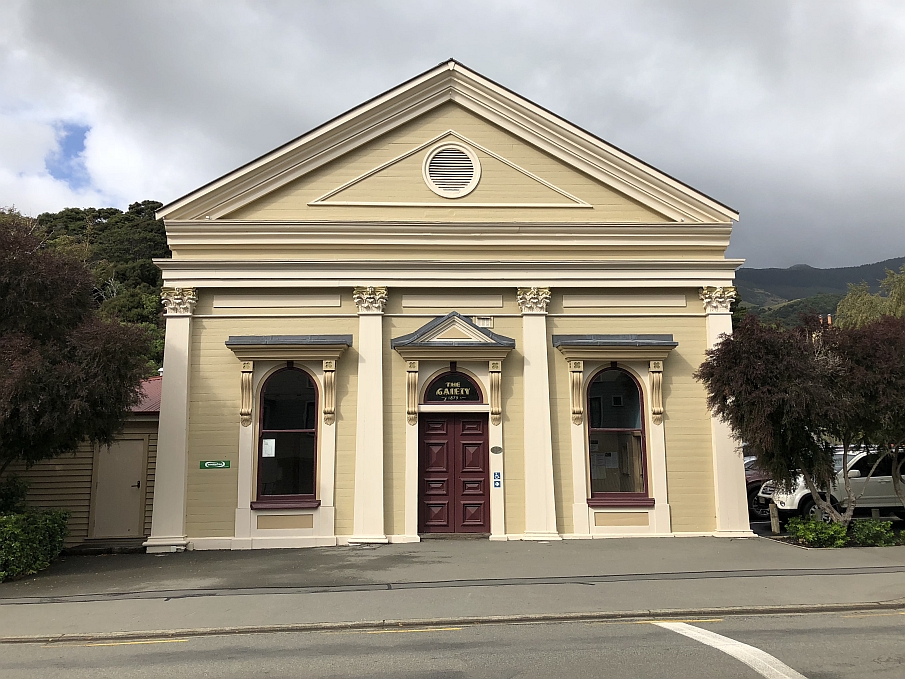
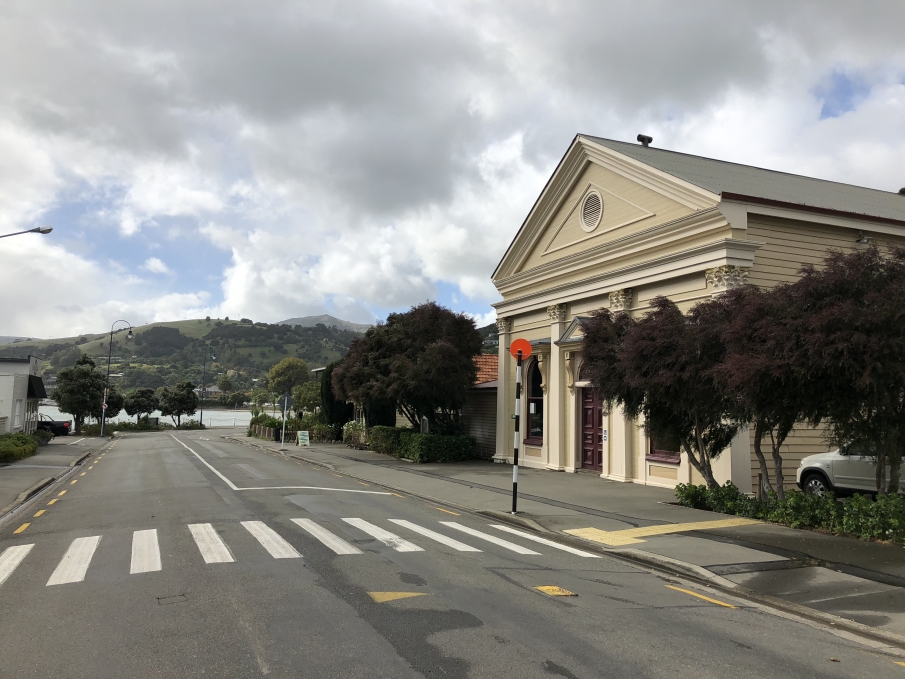
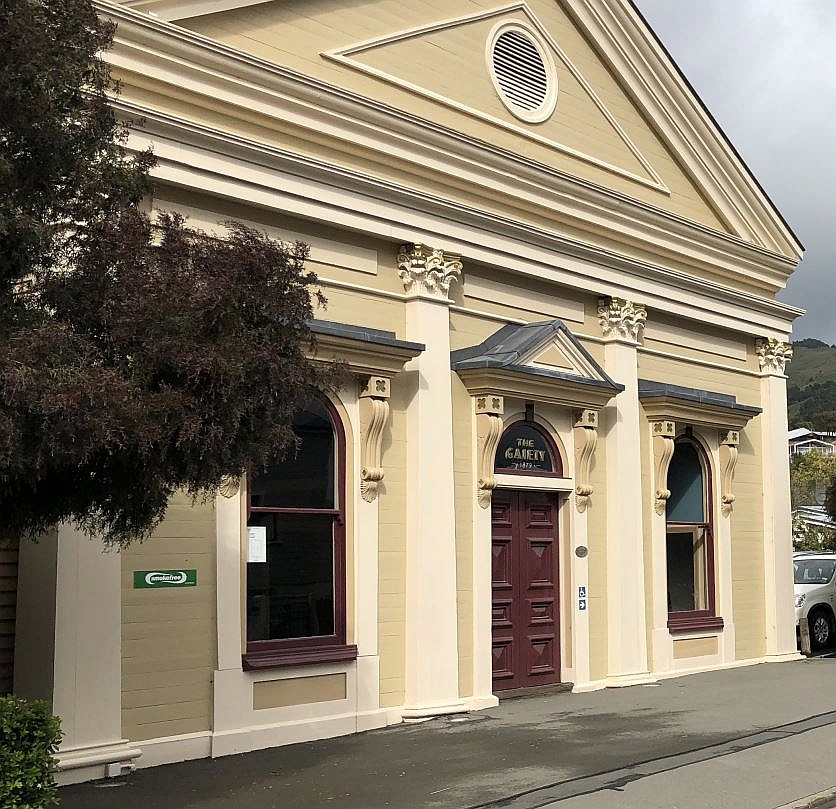
The footprint of the Gaiety Hall occupies the majority of its Rue Jolie site. It sits on the east side of Rue Jolie, immediately to the south of its neighbour, the Coronation Library. Constructed of timber, the building features an elaborate façade with rich classical features, including strongly outlined pediment, bold door and window surrounds and tapered pilasters with Corinthian capitals. In contrast to the street frontage, the sides of the building are devoid of ornament. The north elevation reflects various small additions.
The Akaroa Lodge of the Order of Oddfellows utilised the hall for their ceremonial and social activities but was also made widely available for public use, including lectures, movies, sale of goods, dances and indoor skating. In 1911, local businessman, Frank Taylor began screening pictures in the hall. After he moved to Springfield in 1914, the business was taken over by his brother, well-known local merchant Thomas Edward Taylor. In the silent film era, his daughter Irene Pilkington played the piano accompaniment. Thomas Taylor purchased the building in November 1945 and, after his death in 1947, the property passed to his grandchildren, Edward Pilkington and Fay Batt. They ran the business until 1958 and it was Irene’s daughter, Fay, who suggested that the venue be called the Gaiety Hall, after the London theatre of the same name. Local civic group, the Akaroa Progress Association, purchased the hall in 1958 and over time they extended the building, repaired the roof and built a stage for the Drama Club. In 1971 it passed into local body ownership and was used by various clubs and community groups, as well as the Oddfellows. In circa 1988 the toilets and supper room were combined in a single wing, with a new entrance way. Further restoration work took place in 2001-2. Following the Canterbury Earthquakes of 2010-11, in 2015-16 the building was strengthened and restored and it is once again a key community gathering place in Akaroa, especially for shows and meetings.
From the mid nineteenth century, Akaroa doctor, Daniel Watkins, owned Rural Section 61 which included much of the present area of South Akaroa. In October 1877 he sold this section to trustees of the Lodge of Oddfellows for £150. By November 1877 architect A W Simpson had prepared a design for a new hall and the contract had been let to builder Mr J Donovan of Akaroa for £868. A dispute with the builder delayed completion of the building by the due date of 28 June 1878 and the contract to finish it was re-let to Mr Penlington, builder and contractor. When the hall opened in April 1879, it was described as being ‘very conveniently fitted up inside’ and the main hall was to hold about 400 people and the gallery about 100. The total cost when complete was £1200. A ball was held to celebrate its opening.
The footprint of the Gaiety Hall occupies the majority of its Rue Jolie site. It sits on the east side of Rue Jolie, immediately to the south of its neighbour, the Coronation Library. Constructed of timber, the building features an elaborate façade with rich classical features, including strongly outlined pediment, bold door and window surrounds and tapered pilasters with Corinthian capitals. In contrast to the street frontage, the sides of the building are devoid of ornament. The north elevation reflects various small additions.
The Akaroa Lodge of the Order of Oddfellows utilised the hall for their ceremonial and social activities but was also made widely available for public use, including lectures, movies, sale of goods, dances and indoor skating. In 1911, local businessman, Frank Taylor began screening pictures in the hall. After he moved to Springfield in 1914, the business was taken over by his brother, well-known local merchant Thomas Edward Taylor. In the silent film era, his daughter Irene Pilkington played the piano accompaniment. Thomas Taylor purchased the building in November 1945 and, after his death in 1947, the property passed to his grandchildren, Edward Pilkington and Fay Batt. They ran the business until 1958 and it was Irene’s daughter, Fay, who suggested that the venue be called the Gaiety Hall, after the London theatre of the same name. Local civic group, the Akaroa Progress Association, purchased the hall in 1958 and over time they extended the building, repaired the roof and built a stage for the Drama Club. In 1971 it passed into local body ownership and was used by various clubs and community groups, as well as the Oddfellows. In circa 1988 the toilets and supper room were combined in a single wing, with a new entrance way. Further restoration work took place in 2001-2. Following the Canterbury Earthquakes of 2010-11, in 2015-16 the building was strengthened and restored and it is once again a key community gathering place in Akaroa, especially for shows and meetings.