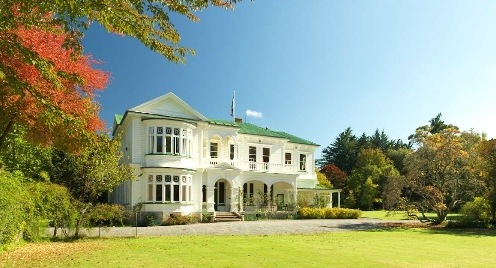
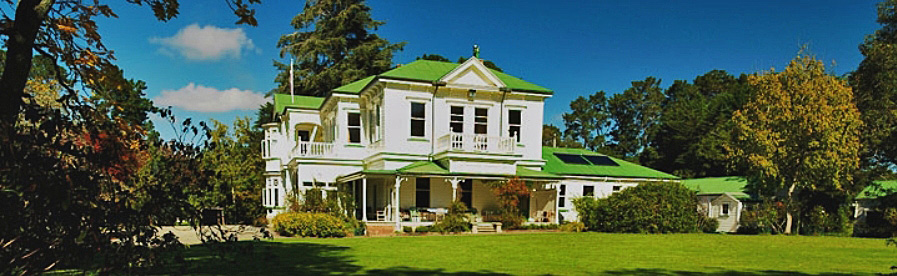
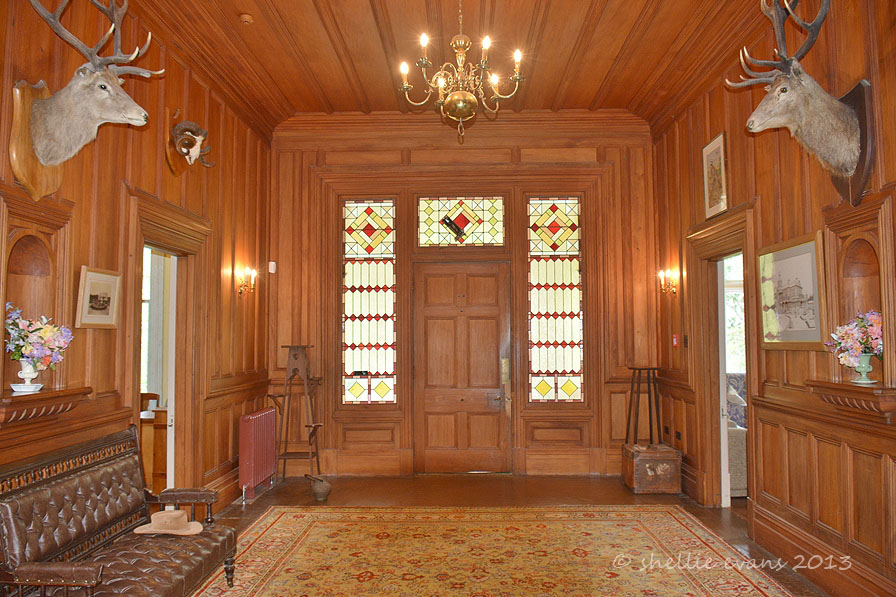
Gwavas Station Homestead, constructed in 1880 and extended in 1900, was the second residence on this prominent Central Hawke’s Bay sheep run. It is an impressive house that is enhanced by its outstanding setting of an extensive garden of mature trees and shrubs. The place has architectural and historical significance as a grand and largely unchanged example of a homestead and for its association with Charles Tilleard Natusch, an architect ‘best remembered for his legacy of fine houses’, who designed the homestead’s additions and alterations. It has further historical value for having continuously remained in the family’s possession, and for the station being one of the earliest in Hawke’s Bay. Aesthetic significance derives from the homestead’s interior, which features a remarkable tōtara-panelled entrance hall and ornate staircase with stained glass windows, and for the nine-hectare garden, which is recognised as one of national significance.
Tangata whenua settled in what is now Hawke’s Bay around 1250-1300 AD, mainly along its coast and inland waterways. The people who became known as Ngāti Kahungunu arrived in the 1500s. Pākehā established whaling and trading stations in the region from the 1830s, and the government started purchasing land in the 1850s, most of which was leased or sold to settlers who established sheep or cattle stations. By 1859 almost 1.5 million acres of Hawke’s Bay’s land had been purchased from Ngāti Kahungunu.
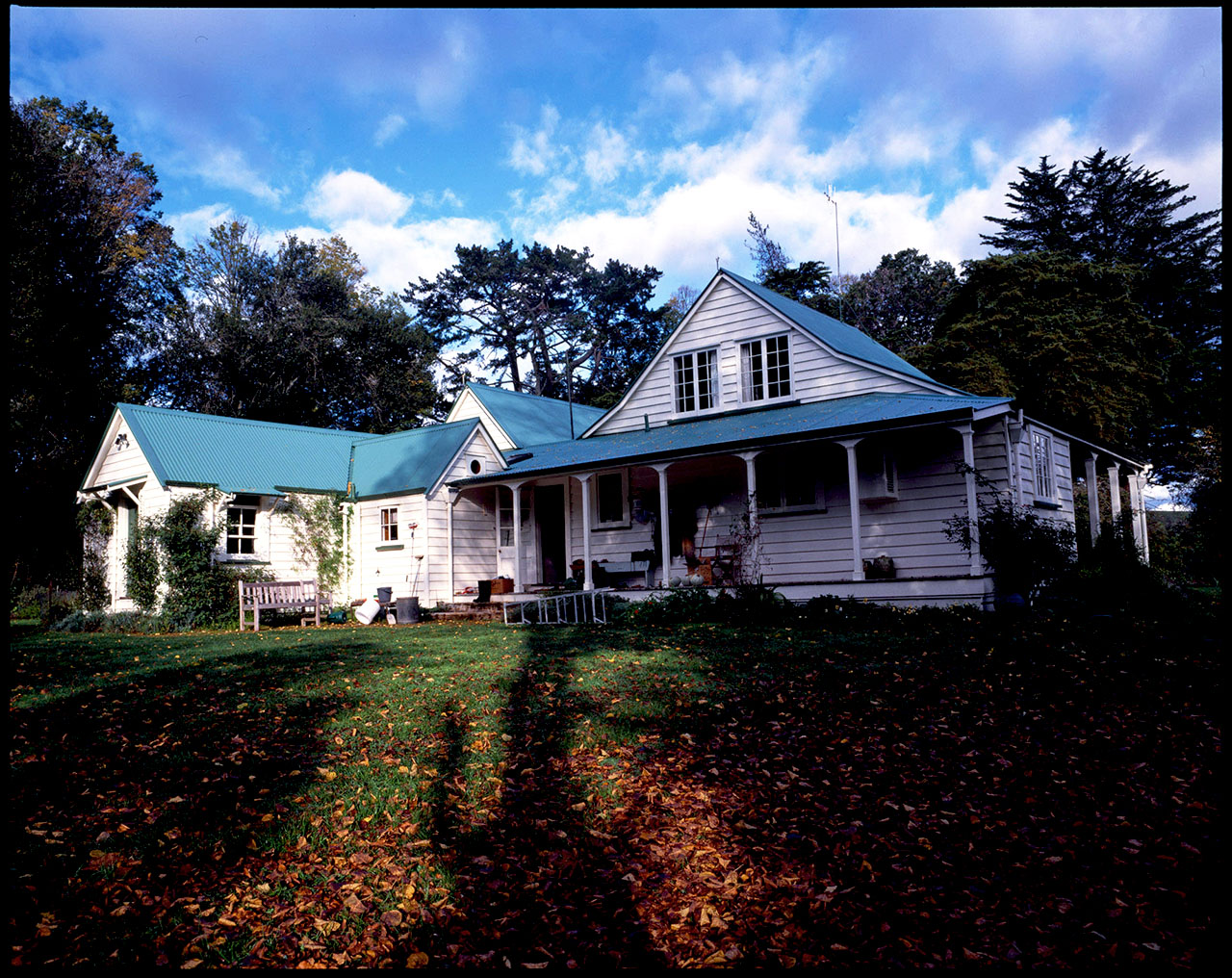
In the early 1850s, Charles Johnson Pharazyn acquired a 34,000-acre block of land at Tikokino and in 1858, following a short partnership, ownership was transferred to Major George Gwavas Carlyon. The station was named Gwavas (pronounced Gway-vas, meaning ‘winter dwelling’ or ‘permanent steading’) after the Major’s Cornish family name. A homestead was built around 1861 (Gwavas Station Original Homestead, List No. 2754) and a second residence (the subject of this List entry) in 1890.
The new homestead was a single-storey building of around thirty rooms designed by Napier-based architect Thomas R. Cooper for Arthur Spry Gwavas Carlyon. ASG, as he was known, set out the grounds in the 1880s with head gardener John Nicoll, who worked at the station for 55 years. In 1899 Charles Tilleard Natusch skilfully designed additions and alterations including a second storey and a square tower that seamlessly blended with the existing residence. Completed in 1900, these changes increased the floor space to 900 square metres and included the unusual provision of a darkroom. The panelling uses native timbers and is considered by conservation architect Chris Cochran as the best panelling of its type that he has seen. The woodland garden was expanded to incorporate species sourced from Tregrehan, the Carlyon ancestral estate in Cornwall. By the early 1900s, around 20,000 trees had been planted and a stand of lowland podocarp forest was preserved. Members of subsequent generations, notably Michael Hudson, continued to plant rare species, develop the grounds, and catalogue and label every plant, including over 1000 rhododendrons and 120-year-old raspberry bushes. Blocks of Gwavas Station were sold over time, ultimately reducing the landholding to 22 hectares.
Natusch’s client list included numerous wealthy, prominent landowning families and Gwavas Station Homestead is regarded as one of the best examples of the architect’s large-scale houses. The house has remained largely unchanged, except for the removal of the tower and conservatory in 1951. Phyllida and Stuart Gibson moved into the house in 2008, after it had been unoccupied for 45 years since the death of Phyllida’s grandmother. They installed a fire sprinkler and heating systems, and the only significant layout change was the creation of a large kitchen-dining-family room from the original kitchen, servants’ quarters and service rooms. Some original wallpaper, curtains, carpet, and linoleum have been retained, as have particularly striking elements including the billiard room’s carved tōtara mantelpiece, with rewarewa inlay, and the full-length stained-glass window at the staircase landing, which depicts the Carlyon family coat of arms. As well as continuing as a family home, three bedrooms are used for bed-and-breakfast guests, and the place serves as a function venue.
Tangata whenua settled in what is now Hawke’s Bay around 1250-1300 AD, mainly along its coast and inland waterways. The people who became known as Ngāti Kahungunu arrived in the 1500s. Pākehā established whaling and trading stations in the region from the 1830s, and the government started purchasing land in the 1850s, most of which was leased or sold to settlers who established sheep or cattle stations. By 1859 almost 1.5 million acres of Hawke’s Bay’s land had been purchased from Ngāti Kahungunu.
In the early 1850s, Charles Johnson Pharazyn acquired a 34,000-acre block of land at Tikokino and in 1858, following a short partnership, ownership was transferred to Major George Gwavas Carlyon. The station was named Gwavas (pronounced Gway-vas, meaning ‘winter dwelling’ or ‘permanent steading’) after the Major’s Cornish family name. A homestead was built around 1861 (Gwavas Station Original Homestead, List No. 2754) and a second residence (the subject of this List entry) in 1890.
The new homestead was a single-storey building of around thirty rooms designed by Napier-based architect Thomas R. Cooper for Arthur Spry Gwavas Carlyon. ASG, as he was known, set out the grounds in the 1880s with head gardener John Nicoll, who worked at the station for 55 years. In 1899 Charles Tilleard Natusch skilfully designed additions and alterations including a second storey and a square tower that seamlessly blended with the existing residence. Completed in 1900, these changes increased the floor space to 900 square metres and included the unusual provision of a darkroom. The panelling uses native timbers and is considered by conservation architect Chris Cochran as the best panelling of its type that he has seen. The woodland garden was expanded to incorporate species sourced from Tregrehan, the Carlyon ancestral estate in Cornwall. By the early 1900s, around 20,000 trees had been planted and a stand of lowland podocarp forest was preserved. Members of subsequent generations, notably Michael Hudson, continued to plant rare species, develop the grounds, and catalogue and label every plant, including over 1000 rhododendrons and 120-year-old raspberry bushes. Blocks of Gwavas Station were sold over time, ultimately reducing the landholding to 22 hectares.
Natusch’s client list included numerous wealthy, prominent landowning families and Gwavas Station Homestead is regarded as one of the best examples of the architect’s large-scale houses. The house has remained largely unchanged, except for the removal of the tower and conservatory in 1951. Phyllida and Stuart Gibson moved into the house in 2008, after it had been unoccupied for 45 years since the death of Phyllida’s grandmother. They installed a fire sprinkler and heating systems, and the only significant layout change was the creation of a large kitchen-dining-family room from the original kitchen, servants’ quarters and service rooms. Some original wallpaper, curtains, carpet, and linoleum have been retained, as have particularly striking elements including the billiard room’s carved tōtara mantelpiece, with rewarewa inlay, and the full-length stained-glass window at the staircase landing, which depicts the Carlyon family coat of arms. As well as continuing as a family home, three bedrooms are used for bed-and-breakfast guests, and the place serves as a function venue.