

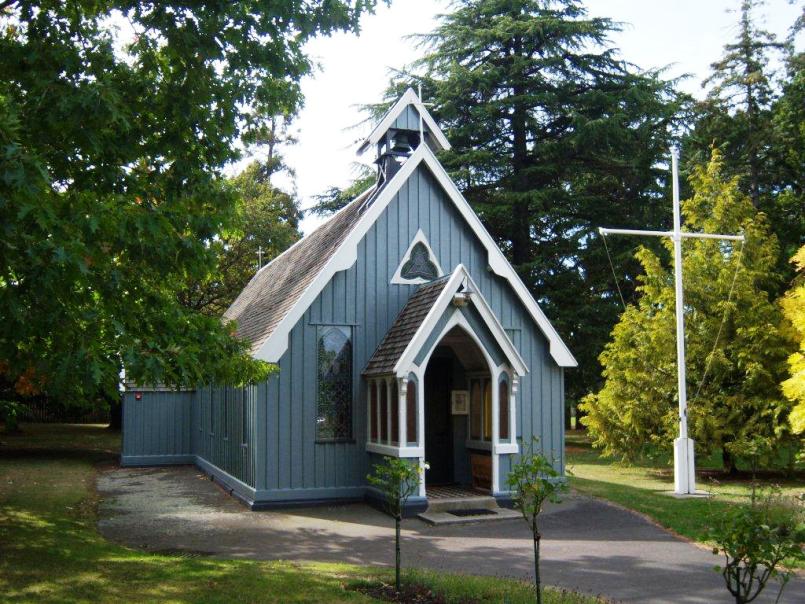
The 1870s was a time of growth for the surrounding district, and seven other Anglican churches were built within a ten mile radius of All Saints'. As a consequence, attendance there declined. In 1901 the Church offered the building to the Burnham Industrial School on the condition that it continued to be used as a church. The school accepted the offer and the church was moved to its current site, reopening on 5 November 1903. At this time the building was extended, reroofed and repainted, a contemporary newspaper article stating that all the work had been undertaken by the boys at the Industrial School under the supervision of the instructor in carpentry.
When the Industrial School closed in 1918, the Department of Defence acquired the Burnham grounds and buildings. The church officially became the 'Garrison Church' in July 1923. Since the Second World War other denominations besides the Anglicans have held services there and it continues to be used for worship today.
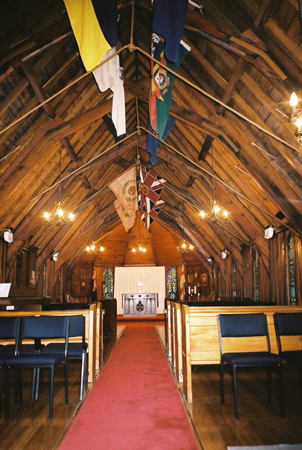
All Saints' Garrison Church is significant as the first rural Anglican church to be built in Canterbury, and because of its continued use as a church for over a century, albeit by various denominations. Its continuing association with the New Zealand Army and its stained glass memorial windows are also notable.
List Entry Information
Status
Listed
List Entry Status
Historic Place Category 2
Access
Private/No Public Access
List Number
1781
Date Entered
23rd June 1983
Date of Effect
23rd June 1983
City/District Council
Selwyn District
Region
Canterbury Region
Legal description
Pt RES 1160 (RT CB424/184), Canterbury Land District
Status
Listed
List Entry Status
Historic Place Category 2
Access
Private/No Public Access
List Number
1781
Date Entered
23rd June 1983
Date of Effect
23rd June 1983
City/District Council
Selwyn District
Region
Canterbury Region
Legal description
Pt RES 1160 (RT CB424/184), Canterbury Land District
Construction Details
Start Year
1863
Finish Year
1864
Type
Original Construction
Start Year
1901
Type
Other
Description
Moved to new site
Start Year
1901
Finish Year
1903
Type
Addition
Description
Extension of 20 feet added and bell tower added
Start Year
1915
Type
Modification
Description
New font and altar installed
Start Year
1945
Finish Year
1951
Type
Reconstruction
Description
July 1945 roof and bell tower damaged by falling trees. Bell tower demolished. Repairs not completed until 1951
Notable Features
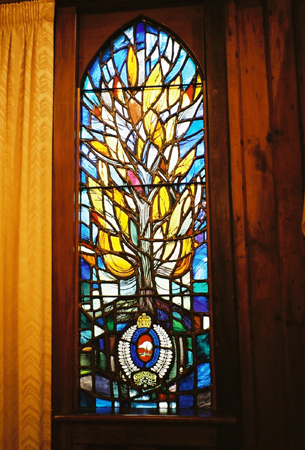
Two stained glass windows were installed in 1976 to commemorate members of the New Zealand Regiment, the Royal New Zealand Infantry Regiment and others associated with them who were killed while serving overseas. These windows were designed by Beverley Shore-Bennett and illustrate the 'Tree of Life' on one side and the 'Burning Bush' on the other.
Construction Details
Start Year
1863
Finish Year
1864
Type
Original Construction
Start Year
1901
Type
Other
Description
Moved to new site
Start Year
1901
Finish Year
1903
Type
Addition
Description
Extension of 20 feet added and bell tower added
Start Year
1915
Type
Modification
Description
New font and altar installed
Start Year
1945
Finish Year
1951
Type
Reconstruction
Description
July 1945 roof and bell tower damaged by falling trees. Bell tower demolished. Repairs not completed until 1951
Notable Features
Two stained glass windows were installed in 1976 to commemorate members of the New Zealand Regiment, the Royal New Zealand Infantry Regiment and others associated with them who were killed while serving overseas. These windows were designed by Beverley Shore-Bennett and illustrate the 'Tree of Life' on one side and the 'Burning Bush' on the other.
Historical and Associated Iwi / Hapū / Whānau
Completion Date
15th August 2001
Report Written By
Melanie Lovell-Smith
Information Sources
Christchurch Press
Other Information
This place was identified as significant under previous legislation with different information requirements. It remains significant under the current legislation. There is opportunity under our legislation and policies to add to this information. Further information about this place may be available from the Southern Regional Office of Heritage New Zealand Pouhere Taonga. Please note that entry on the New Zealand Heritage List/Rarangi Korero identifies only the heritage values of the property concerned, and should not be construed as advice on the state of the property, or as a comment of its soundness or safety, including in regard to earthquake risk, safety in the event of fire, or insanitary conditions.
Historical and Associated Iwi / Hapū / Whānau
Completion Date
15th August 2001
Report Written By
Melanie Lovell-Smith
Information Sources
Christchurch Press
Other Information
This place was identified as significant under previous legislation with different information requirements. It remains significant under the current legislation. There is opportunity under our legislation and policies to add to this information. Further information about this place may be available from the Southern Regional Office of Heritage New Zealand Pouhere Taonga. Please note that entry on the New Zealand Heritage List/Rarangi Korero identifies only the heritage values of the property concerned, and should not be construed as advice on the state of the property, or as a comment of its soundness or safety, including in regard to earthquake risk, safety in the event of fire, or insanitary conditions.
Current Usages
Uses: Religion
Specific Usage: Church
Former Usages
General Usage: Religion
Specific Usage: Church
Current Usages
Uses: Religion
Specific Usage: Church
Former Usages
General Usage: Religion
Specific Usage: Church
Location
Sign up to hear more
Get the latest heritage news, features and events delivered
straight to your inbox.
