DonateMembershipVisit Heritage
  • Tūrangawaewae
    Places
  • Tira Māori
    Māori Heritage
  • Poutairangahia
    Archaeology
  • Rauemi
    Resources
  • Mō Tātou
    About Us
  • New Zealand Heritage List
  • Nominate and submit
  • Explore the List
  • National Historic Landmarks
  • Plaques
  • Rainbow List Project
  • Lost heritage
  • Visit Heritage
  • Our properties
  • Turnbull House Project
  • Collections
  • Shop
  • Tohu Whenua
  • Tira Māori
  • Conserving Māori heritage
  • Marae built heritage
  • Māori heritage on the List
  • Hinemihi—Te Hokinga Mai
  • What is archaeology?
  • Is there a site on my property?
  • What are my legal requirements?
  • Affecting an archaeological site
  • Declaring an archaeological site
  • Archaeology FAQs
  • Archaeology Digital Library
  • Archaeology guidelines and templates
  • Resources
  • Funding
  • Publications
  • Sustainable management guides
  • Disaster recovery
  • Podcasts & digital resources
  • Education Hub
  • Conservation plans
  • About
  • Board
  • Māori Heritage Council
  • Senior Staff
  • Offices
  • Contact us
  • Careers
  • Covenants
  • Fast-track
  • Corporate documents
  • Currently consulting on
  • Our submissions
  • News
  • Covid-19 response
Quick links
Rārangi Kōrero | The List
Explore the List
National Historic Landmarks
Ngā Manawhenua o Aotearoa me ōna Kōrero Tūturu
Quick links
Tapuwae
A Vision for Places of Māori Heritage
Funding for Māori Heritage
Resources
Quick links
Archaeological Authority Portal
Applying for an archaeological authority
Archaeology FAQs
Browse the most frequently asked questions about archaeological authorities and the archaeological process.
Quick links
Quick links
News
News Keep up to date with Heritage New Zealand Pouhere Taonga
Membership
Membership Find out more and sign up today
DonateMembershipVisit Heritage
  • Tūrangawaewae
    Places
  • Tira Māori
    Māori Heritage
  • Poutairangahia
    Archaeology
  • Rauemi
    Resources
  • Mō Tātou
    About Us
  • New Zealand Heritage List
  • Nominate and submit
  • Explore the List
  • National Historic Landmarks
  • Plaques
  • Rainbow List Project
  • Lost heritage
  • Visit Heritage
  • Our properties
  • Turnbull House Project
  • Collections
  • Shop
  • Tohu Whenua
  • Tira Māori
  • Conserving Māori heritage
  • Marae built heritage
  • Māori heritage on the List
  • Hinemihi—Te Hokinga Mai
  • What is archaeology?
  • Is there a site on my property?
  • What are my legal requirements?
  • Affecting an archaeological site
  • Declaring an archaeological site
  • Archaeology FAQs
  • Archaeology Digital Library
  • Archaeology guidelines and templates
  • Resources
  • Funding
  • Publications
  • Sustainable management guides
  • Disaster recovery
  • Podcasts & digital resources
  • Education Hub
  • Conservation plans
  • About
  • Board
  • Māori Heritage Council
  • Senior Staff
  • Offices
  • Contact us
  • Careers
  • Covenants
  • Fast-track
  • Corporate documents
  • Currently consulting on
  • Our submissions
  • News
  • Covid-19 response
Quick links
Rārangi Kōrero | The List
Explore the List
National Historic Landmarks
Ngā Manawhenua o Aotearoa me ōna Kōrero Tūturu
Quick links
Tapuwae
A Vision for Places of Māori Heritage
Funding for Māori Heritage
Resources
Quick links
Archaeological Authority Portal
Applying for an archaeological authority
Archaeology FAQs
Browse the most frequently asked questions about archaeological authorities and the archaeological process.
Quick links
Quick links
News
News Keep up to date with Heritage New Zealand Pouhere Taonga
Membership
Membership Find out more and sign up today
  • Places
  • Nominate and submit
  • National Historic Landmarks
  • Places
  • Nominate and submit
  • National Historic Landmarks
  • Tira Māori
  • Conserving Māori heritage
  • Marae built heritage
  • Tira Māori
  • Conserving Māori heritage
  • Marae built heritage
  • Archaeological authorities
  • Archaeology Digital Library
  • Archaeological authorities
  • Archaeology Digital Library
  • All resources
  • Publications
  • Funding
  • All resources
  • Publications
  • Funding
  • FAQs
  • FAQs
Follow us on:
Places
  • Places
  • Nominate and submit
  • National Historic Landmarks
Tira Māori
  • Tira Māori
  • Conserving Māori heritage
  • Marae built heritage
Archaeology
  • Archaeological authorities
  • Archaeology Digital Library
Resources
  • All resources
  • Publications
  • Funding
FAQs
  • FAQs
Follow us on
HomePrivacyTerms and conditionsAbout this site
© Heritage New Zealand Pouhere Taonga 2026.
 
Cuningham House

7 Rolleston Avenue and 8 Riccarton Avenue, CHRISTCHURCH

Public

Historic Place Category 2

List No. 1862
Quick links:
List GalleryLocationDetails
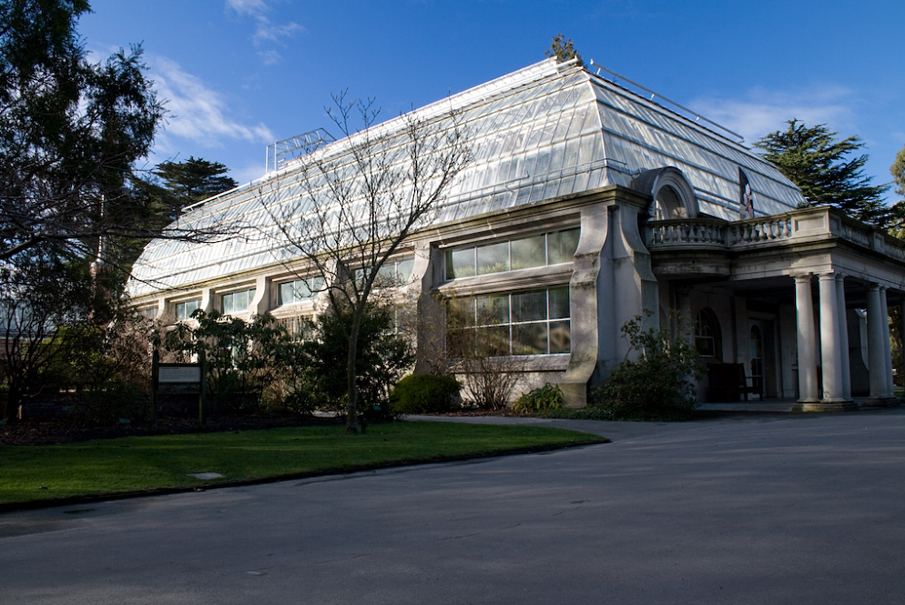
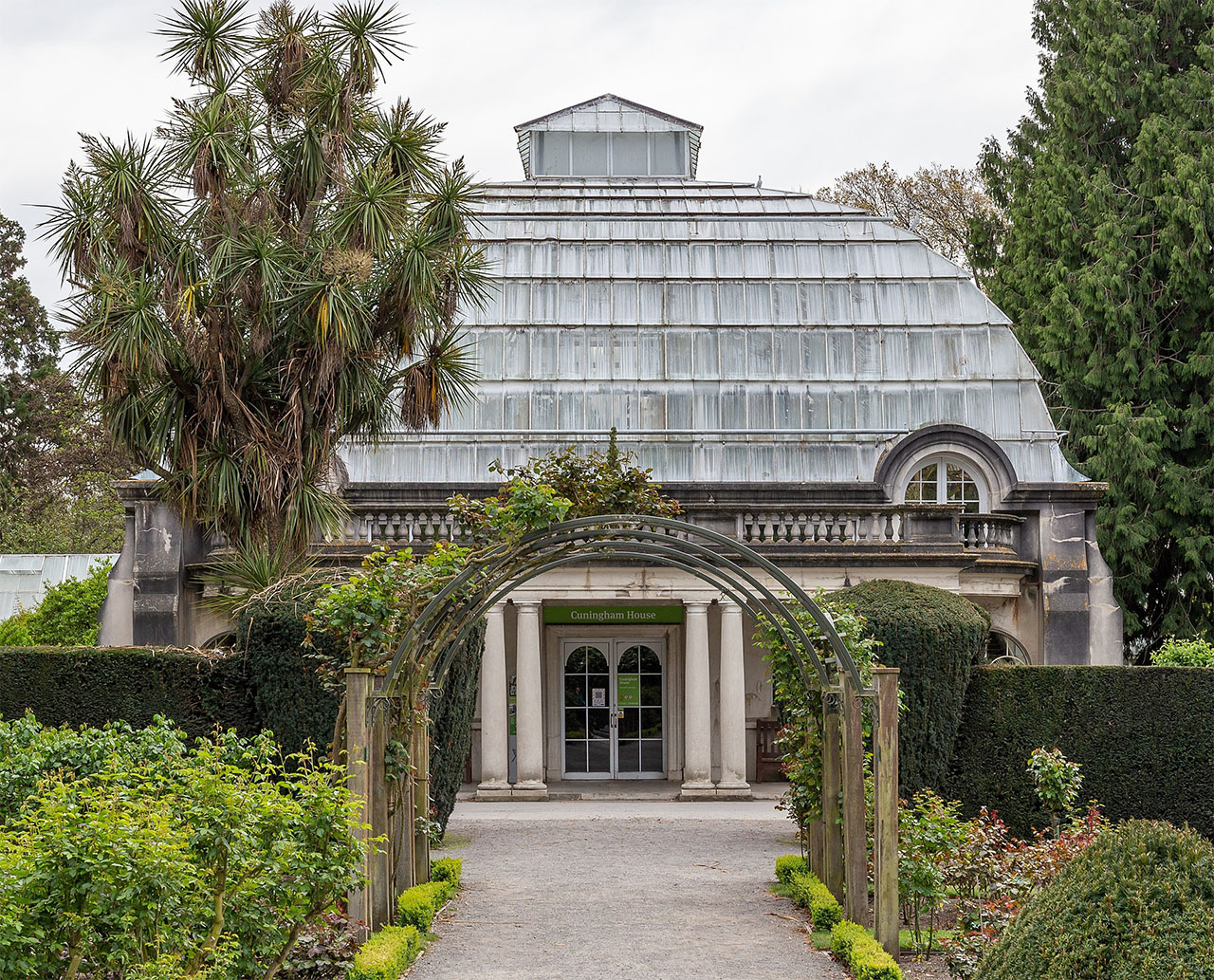
The Neo-Classical style display house known as Cuningham House, built in 1923-4, is a widely visited built heritage feature within the setting of the Christchurch Botanic Gardens. Associated with benefactor, Charles Cuningham, architects Collins and Harman and early curator James Young, the building has historical, social, architectural and aesthetic significance.

A £8,000 bequest by former law clerk and avid garden admirer, Charles Adam Cleverly Cuningham (1850-1915), allowed for the erection of a winter garden building at the Botanic Gardens. The building was modelled on the Reid Winter Gardens at Springburn Park in Glasgow, which the Botanic Garden’s curator, James Young, and Board member, James Jamieson, had both independently inspected. The foundation stone was laid by Governor General, Lord Jellicoe, on 26 April 1923. The architects were well known local firm of Collins and Harman and the building contractors were Christchurch firm of Moore and Sons. When opened on 9 August 1924, the heated building housing a large range of exotic plants was described as being ‘the finest building of its kind in Australia and New Zealand’.

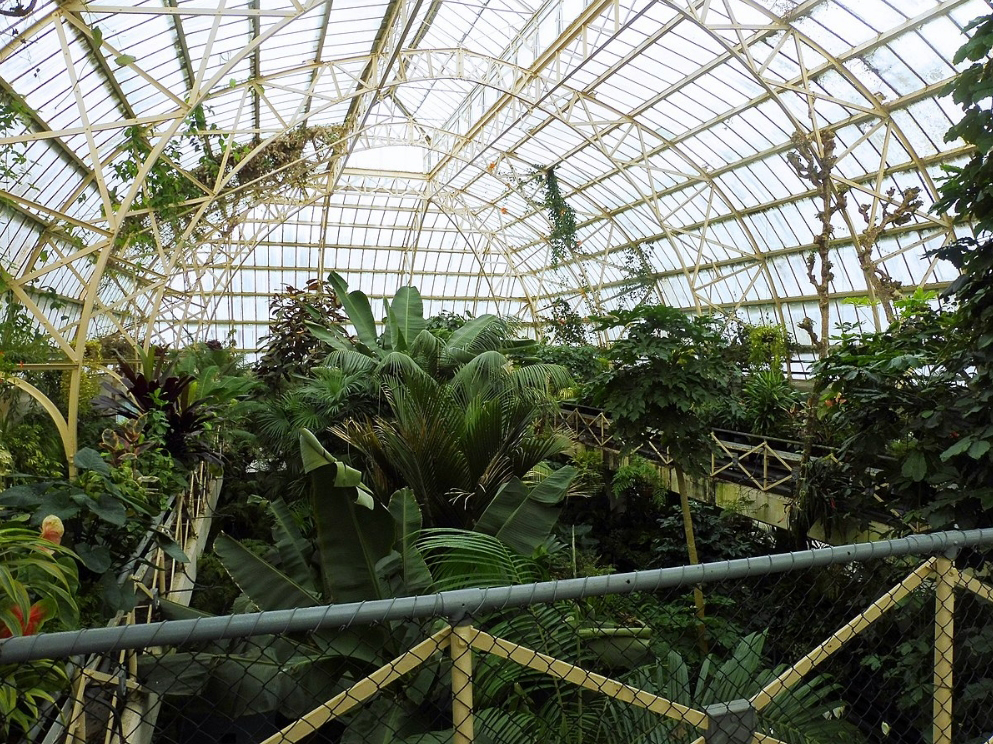
Situated in an axial arrangement to align with the adjacent Rosary (rose garden), Cuningham House is a Neo-Classical style symmetrical building, rectangular in form. It is constructed of reinforced concrete, steel, aluminium and glass. The domed roof, with multi-paned glazed tiers capped by a lantern running the length of four central bays, is supported on the interior by five arched steel trusses and a diagonal truss at each corner. The main entrance is from a Tuscan style portico on the south side leading into a single large interior space. On the interior, on either side of the main entrance, a staircase leads up to a mezzanine gallery which encircles the building. At either end of the gallery on the southern end of the building are two sets of double doors which lead out to a terrace with classical balustrading, located above the entrance portico. At ground floor level, floor plants in beds are located around the perimeter of the building and within a rectangular central bed. On the north wall are double doors for exiting the building through to a separate display building, the Townend House.

Following the European tradition of displaying plants not easily cultivated outdoors, Cuningham House attracts visitors to view exotic plants in a similar way that visitors view works of art in a gallery. While the broad range of exotic plant species kept in the building’s warm environment have changed over time, are small proportion of the original plants placed in Cuningham House are still extant. Small changes have been made to the building over time. In 1971 the roof was removed and glazing replaced. In 1972 the original coal fired cast iron boiler was replaced with an oil fired stainless steel one. In 1981 access ramps were added, and in the mid 1990s a purpose built ladder improved access to the roof. Repairs were carried out to Cuningham House following damage caused by the Canterbury Earthquakes of 2010-11.
Cuningham House, Botanic Gardens, Christchurch. CC BY-SA 4.0 Image courtesy of commons.wikimedia.org | Michal Klajban | 05/10/2020 | Michal Klajban - Wikimedia Commons
Cuningham House, Botanic Gardens, Christchurch. CC BY-SA 2.0 Image courtesy of commons.wikimedia.org | Scoro | 17/08/2008 | Scoro - Wikimedia Commons
Cuningham House, Botanic Gardens, Christchurch. Interior. CC BY-SA 4.0 Image courtesy of commons.wikimedia.org | Pear285 | 07/07/2016 | Pear285 - Wikimedia Commons
Cuningham House, Botanic Gardens, Christchurch. CC BY-SA 4.0 Image courtesy of commons.wikimedia.org | Michal Klajban | 05/10/2020 | Michal Klajban - Wikimedia Commons
Cuningham House, Botanic Gardens, Christchurch. CC BY-SA 2.0 Image courtesy of commons.wikimedia.org | Scoro | 17/08/2008 | Scoro - Wikimedia Commons
Cuningham House, Botanic Gardens, Christchurch. Interior. CC BY-SA 4.0 Image courtesy of commons.wikimedia.org | Pear285 | 07/07/2016 | Pear285 - Wikimedia Commons

List Entry Information

Overview

Status
Listed

List Entry Status
Historic Place Category 2

Access
Able to Visit

List Number
1862

Date Entered
26th November 1981

Date of Effect
26th November 1981

City/District Council
Christchurch City

Region
Canterbury Region

Extent of List Entry

Pt Res 25 (NZ Gazette 1990, p. 828, RT 668229), Canterbury Land District

Legal description

Extent includes part of the land described as Pt Res 25 (NZ Gazette 1990, p. 828; RT 668229), Canterbury Land District and the building known as Cuningham House thereon.

Location Description

Christchurch City Council have the primary address as 7 Riccarton Avenue, with 8 Riccarton Avenue and 5 Rolleston Avenue as other addresses.

Detailed List Entry

Construction Professional

Name

Collins & Harman

Type

Architect

Biography

One of the two oldest architectural firms in New Zealand, Armson, Collins and Harman was established by William Barnett Armson in 1870. After serving his articles with Armson, John James Collins (1855-1933) bought the practice after the former's death in 1883 and subsequently took Richard Dacre Harman (1859-1927) into partnership four years later. Collins' son, John Goddard Collins (1886-1973), joined the firm in 1903. Armson, Collins and Harman was one of Christchurch's leading architectural practices in the early years of this century. Notable examples of the firm's work include the Christchurch Press Building (1909), Nazareth House (1909), the former Canterbury College Students Union (1927), the Nurses Memorial Chapel at Christchurch Public Hospital (1927) and the Sign of the Takahe (1936). Their domestic work includes Blue Cliffs Station Homestead (1889) and Meadowbank Homestead, Irwell. In 1928 the firm's name was simplified to Collins and Harman and the firm continues today as Collins Architects Ltd. With a versatility and competence that betrayed the practice's debt to Armson's skill and professionalism, Collins and Harman designed a wide variety of building types in a range of styles.

Name

Moore and Sons

Type

Builder

Biography

No biography is currently available for this construction professional

Reference

Completion Date

12th October 2016

Report Written By

Robyn Burgess

Information Sources

Christchurch City Council

Christchurch City Council

Beaumont & Mosley, 2013

Beaumont, Louise, Dave Pearson Architects Ltd and Bridget Mosley, A Conservation Plan for Hagely Park and the Christchurch Botanic Gardens, September 2013, URL: https://www.ccc.govt.nz/parks-and-gardens/christchurch-botanic-gardens/about-us/history/conservation-plan/

Report Written By

This place was identified as significant under previous legislation with different information requirements. It remains significant under the current legislation. There is opportunity under our legislation and policies to add to this information. Further information about this place may be available from the Southern Regional Office of Heritage New Zealand Pouhere Taonga. Please note that entry on the New Zealand Heritage List/Rarangi Korero identifies only the heritage values of the property concerned, and should not be construed as advice on the state of the property, or as a comment of its soundness or safety, including in regard to earthquake risk, safety in the event of fire, or insanitary conditions. A fully referenced upgrade report is available on request from the Southern Region Office of Heritage New Zealand.

Further Information

Current Usages

Uses: Civic Facilities

Specific Usage: Glasshouse/conservatory/fernery - public

Former Usages

Themes

Web Links

Overview

Status

Listed

List Entry Status

Historic Place Category 2

Access

Able to Visit

List Number

1862

Date Entered

26th November 1981

Date of Effect

26th November 1981

City/District Council

Christchurch City

Region

Canterbury Region

Extent of List Entry

Pt Res 25 (NZ Gazette 1990, p. 828, RT 668229), Canterbury Land District

Legal description

Extent includes part of the land described as Pt Res 25 (NZ Gazette 1990, p. 828; RT 668229), Canterbury Land District and the building known as Cuningham House thereon.

Location Description

Christchurch City Council have the primary address as 7 Riccarton Avenue, with 8 Riccarton Avenue and 5 Rolleston Avenue as other addresses.

Status

Listed

List Entry Status

Historic Place Category 2

Access

Able to Visit

List Number

1862

Date Entered

26th November 1981

Date of Effect

26th November 1981

City/District Council

Christchurch City

Region

Canterbury Region

Extent of List Entry

Pt Res 25 (NZ Gazette 1990, p. 828, RT 668229), Canterbury Land District

Legal description

Extent includes part of the land described as Pt Res 25 (NZ Gazette 1990, p. 828; RT 668229), Canterbury Land District and the building known as Cuningham House thereon.

Location Description

Christchurch City Council have the primary address as 7 Riccarton Avenue, with 8 Riccarton Avenue and 5 Rolleston Avenue as other addresses.

Construction Information

Construction Professional

Name

Collins & Harman

Type

Architect

Biography

One of the two oldest architectural firms in New Zealand, Armson, Collins and Harman was established by William Barnett Armson in 1870. After serving his articles with Armson, John James Collins (1855-1933) bought the practice after the former's death in 1883 and subsequently took Richard Dacre Harman (1859-1927) into partnership four years later. Collins' son, John Goddard Collins (1886-1973), joined the firm in 1903. Armson, Collins and Harman was one of Christchurch's leading architectural practices in the early years of this century. Notable examples of the firm's work include the Christchurch Press Building (1909), Nazareth House (1909), the former Canterbury College Students Union (1927), the Nurses Memorial Chapel at Christchurch Public Hospital (1927) and the Sign of the Takahe (1936). Their domestic work includes Blue Cliffs Station Homestead (1889) and Meadowbank Homestead, Irwell. In 1928 the firm's name was simplified to Collins and Harman and the firm continues today as Collins Architects Ltd. With a versatility and competence that betrayed the practice's debt to Armson's skill and professionalism, Collins and Harman designed a wide variety of building types in a range of styles.

Name

Moore and Sons

Type

Builder

Biography

No biography is currently available for this construction professional

Construction Professional

Name

Collins & Harman

Type

Architect

Biography

One of the two oldest architectural firms in New Zealand, Armson, Collins and Harman was established by William Barnett Armson in 1870. After serving his articles with Armson, John James Collins (1855-1933) bought the practice after the former's death in 1883 and subsequently took Richard Dacre Harman (1859-1927) into partnership four years later. Collins' son, John Goddard Collins (1886-1973), joined the firm in 1903. Armson, Collins and Harman was one of Christchurch's leading architectural practices in the early years of this century. Notable examples of the firm's work include the Christchurch Press Building (1909), Nazareth House (1909), the former Canterbury College Students Union (1927), the Nurses Memorial Chapel at Christchurch Public Hospital (1927) and the Sign of the Takahe (1936). Their domestic work includes Blue Cliffs Station Homestead (1889) and Meadowbank Homestead, Irwell. In 1928 the firm's name was simplified to Collins and Harman and the firm continues today as Collins Architects Ltd. With a versatility and competence that betrayed the practice's debt to Armson's skill and professionalism, Collins and Harman designed a wide variety of building types in a range of styles.

Name

Moore and Sons

Type

Builder

Biography

No biography is currently available for this construction professional

Reference

Historical and Associated Iwi / Hapū / Whānau

Completion Date

12th October 2016

Report Written By

Robyn Burgess

Information Sources

Christchurch City Council

Christchurch City Council

Beaumont & Mosley, 2013

Beaumont, Louise, Dave Pearson Architects Ltd and Bridget Mosley, A Conservation Plan for Hagely Park and the Christchurch Botanic Gardens, September 2013, URL: https://www.ccc.govt.nz/parks-and-gardens/christchurch-botanic-gardens/about-us/history/conservation-plan/

Other Information

This place was identified as significant under previous legislation with different information requirements. It remains significant under the current legislation. There is opportunity under our legislation and policies to add to this information. Further information about this place may be available from the Southern Regional Office of Heritage New Zealand Pouhere Taonga. Please note that entry on the New Zealand Heritage List/Rarangi Korero identifies only the heritage values of the property concerned, and should not be construed as advice on the state of the property, or as a comment of its soundness or safety, including in regard to earthquake risk, safety in the event of fire, or insanitary conditions. A fully referenced upgrade report is available on request from the Southern Region Office of Heritage New Zealand.

Historical and Associated Iwi / Hapū / Whānau

Completion Date

12th October 2016

Report Written By

Robyn Burgess

Information Sources

Christchurch City Council

Christchurch City Council

Beaumont & Mosley, 2013

Beaumont, Louise, Dave Pearson Architects Ltd and Bridget Mosley, A Conservation Plan for Hagely Park and the Christchurch Botanic Gardens, September 2013, URL: https://www.ccc.govt.nz/parks-and-gardens/christchurch-botanic-gardens/about-us/history/conservation-plan/

Other Information

This place was identified as significant under previous legislation with different information requirements. It remains significant under the current legislation. There is opportunity under our legislation and policies to add to this information. Further information about this place may be available from the Southern Regional Office of Heritage New Zealand Pouhere Taonga. Please note that entry on the New Zealand Heritage List/Rarangi Korero identifies only the heritage values of the property concerned, and should not be construed as advice on the state of the property, or as a comment of its soundness or safety, including in regard to earthquake risk, safety in the event of fire, or insanitary conditions. A fully referenced upgrade report is available on request from the Southern Region Office of Heritage New Zealand.

Further Information

Current Usages

Uses: Civic Facilities

Specific Usage: Glasshouse/conservatory/fernery - public

Current Usages

Uses: Civic Facilities

Specific Usage: Glasshouse/conservatory/fernery - public

Location

Loading
Related listings
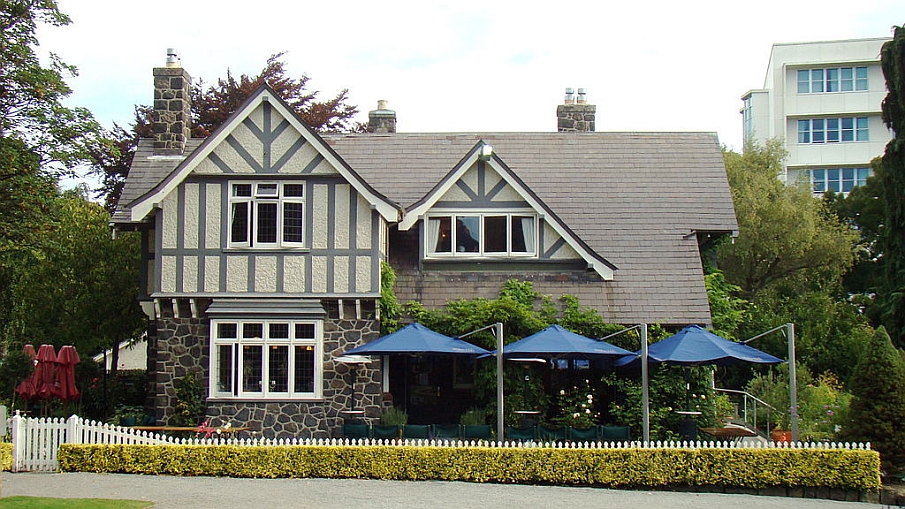
Curator's House, Christchurch Botanic Garden. CC BY-SA 2.0 Image courtesy of www.flickr.com
Curator's House
Curator's House, Christchurch Botanic Garden. CC BY-SA 2.0 Image courtesy of www.flickr.com
Curator's House
Stay up to date with Heritage this month