The Neo-Classical style display house known as Cuningham House, built in 1923-4, is a widely visited built heritage feature within the setting of the Christchurch Botanic Gardens. Associated with benefactor, Charles Cuningham, architects Collins and Harman and early curator James Young, the building has historical, social, architectural and aesthetic significance.
A £8,000 bequest by former law clerk and avid garden admirer, Charles Adam Cleverly Cuningham (1850-1915), allowed for the erection of a winter garden building at the Botanic Gardens. The building was modelled on the Reid Winter Gardens at Springburn Park in Glasgow, which the Botanic Garden’s curator, James Young, and Board member, James Jamieson, had both independently inspected. The foundation stone was laid by Governor General, Lord Jellicoe, on 26 April 1923. The architects were well known local firm of Collins and Harman and the building contractors were Christchurch firm of Moore and Sons. When opened on 9 August 1924, the heated building housing a large range of exotic plants was described as being ‘the finest building of its kind in Australia and New Zealand’.
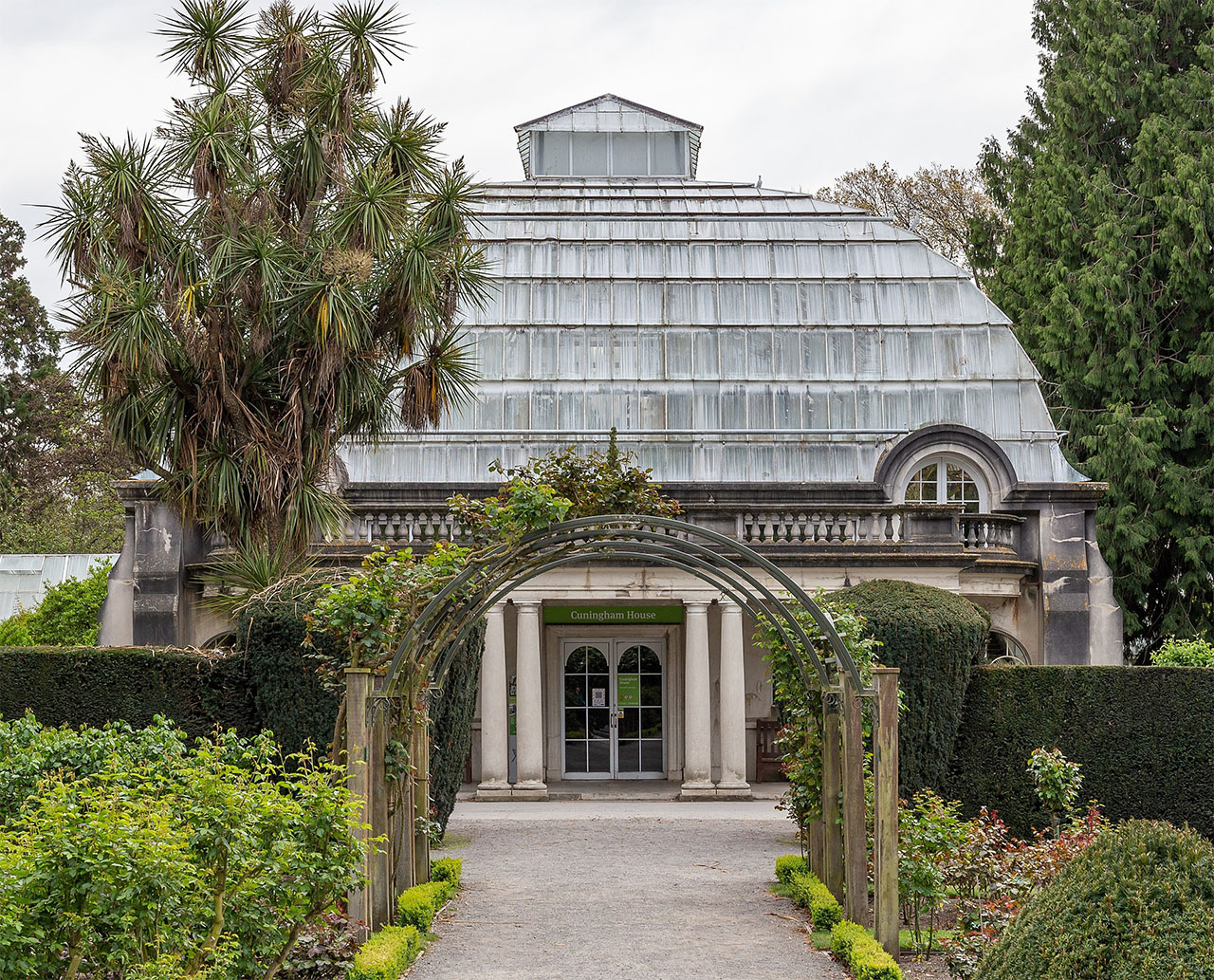
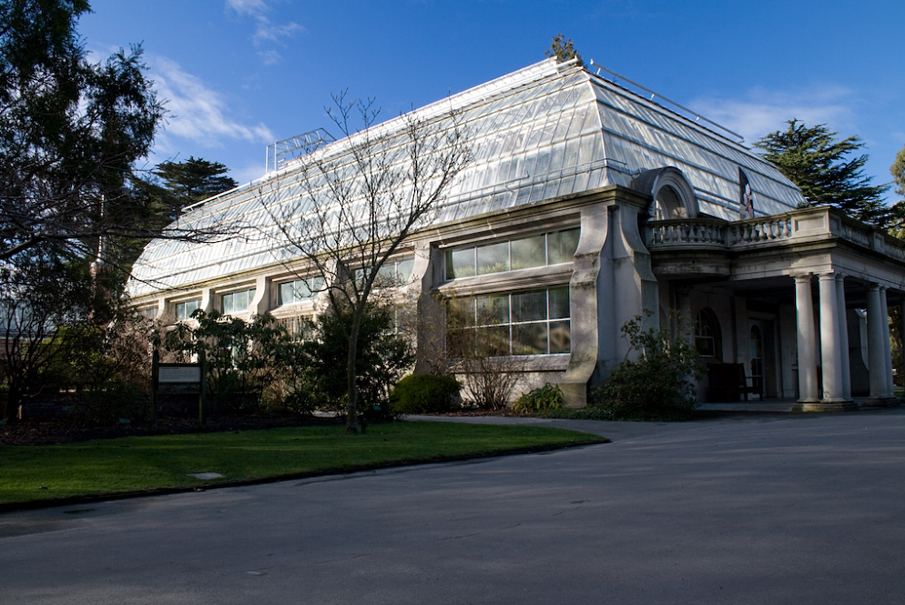
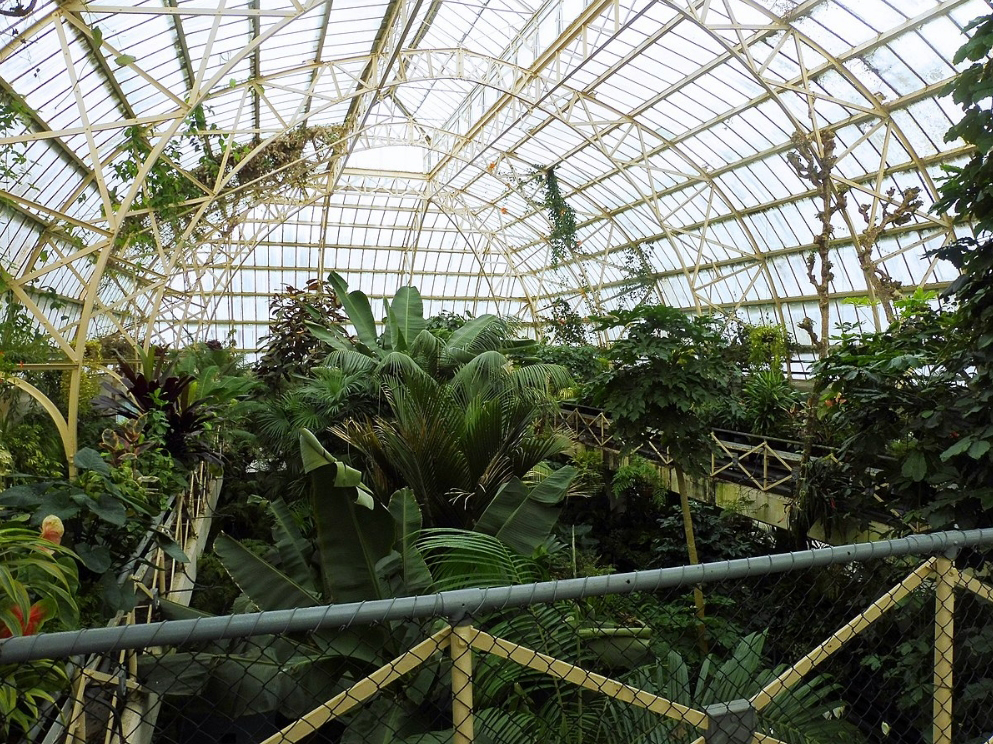
Situated in an axial arrangement to align with the adjacent Rosary (rose garden), Cuningham House is a Neo-Classical style symmetrical building, rectangular in form. It is constructed of reinforced concrete, steel, aluminium and glass. The domed roof, with multi-paned glazed tiers capped by a lantern running the length of four central bays, is supported on the interior by five arched steel trusses and a diagonal truss at each corner. The main entrance is from a Tuscan style portico on the south side leading into a single large interior space. On the interior, on either side of the main entrance, a staircase leads up to a mezzanine gallery which encircles the building. At either end of the gallery on the southern end of the building are two sets of double doors which lead out to a terrace with classical balustrading, located above the entrance portico. At ground floor level, floor plants in beds are located around the perimeter of the building and within a rectangular central bed. On the north wall are double doors for exiting the building through to a separate display building, the Townend House.
Following the European tradition of displaying plants not easily cultivated outdoors, Cuningham House attracts visitors to view exotic plants in a similar way that visitors view works of art in a gallery. While the broad range of exotic plant species kept in the building’s warm environment have changed over time, are small proportion of the original plants placed in Cuningham House are still extant. Small changes have been made to the building over time. In 1971 the roof was removed and glazing replaced. In 1972 the original coal fired cast iron boiler was replaced with an oil fired stainless steel one. In 1981 access ramps were added, and in the mid 1990s a purpose built ladder improved access to the roof. Repairs were carried out to Cuningham House following damage caused by the Canterbury Earthquakes of 2010-11.
A £8,000 bequest by former law clerk and avid garden admirer, Charles Adam Cleverly Cuningham (1850-1915), allowed for the erection of a winter garden building at the Botanic Gardens. The building was modelled on the Reid Winter Gardens at Springburn Park in Glasgow, which the Botanic Garden’s curator, James Young, and Board member, James Jamieson, had both independently inspected. The foundation stone was laid by Governor General, Lord Jellicoe, on 26 April 1923. The architects were well known local firm of Collins and Harman and the building contractors were Christchurch firm of Moore and Sons. When opened on 9 August 1924, the heated building housing a large range of exotic plants was described as being ‘the finest building of its kind in Australia and New Zealand’.
Situated in an axial arrangement to align with the adjacent Rosary (rose garden), Cuningham House is a Neo-Classical style symmetrical building, rectangular in form. It is constructed of reinforced concrete, steel, aluminium and glass. The domed roof, with multi-paned glazed tiers capped by a lantern running the length of four central bays, is supported on the interior by five arched steel trusses and a diagonal truss at each corner. The main entrance is from a Tuscan style portico on the south side leading into a single large interior space. On the interior, on either side of the main entrance, a staircase leads up to a mezzanine gallery which encircles the building. At either end of the gallery on the southern end of the building are two sets of double doors which lead out to a terrace with classical balustrading, located above the entrance portico. At ground floor level, floor plants in beds are located around the perimeter of the building and within a rectangular central bed. On the north wall are double doors for exiting the building through to a separate display building, the Townend House.
Following the European tradition of displaying plants not easily cultivated outdoors, Cuningham House attracts visitors to view exotic plants in a similar way that visitors view works of art in a gallery. While the broad range of exotic plant species kept in the building’s warm environment have changed over time, are small proportion of the original plants placed in Cuningham House are still extant. Small changes have been made to the building over time. In 1971 the roof was removed and glazing replaced. In 1972 the original coal fired cast iron boiler was replaced with an oil fired stainless steel one. In 1981 access ramps were added, and in the mid 1990s a purpose built ladder improved access to the roof. Repairs were carried out to Cuningham House following damage caused by the Canterbury Earthquakes of 2010-11.