The Continuous Kiln on Featherston Street in Palmerston North provides rare and valuable insight into New Zealand's industrial history.
At the turn of the nineteenth century, the use of brick was compulsory when building in Palmerston North's central business district. The high demand for bricks prompted Manchester-born Robert Price Edwards to move from his small brickworks in Church Street (established 1886) to the larger Featherston Street property in 1901, and, just three years later, justified the construction of the expensive, labour intensive, continuous kiln.
Lack of definite evidence has caused considerable debate over the probable year in which the kiln was constructed. On the basis of a newspaper article, which mentions that a kiln was being constructed on the site that would increase output from 28,000 to 50,000 bricks per week, it is likely that the kiln was erected in 1904. Supporting this is the doubling of the rateable value of the land in that year from £300 to £600, confirming that major improvements to the property were undertaken in that year.
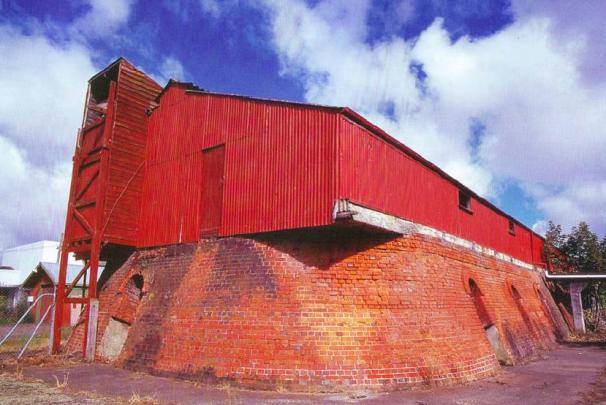
The continuous kiln at Palmerston North was based on a design patented by William Sercombe of Leicester, England, in 1891. A variation of the original, circular continuous kiln patented in Germany by Frederick Hoffman in 1858, the kiln was based on a rectangular design with rounded corners. It was 34.32 metres long and covered a breadth of 12.98 metres. The body of the kiln was made from bricks fired on the site while the roof space was constructed from corrugated iron. The work of a competent bricklayer, the kiln features a number of unobtrusive, artistic features that embellish the otherwise, purely industrial structure.
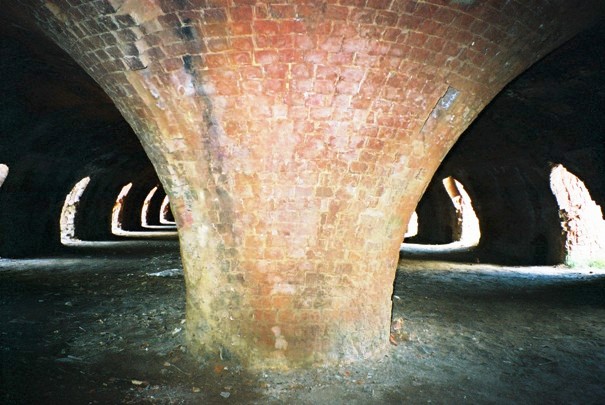
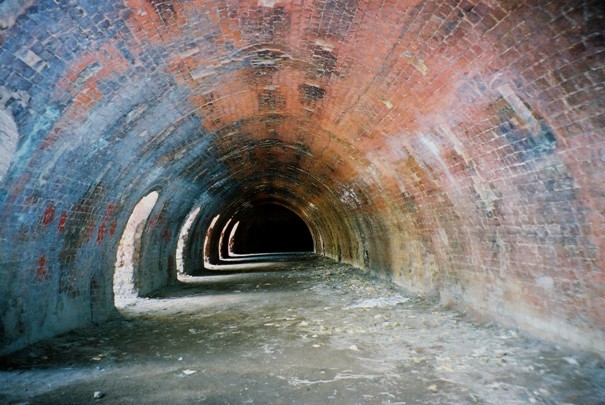
Regularly spaced around the sides of the kiln were 14 openings known as 'wickets'. When clay bricks were ready to be fired labourers would build temporary walls of fired brick inside the ovular tunnel in the kiln. Gaps in the walls would be covered with wet newspaper. This created a series of 14 rooms or 'chambers' inside the kiln, each of which could be accessed through a wicket opening. Up to 10,000 new bricks were then stacked inside at least ten of the chambers and the wicket openings were bricked up and plastered over. In the remaining chambers, large wood fires were lit. Over a week, the heat of these fires was steadily increased. When the kiln reached a certain temperature, the newspaper covering the gaps in the temporary wall would burn away, releasing the fire into the adjacent chamber holding a fresh load of new bricks.
Coal was dropped into the chamber holding the bricks through small holes in the ceiling, increasing the temperature until it was sufficient to fire the bricks. When the fire in the chamber reached a certain temperature, the paper stuffed in the next wall would burn away, and the fire would leap into a new chamber and fire more bricks. It took approximately six weeks for the fire to travel around the 14 chambers in the kiln. At any given time during a firing period, one chamber was being loaded with new bricks, one was being emptied, one was being fired and the rest were either heating up or cooling down.
As the heat was transferred from chamber to chamber, the kiln was highly efficient. Until the introduction of the tunnel kiln, no other kiln type could equal the continuous kiln in economy of fuel used, the ease of firing, the high quality of goods fired in them and the very low percentage of rejects. While the continuous kiln was extremely efficient during the firing process, a considerable amount of fuel and energy was required to start the kiln and it was therefore only economical to construct and use in well-established brickworks that required a high and continuous output of bricks or pipes.
In 1919 Edwards sold the kiln to a newly registered company Brick & Pipes Ltd. Brick & Pipes Ltd expanded, constructing new kilns until the company could produce up to 60,000 bricks per week from the Featherston Street site.
In 1931 the Hawke's Bay earthquake caused a decline in demand for bricks. As wages increased after the Great Depression, and the clay began to run out, the Continuous Kiln became uneconomic to run. Three downdraught kilns, built between 1946 and 1954, became sufficient to meet the smaller orders received by the company and, in 1959, the Continuous Kiln was fired for the last time. In 1977 its 28 metre high chimney was demolished to make way for further development on the property. A protection order was placed over the kiln in 1984 and, despite damage by vandals, the kiln structure remains sound.
The Continuous Kiln at Palmerston North has national and international significance as one of the very few remaining examples of the continuous kiln remaining in New Zealand and Europe. The kiln represents an important aspect of New Zealand's industrial history and has considerable potential to enhance understanding of the role of brickworks in the country's past. The design of the kiln is of considerable technical importance. It is also noteworthy as a fine example of industrial architecture. Further insight into the history of the kiln is added by its location amidst the remains of the wider brickworks complex. The local community holds the Continuous Kiln in high esteem and are actively working to ensure its survival in the future.
At the turn of the nineteenth century, the use of brick was compulsory when building in Palmerston North's central business district. The high demand for bricks prompted Manchester-born Robert Price Edwards to move from his small brickworks in Church Street (established 1886) to the larger Featherston Street property in 1901, and, just three years later, justified the construction of the expensive, labour intensive, continuous kiln.
Lack of definite evidence has caused considerable debate over the probable year in which the kiln was constructed. On the basis of a newspaper article, which mentions that a kiln was being constructed on the site that would increase output from 28,000 to 50,000 bricks per week, it is likely that the kiln was erected in 1904. Supporting this is the doubling of the rateable value of the land in that year from £300 to £600, confirming that major improvements to the property were undertaken in that year.
The continuous kiln at Palmerston North was based on a design patented by William Sercombe of Leicester, England, in 1891. A variation of the original, circular continuous kiln patented in Germany by Frederick Hoffman in 1858, the kiln was based on a rectangular design with rounded corners. It was 34.32 metres long and covered a breadth of 12.98 metres. The body of the kiln was made from bricks fired on the site while the roof space was constructed from corrugated iron. The work of a competent bricklayer, the kiln features a number of unobtrusive, artistic features that embellish the otherwise, purely industrial structure.
Regularly spaced around the sides of the kiln were 14 openings known as 'wickets'. When clay bricks were ready to be fired labourers would build temporary walls of fired brick inside the ovular tunnel in the kiln. Gaps in the walls would be covered with wet newspaper. This created a series of 14 rooms or 'chambers' inside the kiln, each of which could be accessed through a wicket opening. Up to 10,000 new bricks were then stacked inside at least ten of the chambers and the wicket openings were bricked up and plastered over. In the remaining chambers, large wood fires were lit. Over a week, the heat of these fires was steadily increased. When the kiln reached a certain temperature, the newspaper covering the gaps in the temporary wall would burn away, releasing the fire into the adjacent chamber holding a fresh load of new bricks.
Coal was dropped into the chamber holding the bricks through small holes in the ceiling, increasing the temperature until it was sufficient to fire the bricks. When the fire in the chamber reached a certain temperature, the paper stuffed in the next wall would burn away, and the fire would leap into a new chamber and fire more bricks. It took approximately six weeks for the fire to travel around the 14 chambers in the kiln. At any given time during a firing period, one chamber was being loaded with new bricks, one was being emptied, one was being fired and the rest were either heating up or cooling down.
As the heat was transferred from chamber to chamber, the kiln was highly efficient. Until the introduction of the tunnel kiln, no other kiln type could equal the continuous kiln in economy of fuel used, the ease of firing, the high quality of goods fired in them and the very low percentage of rejects. While the continuous kiln was extremely efficient during the firing process, a considerable amount of fuel and energy was required to start the kiln and it was therefore only economical to construct and use in well-established brickworks that required a high and continuous output of bricks or pipes.
In 1919 Edwards sold the kiln to a newly registered company Brick & Pipes Ltd. Brick & Pipes Ltd expanded, constructing new kilns until the company could produce up to 60,000 bricks per week from the Featherston Street site.
In 1931 the Hawke's Bay earthquake caused a decline in demand for bricks. As wages increased after the Great Depression, and the clay began to run out, the Continuous Kiln became uneconomic to run. Three downdraught kilns, built between 1946 and 1954, became sufficient to meet the smaller orders received by the company and, in 1959, the Continuous Kiln was fired for the last time. In 1977 its 28 metre high chimney was demolished to make way for further development on the property. A protection order was placed over the kiln in 1984 and, despite damage by vandals, the kiln structure remains sound.
The Continuous Kiln at Palmerston North has national and international significance as one of the very few remaining examples of the continuous kiln remaining in New Zealand and Europe. The kiln represents an important aspect of New Zealand's industrial history and has considerable potential to enhance understanding of the role of brickworks in the country's past. The design of the kiln is of considerable technical importance. It is also noteworthy as a fine example of industrial architecture. Further insight into the history of the kiln is added by its location amidst the remains of the wider brickworks complex. The local community holds the Continuous Kiln in high esteem and are actively working to ensure its survival in the future.