

John Acland and Charles Tripp, two lawyers from Devon, arrived in Canterbury in January 1855 to find that much of the accessible Canterbury land had already been taken up. They formed a partnership and purchased land in South Canterbury near the Orari River and along the foothills of the Mt. Peel range. This was the first high country station taken up in Canterbury. By 1862 they had decided to separate, with Acland retaining the Mt. Peel section while Tripp took over the Orari Gorge Station. The two friends each married daughters of Bishop Harper.
At Mt. Peel church services conducted by John Acland, who was licensed as a lay reader, were regularly held at the homestead. In 1866 he gave land near the homestead to the Church Property Trustees for a church and burial ground. Plans and specifications prepared by Edward Ashworth of Exeter were donated by Rev. P.L.D. Acland , vicar of Broadclyst and Sub-dean of the Exeter Cathedral. On December 14th 1868, Emily Acland, John's wife, laid the foundation stone for the church. William Brassington, the highly regarded Christchurch stone mason whose sculptural work is seen at the Provincial Council Buildings (1865) and the Canterbury Museum (1876-7), was responsible for the construction. He used large stones gathered from the nearby Rangitata riverbed with Mt. Somers limestone for quoins and dressings and had the church completed for its first service on May 30th 1869 when Bishop Harper was present to preach the first sermon. On December 12th that year the Bishop returned, once more welcomed by his grandchildren, daughter and son-in-law, for the consecration. The name, "the Church of the Holy Innocents" was chosen to commemorate the four small children, including an Acland daughter, who were buried nearby.
The church's interior is graced by a fine range of stained glass. A memorial window over the altar commemorates John and Emily Acland and the north-west window was installed in 1889 as a memorial to Michael Mitten who served for 15 years as the manager of Mt. Peel Station. In 1943 a window was donated by the Sheepowners Federation of New Zealand in recognition of Henry Dyke Acland's contribution to the sheep industry. An Acland tradition has evolved since 1882, with a family member tolling the church bell to ring in the New Year.
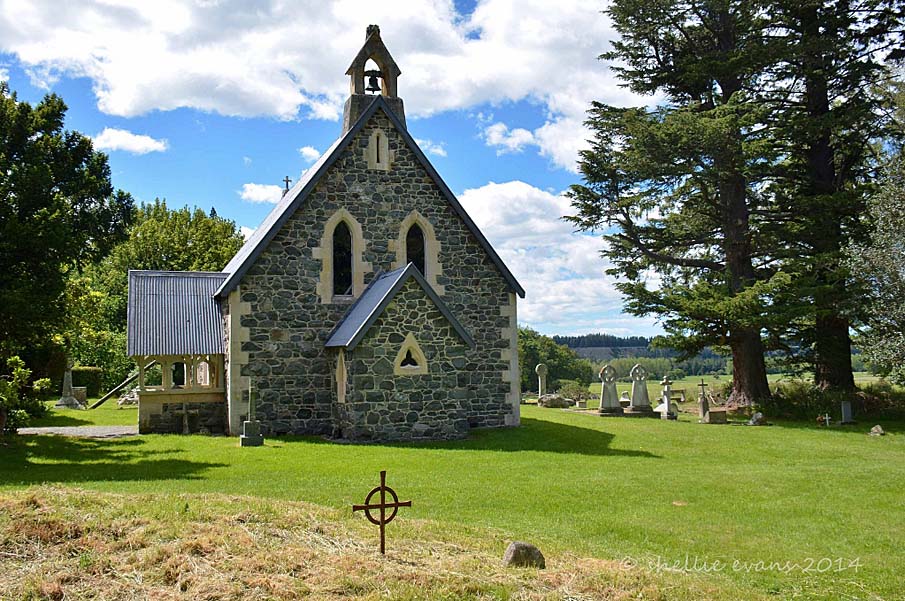
Church of the Holy Innocents, Mount Peel. Photo Competition Entrant 2026 | Mark von Huben | 02/01/2026 | Mark von Huben
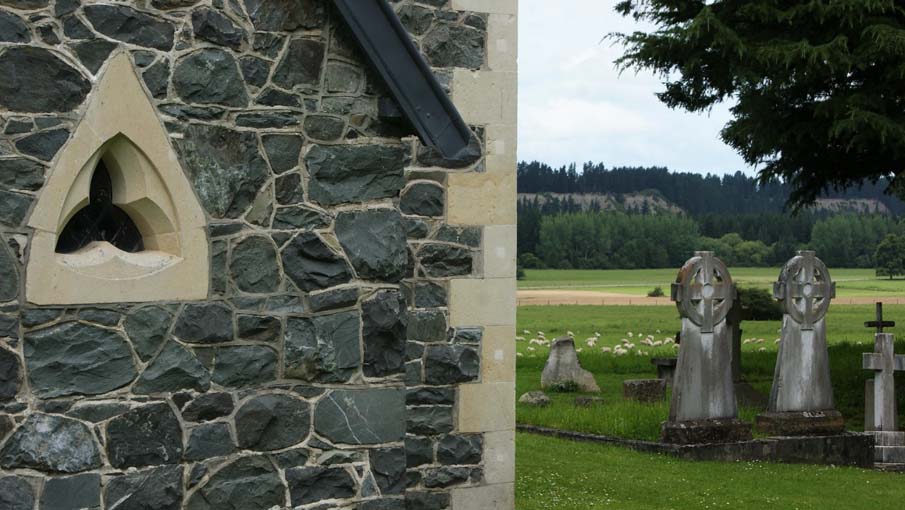
Church of the Holy Innocents, Mount Peel. Photo Competition Entrant 2026 | Mike Hodgkinson | 23/12/2025 | Mike Hodgkinson
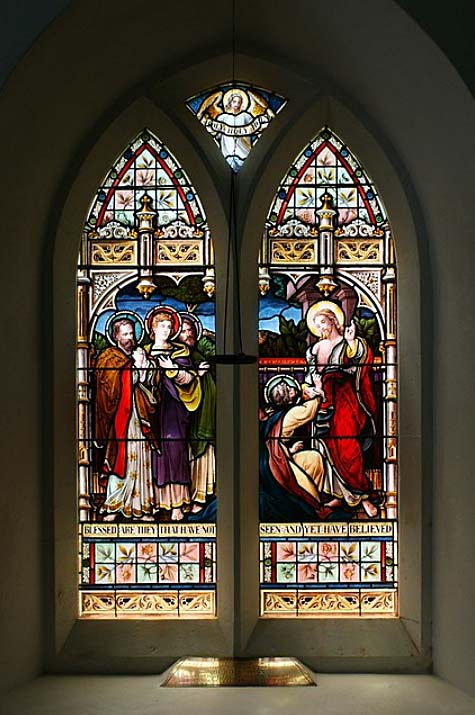
Church of the Holy Innocents, Mount Peel. Photo Competition Entrant 2026 | Andrew Watts | 07/02/2026 | Andrew Watts
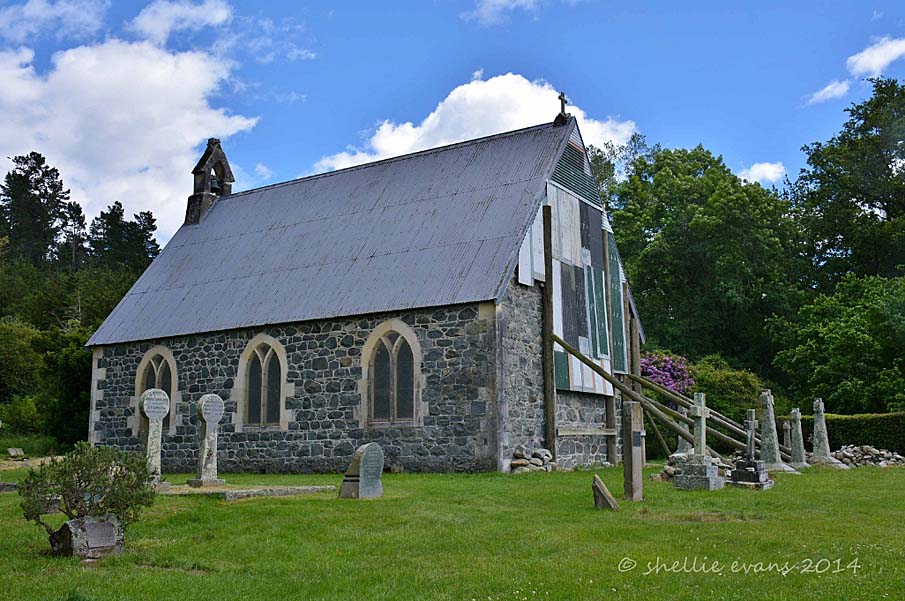
Church of the Holy Innocents, Mount Peel. Image courtesy of www.flickr.com | PhilBee NZ - Phil Braithwaite | 27/12/2018 | Phil Braithwaite
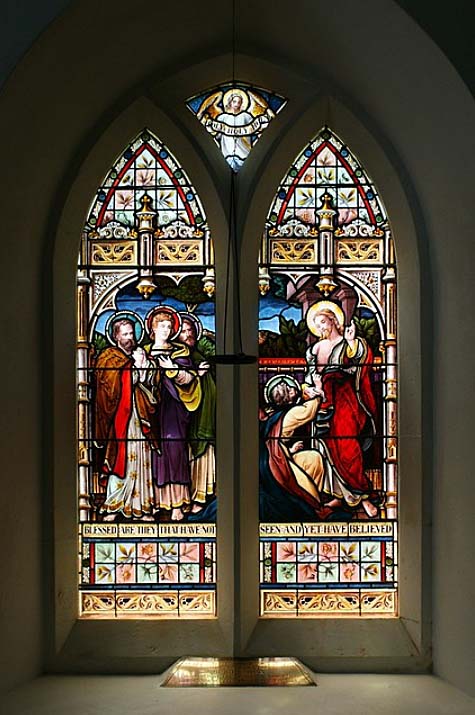
Church of the Holy Innocents, Mount Peel. Stained glass. Image courtesy of www.flickr.com | PhilBee NZ - Phil Braithwaite | 27/12/2018 | Phil Braithwaite
Church of the Holy Innocents, Mount Peel. Photo Competition Entrant 2026 | Mark von Huben | 02/01/2026 | Mark von Huben
Church of the Holy Innocents, Mount Peel. Photo Competition Entrant 2026 | Mike Hodgkinson | 23/12/2025 | Mike Hodgkinson
Church of the Holy Innocents, Mount Peel. Photo Competition Entrant 2026 | Andrew Watts | 07/02/2026 | Andrew Watts
Church of the Holy Innocents, Mount Peel. Image courtesy of www.flickr.com | PhilBee NZ - Phil Braithwaite | 27/12/2018 | Phil Braithwaite
Church of the Holy Innocents, Mount Peel. Stained glass. Image courtesy of www.flickr.com | PhilBee NZ - Phil Braithwaite | 27/12/2018 | Phil Braithwaite
