DonateMembershipVisit Heritage
  • Tūrangawaewae
    Places
  • Tira Māori
    Māori Heritage
  • Poutairangahia
    Archaeology
  • Rauemi
    Resources
  • Mō Tātou
    About Us
  • New Zealand Heritage List
  • Nominate and submit
  • Explore the List
  • National Historic Landmarks
  • Plaques
  • Rainbow List Project
  • Lost heritage
  • Visit Heritage
  • Our properties
  • Turnbull House Project
  • Collections
  • Shop
  • Tohu Whenua
  • Tira Māori
  • Conserving Māori heritage
  • Marae built heritage
  • Māori heritage on the List
  • Hinemihi—Te Hokinga Mai
  • What is archaeology?
  • Is there a site on my property?
  • What are my legal requirements?
  • Affecting an archaeological site
  • Declaring an archaeological site
  • Archaeology FAQs
  • Archaeology Digital Library
  • Archaeology guidelines and templates
  • Resources
  • Funding
  • Publications
  • Sustainable management guides
  • Disaster recovery
  • Podcasts & digital resources
  • Education Hub
  • Conservation plans
  • About
  • Board
  • Māori Heritage Council
  • Senior Staff
  • Offices
  • Contact us
  • Careers
  • Covenants
  • Fast-track
  • Corporate documents
  • Currently consulting on
  • Our submissions
  • News
  • Covid-19 response
Quick links
Rārangi Kōrero | The List
Explore the List
National Historic Landmarks
Ngā Manawhenua o Aotearoa me ōna Kōrero Tūturu
Quick links
Tapuwae
A Vision for Places of Māori Heritage
Funding for Māori Heritage
Resources
Quick links
Archaeological Authority Portal
Applying for an archaeological authority
Archaeology FAQs
Browse the most frequently asked questions about archaeological authorities and the archaeological process.
Quick links
Quick links
News
News Keep up to date with Heritage New Zealand Pouhere Taonga
Membership
Membership Find out more and sign up today
DonateMembershipVisit Heritage
  • Tūrangawaewae
    Places
  • Tira Māori
    Māori Heritage
  • Poutairangahia
    Archaeology
  • Rauemi
    Resources
  • Mō Tātou
    About Us
  • New Zealand Heritage List
  • Nominate and submit
  • Explore the List
  • National Historic Landmarks
  • Plaques
  • Rainbow List Project
  • Lost heritage
  • Visit Heritage
  • Our properties
  • Turnbull House Project
  • Collections
  • Shop
  • Tohu Whenua
  • Tira Māori
  • Conserving Māori heritage
  • Marae built heritage
  • Māori heritage on the List
  • Hinemihi—Te Hokinga Mai
  • What is archaeology?
  • Is there a site on my property?
  • What are my legal requirements?
  • Affecting an archaeological site
  • Declaring an archaeological site
  • Archaeology FAQs
  • Archaeology Digital Library
  • Archaeology guidelines and templates
  • Resources
  • Funding
  • Publications
  • Sustainable management guides
  • Disaster recovery
  • Podcasts & digital resources
  • Education Hub
  • Conservation plans
  • About
  • Board
  • Māori Heritage Council
  • Senior Staff
  • Offices
  • Contact us
  • Careers
  • Covenants
  • Fast-track
  • Corporate documents
  • Currently consulting on
  • Our submissions
  • News
  • Covid-19 response
Quick links
Rārangi Kōrero | The List
Explore the List
National Historic Landmarks
Ngā Manawhenua o Aotearoa me ōna Kōrero Tūturu
Quick links
Tapuwae
A Vision for Places of Māori Heritage
Funding for Māori Heritage
Resources
Quick links
Archaeological Authority Portal
Applying for an archaeological authority
Archaeology FAQs
Browse the most frequently asked questions about archaeological authorities and the archaeological process.
Quick links
Quick links
News
News Keep up to date with Heritage New Zealand Pouhere Taonga
Membership
Membership Find out more and sign up today
  • Places
  • Nominate and submit
  • National Historic Landmarks
  • Places
  • Nominate and submit
  • National Historic Landmarks
  • Tira Māori
  • Conserving Māori heritage
  • Marae built heritage
  • Tira Māori
  • Conserving Māori heritage
  • Marae built heritage
  • Archaeological authorities
  • Archaeology Digital Library
  • Archaeological authorities
  • Archaeology Digital Library
  • All resources
  • Publications
  • Funding
  • All resources
  • Publications
  • Funding
  • FAQs
  • FAQs
Follow us on:
Places
  • Places
  • Nominate and submit
  • National Historic Landmarks
Tira Māori
  • Tira Māori
  • Conserving Māori heritage
  • Marae built heritage
Archaeology
  • Archaeological authorities
  • Archaeology Digital Library
Resources
  • All resources
  • Publications
  • Funding
FAQs
  • FAQs
Follow us on
HomePrivacyTerms and conditionsAbout this site
© Heritage New Zealand Pouhere Taonga 2026.
 
Petone Settlers Museum

The Esplanade, Petone, LOWER HUTT

Public

Historic Place Category 1

List No. 206

Quick links:
List GalleryLocationDetails
The Petone Settlers Museum on Petone's foreshore was constructed in 1939 as part of the Wellington Province's centennial commemorations marking the arrival in Petone of the first New Zealand Company immigrant ships, the 'Aurora' and the 'Cuba', in January 1840. Planning for the construction of the monument began in 1936 at a Dominion Conference of Provincial Centennial Organisations. In 1938 the decision was made by the 'Wellington Provincial Council New Zealand Centennial Organisation' to erect just one Wellington provincial memorial, at Petone, and that the memorial would be a bathing pavilion. A national competition was held to find the final design of the building, with noted Wellington architect, William Gray Young (1885-1962) adjudicating. The winner was the Auckland-based architect Horace Lovell Massey (1895-1979).

Massey's design for the 'Wellington Provincial Centennial Memorial' combines Stripped Classical and Art Deco elements. It consists of a central Hall of Memories, flanked with bathing pavilions for beach-goers. The focal point of the building was (and still is) an arched etched-glass window on the north façade, which depicts the first meeting of the New Zealand Company Settlers with the Te Ati Awa people. At the base of the window, a relief representing the prow of the 'Aurora' protrudes to the north.

In May 1939 MacLauchlan and Lane of Petone won the tender to construct the memorial. The building was opened by Governor-General, Lord Galway, in front of a large crowd, on 22 January 1940.

In 1977 the western bathing pavilion was converted to the Petone Settlers Museum. Two years later the eastern bathing pavilion was converted to what is now the Charles Heaphy Gallery. In 1988-1989 the building was refurbished to meet modern museum requirements. Today the museum is a repository of local history, with an emphasis on Maori and Pakeha settlement of the Wellington region.

This building, now known as the Petone Settlers Museum/Te Whare Whakaaro o Pito-one, has great representative significance as it commemorates the arrival of the first New Zealand Company immigrants to Wellington in January 1840. Designed by a noted architect, it is a prominent landmark on the Petone foreshore. It has additional community value as a museum dedicated to local history for over a quarter of a century.
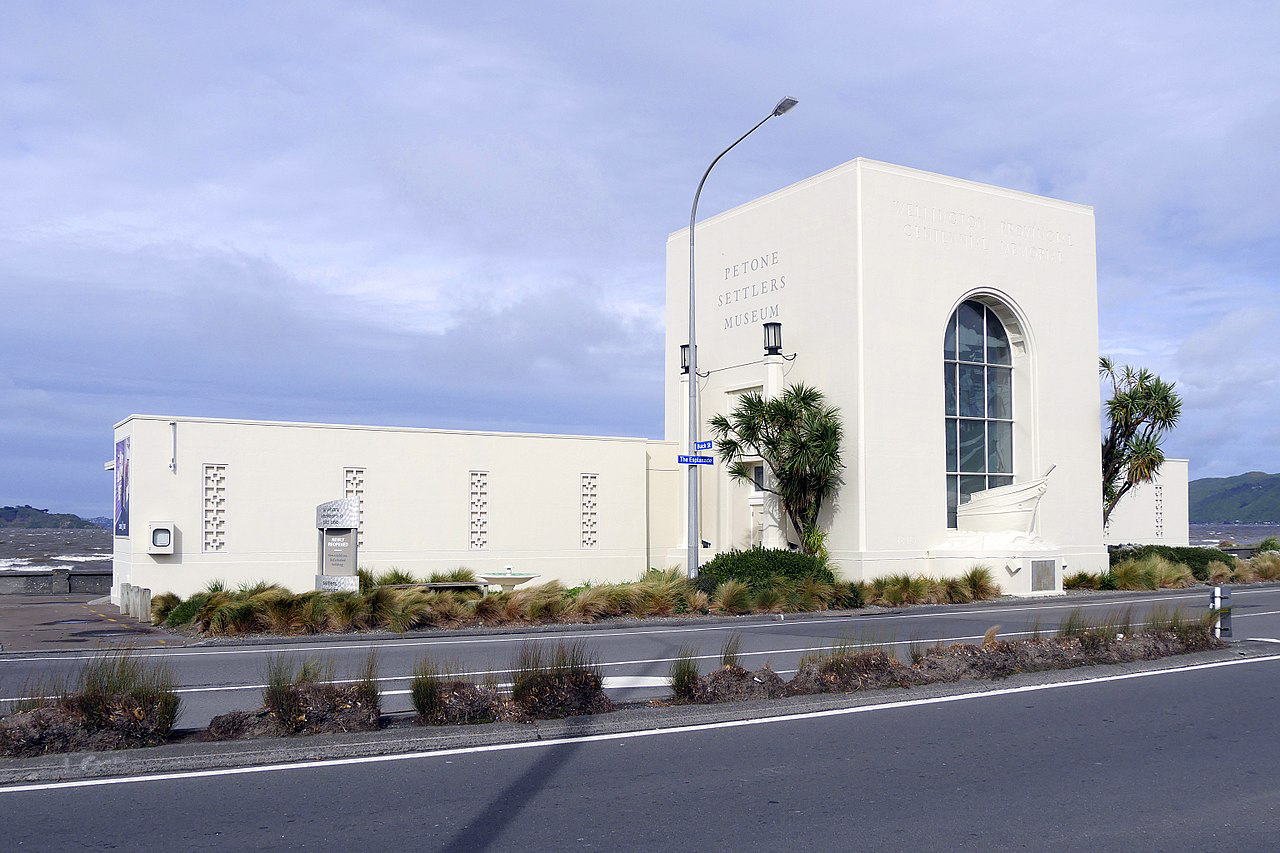
Petone Settlers Museum. CC BY 3.0 Image courtesy of commons.wikimedia.org | Ulrich Lange, Bochum, Germany | 14/03/2017 | Ulrich Lange - Wikimedia Commons
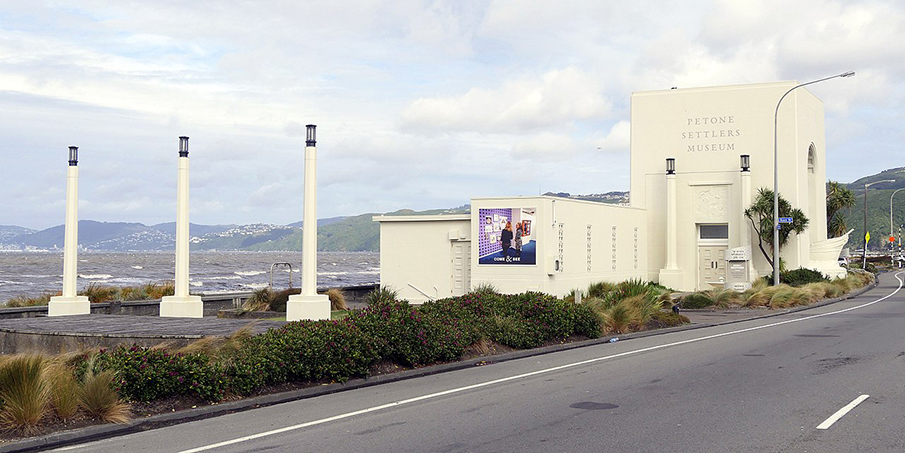
Petone Settlers Museum (side view). CC BY 3.0 Image courtesy of commons.wikimedia.org | Ulrich Lange, Bochum, Germany | 14/03/2017 | Ulrich Lange - Wikimedia Commons
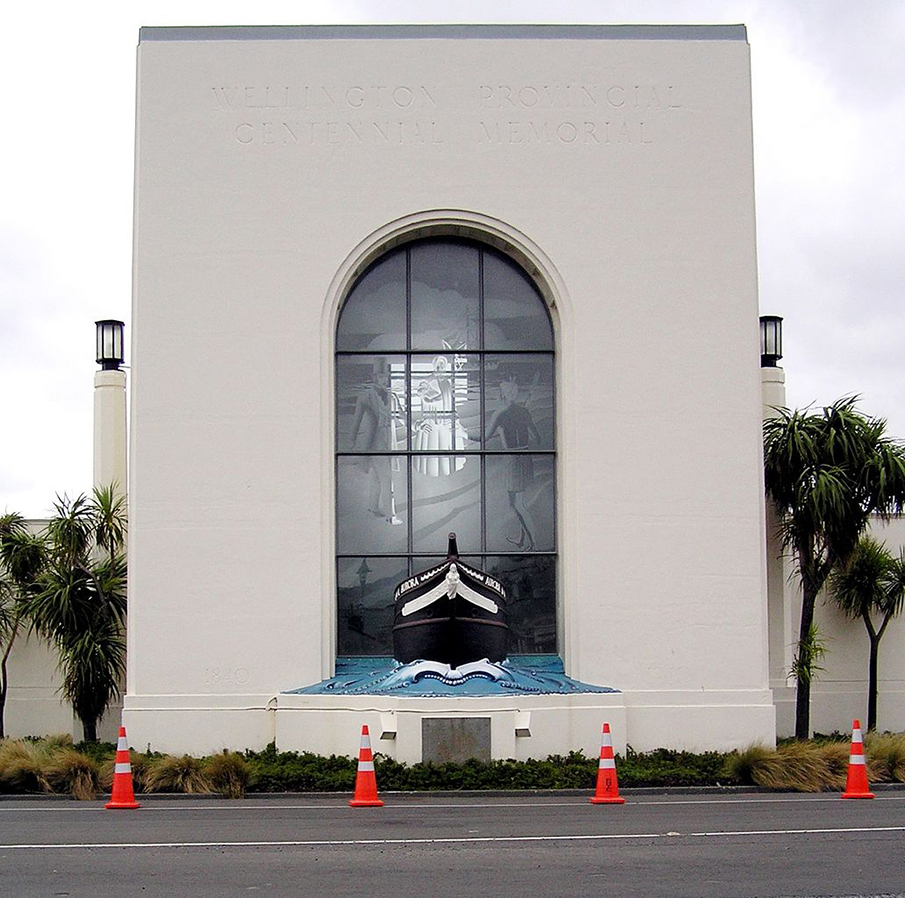
Petone Settlers Museum. CC BY-SA 2.0 Image courtesy of commons.wikimedia.org | Gordon Haws | 25/02/2005 | Gordon Haws - Wikimedia Commons
Petone Settlers Museum. CC BY 3.0 Image courtesy of commons.wikimedia.org | Ulrich Lange, Bochum, Germany | 14/03/2017 | Ulrich Lange - Wikimedia Commons
Petone Settlers Museum (side view). CC BY 3.0 Image courtesy of commons.wikimedia.org | Ulrich Lange, Bochum, Germany | 14/03/2017 | Ulrich Lange - Wikimedia Commons
Petone Settlers Museum. CC BY-SA 2.0 Image courtesy of commons.wikimedia.org | Gordon Haws | 25/02/2005 | Gordon Haws - Wikimedia Commons


List Entry Information

Overview

Status
Listed

List Entry Status
Historic Place Category 1

Access
Able to Visit

List Number
206

Date Entered
6th September 1984

Date of Effect
6th September 1984

City/District Council
Hutt City

Region
Wellington Region

Legal description

Pt land between high water mark & sthn boundary of Esplanade SO 14160

Detailed List Entry

Construction Professional

Name

Massey, Horace Lovell

Type

Architect

Biography

Massey (1895-1979) was born in Auckland and educated at Auckland Grammar. In 1919 he won a scholarship which allowed him to study for three years at the Architectural Association in London. He returned to Auckland in 1922 and in the mid-1920s was a partner in the firm Massey, Morgan, Hyland and Phillips who were responsible for much hospital work including the Nurses' Home at Napier Hospital (1925-26) and the Fallen Soldiers' Memorial Hospital in Hastings (1925). Massey himself was an active member of the Auckland Hospital Board for many years. In the late 1920s Massey was in partnership with G.E. Tole, followed by a period on his own during which he designed Cintra Flats, Auckland (1936). In the 1940s and 1950s he was senior partner of the firm Massey, Beatson, Rix-Trott and Carter who were responsible for a wide variety of work including Pukekohe War Memorial Hall, Coates Memorial Church, Matakohe (1950), Auckland Crematorium (1952), Takapuna Grammar School (1956) and Norwich Union Insurance Society Building, Queen Street (1963). Massey also designed many fine houses including the Geddes House, Remuera (1936-37), McArthur House, Orakei (1938) and Melvin House, Achilles Point (1942). He was involved with the New Zealand Institute of Architects and devoted time to the publication of professional papers. As an architect he was influential in introducing the ideals of the Modern Movement to Auckland. H.L. Massey Horace Massey was born at Auckland in 1895 and was educated at Auckland Grammar School. He was articled to architect Alec Wiseman and also worked with R.K. Binney and Hoggard, Prouse and Gummer. During the First World War (1914-1918), he was billeted for a while before proceeding to France where he served until the end of the war. During his time in England he took a great interest in local housing. At the end of the war he was one of 3000 entrants in the Daily Mail Ideal Homes Competition. He won the £500 first prize in the northern industrial section and was also awarded one of six New Zealand Expeditionary Forces scholarships to study for three years. He chose to study in London at the Architectural Association School and then returned to New Zealand and became a partner in the firm Massey, Morgan, Hyland & Philips. He left this partnership in the mid 1920s and practiced on his own for a couple of years before forming the partnership Tole & Massey. In the mid 1930s he again practiced on his own, later setting up the firm Horace L. Massey & Partners. In the late 1940s he became a senior partner in the firm Massey, Beatson, Rix-Trott & Carter. Massey retired in the late 1950s and died in 1978 at the age of 83. Massey was a prolific architect. One of his former partners estimated that he designed one in every five architect-designed houses in Auckland during the 1920s. During this decade he was responsible for a wide variety of designs including: Hawkes Bay Fallen Soldiers Memorial Hospital (1925); rebuilding the Lyric Theatre, Auckland (1926); Whangarei Nurses' Home (1927); Holy Cross Convent, Epsom (1928); and Heards Factory, Parnell (1929). The next two decades his work included: St Michael's Church, Remuera (1933); Cintra Flats, Symonds Street (1935); Whangarei Public Library (with Morgan, 1936), A.L. Caughey home, Remuera (1937); Provincial Centennial Memorial, Petone (1940) and Auckland Crematorium (1943). Massey received both national and international acclaim for his designs. In 1922 he was awarded the second prize (with Morgan and Armstrong) for the Bengal Legislative Council Chambers in Calcutta. In 1933 he was commended for his entry in the competition for the design of premises for the Royal Institute of Architects in London. He won New Zealand Institute of Architects (NZIA) gold medals in 1933 for St Michael's Church, Remuera (with G.E. Tole); in 1937 for Cintra Flats, Auckland; in 1938 for the Whangarei Public Library (with A.P. Morgan); and in 1940 for the Wellington Provincial Centennial Memorial in Petone. The Petone design was also the winning entry in a competition for the design of the building. At the time Massey was the only architect to ever have won four NZIA gold medals. In 1950 he was awarded the NZIA bronze medal for the design of his own home. Massey was also well known for his landscape design work. In 1930 he prepared a plan for the reclamation of Hobson Bay but the design was never implemented. In the mid 1930s he designed a large floral carpet, which was exhibited in the Auckland Town Hall. In 1937 he prepared a garden design for G.H. Abel in Remuera complete with tennis court, putting green, formal garden and green house. In the 1940s he redesigned the garden of Mr N.B. Spencer, which won the 1947-48 Tudor Rose Bowl in the Remuera Round Garden Competition. In 1948 he replanned the garden of John Dreadon in Orakei Road. He also wrote several papers on garden design.

Construction Details

Start Year

1939

Finish Year

1940

Type

Original Construction

Start Year

1977

Type

Modification

Description

Western bathing pavilion converted to the Petone Settlers Museum

Start Year

1979

Type

Modification

Description

Eastern bathing pavilion converted to what is now the Charles Heaphy Gallery

Start Year

1988

Finish Year

1989

Type

Modification

Description

Refurbished to meet museum requirements

Reference

Completion Date

16th August 2001

Report Written By

Helen McCracken / Geoff Mew

Information Sources

Alexander Turnbull Library

Alexander Turnbull Library, Wellington

Evening Post

Evening Post, 27 Jun 1919, p.7.

Report Written By

This place was identified as significant under previous legislation with different information requirements. It remains significant under the current legislation. There is opportunity under our legislation and policies to add to this information. Further information about this place may be available from the Central Regional Office of Heritage New Zealand Pouhere Taonga. NZIA Gold Award Winners 1940 Please note that entry on the New Zealand Heritage List/Rarangi Korero identifies only the heritage values of the property concerned, and should not be construed as advice on the state of the property, or as a comment of its soundness or safety, including in regard to earthquake risk, safety in the event of fire, or insanitary conditions.

Further Information

Current Usages

Uses: Civic Facilities

Specific Usage: Museum

Uses: Commemoration

Specific Usage: Memorial - Early settler

Former Usages

General Usage:: Civic Facilities

Specific Usage: Civic facilities - other

Themes

Web Links

description: Petone Settlers Museum

url: https://www.huttcity.govt.nz/arts-and-culture/museums/petone-settlers-museum

Overview

Status

Listed

List Entry Status

Historic Place Category 1

Access

Able to Visit

List Number

206

Date Entered

6th September 1984

Date of Effect

6th September 1984

City/District Council

Hutt City

Region

Wellington Region

Legal description

Pt land between high water mark & sthn boundary of Esplanade SO 14160

Status

Listed

List Entry Status

Historic Place Category 1

Access

Able to Visit

List Number

206

Date Entered

6th September 1984

Date of Effect

6th September 1984

City/District Council

Hutt City

Region

Wellington Region

Legal description

Pt land between high water mark & sthn boundary of Esplanade SO 14160

Construction Information

Construction Professional

Name

Massey, Horace Lovell

Type

Architect

Biography

Massey (1895-1979) was born in Auckland and educated at Auckland Grammar. In 1919 he won a scholarship which allowed him to study for three years at the Architectural Association in London. He returned to Auckland in 1922 and in the mid-1920s was a partner in the firm Massey, Morgan, Hyland and Phillips who were responsible for much hospital work including the Nurses' Home at Napier Hospital (1925-26) and the Fallen Soldiers' Memorial Hospital in Hastings (1925). Massey himself was an active member of the Auckland Hospital Board for many years. In the late 1920s Massey was in partnership with G.E. Tole, followed by a period on his own during which he designed Cintra Flats, Auckland (1936). In the 1940s and 1950s he was senior partner of the firm Massey, Beatson, Rix-Trott and Carter who were responsible for a wide variety of work including Pukekohe War Memorial Hall, Coates Memorial Church, Matakohe (1950), Auckland Crematorium (1952), Takapuna Grammar School (1956) and Norwich Union Insurance Society Building, Queen Street (1963). Massey also designed many fine houses including the Geddes House, Remuera (1936-37), McArthur House, Orakei (1938) and Melvin House, Achilles Point (1942). He was involved with the New Zealand Institute of Architects and devoted time to the publication of professional papers. As an architect he was influential in introducing the ideals of the Modern Movement to Auckland. H.L. Massey Horace Massey was born at Auckland in 1895 and was educated at Auckland Grammar School. He was articled to architect Alec Wiseman and also worked with R.K. Binney and Hoggard, Prouse and Gummer. During the First World War (1914-1918), he was billeted for a while before proceeding to France where he served until the end of the war. During his time in England he took a great interest in local housing. At the end of the war he was one of 3000 entrants in the Daily Mail Ideal Homes Competition. He won the £500 first prize in the northern industrial section and was also awarded one of six New Zealand Expeditionary Forces scholarships to study for three years. He chose to study in London at the Architectural Association School and then returned to New Zealand and became a partner in the firm Massey, Morgan, Hyland & Philips. He left this partnership in the mid 1920s and practiced on his own for a couple of years before forming the partnership Tole & Massey. In the mid 1930s he again practiced on his own, later setting up the firm Horace L. Massey & Partners. In the late 1940s he became a senior partner in the firm Massey, Beatson, Rix-Trott & Carter. Massey retired in the late 1950s and died in 1978 at the age of 83. Massey was a prolific architect. One of his former partners estimated that he designed one in every five architect-designed houses in Auckland during the 1920s. During this decade he was responsible for a wide variety of designs including: Hawkes Bay Fallen Soldiers Memorial Hospital (1925); rebuilding the Lyric Theatre, Auckland (1926); Whangarei Nurses' Home (1927); Holy Cross Convent, Epsom (1928); and Heards Factory, Parnell (1929). The next two decades his work included: St Michael's Church, Remuera (1933); Cintra Flats, Symonds Street (1935); Whangarei Public Library (with Morgan, 1936), A.L. Caughey home, Remuera (1937); Provincial Centennial Memorial, Petone (1940) and Auckland Crematorium (1943). Massey received both national and international acclaim for his designs. In 1922 he was awarded the second prize (with Morgan and Armstrong) for the Bengal Legislative Council Chambers in Calcutta. In 1933 he was commended for his entry in the competition for the design of premises for the Royal Institute of Architects in London. He won New Zealand Institute of Architects (NZIA) gold medals in 1933 for St Michael's Church, Remuera (with G.E. Tole); in 1937 for Cintra Flats, Auckland; in 1938 for the Whangarei Public Library (with A.P. Morgan); and in 1940 for the Wellington Provincial Centennial Memorial in Petone. The Petone design was also the winning entry in a competition for the design of the building. At the time Massey was the only architect to ever have won four NZIA gold medals. In 1950 he was awarded the NZIA bronze medal for the design of his own home. Massey was also well known for his landscape design work. In 1930 he prepared a plan for the reclamation of Hobson Bay but the design was never implemented. In the mid 1930s he designed a large floral carpet, which was exhibited in the Auckland Town Hall. In 1937 he prepared a garden design for G.H. Abel in Remuera complete with tennis court, putting green, formal garden and green house. In the 1940s he redesigned the garden of Mr N.B. Spencer, which won the 1947-48 Tudor Rose Bowl in the Remuera Round Garden Competition. In 1948 he replanned the garden of John Dreadon in Orakei Road. He also wrote several papers on garden design.

Construction Details

Start Year

1939

Finish Year

1940

Type

Original Construction

Start Year

1977

Type

Modification

Description

Western bathing pavilion converted to the Petone Settlers Museum

Start Year

1979

Type

Modification

Description

Eastern bathing pavilion converted to what is now the Charles Heaphy Gallery

Start Year

1988

Finish Year

1989

Type

Modification

Description

Refurbished to meet museum requirements

Construction Professional

Name

Massey, Horace Lovell

Type

Architect

Biography

Massey (1895-1979) was born in Auckland and educated at Auckland Grammar. In 1919 he won a scholarship which allowed him to study for three years at the Architectural Association in London. He returned to Auckland in 1922 and in the mid-1920s was a partner in the firm Massey, Morgan, Hyland and Phillips who were responsible for much hospital work including the Nurses' Home at Napier Hospital (1925-26) and the Fallen Soldiers' Memorial Hospital in Hastings (1925). Massey himself was an active member of the Auckland Hospital Board for many years. In the late 1920s Massey was in partnership with G.E. Tole, followed by a period on his own during which he designed Cintra Flats, Auckland (1936). In the 1940s and 1950s he was senior partner of the firm Massey, Beatson, Rix-Trott and Carter who were responsible for a wide variety of work including Pukekohe War Memorial Hall, Coates Memorial Church, Matakohe (1950), Auckland Crematorium (1952), Takapuna Grammar School (1956) and Norwich Union Insurance Society Building, Queen Street (1963). Massey also designed many fine houses including the Geddes House, Remuera (1936-37), McArthur House, Orakei (1938) and Melvin House, Achilles Point (1942). He was involved with the New Zealand Institute of Architects and devoted time to the publication of professional papers. As an architect he was influential in introducing the ideals of the Modern Movement to Auckland. H.L. Massey Horace Massey was born at Auckland in 1895 and was educated at Auckland Grammar School. He was articled to architect Alec Wiseman and also worked with R.K. Binney and Hoggard, Prouse and Gummer. During the First World War (1914-1918), he was billeted for a while before proceeding to France where he served until the end of the war. During his time in England he took a great interest in local housing. At the end of the war he was one of 3000 entrants in the Daily Mail Ideal Homes Competition. He won the £500 first prize in the northern industrial section and was also awarded one of six New Zealand Expeditionary Forces scholarships to study for three years. He chose to study in London at the Architectural Association School and then returned to New Zealand and became a partner in the firm Massey, Morgan, Hyland & Philips. He left this partnership in the mid 1920s and practiced on his own for a couple of years before forming the partnership Tole & Massey. In the mid 1930s he again practiced on his own, later setting up the firm Horace L. Massey & Partners. In the late 1940s he became a senior partner in the firm Massey, Beatson, Rix-Trott & Carter. Massey retired in the late 1950s and died in 1978 at the age of 83. Massey was a prolific architect. One of his former partners estimated that he designed one in every five architect-designed houses in Auckland during the 1920s. During this decade he was responsible for a wide variety of designs including: Hawkes Bay Fallen Soldiers Memorial Hospital (1925); rebuilding the Lyric Theatre, Auckland (1926); Whangarei Nurses' Home (1927); Holy Cross Convent, Epsom (1928); and Heards Factory, Parnell (1929). The next two decades his work included: St Michael's Church, Remuera (1933); Cintra Flats, Symonds Street (1935); Whangarei Public Library (with Morgan, 1936), A.L. Caughey home, Remuera (1937); Provincial Centennial Memorial, Petone (1940) and Auckland Crematorium (1943). Massey received both national and international acclaim for his designs. In 1922 he was awarded the second prize (with Morgan and Armstrong) for the Bengal Legislative Council Chambers in Calcutta. In 1933 he was commended for his entry in the competition for the design of premises for the Royal Institute of Architects in London. He won New Zealand Institute of Architects (NZIA) gold medals in 1933 for St Michael's Church, Remuera (with G.E. Tole); in 1937 for Cintra Flats, Auckland; in 1938 for the Whangarei Public Library (with A.P. Morgan); and in 1940 for the Wellington Provincial Centennial Memorial in Petone. The Petone design was also the winning entry in a competition for the design of the building. At the time Massey was the only architect to ever have won four NZIA gold medals. In 1950 he was awarded the NZIA bronze medal for the design of his own home. Massey was also well known for his landscape design work. In 1930 he prepared a plan for the reclamation of Hobson Bay but the design was never implemented. In the mid 1930s he designed a large floral carpet, which was exhibited in the Auckland Town Hall. In 1937 he prepared a garden design for G.H. Abel in Remuera complete with tennis court, putting green, formal garden and green house. In the 1940s he redesigned the garden of Mr N.B. Spencer, which won the 1947-48 Tudor Rose Bowl in the Remuera Round Garden Competition. In 1948 he replanned the garden of John Dreadon in Orakei Road. He also wrote several papers on garden design.

Construction Details

Start Year

1939

Finish Year

1940

Type

Original Construction

Start Year

1977

Type

Modification

Description

Western bathing pavilion converted to the Petone Settlers Museum

Start Year

1979

Type

Modification

Description

Eastern bathing pavilion converted to what is now the Charles Heaphy Gallery

Start Year

1988

Finish Year

1989

Type

Modification

Description

Refurbished to meet museum requirements

Reference

Historical and Associated Iwi / Hapū / Whānau

Completion Date

16th August 2001

Report Written By

Helen McCracken / Geoff Mew

Information Sources

Alexander Turnbull Library

Alexander Turnbull Library, Wellington

Evening Post

Evening Post, 27 Jun 1919, p.7.

Other Information

This place was identified as significant under previous legislation with different information requirements. It remains significant under the current legislation. There is opportunity under our legislation and policies to add to this information. Further information about this place may be available from the Central Regional Office of Heritage New Zealand Pouhere Taonga. NZIA Gold Award Winners 1940 Please note that entry on the New Zealand Heritage List/Rarangi Korero identifies only the heritage values of the property concerned, and should not be construed as advice on the state of the property, or as a comment of its soundness or safety, including in regard to earthquake risk, safety in the event of fire, or insanitary conditions.

Historical and Associated Iwi / Hapū / Whānau

Completion Date

16th August 2001

Report Written By

Helen McCracken / Geoff Mew

Information Sources

Alexander Turnbull Library

Alexander Turnbull Library, Wellington

Evening Post

Evening Post, 27 Jun 1919, p.7.

Other Information

This place was identified as significant under previous legislation with different information requirements. It remains significant under the current legislation. There is opportunity under our legislation and policies to add to this information. Further information about this place may be available from the Central Regional Office of Heritage New Zealand Pouhere Taonga. NZIA Gold Award Winners 1940 Please note that entry on the New Zealand Heritage List/Rarangi Korero identifies only the heritage values of the property concerned, and should not be construed as advice on the state of the property, or as a comment of its soundness or safety, including in regard to earthquake risk, safety in the event of fire, or insanitary conditions.

Further Information

Current Usages

Uses: Civic Facilities

Specific Usage: Museum

Uses: Commemoration

Specific Usage: Memorial - Early settler

Former Usages

General Usage: Civic Facilities

Specific Usage: Civic facilities - other

Web Links

description: Petone Settlers Museum

url: https://www.huttcity.govt.nz/arts-and-culture/museums/petone-settlers-museum

Current Usages

Uses: Civic Facilities

Specific Usage: Museum

Uses: Commemoration

Specific Usage: Memorial - Early settler

Former Usages

General Usage: Civic Facilities

Specific Usage: Civic facilities - other

Web Links

description: Petone Settlers Museum

url: https://www.huttcity.govt.nz/arts-and-culture/museums/petone-settlers-museum

Location

Loading
Related listings
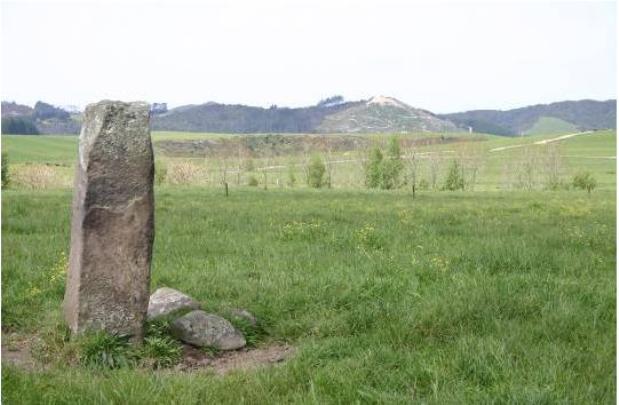
Arthur's Stone, Waimate North Road, Kerikeri
Arthur's Stone
Arthur's Stone, Waimate North Road, Kerikeri
Arthur's Stone
Stay up to date with Heritage this month