DonateMembershipVisit Heritage
  • Tūrangawaewae
    Places
  • Tira Māori
    Māori Heritage
  • Poutairangahia
    Archaeology
  • Rauemi
    Resources
  • Mō Tātou
    About Us
  • New Zealand Heritage List
  • Nominate and submit
  • Explore the List
  • National Historic Landmarks
  • Plaques
  • Rainbow List Project
  • Lost heritage
  • Visit Heritage
  • Our properties
  • Turnbull House Project
  • Collections
  • Shop
  • Tohu Whenua
  • Tira Māori
  • Conserving Māori heritage
  • Marae built heritage
  • Māori heritage on the List
  • Hinemihi—Te Hokinga Mai
  • What is archaeology?
  • Is there a site on my property?
  • What are my legal requirements?
  • Affecting an archaeological site
  • Declaring an archaeological site
  • Archaeology FAQs
  • Archaeology Digital Library
  • Archaeology guidelines and templates
  • Resources
  • Funding
  • Publications
  • Sustainable management guides
  • Disaster recovery
  • Podcasts & digital resources
  • Education Hub
  • Conservation plans
  • About
  • Board
  • Māori Heritage Council
  • Senior Staff
  • Offices
  • Contact us
  • Careers
  • Covenants
  • Fast-track
  • Corporate documents
  • Currently consulting on
  • Our submissions
  • News
  • Covid-19 response
Quick links
Rārangi Kōrero | The List
Explore the List
National Historic Landmarks
Ngā Manawhenua o Aotearoa me ōna Kōrero Tūturu
Quick links
Tapuwae
A Vision for Places of Māori Heritage
Funding for Māori Heritage
Resources
Quick links
Archaeological Authority Portal
Applying for an archaeological authority
Archaeology FAQs
Browse the most frequently asked questions about archaeological authorities and the archaeological process.
Quick links
Quick links
News
News Keep up to date with Heritage New Zealand Pouhere Taonga
Membership
Membership Find out more and sign up today
DonateMembershipVisit Heritage
  • Tūrangawaewae
    Places
  • Tira Māori
    Māori Heritage
  • Poutairangahia
    Archaeology
  • Rauemi
    Resources
  • Mō Tātou
    About Us
  • New Zealand Heritage List
  • Nominate and submit
  • Explore the List
  • National Historic Landmarks
  • Plaques
  • Rainbow List Project
  • Lost heritage
  • Visit Heritage
  • Our properties
  • Turnbull House Project
  • Collections
  • Shop
  • Tohu Whenua
  • Tira Māori
  • Conserving Māori heritage
  • Marae built heritage
  • Māori heritage on the List
  • Hinemihi—Te Hokinga Mai
  • What is archaeology?
  • Is there a site on my property?
  • What are my legal requirements?
  • Affecting an archaeological site
  • Declaring an archaeological site
  • Archaeology FAQs
  • Archaeology Digital Library
  • Archaeology guidelines and templates
  • Resources
  • Funding
  • Publications
  • Sustainable management guides
  • Disaster recovery
  • Podcasts & digital resources
  • Education Hub
  • Conservation plans
  • About
  • Board
  • Māori Heritage Council
  • Senior Staff
  • Offices
  • Contact us
  • Careers
  • Covenants
  • Fast-track
  • Corporate documents
  • Currently consulting on
  • Our submissions
  • News
  • Covid-19 response
Quick links
Rārangi Kōrero | The List
Explore the List
National Historic Landmarks
Ngā Manawhenua o Aotearoa me ōna Kōrero Tūturu
Quick links
Tapuwae
A Vision for Places of Māori Heritage
Funding for Māori Heritage
Resources
Quick links
Archaeological Authority Portal
Applying for an archaeological authority
Archaeology FAQs
Browse the most frequently asked questions about archaeological authorities and the archaeological process.
Quick links
Quick links
News
News Keep up to date with Heritage New Zealand Pouhere Taonga
Membership
Membership Find out more and sign up today
  • Places
  • Nominate and submit
  • National Historic Landmarks
  • Places
  • Nominate and submit
  • National Historic Landmarks
  • Tira Māori
  • Conserving Māori heritage
  • Marae built heritage
  • Tira Māori
  • Conserving Māori heritage
  • Marae built heritage
  • Archaeological authorities
  • Archaeology Digital Library
  • Archaeological authorities
  • Archaeology Digital Library
  • All resources
  • Publications
  • Funding
  • All resources
  • Publications
  • Funding
  • FAQs
  • FAQs
Follow us on:
Places
  • Places
  • Nominate and submit
  • National Historic Landmarks
Tira Māori
  • Tira Māori
  • Conserving Māori heritage
  • Marae built heritage
Archaeology
  • Archaeological authorities
  • Archaeology Digital Library
Resources
  • All resources
  • Publications
  • Funding
FAQs
  • FAQs
Follow us on
HomePrivacyTerms and conditionsAbout this site
© Heritage New Zealand Pouhere Taonga 2026.
 
St Patrick's Catholic Church

7 Hertford Street and Merioneth Street, ARROWTOWN

Private

Historic Place Category 2

List No. 2117

Quick links:
List GalleryLocationDetails
St Patrick’s Catholic Church, built between 1873 and 1902 on a landmark corner site, has been the focus of Catholic worship and education in Arrowtown since its inception. It is a fine example of architect F.W. Burwell’s ecclesiastical architecture and has a significant association with Australasia’s first saint, Mary of the Cross MacKillop.

The history of the Catholic community in Arrowtown reaches back to the discovery of gold on the Arrow River in 1862. The first Catholic priests, Father Moreau and Father Martin, took it in turns to visit the isolated mining settlements. After Invercargill parish was separated from Queenstown in 1873, the care of the around 650 Catholics was entrusted to Father John Mackay. On 26 July 1873, miner John Healy gave a three-quarter acre section to the Bishop of Dunedin as a site for the church.

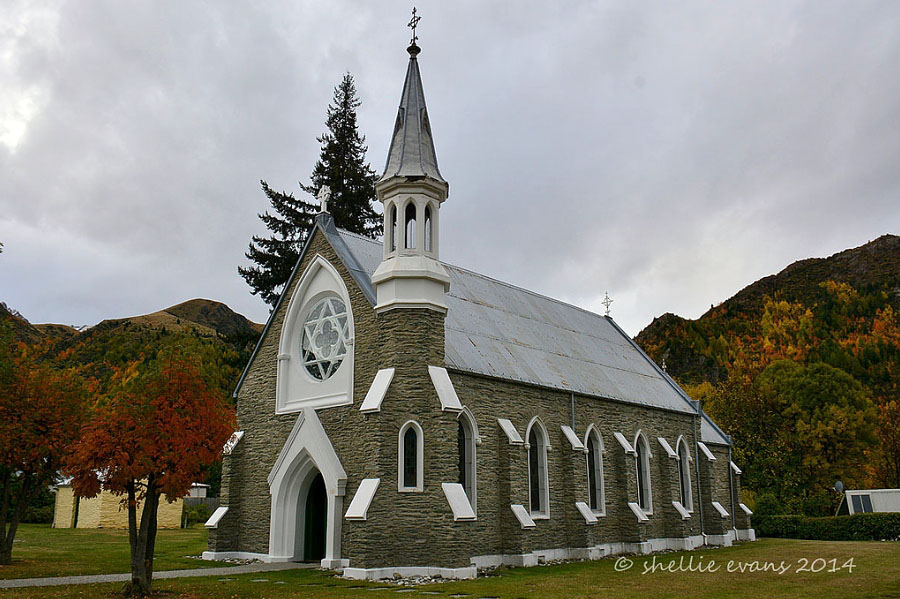
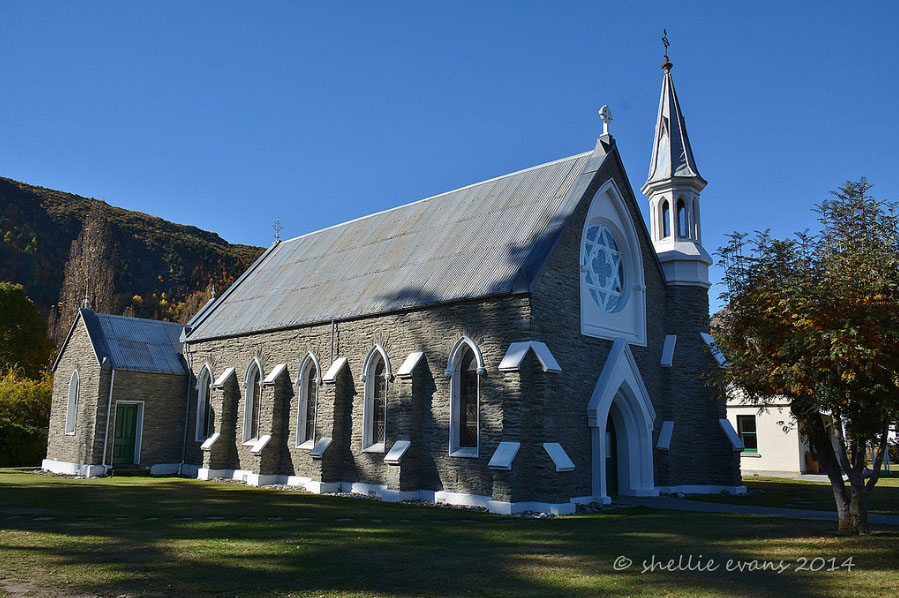
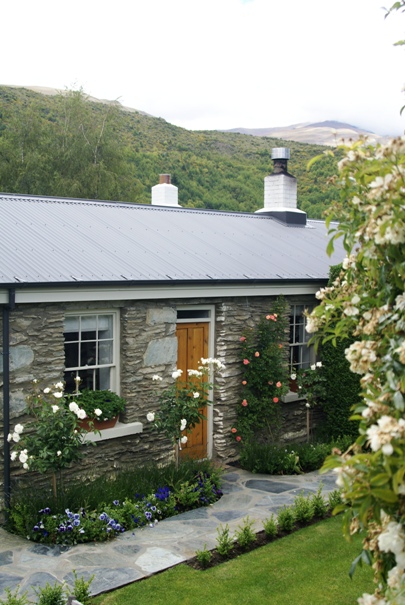
Prominent architect F.W. Burwell designed the church in a Gothic style with a narrow spire and a fine rose window. Built of local stone with contrasting cement facings, St Patrick’s is set on a generous corner section above Arrowtown’s main street. Alongside the church sits Mary MacKillop’s cottage, a small stone building that provided a home for the sisters, and later for the priest when he stayed overnight in Arrowtown. In 1880, the church bought the section next to St Patrick’s, complete with stone cottage. The cottage, over the years, served as a home, refectory, classroom and garage. The church served as a classroom for the school during the week. In 1882, the church was renovated and enlarged. A new sanctuary (16 feet by 15 feet) was added, and a stained glass window at the back of the altar. In February 1883, the Bishop ‘canonically erected’ the Stations of the Cross. By 1886, a strong parish had developed - the buildings reflecting the strength of the community - the parish had spent £2,370 on the church and grounds, priest’s residence and site for a convent. The sacristy was added in 1902.

In 1897, the Sisters of St Joseph of the Sacred Heart, led by assistant Mother General (and founding sister) Mary MacKillop, arrived in Arrowtown. MacKillop was born in Melbourne of Scottish parents and spent her life providing education to and ministering to the needs of Australia and New Zealand’s poor and working class. She founded the order in Penola, South Australia in 1866. By 1891, it had 300 sisters working in nine dioceses in Australia and New Zealand. MacKillop has been known as Saint Mary of the Cross MacKillop since her canonisation in 2010. Although MacKillop herself was only in Arrowtown for a short time, her biographer Paul Gardiner writes that ‘[n]o place typifies the spirit of Mary MacKillop and the early Josephites better than Arrowtown – by Australian standards it is far “beyond the black stump”, by the standards of the rest of mankind it is on the edge of the earth but it was not too humble, cold or remote for the sisters to go there to bring the knowledge and love of God to little children.’

By the 1940s, the Arrowtown Catholic school roll was falling, and the convent closed, ending the relationship between the Sisters of St Joseph and the Arrowtown parishioners. In 2014, St Patrick’s Catholic Church remains the heart of Arrowtown’s Catholic community and attracts visitors interested in the life of Australasia’s first saint.
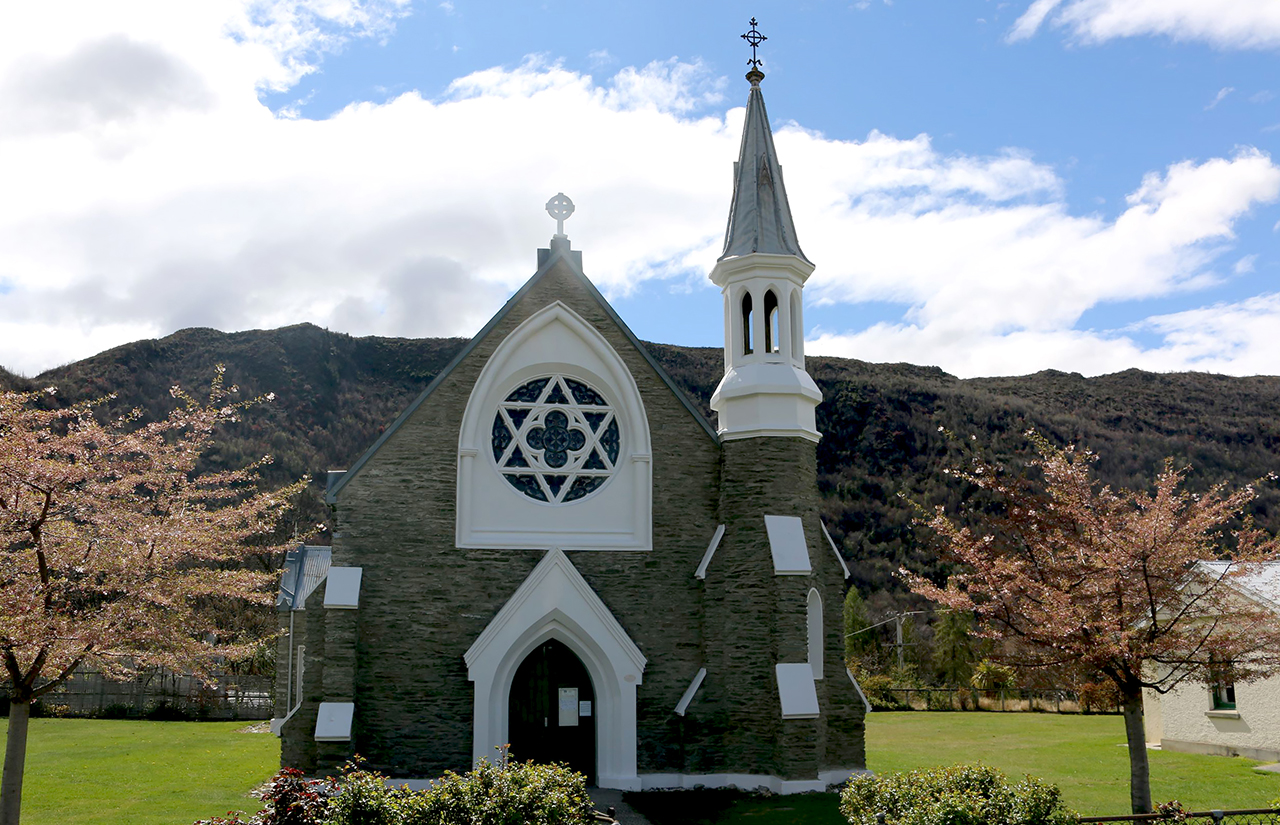
St Patrick's Catholic Church, Arrowtown. CC BY-SA 4.0 Image courtesy of commons.wikimedia.org | Wildman NZ | 05/10/2021 | Wildman NZ - Wikimedia Commons
St Patrick's Catholic Church, Arrowtown. Image courtesy of www.flickr.com | Shellie Evans - flyingkiwigirl | 02/05/2014 | Shellie Evans
St Patrick's Catholic Church, Arrowtown. Image courtesy of www.flickr.com | Shellie Evans - flyingkiwigirl | 30/04/2014 | Shellie Evans
St Patrick's Catholic Church, Arrowtown. CC BY-SA 4.0 Image courtesy of commons.wikimedia.org | Wildman NZ | 05/10/2021 | Wildman NZ - Wikimedia Commons
St Patrick's Catholic Church, Arrowtown. Image courtesy of www.flickr.com | Shellie Evans - flyingkiwigirl | 02/05/2014 | Shellie Evans
St Patrick's Catholic Church, Arrowtown. Image courtesy of www.flickr.com | Shellie Evans - flyingkiwigirl | 30/04/2014 | Shellie Evans

List Entry Information

Overview

Status
Listed

List Entry Status
Historic Place Category 2

Access
Private/No Public Access

List Number
2117

Date Entered
24th November 1983

Date of Effect
24th November 1983

City/District Council
Queenstown-Lakes District

Region
Otago Region

Extent of List Entry

The extent includes part of the land described as Lot 2 DP 17118 (RT OT8D/251), Otago Land District, and the building known as St Patrick's Catholic Church thereon.

Legal description

Lot 2 DP 17118 (RT OT8D/251), Otago Land District

Detailed List Entry

Construction Professional

Name

Burwell, F. W.

Type

Architect

Biography

F.W. Burwell (1846-1915) is noted for designing many buildings in Invercargill, transforming the centre of the town between 1874 and the mid-1880s. Born in Scotland, Burwell served his articles with the architect John Matthews and immigrated to New Zealand in the late 1860s. By 1873, he had established his practice in Queenstown. He moved to Invercargill the following year. Once established there, he began designing elegant two and three-storey buildings in the Renaissance style. He designed almost all the buildings in Dee Street, including the hospital. 'The Crescent' was another notable Invercargill streetscape created by Burwell. In recognition of his work, he was elected a Fellow of the Royal Institute of British Architects in 1880. The depression in the 1880s saw his commissions decline and he moved to Australia in 1887 where he practised in Melbourne, Perth and then Fremantle. He was particularly successful in the last, as Western Australia was in the middle of a building boom, and a number of his commercial buildings in central Fremantle are now classified by the Australian Heritage Commission. Burwell returned to Melbourne in 1910, and died there five years later. (Jonathan Mane-Wheoki, 'Burwell, Frederick William (1846-1915)' in Jane Thomson (ed.), Southern People: a dictionary of Otago Southland biography, Dunedin, 1998, p. 74.)

Name

Walker, Peter

Type

Builder

Biography

In 1873, the Otago Witness described Peter Walker as a Queenstown contractor. Walker worked with Burwell on Bendix Hallenstein’s residence at Thurlby Domain (Register No. 2240), and St John’s Presbyterian Church at Arrowtown (Register No. 2119), and possibly other projects. (Source: Information Upgrade Report, Heather Bauchop, Mar 2014)

Construction Details

Start Year

1873

Type

Original Construction

Start Year

1882

Type

Addition

Description

Sanctuary

Start Year

1902

Type

Addition

Description

Sacristy

Reference

Completion Date

10th March 2014

Report Written By

Heather Bauchop

Information Sources

Miller, 1973

F.W.G Miller, Golden Days of Lake County, 5th edn, Christchurch, 1973

New Zealand Tablet

New Zealand Tablet

Otago Witness

Otago Witness

Catholic Church in the Wakatipu

Catholic Church in the Wakatipu, Tablet Print, Dunedin, 1963.

Gardiner, 1994

Paul Gardiner, Mary MacKillop: An extraordinary Australian, E.J.Dwyer (Australia) Pty Ltd, Alexandria, 1994

Report Written By

This place was identified as significant under previous legislation with different information requirements. It remains significant under the current legislation. There is opportunity under our legislation and policies to add to this information. Further information about this place may be available from the Otago/Southland Office of Heritage New Zealand Pouhere Taonga. A fully referenced upgrade report is available on request from the Southern Regioanl office of the NZHPT. Please note that entry on the New Zealand Heritage List/Rarangi Korero identifies only the heritage values of the property concerned, and should not be construed as advice on the state of the property, or as a comment of its soundness or safety, including in regard to earthquake risk, safety in the event of fire, or insanitary conditions.

Further Information

Current Usages

Uses: Religion

Specific Usage: Church

Former Usages

General Usage:: Religion

Specific Usage: Church

Themes

Web Links

Overview

Status

Listed

List Entry Status

Historic Place Category 2

Access

Private/No Public Access

List Number

2117

Date Entered

24th November 1983

Date of Effect

24th November 1983

City/District Council

Queenstown-Lakes District

Region

Otago Region

Extent of List Entry

The extent includes part of the land described as Lot 2 DP 17118 (RT OT8D/251), Otago Land District, and the building known as St Patrick's Catholic Church thereon.

Legal description

Lot 2 DP 17118 (RT OT8D/251), Otago Land District

Status

Listed

List Entry Status

Historic Place Category 2

Access

Private/No Public Access

List Number

2117

Date Entered

24th November 1983

Date of Effect

24th November 1983

City/District Council

Queenstown-Lakes District

Region

Otago Region

Extent of List Entry

The extent includes part of the land described as Lot 2 DP 17118 (RT OT8D/251), Otago Land District, and the building known as St Patrick's Catholic Church thereon.

Legal description

Lot 2 DP 17118 (RT OT8D/251), Otago Land District

Construction Information

Construction Professional

Name

Burwell, F. W.

Type

Architect

Biography

F.W. Burwell (1846-1915) is noted for designing many buildings in Invercargill, transforming the centre of the town between 1874 and the mid-1880s. Born in Scotland, Burwell served his articles with the architect John Matthews and immigrated to New Zealand in the late 1860s. By 1873, he had established his practice in Queenstown. He moved to Invercargill the following year. Once established there, he began designing elegant two and three-storey buildings in the Renaissance style. He designed almost all the buildings in Dee Street, including the hospital. 'The Crescent' was another notable Invercargill streetscape created by Burwell. In recognition of his work, he was elected a Fellow of the Royal Institute of British Architects in 1880. The depression in the 1880s saw his commissions decline and he moved to Australia in 1887 where he practised in Melbourne, Perth and then Fremantle. He was particularly successful in the last, as Western Australia was in the middle of a building boom, and a number of his commercial buildings in central Fremantle are now classified by the Australian Heritage Commission. Burwell returned to Melbourne in 1910, and died there five years later. (Jonathan Mane-Wheoki, 'Burwell, Frederick William (1846-1915)' in Jane Thomson (ed.), Southern People: a dictionary of Otago Southland biography, Dunedin, 1998, p. 74.)

Name

Walker, Peter

Type

Builder

Biography

In 1873, the Otago Witness described Peter Walker as a Queenstown contractor. Walker worked with Burwell on Bendix Hallenstein’s residence at Thurlby Domain (Register No. 2240), and St John’s Presbyterian Church at Arrowtown (Register No. 2119), and possibly other projects. (Source: Information Upgrade Report, Heather Bauchop, Mar 2014)

Construction Details

Start Year

1873

Type

Original Construction

Start Year

1882

Type

Addition

Description

Sanctuary

Start Year

1902

Type

Addition

Description

Sacristy

Construction Professional

Name

Burwell, F. W.

Type

Architect

Biography

F.W. Burwell (1846-1915) is noted for designing many buildings in Invercargill, transforming the centre of the town between 1874 and the mid-1880s. Born in Scotland, Burwell served his articles with the architect John Matthews and immigrated to New Zealand in the late 1860s. By 1873, he had established his practice in Queenstown. He moved to Invercargill the following year. Once established there, he began designing elegant two and three-storey buildings in the Renaissance style. He designed almost all the buildings in Dee Street, including the hospital. 'The Crescent' was another notable Invercargill streetscape created by Burwell. In recognition of his work, he was elected a Fellow of the Royal Institute of British Architects in 1880. The depression in the 1880s saw his commissions decline and he moved to Australia in 1887 where he practised in Melbourne, Perth and then Fremantle. He was particularly successful in the last, as Western Australia was in the middle of a building boom, and a number of his commercial buildings in central Fremantle are now classified by the Australian Heritage Commission. Burwell returned to Melbourne in 1910, and died there five years later. (Jonathan Mane-Wheoki, 'Burwell, Frederick William (1846-1915)' in Jane Thomson (ed.), Southern People: a dictionary of Otago Southland biography, Dunedin, 1998, p. 74.)

Name

Walker, Peter

Type

Builder

Biography

In 1873, the Otago Witness described Peter Walker as a Queenstown contractor. Walker worked with Burwell on Bendix Hallenstein’s residence at Thurlby Domain (Register No. 2240), and St John’s Presbyterian Church at Arrowtown (Register No. 2119), and possibly other projects. (Source: Information Upgrade Report, Heather Bauchop, Mar 2014)

Construction Details

Start Year

1873

Type

Original Construction

Start Year

1882

Type

Addition

Description

Sanctuary

Start Year

1902

Type

Addition

Description

Sacristy

Reference

Historical and Associated Iwi / Hapū / Whānau

Completion Date

10th March 2014

Report Written By

Heather Bauchop

Information Sources

Miller, 1973

F.W.G Miller, Golden Days of Lake County, 5th edn, Christchurch, 1973

New Zealand Tablet

New Zealand Tablet

Otago Witness

Otago Witness

Catholic Church in the Wakatipu

Catholic Church in the Wakatipu, Tablet Print, Dunedin, 1963.

Gardiner, 1994

Paul Gardiner, Mary MacKillop: An extraordinary Australian, E.J.Dwyer (Australia) Pty Ltd, Alexandria, 1994

Other Information

This place was identified as significant under previous legislation with different information requirements. It remains significant under the current legislation. There is opportunity under our legislation and policies to add to this information. Further information about this place may be available from the Otago/Southland Office of Heritage New Zealand Pouhere Taonga. A fully referenced upgrade report is available on request from the Southern Regioanl office of the NZHPT. Please note that entry on the New Zealand Heritage List/Rarangi Korero identifies only the heritage values of the property concerned, and should not be construed as advice on the state of the property, or as a comment of its soundness or safety, including in regard to earthquake risk, safety in the event of fire, or insanitary conditions.

Historical and Associated Iwi / Hapū / Whānau

Completion Date

10th March 2014

Report Written By

Heather Bauchop

Information Sources

Miller, 1973

F.W.G Miller, Golden Days of Lake County, 5th edn, Christchurch, 1973

New Zealand Tablet

New Zealand Tablet

Otago Witness

Otago Witness

Catholic Church in the Wakatipu

Catholic Church in the Wakatipu, Tablet Print, Dunedin, 1963.

Gardiner, 1994

Paul Gardiner, Mary MacKillop: An extraordinary Australian, E.J.Dwyer (Australia) Pty Ltd, Alexandria, 1994

Other Information

This place was identified as significant under previous legislation with different information requirements. It remains significant under the current legislation. There is opportunity under our legislation and policies to add to this information. Further information about this place may be available from the Otago/Southland Office of Heritage New Zealand Pouhere Taonga. A fully referenced upgrade report is available on request from the Southern Regioanl office of the NZHPT. Please note that entry on the New Zealand Heritage List/Rarangi Korero identifies only the heritage values of the property concerned, and should not be construed as advice on the state of the property, or as a comment of its soundness or safety, including in regard to earthquake risk, safety in the event of fire, or insanitary conditions.

Further Information

Current Usages

Uses: Religion

Specific Usage: Church

Former Usages

General Usage: Religion

Specific Usage: Church

Current Usages

Uses: Religion

Specific Usage: Church

Former Usages

General Usage: Religion

Specific Usage: Church

Location

Loading
Related listings
The Old Convent, Arrowtown
The Old Convent
The Old Convent, Arrowtown
The Old Convent
Stay up to date with Heritage this month