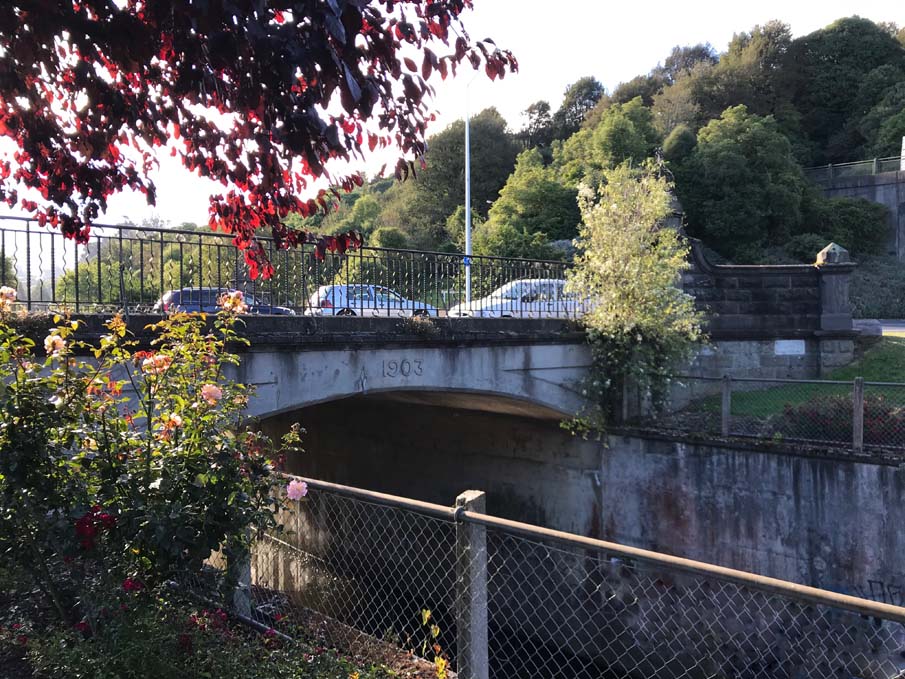
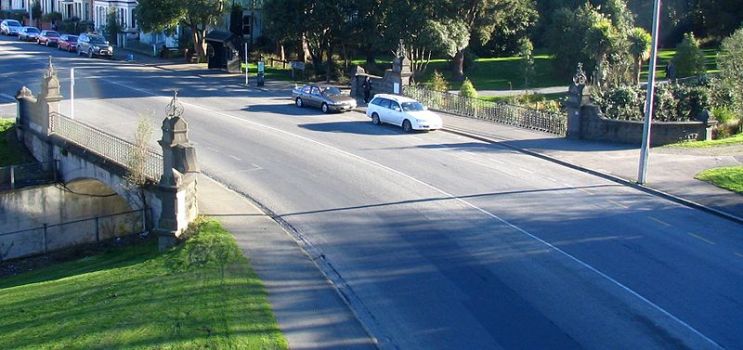
George Street Bridge is located in the far north of the Willowbank Heritage Precinct over the Water of the Leith and was constructed in 1903. The bridge has historic, technological, and aesthetic significance as the first reinforced concrete arch bridge in New Zealand and is important to the streetscape of historic precinct.
Both iwi history and archaeological evidence show Māori occupation in the Ōtākou / Otago region since the 12th century. Today, Kāi Tahu mana whenua is recognised over a large part of Te Wai Pounamu. Kāti Māmoe and Waitaha shared occupation are always acknowledged. The hapū Kai Te Pahi, Kāti Moki, and Kāti Taoka still maintain their presence and responsibility as kaitiaki in this region. Traditional Māori place names include Ōwheo (the Water of Leith), a river that runs in North Dunedin that the bridge crosses, that facilitated travel by waka from the coast to places further inland and the mouth of Ōwheo, known as Te Tutai o Te Matauira, was likely a valuable settlement area for accessing kaimoana and other resources.
By the 1870s Pākehā settlement at this end of George Street saw the value of the easy access to fresh water from the Water of the Leith and breweries and flour mills were established in the area. By 1900, residents were calling for a connection from Pine Hill and the north end of Dunedin to the northern end of George Street and were demanding a substantial traffic bridge.
Proclaimed in 1903 as the first concrete arch bridge in the colony, Dunedin's George Street Bridge is a landmark in the history of bridge design in New Zealand. The designer was John Rogers recently appointed City Engineer for Dunedin. Rodgers recommended Monier construction, recently used in Australia from where he’d last been employed, which involved iron netting in cement mortar, which would be light, strong, inexpensive and durable. This was the first time Monier construction had been used as a bridge in New Zealand. Other projects such as the Musselburgh Pumping Station works and major drainage works in South Dunedin and central city in 1903-4 also went on to use the Monier construction. The plans were described as a “very pretty bridge… and should prove quite an ornament to the City”. The tender was won by A. Ferry. The Water of the Leith course was changed for a small distance by the bridge.
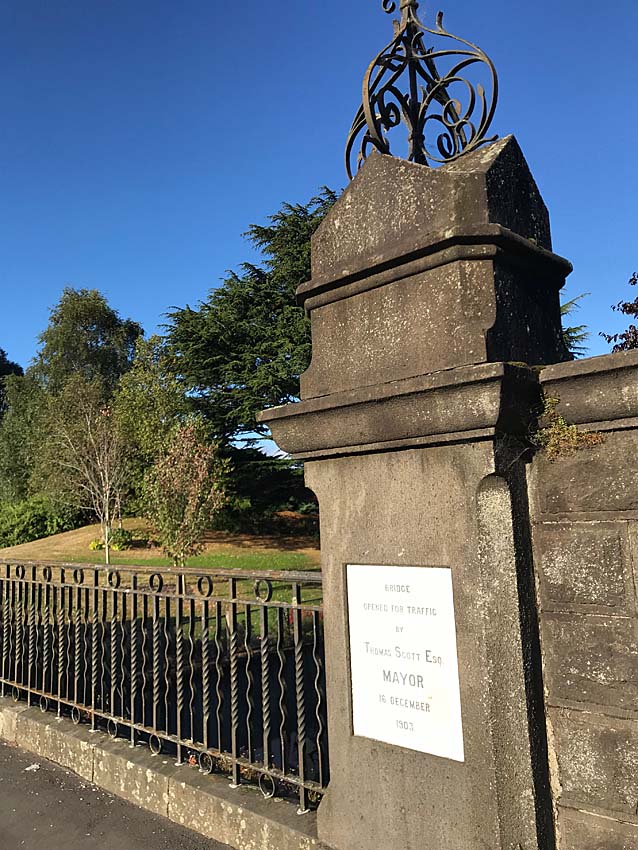
The walls of the bridge are constructed of Port Chalmers breccia with Timaru stone moulding panel with Kokonga granite for the pillar bases and cap mouldings. Wrought iron ornamental railing is in the stone base with four ornamental wrought iron lamps on four large pillars, that were lit by electric light from 1903. The arch was constructed on the 9 December 1902.
The new bridge enabled a new tram line to be established along George Street and the first sod was turned in a ceremony immediately after an inscribed tablet was inserted into the foundation stone of the George Street Bridge. The banks of the Leith were planted out in willows to add “beauty in years to come”. The bridge officially opened with the northern section of the Electric Tramways, the first concrete bridge of Monier construction in New Zealand. Guests of a luncheon took six trams to the George Street bridge where the Mayor unveiled a marble tablet and declared the bridge open for traffic. The bridge is a pioneer example of engineering technology along with significant historical and aesthetic values and is still used as a traffic bridge today.