

Dunedin City Council building permits indicate that this house was built for Donald McPherson in 1902. Donald McPherson (c.1838-1923) was a Dunedin custom’s officer. McPherson lived in the house till his death.
Architect James Louis Salmond (1868-1950) was born in North Shields, England. He was educated at Otago Boys' High School and began his career articled to Robert Arthur Lawson (1833-1902). Salmond initially practised on his own account but later rejoined Lawson in partnership. Salmond took over the practice when Lawson died in 1902.
Salmond was the architect of over 20 churches in Otago including the Presbyterian churches at Roslyn, Kaikorai, North Dunedin and the Wesleyan church at Mornington. He designed many private residences including Watson Shennan's house at 367 High Street, as well as those at 114 Cargill Street and 14 Pitt Street, all in Dunedin. Salmond was president of the Otago Art Society, and also served a term as president of the New Zealand Institute of Architects. His son Arthur joined the firm having studied in London and his grandson John continues to work in the firm today. It is now known as Salmond Anderson Architects. The house was built by Richard Torrance.
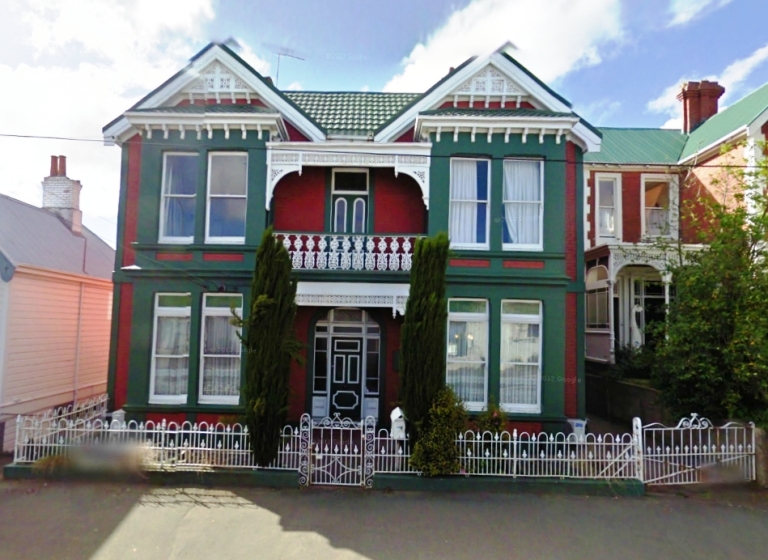
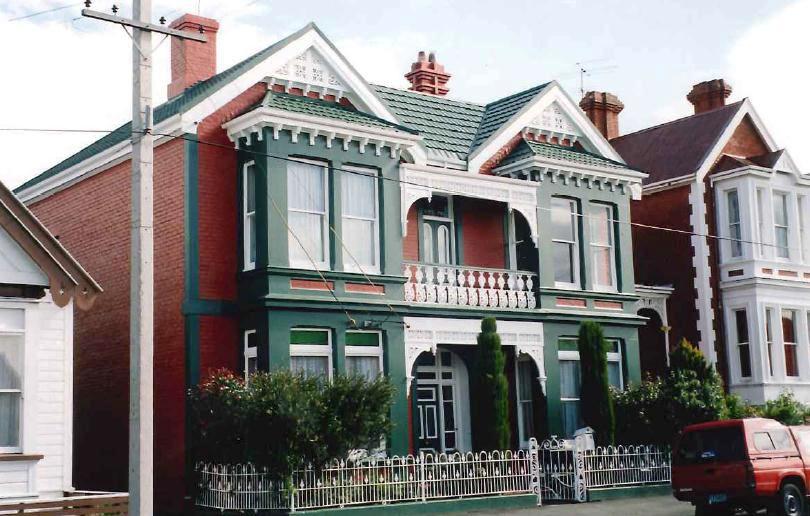
Plans show a generous two-storey double-bay brick villa with a drawing room, dining room and breakfast room (and service rooms) on the ground floor, and four bedrooms on the first floor. Decorative elements on the façade include cast iron lace, brackets under the eaves and half-timbering on the gable ends. To the street front is a wrought iron fence, adding to the house’s street presence. In 2016, the house remains a private residence.
List Entry Information
Status
Listed
List Entry Status
Historic Place Category 2
Access
Private/No Public Access
List Number
2175
Date Entered
2nd July 1982
Date of Effect
2nd July 1982
City/District Council
Dunedin City
Region
Otago Region
Extent of List Entry
Extent includes the land described as Pt Secs 44-45 Blk II Town of Dunedin (RT OT262/147), Otago Land District, and the building known as the McPherson Residence (Former), thereon.
Legal description
Pt Secs 44- 45 Blk II Town of Dunedin (RT OT262/147), Otago Land District
Status
Listed
List Entry Status
Historic Place Category 2
Access
Private/No Public Access
List Number
2175
Date Entered
2nd July 1982
Date of Effect
2nd July 1982
City/District Council
Dunedin City
Region
Otago Region
Extent of List Entry
Extent includes the land described as Pt Secs 44-45 Blk II Town of Dunedin (RT OT262/147), Otago Land District, and the building known as the McPherson Residence (Former), thereon.
Legal description
Pt Secs 44- 45 Blk II Town of Dunedin (RT OT262/147), Otago Land District
Construction Professional
Name
Richard Torrence
Type
Builder
Biography
Richard Torrance (c. 1854-1911) was a Scottish-born Dunedin builder.
Name
Salmond, James Louis
Type
Architect
Biography
James Louis Salmond (1868-1950) was born in North Shields, England. He was educated at Otago Boys' High School and began his career articled to Robert Arthur Lawson (1833-1902). Salmond initially practised on his own account but later rejoined Lawson in partnership. Salmond took over the practice when Lawson died in 1902. Salmond was the architect of over 20 churches in Otago including the Presbyterian churches at Roslyn, Kaikorai, North Dunedin and the Wesleyan church at Mornington. He designed many private residences including Watson Shennan's house at 367 High Street, as well as those at 114 Cargill Street and 14 Pitt Street, all in Dunedin. Salmond was president of the Otago Art Society, and also served a term as president of the New Zealand Institute of Architects. His son Arthur joined the firm having studied in London and his grandson John continues to work in the firm today. It is now known as Salmond Anderson Architects.
Construction Details
Start Year
1902
Type
Original Construction
Construction Professional
Name
Richard Torrence
Type
Builder
Biography
Richard Torrance (c. 1854-1911) was a Scottish-born Dunedin builder.
Name
Salmond, James Louis
Type
Architect
Biography
James Louis Salmond (1868-1950) was born in North Shields, England. He was educated at Otago Boys' High School and began his career articled to Robert Arthur Lawson (1833-1902). Salmond initially practised on his own account but later rejoined Lawson in partnership. Salmond took over the practice when Lawson died in 1902. Salmond was the architect of over 20 churches in Otago including the Presbyterian churches at Roslyn, Kaikorai, North Dunedin and the Wesleyan church at Mornington. He designed many private residences including Watson Shennan's house at 367 High Street, as well as those at 114 Cargill Street and 14 Pitt Street, all in Dunedin. Salmond was president of the Otago Art Society, and also served a term as president of the New Zealand Institute of Architects. His son Arthur joined the firm having studied in London and his grandson John continues to work in the firm today. It is now known as Salmond Anderson Architects.
Construction Details
Start Year
1902
Type
Original Construction
Historical and Associated Iwi / Hapū / Whānau
Completion Date
29th November 2016
Report Written By
Heather Bauchop
Other Information
This place was identified as significant under previous legislation with different information requirements. It remains significant under the current legislation. There is opportunity under our legislation and policies to add to this information. Further information about this place may be available from the Otago/Southland Office of Heritage New Zealand Pouhere Taonga. Please note that entry on the New Zealand Heritage List/Rarangi Korero identifies only the heritage values of the property concerned, and should not be construed as advice on the state of the property, or as a comment of its soundness or safety, including in regard to earthquake risk, safety in the event of fire, or insanitary conditions. A fully referenced upgrade report is available on request from the Otago/Southland Area Office of Heritage New Zealand.
Historical and Associated Iwi / Hapū / Whānau
Completion Date
29th November 2016
Report Written By
Heather Bauchop
Other Information
This place was identified as significant under previous legislation with different information requirements. It remains significant under the current legislation. There is opportunity under our legislation and policies to add to this information. Further information about this place may be available from the Otago/Southland Office of Heritage New Zealand Pouhere Taonga. Please note that entry on the New Zealand Heritage List/Rarangi Korero identifies only the heritage values of the property concerned, and should not be construed as advice on the state of the property, or as a comment of its soundness or safety, including in regard to earthquake risk, safety in the event of fire, or insanitary conditions. A fully referenced upgrade report is available on request from the Otago/Southland Area Office of Heritage New Zealand.
Current Usages
Uses: Accommodation
Specific Usage: House
Former Usages
General Usage: Accommodation
Specific Usage: House
Current Usages
Uses: Accommodation
Specific Usage: House
Former Usages
General Usage: Accommodation
Specific Usage: House
