

The 1866 building was occupied as Warden's Court from 1866-1876. In October 1876 it was handed over to the control of the postmaster general. The Post Office took up occupancy in 1877, moving from its older building which was situated behind the present one. The building remained the home of the Post Office from 1877 to 1973. In 1973 the Post Office shifted to new premises on Ross Place, and the building was vacated, and has remained largely unoccupied, except for a few short term tenancies since.
By the mid 1970s there was discussion about creating a historic reserve, noting the Post Office's importance to the other historic buildings in the vicinity, notably the adjoining Warden's Court (c.1874-1876), the Lodge St George (1878), the Presbyterian Church (1886) and other associated government buildings on the wider block. The site was reserved for historical purposes in May 1979. The Commissioner of Crown Lands at the time noted that the building was a landmark, "not only in Lawrence, but from the point of view of early New Zealand architecture," and hoped it would be put to good use by the local community. The property was handed over to the NZHPT to administer under the Reserves Act 1977 in mid 1981.
By the mid 1980s the building had remained untenanted and suggestions were made to revoke reserve status and sell it, with a covenant in place to protect it. The Reserve status was revoked, and the building sold into private hands in November 1989. A Heritage Covenant was registered on the building in 1990 (document 760813).
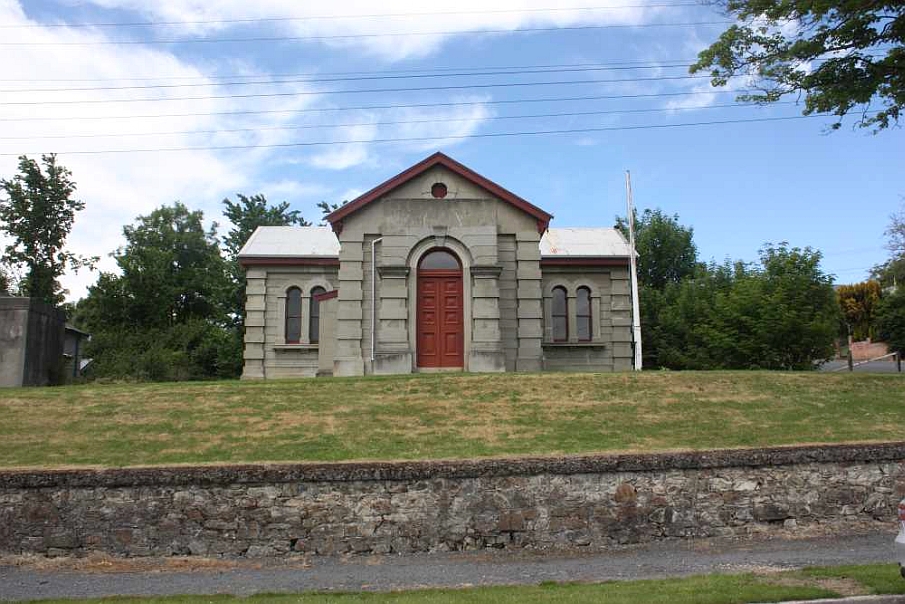
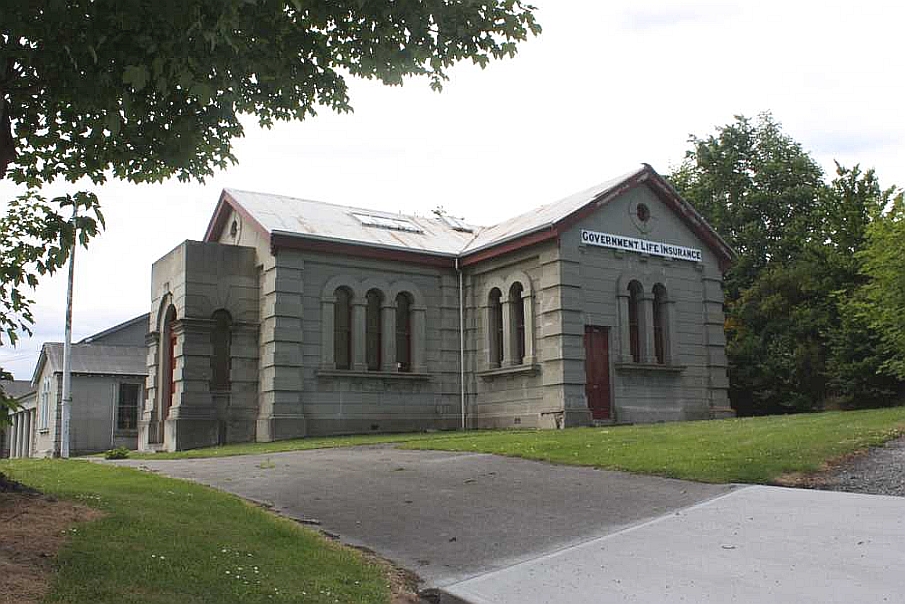
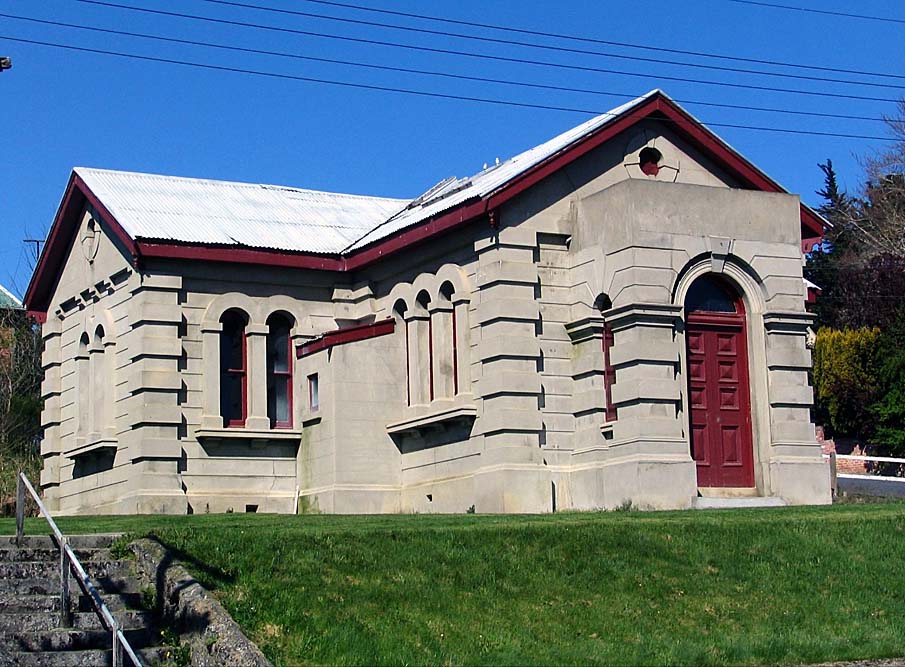
List Entry Information
Status
Listed
List Entry Status
Historic Place Category 2
Access
Private/No Public Access
List Number
2244
Date Entered
2nd April 2004
Date of Effect
2nd April 2004
City/District Council
Clutha District
Region
Otago Region
Legal description
Sec 9 Blk LXVI Town of Lawrence (RT OT13B/61)
Location Description
Located on the corner of Colonsay Street and Peel Street.
Status
Listed
List Entry Status
Historic Place Category 2
Access
Private/No Public Access
List Number
2244
Date Entered
2nd April 2004
Date of Effect
2nd April 2004
City/District Council
Clutha District
Region
Otago Region
Legal description
Sec 9 Blk LXVI Town of Lawrence (RT OT13B/61)
Location Description
Located on the corner of Colonsay Street and Peel Street.
Why is this place significant?
Historic Significance
Historical Significance or Value The Warden's Courts provided an important function in this period of history. Its use as first a Court and then a Post Office (for nearly 100 years) make it an important part of the social functioning of the town and an important part of the town's history.
Physical Significance
Lawrence's first Warden's Court (known as the Post Office) was designed by prominent Dunedin architect Robert Arthur Lawson. It is possibly one of Lawson's earlier surviving buildings, representing the beginning of his distinguished architectural career. In its positioning on a prominent hillside overlooking Lawrence's main street, amidst other Government buildings, and its Italianate style it makes an important architectural contribution to the town. As Warden's Court it was the first substantial Government building to be constructed in the town, and represents the importance of the goldfield's history of the area.
Why is this place Category 1 / Category 2?
Detail Of Assessed Criteria
As the first goldfields Warden's Court this building represents an important aspect of New Zealand history, and shows a strong association with these significant events. The goldfields period with administration provided by the Court was a formative part of the history of Otago and New Zealand as a whole, and Lawrence and nearby Gabriels Gully were the first places in the country to feel the full effect of the rushes. The grandeur of this building in its small township shows the importance of this era as a bringer of wealth and government functions to Tuapeka area. This building has a strong positive association for the community, having operated as a Post Office for close to 100 years, and also because of its prominent position in the townscape. Its value was also recognised in its previous Historic Reserve status, and through the Covenant which remains on the title. The Post Office was originally built as the Warden's Court, and as such it is the earliest such surviving building in the country, clearly identifying a rare building type. The later Wardens Court (1874-1876) on the adjoining section is the only one on the NZHPT register, and the building under discussion predates it by 10 years.
Why is this place significant?
Historic Significance
Historical Significance or Value The Warden's Courts provided an important function in this period of history. Its use as first a Court and then a Post Office (for nearly 100 years) make it an important part of the social functioning of the town and an important part of the town's history.
Physical Significance
Lawrence's first Warden's Court (known as the Post Office) was designed by prominent Dunedin architect Robert Arthur Lawson. It is possibly one of Lawson's earlier surviving buildings, representing the beginning of his distinguished architectural career. In its positioning on a prominent hillside overlooking Lawrence's main street, amidst other Government buildings, and its Italianate style it makes an important architectural contribution to the town. As Warden's Court it was the first substantial Government building to be constructed in the town, and represents the importance of the goldfield's history of the area.
Why is this place Category 1 / Category 2?
Detail Of Assessed Criteria
As the first goldfields Warden's Court this building represents an important aspect of New Zealand history, and shows a strong association with these significant events. The goldfields period with administration provided by the Court was a formative part of the history of Otago and New Zealand as a whole, and Lawrence and nearby Gabriels Gully were the first places in the country to feel the full effect of the rushes. The grandeur of this building in its small township shows the importance of this era as a bringer of wealth and government functions to Tuapeka area. This building has a strong positive association for the community, having operated as a Post Office for close to 100 years, and also because of its prominent position in the townscape. Its value was also recognised in its previous Historic Reserve status, and through the Covenant which remains on the title. The Post Office was originally built as the Warden's Court, and as such it is the earliest such surviving building in the country, clearly identifying a rare building type. The later Wardens Court (1874-1876) on the adjoining section is the only one on the NZHPT register, and the building under discussion predates it by 10 years.
Construction Professional
Name
Lawson, Robert Arthur
Type
Architect
Biography
Born in Scotland, Lawson (1833-1902) began his professional career in Perth. At the age of 25 he moved to Melbourne and was engaged in goldmining and journalism before resuming architectural practice. In 1862 Lawson sailed for Dunedin, where his sketch plans had won the competition for the design of First Church. This was built 1867-73. Lawson went on to become one of the most important architects in New Zealand. First Church is regarded as his masterpiece and one of the finest nineteenth century churches in New Zealand. He was also responsible for the design of the Trinity Church (now Fortune Theatre), Dunedin (1869-70), the East Taieri Presbyterian Church (1870), and Knox Church, Dunedin (1874). He designed Park's School (1864) and the ANZ Bank (originally Union Bank, 1874). In Oamaru he designed the Bank of Otago (later National Bank building, 1870) and the adjoining Bank of New South Wales (now Forrester Gallery, 1881). See also: Ledgerwood, Norman, 2013. 'R.A. Lawson: Victorian Architect of Dunedin'. Historic Cemeteries Conservation NZ.
Construction Details
Start Year
1866
Type
Original Construction
Construction Materials
The Lawrence Post Office, built as the Warden's Court, is one of Lawson's earlier surviving buildings. It is of Italianate style, constructed of brick and plaster, with an iron roof.
Construction Professional
Name
Lawson, Robert Arthur
Type
Architect
Biography
Born in Scotland, Lawson (1833-1902) began his professional career in Perth. At the age of 25 he moved to Melbourne and was engaged in goldmining and journalism before resuming architectural practice. In 1862 Lawson sailed for Dunedin, where his sketch plans had won the competition for the design of First Church. This was built 1867-73. Lawson went on to become one of the most important architects in New Zealand. First Church is regarded as his masterpiece and one of the finest nineteenth century churches in New Zealand. He was also responsible for the design of the Trinity Church (now Fortune Theatre), Dunedin (1869-70), the East Taieri Presbyterian Church (1870), and Knox Church, Dunedin (1874). He designed Park's School (1864) and the ANZ Bank (originally Union Bank, 1874). In Oamaru he designed the Bank of Otago (later National Bank building, 1870) and the adjoining Bank of New South Wales (now Forrester Gallery, 1881). See also: Ledgerwood, Norman, 2013. 'R.A. Lawson: Victorian Architect of Dunedin'. Historic Cemeteries Conservation NZ.
Construction Details
Start Year
1866
Type
Original Construction
Construction Materials
The Lawrence Post Office, built as the Warden's Court, is one of Lawson's earlier surviving buildings. It is of Italianate style, constructed of brick and plaster, with an iron roof.
The building was originally designed in 1866 as the Warden's Court by Dunedin architect Robert Arthur Lawson (1833-1902). Scottish born Lawson started his professional career in Melbourne in 1861. After winning the design competition for the First Church of Otago in Dunedin, he set up practice in that city in June 1862. He was pre-eminently a church architect, designing and superintending the construction of over forty churches. He also designed other notable buildings in Otago such as the Dunedin Municipal Chambers (1878-1880) and Otago Boys High School (1882-1884) as well as the now demolished Seacliff Lunatic Asylum (1879-84). After Seacliff Asylum was condemned and Lawson disgraced he returned to Melbourne in 1890. He returned to Dunedin in October 1900, dying two years later.
The building was originally designed in 1866 as the Warden's Court by Dunedin architect Robert Arthur Lawson (1833-1902). Scottish born Lawson started his professional career in Melbourne in 1861. After winning the design competition for the First Church of Otago in Dunedin, he set up practice in that city in June 1862. He was pre-eminently a church architect, designing and superintending the construction of over forty churches. He also designed other notable buildings in Otago such as the Dunedin Municipal Chambers (1878-1880) and Otago Boys High School (1882-1884) as well as the now demolished Seacliff Lunatic Asylum (1879-84). After Seacliff Asylum was condemned and Lawson disgraced he returned to Melbourne in 1890. He returned to Dunedin in October 1900, dying two years later.
Historical and Associated Iwi / Hapū / Whānau
Completion Date
7th September 2004
Report Written By
Heather Bauchop
Information Sources
Dictionary of New Zealand Biography
Dictionary of New Zealand Biography
New Zealand Historic Places Trust (NZHPT)
New Zealand Historic Places Trust
Other Information
NZHPT Heritage Covenant (13Aug90). Please note that entry on the New Zealand Heritage List/Rarangi Korero identifies only the heritage values of the property concerned, and should not be construed as advice on the state of the property, or as a comment of its soundness or safety, including in regard to earthquake risk, safety in the event of fire, or insanitary conditions.
Historical and Associated Iwi / Hapū / Whānau
Completion Date
7th September 2004
Report Written By
Heather Bauchop
Information Sources
Dictionary of New Zealand Biography
Dictionary of New Zealand Biography
New Zealand Historic Places Trust (NZHPT)
New Zealand Historic Places Trust
Other Information
NZHPT Heritage Covenant (13Aug90). Please note that entry on the New Zealand Heritage List/Rarangi Korero identifies only the heritage values of the property concerned, and should not be construed as advice on the state of the property, or as a comment of its soundness or safety, including in regard to earthquake risk, safety in the event of fire, or insanitary conditions.
Current Usages
Uses: Vacant
Specific Usage: Vacant
Former Usages
General Usage: Communication
Specific Usage: Post Office
Current Usages
Uses: Vacant
Specific Usage: Vacant
Former Usages
General Usage: Communication
Specific Usage: Post Office
Location
Sign up to hear more
Get the latest heritage news, features and events delivered
straight to your inbox.
