DonateMembershipVisit Heritage
  • Tūrangawaewae
    Places
  • Tira Māori
    Māori Heritage
  • Poutairangahia
    Archaeology
  • Rauemi
    Resources
  • Mō Tātou
    About Us
  • New Zealand Heritage List
  • Nominate and submit
  • Explore the List
  • National Historic Landmarks
  • Plaques
  • Rainbow List Project
  • Lost heritage
  • Visit Heritage
  • Our properties
  • Turnbull House Project
  • Collections
  • Shop
  • Tohu Whenua
  • Tira Māori
  • Conserving Māori heritage
  • Marae built heritage
  • Māori heritage on the List
  • Hinemihi—Te Hokinga Mai
  • What is archaeology?
  • Is there a site on my property?
  • What are my legal requirements?
  • Affecting an archaeological site
  • Declaring an archaeological site
  • Archaeology FAQs
  • Archaeology Digital Library
  • Archaeology guidelines and templates
  • Resources
  • Funding
  • Publications
  • Sustainable management guides
  • Disaster recovery
  • Podcasts & digital resources
  • Education Hub
  • Conservation plans
  • About
  • Board
  • Māori Heritage Council
  • Senior Staff
  • Offices
  • Contact us
  • Careers
  • Covenants
  • Fast-track
  • Corporate documents
  • Currently consulting on
  • Our submissions
  • News
  • Covid-19 response
Quick links
Rārangi Kōrero | The List
Explore the List
National Historic Landmarks
Ngā Manawhenua o Aotearoa me ōna Kōrero Tūturu
Quick links
Tapuwae
A Vision for Places of Māori Heritage
Funding for Māori Heritage
Resources
Quick links
Archaeological Authority Portal
Applying for an archaeological authority
Archaeology FAQs
Browse the most frequently asked questions about archaeological authorities and the archaeological process.
Quick links
Quick links
Contact us
Offices
DonateMembershipVisit Heritage
  • Tūrangawaewae
    Places
  • Tira Māori
    Māori Heritage
  • Poutairangahia
    Archaeology
  • Rauemi
    Resources
  • Mō Tātou
    About Us
  • New Zealand Heritage List
  • Nominate and submit
  • Explore the List
  • National Historic Landmarks
  • Plaques
  • Rainbow List Project
  • Lost heritage
  • Visit Heritage
  • Our properties
  • Turnbull House Project
  • Collections
  • Shop
  • Tohu Whenua
  • Tira Māori
  • Conserving Māori heritage
  • Marae built heritage
  • Māori heritage on the List
  • Hinemihi—Te Hokinga Mai
  • What is archaeology?
  • Is there a site on my property?
  • What are my legal requirements?
  • Affecting an archaeological site
  • Declaring an archaeological site
  • Archaeology FAQs
  • Archaeology Digital Library
  • Archaeology guidelines and templates
  • Resources
  • Funding
  • Publications
  • Sustainable management guides
  • Disaster recovery
  • Podcasts & digital resources
  • Education Hub
  • Conservation plans
  • About
  • Board
  • Māori Heritage Council
  • Senior Staff
  • Offices
  • Contact us
  • Careers
  • Covenants
  • Fast-track
  • Corporate documents
  • Currently consulting on
  • Our submissions
  • News
  • Covid-19 response
Quick links
Rārangi Kōrero | The List
Explore the List
National Historic Landmarks
Ngā Manawhenua o Aotearoa me ōna Kōrero Tūturu
Quick links
Tapuwae
A Vision for Places of Māori Heritage
Funding for Māori Heritage
Resources
Quick links
Archaeological Authority Portal
Applying for an archaeological authority
Archaeology FAQs
Browse the most frequently asked questions about archaeological authorities and the archaeological process.
Quick links
Quick links
Contact us
Offices
  • Places
  • Nominate and submit
  • National Historic Landmarks
  • Places
  • Nominate and submit
  • National Historic Landmarks
  • Tira Māori
  • Conserving Māori heritage
  • Marae built heritage
  • Tira Māori
  • Conserving Māori heritage
  • Marae built heritage
  • Archaeological authorities
  • Archaeology Digital Library
  • Archaeological authorities
  • Archaeology Digital Library
  • All resources
  • Publications
  • Funding
  • All resources
  • Publications
  • Funding
  • FAQs
  • FAQs
Follow us on:
Places
  • Places
  • Nominate and submit
  • National Historic Landmarks
Tira Māori
  • Tira Māori
  • Conserving Māori heritage
  • Marae built heritage
Archaeology
  • Archaeological authorities
  • Archaeology Digital Library
Resources
  • All resources
  • Publications
  • Funding
FAQs
  • FAQs
Follow us on
HomePrivacyTerms and conditionsAbout this site
© Heritage New Zealand Pouhere Taonga 2026.
 
St Gerard's Monastery

73-75 Hawker Street and Moeller Street and Oriental Terrace, Mt Victoria, WELLINGTON

Private

Historic Place Category 1

List No. 227

Quick links:
List GalleryLocationDetails
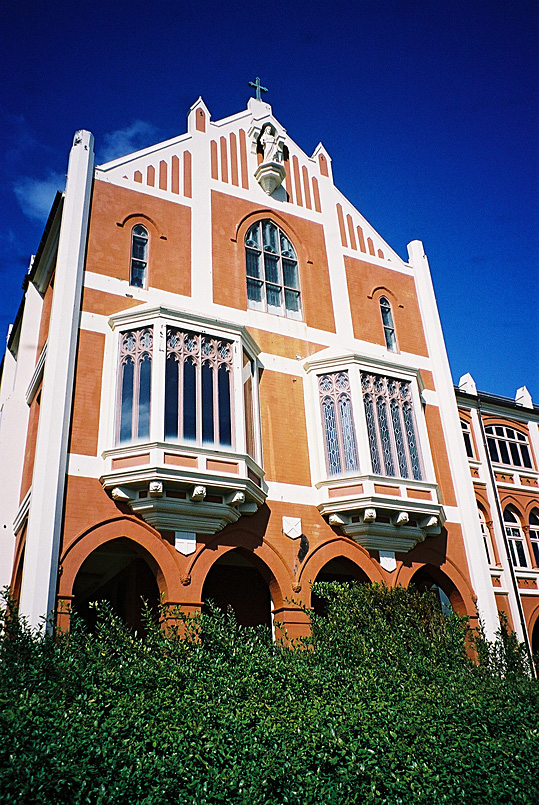
From its commanding site overlooking Wellington Harbour, St Gerard's Monastery has, since 1932, served as a symbol of spiritual strength and service. Funded by public donations collected in the middle of the Great Depression, the building was originally constructed as a home for the Redemptorists, members of the Congregation of the Most Holy Redeemer. The Redemptorists, who first arrived in New Zealand in 1883, required a base from which they could travel the country inspiring Catholics to find a deeper faith. The monastery was built on the site of the Redemptorists' former homestead, which was originally home to one-time Auditor and Controller General James Fitzgerald. It was cleverly integrated into the church that was erected on the site in 1908. The three storied monastery allowed the priests to accommodate guests and hold retreats and missions on a greater scale than had been possible before and its construction reflects a strengthening of the Redemptorist's commitment to New Zealand.

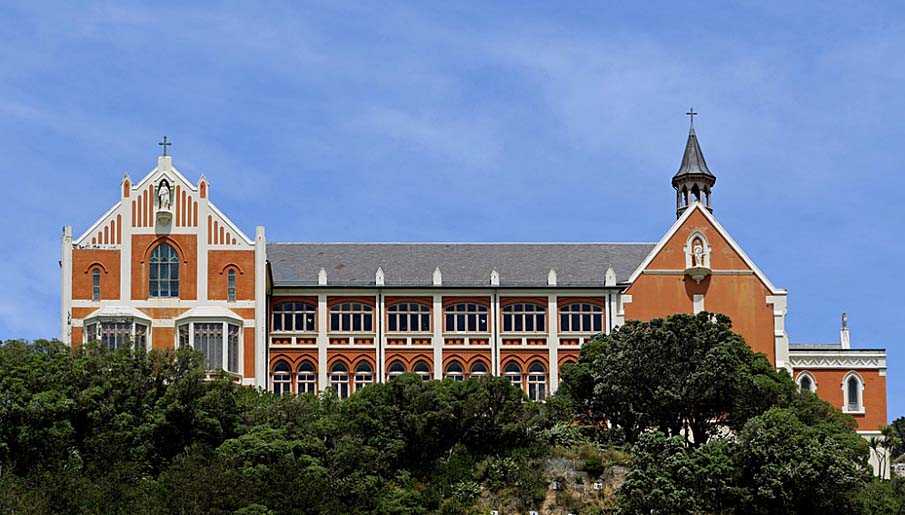
The monastery was designed by Frederick de Jersey Clere, a well-known architect responsible for designing St Mary's of the Angels in Boulcott Street, where the Redemptorists had held many of their early missions. Built as an extension of the church, the eastern gable of the monastery mimics the structure and form of the church, giving the complex a balanced composition. The strong horizontal and vertical grid of the concrete post and beam structure is accentuated by red, brickwork arches of the cloisters and add drama to the building. Its Gothic pinnacles, pointed arches, and the lancet windows decorated with quatrefoils and trefoils, reflect the decorative elements used in the Church.

To comply with city council regulations, the building structure was composed of reinforced concrete and clad in brick veneer. Inside the monastery decoration was kept to a minimum, creating a severe yet dignified space. Heart timber was used for the doors, window frames and floors while the wall surface was generally of concrete covered with plaster. Bedrooms for the Redemptorists and guests originally occupied the first and second floors, together with living facilities such as a private chapel, oratory, library and parlour. The ground floor was used for storage and utilitarian rooms such as the kitchen and laundry. The workmanship and materials used in the building are of a very high standard and the design appropriately religious.

Other than changes made for decorative or safety reasons, the monastery has had only two major changes. The first was the enclosure of the cloisters on the first and second floors, to block out the high Wellington winds. The second, and more dramatic, alteration was the demolition of the original entrance, removed to make way for a car park in 1971 when the Church became a parish. It is a reflection of the attempts made by the Redemptorists during this period to cater more for their local congregation.

The monastery continued to serve the Redemptorists until 1988, when increasing rates and declining numbers forced them to sell the property. The proposed sale of the building raised considerable concerns within the Wellington community about its future. However, the strong spiritual role of the building was retained when the International Catholic Programme of Evangelisation (ICPE) purchased it for use as a retreat and training centre for evangelist missionaries in 1992. In recognition of the monastery's importance as a historic landmark, the Wellington City Council purchased land in front of the monastery to prevent it being obscured by new buildings. The new owners have entered into a heritage covenant that secures the future of St Gerard's Monastery until at least 2012.

The highly visible and dramatic siting of St Gerard's Monastery on a cliff above Oriental Bay makes the building one of Wellington's most distinctive and significant landmarks, and a feature of many Wellington paintings and postcards. The seamless conjoining of the monastery to the church greatly adds to the aesthetic significance of the building and reflects the close and continuing social connection between them. The building was designed by the nationally renowned architect, Frederick de Jersey Clere, a pioneer of the reinforced concrete construction of which the Monastery is composed. The materials and workmanship evident in the building are of exceptionally high quality.

Largely authentic in appearance, the monastery is highly esteemed by the public. Throughout its history, considerable measures have been taken to preserve the building, culminating in the heritage covenant signed by its current owners in 1993. The building has both national and international historical significance through its connections with the Catholic Church. As the first purpose-built monastery established by the Redemptorists in New Zealand the building reflects the strengthening of their position in this country. It is also the first mission centre established by ICPE in New Zealand. Its continuing use as a centre for the work of the Catholic Church gives the building a strong spiritual significance.
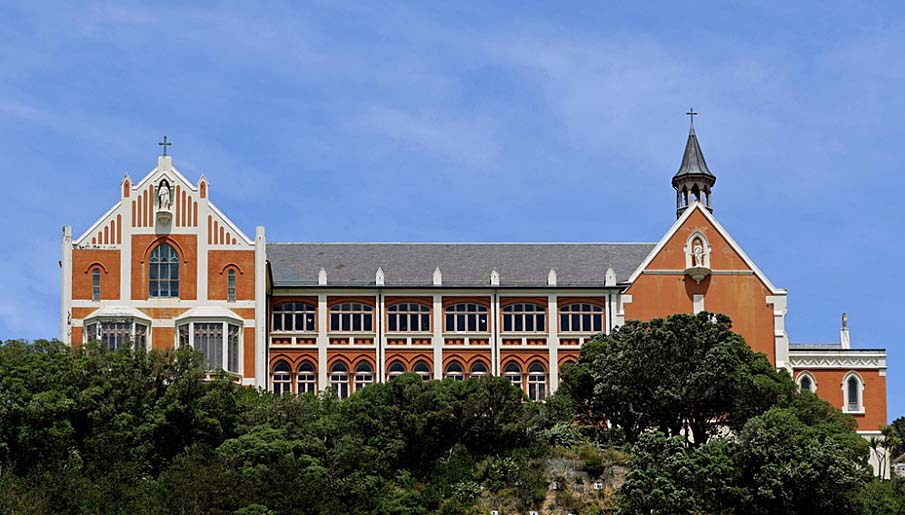
St Gerard's Monastery, Wellington. Image courtesy of www.flickr.com | Minicooperd – Paul Le Roy | 05/12/2015 | Paul Le Roy
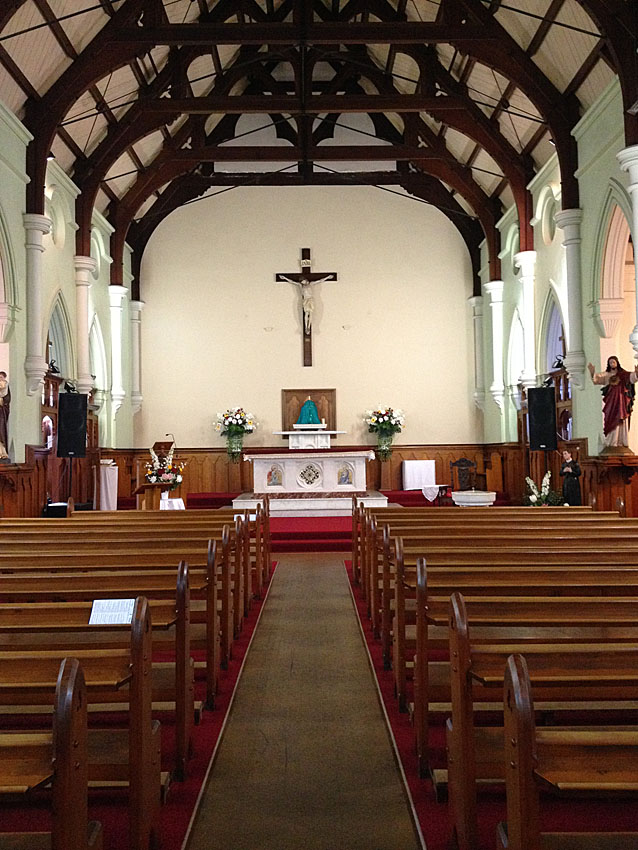
St Gerard's Monastery, Wellington | 20/09/2002 | Heritage New Zealand
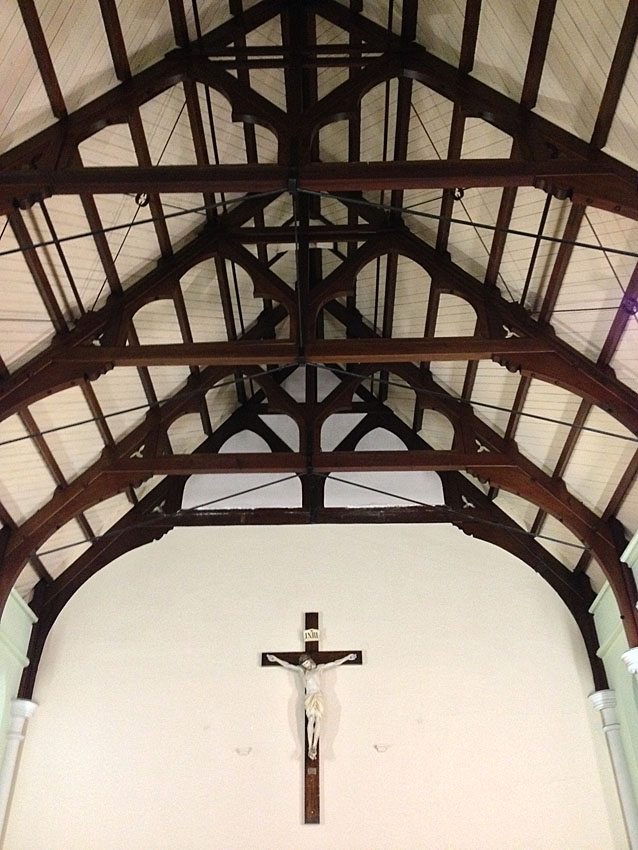
St Gerard's Monastery, Wellington | Tatum Hoskin | 17/10/2019 | Heritage New Zealand
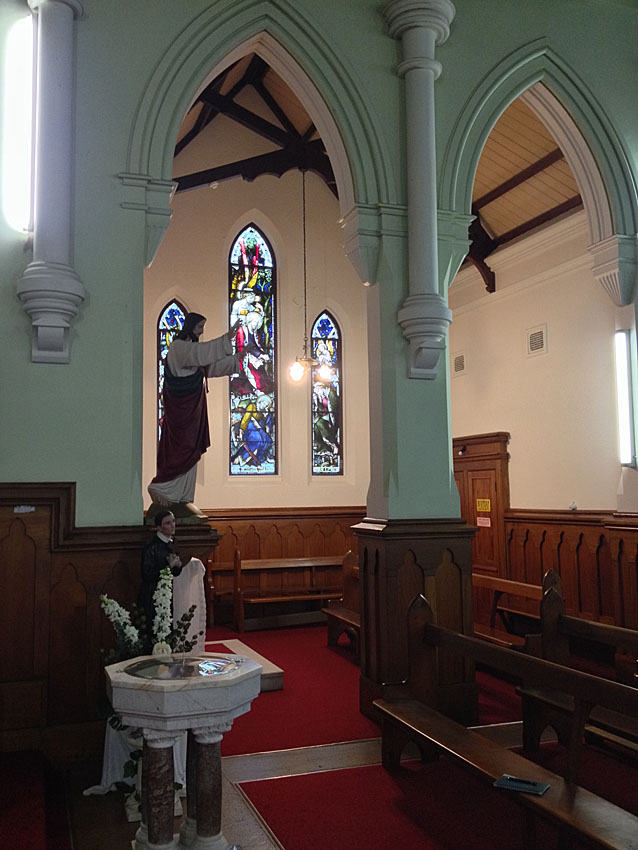
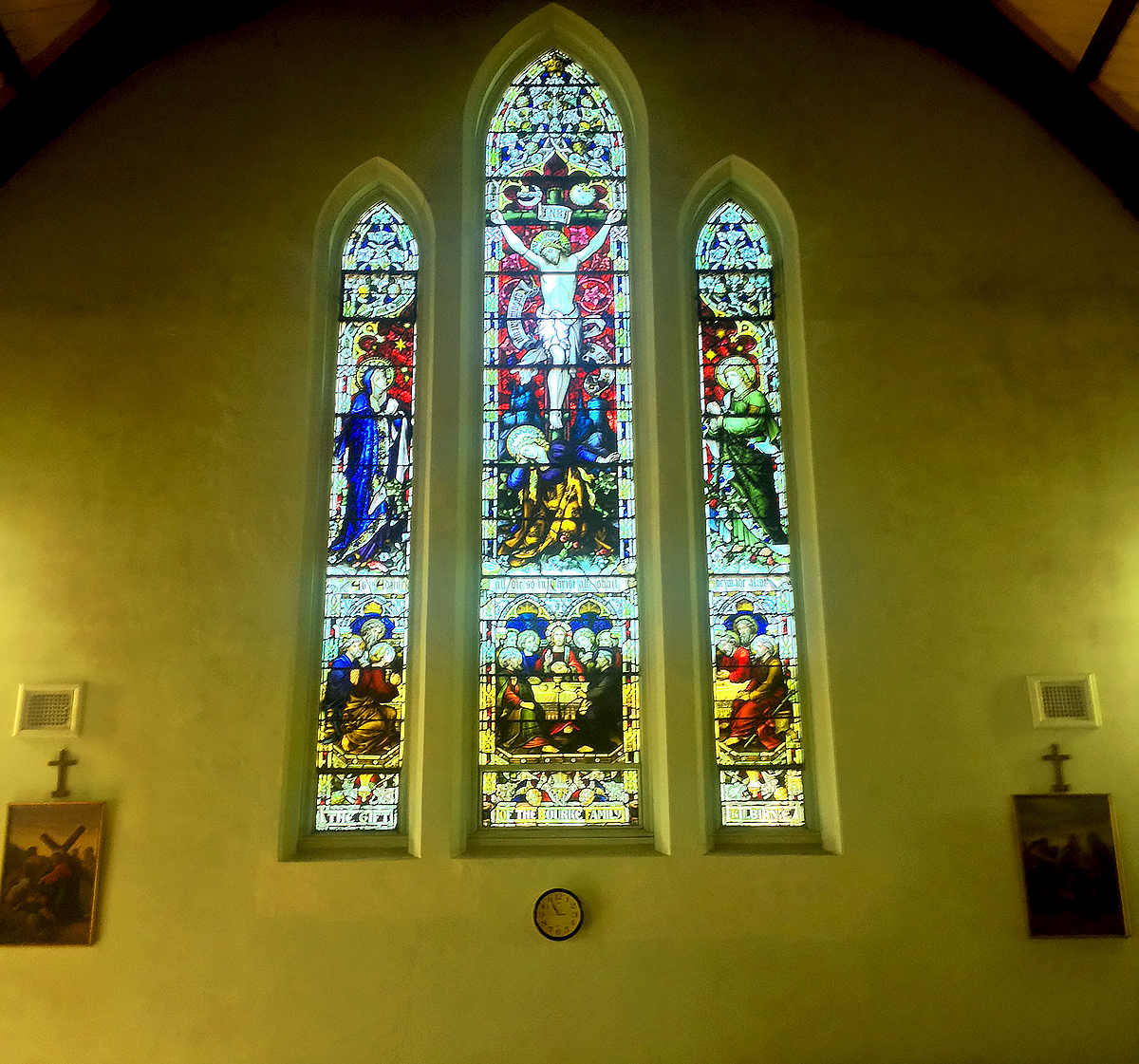
St Gerard's Monastery, Wellington. Stained glass window | Tatum Hoskin | 28/10/2017 | Heritage New Zealand
St Gerard's Monastery, Wellington. Image courtesy of www.flickr.com | Minicooperd – Paul Le Roy | 05/12/2015 | Paul Le Roy
St Gerard's Monastery, Wellington | 20/09/2002 | Heritage New Zealand
St Gerard's Monastery, Wellington | Tatum Hoskin | 17/10/2019 | Heritage New Zealand
St Gerard's Monastery, Wellington. Stained glass window | Tatum Hoskin | 28/10/2017 | Heritage New Zealand

List Entry Information

Overview

Status
Listed

List Entry Status
Historic Place Category 1

Access
Private/No Public Access

List Number
227

Date Entered
5th April 1984

Date of Effect
5th April 1984

City/District Council
Wellington City

Region
Wellington Region

Legal description

Lot 3 DP 76510 (RT WN42D/685), Wellington Land District

Location Description

75 Hawker Street, Mount Victoria, Wellington

Detailed List Entry

Construction Professional

Name

Clere, Frederick De Jersey

Type

Architect

Biography

Clere (1856-1952) was born in Lancashire, the son of an Anglican clergyman, and was articled to Edmund Scott, an ecclesiastical architect of Brighton. He then became chief assistant to R J Withers, a London architect. Clere came to New Zealand in 1877, practising first in Feilding and then in Wanganui. He later came to Wellington and practised there for 58 years. He was elected a Fellow of the Royal Institute of British Architects in 1886 and held office for 50 years as one of four honorary secretaries in the Empire. In 1883 he was appointed Diocesan Architect of the Anglican Church; he designed more than 100 churches while he held this position. Clere was a pioneer in reinforced concrete construction; the outstanding example of his work with this material is the Church of St Mary of the Angels (1922), Wellington. As well as being pre-eminent in church design, Clere was responsible for many domestic and commercial buildings including Wellington's Harbour Board Offices and Bond Store (1891) and Overton in Marton. Clere was also involved in the design of large woolsheds in Hawkes Bay and Wairarapa. He was active in the formation of the New Zealand Institute of Architects and served on their council for many years. He was a member of the Wellington City Council until 1895, and from 1900 a member of the Wellington Diocesan Synod and the General Synod. He was also a member of the New Zealand Academy of Fine Arts.

Construction Details

Start Year

1931

Finish Year

1932

Type

Original Construction

Start Year

1971

Type

Modification

Description

Part of front entrance demolished

Start Year

1971

Type

Addition

Description

Car park built

Construction Materials

Composed of reinforced concrete and clad in a brick veneer. The building features red, brickwork arches, Gothic pinnacles and lancet windows.

Notable Features

Cliff site, created when much of the hill was removed during the Te Aro reclamation. Manner in which the monastery was integrated with the church building. External façade.

Reference

Completion Date

5th October 2002

Report Written By

Rebecca O'Brien

Information Sources

Duggan, 1965

E. Duggan, Diamond Jubilee of St Gerard's Monastery & Church, Wellington, 1965

Kearney, 1997

P. Kearney, Bounteous Redemption; The Redemptorists in New Zealand 1883-1983, Auckland, 1997

Conservation Plan

Conservation Plan

Report Written By

This place was identified as significant under previous legislation with different information requirements. It remains significant under the current legislation. There is opportunity under our legislation and policies to add to this information. Further information about this place may be available from the Central Regional Office of Heritage New Zealand Pouhere Taonga. A fully referenced version of this report is available from the Central Region, New Zealand Historic Places Trust Please note that entry on the New Zealand Heritage List/Rarangi Korero identifies only the heritage values of the property concerned, and should not be construed as advice on the state of the property, or as a comment of its soundness or safety, including in regard to earthquake risk, safety in the event of fire, or insanitary conditions.

Further Information

Current Usages

Uses: Accommodation

Specific Usage: Boarding/ Guest House

Uses: Religion

Specific Usage: Religious Retreat

Former Usages

Themes

Web Links

Overview

Status

Listed

List Entry Status

Historic Place Category 1

Access

Private/No Public Access

List Number

227

Date Entered

5th April 1984

Date of Effect

5th April 1984

City/District Council

Wellington City

Region

Wellington Region

Legal description

Lot 3 DP 76510 (RT WN42D/685), Wellington Land District

Location Description

75 Hawker Street, Mount Victoria, Wellington

Status

Listed

List Entry Status

Historic Place Category 1

Access

Private/No Public Access

List Number

227

Date Entered

5th April 1984

Date of Effect

5th April 1984

City/District Council

Wellington City

Region

Wellington Region

Legal description

Lot 3 DP 76510 (RT WN42D/685), Wellington Land District

Location Description

75 Hawker Street, Mount Victoria, Wellington

Construction Information

Construction Professional

Name

Clere, Frederick De Jersey

Type

Architect

Biography

Clere (1856-1952) was born in Lancashire, the son of an Anglican clergyman, and was articled to Edmund Scott, an ecclesiastical architect of Brighton. He then became chief assistant to R J Withers, a London architect. Clere came to New Zealand in 1877, practising first in Feilding and then in Wanganui. He later came to Wellington and practised there for 58 years. He was elected a Fellow of the Royal Institute of British Architects in 1886 and held office for 50 years as one of four honorary secretaries in the Empire. In 1883 he was appointed Diocesan Architect of the Anglican Church; he designed more than 100 churches while he held this position. Clere was a pioneer in reinforced concrete construction; the outstanding example of his work with this material is the Church of St Mary of the Angels (1922), Wellington. As well as being pre-eminent in church design, Clere was responsible for many domestic and commercial buildings including Wellington's Harbour Board Offices and Bond Store (1891) and Overton in Marton. Clere was also involved in the design of large woolsheds in Hawkes Bay and Wairarapa. He was active in the formation of the New Zealand Institute of Architects and served on their council for many years. He was a member of the Wellington City Council until 1895, and from 1900 a member of the Wellington Diocesan Synod and the General Synod. He was also a member of the New Zealand Academy of Fine Arts.

Construction Details

Start Year

1931

Finish Year

1932

Type

Original Construction

Start Year

1971

Type

Modification

Description

Part of front entrance demolished

Start Year

1971

Type

Addition

Description

Car park built

Construction Materials

Composed of reinforced concrete and clad in a brick veneer. The building features red, brickwork arches, Gothic pinnacles and lancet windows.

Notable Features

Cliff site, created when much of the hill was removed during the Te Aro reclamation. Manner in which the monastery was integrated with the church building. External façade.

Construction Professional

Name

Clere, Frederick De Jersey

Type

Architect

Biography

Clere (1856-1952) was born in Lancashire, the son of an Anglican clergyman, and was articled to Edmund Scott, an ecclesiastical architect of Brighton. He then became chief assistant to R J Withers, a London architect. Clere came to New Zealand in 1877, practising first in Feilding and then in Wanganui. He later came to Wellington and practised there for 58 years. He was elected a Fellow of the Royal Institute of British Architects in 1886 and held office for 50 years as one of four honorary secretaries in the Empire. In 1883 he was appointed Diocesan Architect of the Anglican Church; he designed more than 100 churches while he held this position. Clere was a pioneer in reinforced concrete construction; the outstanding example of his work with this material is the Church of St Mary of the Angels (1922), Wellington. As well as being pre-eminent in church design, Clere was responsible for many domestic and commercial buildings including Wellington's Harbour Board Offices and Bond Store (1891) and Overton in Marton. Clere was also involved in the design of large woolsheds in Hawkes Bay and Wairarapa. He was active in the formation of the New Zealand Institute of Architects and served on their council for many years. He was a member of the Wellington City Council until 1895, and from 1900 a member of the Wellington Diocesan Synod and the General Synod. He was also a member of the New Zealand Academy of Fine Arts.

Construction Details

Start Year

1931

Finish Year

1932

Type

Original Construction

Start Year

1971

Type

Modification

Description

Part of front entrance demolished

Start Year

1971

Type

Addition

Description

Car park built

Construction Materials

Composed of reinforced concrete and clad in a brick veneer. The building features red, brickwork arches, Gothic pinnacles and lancet windows.

Notable Features

Cliff site, created when much of the hill was removed during the Te Aro reclamation. Manner in which the monastery was integrated with the church building. External façade.

Reference

Historical and Associated Iwi / Hapū / Whānau

Completion Date

5th October 2002

Report Written By

Rebecca O'Brien

Information Sources

Duggan, 1965

E. Duggan, Diamond Jubilee of St Gerard's Monastery & Church, Wellington, 1965

Kearney, 1997

P. Kearney, Bounteous Redemption; The Redemptorists in New Zealand 1883-1983, Auckland, 1997

Conservation Plan

Conservation Plan

Other Information

This place was identified as significant under previous legislation with different information requirements. It remains significant under the current legislation. There is opportunity under our legislation and policies to add to this information. Further information about this place may be available from the Central Regional Office of Heritage New Zealand Pouhere Taonga. A fully referenced version of this report is available from the Central Region, New Zealand Historic Places Trust Please note that entry on the New Zealand Heritage List/Rarangi Korero identifies only the heritage values of the property concerned, and should not be construed as advice on the state of the property, or as a comment of its soundness or safety, including in regard to earthquake risk, safety in the event of fire, or insanitary conditions.

Historical and Associated Iwi / Hapū / Whānau

Completion Date

5th October 2002

Report Written By

Rebecca O'Brien

Information Sources

Duggan, 1965

E. Duggan, Diamond Jubilee of St Gerard's Monastery & Church, Wellington, 1965

Kearney, 1997

P. Kearney, Bounteous Redemption; The Redemptorists in New Zealand 1883-1983, Auckland, 1997

Conservation Plan

Conservation Plan

Other Information

This place was identified as significant under previous legislation with different information requirements. It remains significant under the current legislation. There is opportunity under our legislation and policies to add to this information. Further information about this place may be available from the Central Regional Office of Heritage New Zealand Pouhere Taonga. A fully referenced version of this report is available from the Central Region, New Zealand Historic Places Trust Please note that entry on the New Zealand Heritage List/Rarangi Korero identifies only the heritage values of the property concerned, and should not be construed as advice on the state of the property, or as a comment of its soundness or safety, including in regard to earthquake risk, safety in the event of fire, or insanitary conditions.

Further Information

Current Usages

Uses: Accommodation

Specific Usage: Boarding/ Guest House

Uses: Religion

Specific Usage: Religious Retreat

Current Usages

Uses: Accommodation

Specific Usage: Boarding/ Guest House

Uses: Religion

Specific Usage: Religious Retreat

Location

Loading
Related listings
St Gerard's Church. Image courtesy of www.flickr.com
St Gerard's Church
St Gerard's Church. Image courtesy of www.flickr.com
St Gerard's Church
Sign up to hear more

Get the latest heritage news, features and events delivered
straight to your inbox.

Subscribe