Oamaru Athenaeum and Mechanics Institute (Former)

58-60 Thames Street and Steward Street, OAMARU

Historic Place Category 2

List No. 2272

Quick links:
Standing with classical poise on Thames Street in the North Otago town of Oamaru, the former Oamaru Athenaeum and Mechanic’s Institute which opened in 1882, houses the North Otago Museum. Designed by architect Thomas Forrester whose work has given so much character to Oamaru’s white stone architecture, the building stands as a monument to this early cultural institution.

Mechanic’s Institutes and Athenaeums were established in the nineteenth century as voluntary educational organisations. Athenaeums were essentially subscription libraries, something between a public and a private organisation. Historian David Verran writes ‘by the time of their export to New Zealand in the middle of the nineteenth century, the norm was more to provide a modest library of fiction and some non-fiction, a reading room for newspapers and magazines, and a venue for popular lectures and classes, book readings, selections from plays and light drama and music.’

Significant local identities were associated with the Athenaeum – librarian of four decades H.H. Richmond, historian W.H.S Roberts and K.C. McDonald, as well as poet and businessman George Meek. Architects Thomas Forrester (curator and treasurer of the Institute) and his son architect John Meggett Forrester were on the committee.

By the 1950s it was evident that the growth in population, and therefore library usage meant that new premises would be required. The centennial of Oamaru was celebrated in 1963 and the Library decided that new premises would be their centennial project. It was not until 1974 however that work began on the new library which was officially opened in September 1975. The Pioneer Gallery (to become the North Otago Museum) moved into the ground floor of the Athenaeum, and the Council took over responsibility for the museum.

Built in Neo-Classical style on a prominent corner site on Oamaru’s main street, the Athenaeum and Mechanic’s Institute had many international and national precedents. The Classical style is representative of learning and culture appropriate to the functions of learning institutions, and in the New Zealand context reproduced the ‘reassuring forms and symbols of European civilisation in order to lend its cultural life an air of legitimacy and tradition.’ The building’s ‘strict elevation of detached Ionic and Corinthian columns supporting the triangular pediment provided a deliberate link with Classical Antiquity, identifying the building as the centre of the town’s fledgling cultural activities.’

In 2012 the North Otago Museum continues to tell the local stories and care for the collection, and is, as the Otago Daily Times described it the ‘cultural heart’ of Oamaru, a function it has fulfilled since 1883.
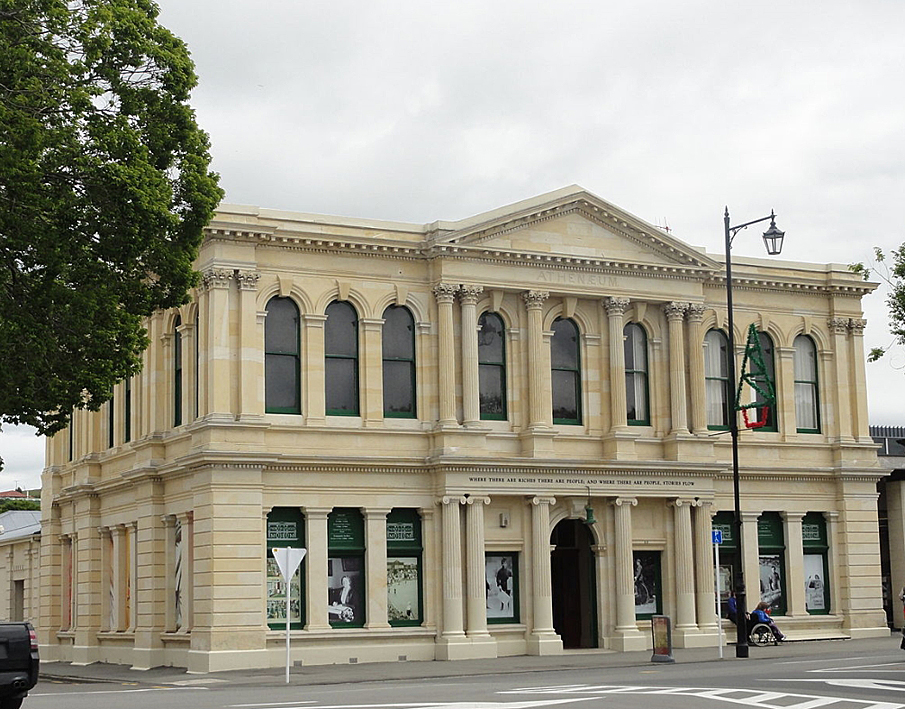
Oamaru Athenaeum and Mechanics Institute (Former). CC Licence 3.0 Image courtesy of commons.wikimedia.org | Andy king50 | 08/12/2011 | Andy king50 - Wikimedia Commons
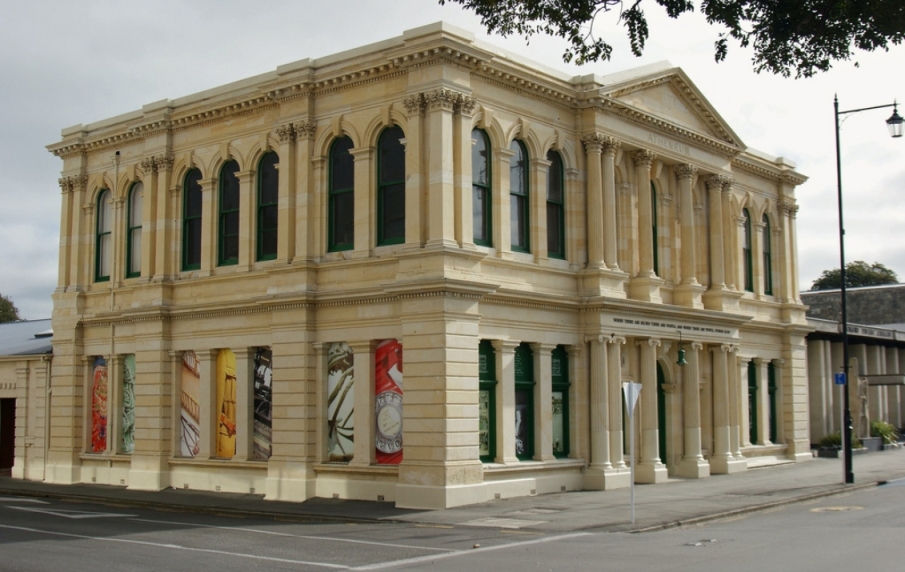
Oamaru Athenaeum and Mechanics Institute (Former). Image courtesy of www.flickr.com | PhilBee NZ - Phil Braithwaite | 09/04/2012 | Phil Braithwaite
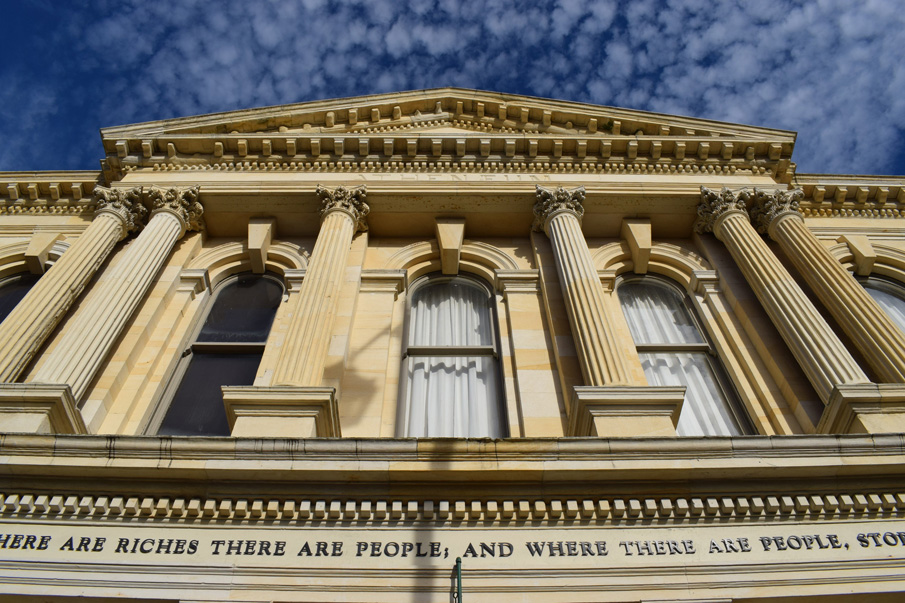
Oamaru Athenaeum and Mechanics Institute (Former). Building detail. Image courtesy of www.jonynz.com | Jonty Crane | 03/02/2017 | Jonty Crane

List Entry Information

Overview

Status

Listed

List Entry Status

Historic Place Category 2

Access

Private/No Public Access

List Number

2272

Date Entered

7th April 1983

Date of Effect

7th April 1983

City/District Council

Waitaki District

Region

Otago Region

Extent of List Entry

Extent includes the land described as Lot 3 DP 19773 (OT65/84, NZ Gazette 1986 p 5198), Otago Land District, and the building known as the Oamaru Athenaeum and Mechanics Institute (Former)

Legal description

Lot 3 DP 19773 (OT65/84, NZ Gazette 1986 p 5198) Otago Land District

Status

Listed

List Entry Status

Historic Place Category 2

Access

Private/No Public Access

List Number

2272

Date Entered

7th April 1983

Date of Effect

7th April 1983

City/District Council

Waitaki District

Region

Otago Region

Extent of List Entry

Extent includes the land described as Lot 3 DP 19773 (OT65/84, NZ Gazette 1986 p 5198), Otago Land District, and the building known as the Oamaru Athenaeum and Mechanics Institute (Former)

Legal description

Lot 3 DP 19773 (OT65/84, NZ Gazette 1986 p 5198) Otago Land District

Construction Information

Construction Professional

Name

Forrester & Lemon

Type

Architectural Partnership

Biography

The architectural partnership of Forrester and Lemon was established in Oamaru in 1872. Thomas Forrester (1838-1907) was born in Glasgow and educated at the Glasgow School of Art. Emigrating to New Zealand in 1861 he settled in Dunedin and worked under William Mason (1810-97) and William Henry Clayton (1823-77) and later Robert Arthur Lawson (1833-1902). In 1865 he superintended the Dunedin Exhibition and from 1870 he became involved with the supervision of harbour works. Some time after 1885 he became Engineer to the Oamaru Harbour Board and in this capacity designed the repairs to the breakwater following storm damage in 1886 and later the Holmes Wharf. On his death in 1907 he was still in the employ of the Harbour Board. John Lemon (1828-1890) was born in Jamaica and travelled to England before emigrating to New Zealand in 1849. He settled in Oamaru in 1860 and with his brother Charles established a timber merchant's business. By 1869 he was in partnership with his father-in-law, George Sumpter calling themselves "Timber and General Merchants, Land and Commission Agents". This partnership was dissolved in 1872 and Lemon entered into partnership with Forrester. Lemon had no architectural experience at all, but had a wide circle of business contacts and was an efficient administrator. Buildings designed by the partnership of Forrester and Lemon include St Paul's Church (1875-76), the Harbour Board Offices (1876), Queen's (later Brydone) Hotel (1881), Waitaki Boys' High School (1883), The Courthouse (1883) and the Post Office (1883-84), all in Oamaru. Forrester and Lemon contributed greatly to Oamaru's nineteenth century character. On Lemon's death in 1890 the practice was taken over by Forrester's son, John Megget Forrester (1865-1965).

Construction Details

Start Year

1882

Type

Original Construction

Start Year

1953

Type

Modification

Description

Library moved to the ground floor. Alterations to allow open plan space

Start Year

1975

Type

Other

Description

Library closed

Start Year

2009

Type

Modification

Description

Museum reroofed

Construction Professional

Name

Forrester & Lemon

Type

Architectural Partnership

Biography

The architectural partnership of Forrester and Lemon was established in Oamaru in 1872. Thomas Forrester (1838-1907) was born in Glasgow and educated at the Glasgow School of Art. Emigrating to New Zealand in 1861 he settled in Dunedin and worked under William Mason (1810-97) and William Henry Clayton (1823-77) and later Robert Arthur Lawson (1833-1902). In 1865 he superintended the Dunedin Exhibition and from 1870 he became involved with the supervision of harbour works. Some time after 1885 he became Engineer to the Oamaru Harbour Board and in this capacity designed the repairs to the breakwater following storm damage in 1886 and later the Holmes Wharf. On his death in 1907 he was still in the employ of the Harbour Board. John Lemon (1828-1890) was born in Jamaica and travelled to England before emigrating to New Zealand in 1849. He settled in Oamaru in 1860 and with his brother Charles established a timber merchant's business. By 1869 he was in partnership with his father-in-law, George Sumpter calling themselves "Timber and General Merchants, Land and Commission Agents". This partnership was dissolved in 1872 and Lemon entered into partnership with Forrester. Lemon had no architectural experience at all, but had a wide circle of business contacts and was an efficient administrator. Buildings designed by the partnership of Forrester and Lemon include St Paul's Church (1875-76), the Harbour Board Offices (1876), Queen's (later Brydone) Hotel (1881), Waitaki Boys' High School (1883), The Courthouse (1883) and the Post Office (1883-84), all in Oamaru. Forrester and Lemon contributed greatly to Oamaru's nineteenth century character. On Lemon's death in 1890 the practice was taken over by Forrester's son, John Megget Forrester (1865-1965).

Construction Details

Start Year

1882

Type

Original Construction

Start Year

1953

Type

Modification

Description

Library moved to the ground floor. Alterations to allow open plan space

Start Year

1975

Type

Other

Description

Library closed

Start Year

2009

Type

Modification

Description

Museum reroofed

Reference

Historical and Associated Iwi / Hapū / Whānau

Iwi: Ngāi Tahu

Public NZAA Number

J41/301

Completion Date

7th May 2012

Report Written By

Heather Bauchop

Information Sources

McCarthy, 2002

Conal McCarthy, Forrester and Lemon of Oamaru, architects, Oamaru, 2002

McDonald, 1962

K C McDonald, 'White Stone Country', Oamaru, 1962

Verran, 2004

David Verran, 'Mechanics' Institutes in New Zealand, and their effect on the development of library services.' Paper to LIANZA conference, September 2004

Grenfell, 2005

Jill Grenfell, A brief history of library services in Oamaru 1864-2005, Waitaki District Council, Oamaru, [2005]

Other Information

This place was identified as significant under previous legislation with different information requirements. It remains significant under the current legislation. There is opportunity under our legislation and policies to add to this information. Further information about this place may be available from the Otago/Southland Office of Heritage New Zealand Pouhere Taonga. A fully referenced Upgrade Report is available from the Otago/Southland Area office of NZHPT. Please note that entry on the New Zealand Heritage List/Rarangi Korero identifies only the heritage values of the property concerned, and should not be construed as advice on the state of the property, or as a comment of its soundness or safety, including in regard to earthquake risk, safety in the event of fire, or insanitary conditions.

Historical and Associated Iwi / Hapū / Whānau

Iwi: Ngāi Tahu

Public NZAA Number

J41/301

Completion Date

7th May 2012

Report Written By

Heather Bauchop

Information Sources

McCarthy, 2002

Conal McCarthy, Forrester and Lemon of Oamaru, architects, Oamaru, 2002

McDonald, 1962

K C McDonald, 'White Stone Country', Oamaru, 1962

Verran, 2004

David Verran, 'Mechanics' Institutes in New Zealand, and their effect on the development of library services.' Paper to LIANZA conference, September 2004

Grenfell, 2005

Jill Grenfell, A brief history of library services in Oamaru 1864-2005, Waitaki District Council, Oamaru, [2005]

Other Information

This place was identified as significant under previous legislation with different information requirements. It remains significant under the current legislation. There is opportunity under our legislation and policies to add to this information. Further information about this place may be available from the Otago/Southland Office of Heritage New Zealand Pouhere Taonga. A fully referenced Upgrade Report is available from the Otago/Southland Area office of NZHPT. Please note that entry on the New Zealand Heritage List/Rarangi Korero identifies only the heritage values of the property concerned, and should not be construed as advice on the state of the property, or as a comment of its soundness or safety, including in regard to earthquake risk, safety in the event of fire, or insanitary conditions.

Further Information

Current Usages

Uses: Civic Facilities

Specific Usage: Museum

Former Usages

General Usage: Civic Facilities

Specific Usage: Library

General Usage: Civic Facilities

Specific Usage: Mechanics’ Institute

Themes

Of Significance to Maori

Current Usages

Uses: Civic Facilities

Specific Usage: Museum

Former Usages

General Usage: Civic Facilities

Specific Usage: Library

General Usage: Civic Facilities

Specific Usage: Mechanics’ Institute

Themes

Of Significance to Maori

Location

Loading
Stay up to date with Heritage this month