DonateMembershipVisit Heritage
  • Tūrangawaewae
    Places
  • Tira Māori
    Māori Heritage
  • Poutairangahia
    Archaeology
  • Rauemi
    Resources
  • Mō Tātou
    About Us
  • New Zealand Heritage List
  • Nominate and submit
  • Explore the List
  • National Historic Landmarks
  • Plaques
  • Rainbow List Project
  • Lost heritage
  • Visit Heritage
  • Our properties
  • Turnbull House Project
  • Collections
  • Shop
  • Tohu Whenua
  • Tira Māori
  • Conserving Māori heritage
  • Marae built heritage
  • Māori heritage on the List
  • Hinemihi—Te Hokinga Mai
  • What is archaeology?
  • Is there a site on my property?
  • What are my legal requirements?
  • Affecting an archaeological site
  • Declaring an archaeological site
  • Archaeology FAQs
  • Archaeology Digital Library
  • Archaeology guidelines and templates
  • Resources
  • Funding
  • Publications
  • Sustainable management guides
  • Disaster recovery
  • Podcasts & digital resources
  • Education Hub
  • Conservation plans
  • About
  • Board
  • Māori Heritage Council
  • Senior Staff
  • Offices
  • Contact us
  • Careers
  • Covenants
  • Fast-track
  • Corporate documents
  • Currently consulting on
  • Our submissions
  • News
  • Covid-19 response
Quick links
Rārangi Kōrero | The List
Explore the List
National Historic Landmarks
Ngā Manawhenua o Aotearoa me ōna Kōrero Tūturu
Quick links
Tapuwae
A Vision for Places of Māori Heritage
Funding for Māori Heritage
Resources
Quick links
Archaeological Authority Portal
Applying for an archaeological authority
Archaeology FAQs
Browse the most frequently asked questions about archaeological authorities and the archaeological process.
Quick links
Quick links
News
News Keep up to date with Heritage New Zealand Pouhere Taonga
Membership
Membership Find out more and sign up today
DonateMembershipVisit Heritage
  • Tūrangawaewae
    Places
  • Tira Māori
    Māori Heritage
  • Poutairangahia
    Archaeology
  • Rauemi
    Resources
  • Mō Tātou
    About Us
  • New Zealand Heritage List
  • Nominate and submit
  • Explore the List
  • National Historic Landmarks
  • Plaques
  • Rainbow List Project
  • Lost heritage
  • Visit Heritage
  • Our properties
  • Turnbull House Project
  • Collections
  • Shop
  • Tohu Whenua
  • Tira Māori
  • Conserving Māori heritage
  • Marae built heritage
  • Māori heritage on the List
  • Hinemihi—Te Hokinga Mai
  • What is archaeology?
  • Is there a site on my property?
  • What are my legal requirements?
  • Affecting an archaeological site
  • Declaring an archaeological site
  • Archaeology FAQs
  • Archaeology Digital Library
  • Archaeology guidelines and templates
  • Resources
  • Funding
  • Publications
  • Sustainable management guides
  • Disaster recovery
  • Podcasts & digital resources
  • Education Hub
  • Conservation plans
  • About
  • Board
  • Māori Heritage Council
  • Senior Staff
  • Offices
  • Contact us
  • Careers
  • Covenants
  • Fast-track
  • Corporate documents
  • Currently consulting on
  • Our submissions
  • News
  • Covid-19 response
Quick links
Rārangi Kōrero | The List
Explore the List
National Historic Landmarks
Ngā Manawhenua o Aotearoa me ōna Kōrero Tūturu
Quick links
Tapuwae
A Vision for Places of Māori Heritage
Funding for Māori Heritage
Resources
Quick links
Archaeological Authority Portal
Applying for an archaeological authority
Archaeology FAQs
Browse the most frequently asked questions about archaeological authorities and the archaeological process.
Quick links
Quick links
News
News Keep up to date with Heritage New Zealand Pouhere Taonga
Membership
Membership Find out more and sign up today
  • Places
  • Nominate and submit
  • National Historic Landmarks
  • Places
  • Nominate and submit
  • National Historic Landmarks
  • Tira Māori
  • Conserving Māori heritage
  • Marae built heritage
  • Tira Māori
  • Conserving Māori heritage
  • Marae built heritage
  • Archaeological authorities
  • Archaeology Digital Library
  • Archaeological authorities
  • Archaeology Digital Library
  • All resources
  • Publications
  • Funding
  • All resources
  • Publications
  • Funding
  • FAQs
  • FAQs
Follow us on:
Places
  • Places
  • Nominate and submit
  • National Historic Landmarks
Tira Māori
  • Tira Māori
  • Conserving Māori heritage
  • Marae built heritage
Archaeology
  • Archaeological authorities
  • Archaeology Digital Library
Resources
  • All resources
  • Publications
  • Funding
FAQs
  • FAQs
Follow us on
HomePrivacyTerms and conditionsAbout this site
© Heritage New Zealand Pouhere Taonga 2026.
 
Connell and Clowes' Store (Former)

1 Tyne Street and Harbour Street, OAMARU

Private

Historic Place Category 2

List No. 2283

Quick links:
List GalleryLocationDetails
Connell and Clowes’ Store, designed by Oamaru’s leading architectural partnership Forrester and Lemon in 1881, sits on a prominent corner site on the north side of Harbour Street, marking the entrance to the outstanding industrial Victorian streetscape of Oamaru’s Harbour/Tyne Street historic area (Register No. 7064).

The store was built for Oamaru businessmen Henry Connell and Thomas (Arthur) Clowes (d.1885). Henry Connell appears to have been a surveyor and commission agent (selling real estate), and was involved with the early capital works of the Oamaru Borough Council, with offices on Tyne Street from 1866. Thomas Clowes made his living as a commission agent. They entered into a formal partnership as ‘Connell and Clowes’ - ‘Auctioneers, Stock and General Commission Agents’ in April 1875.

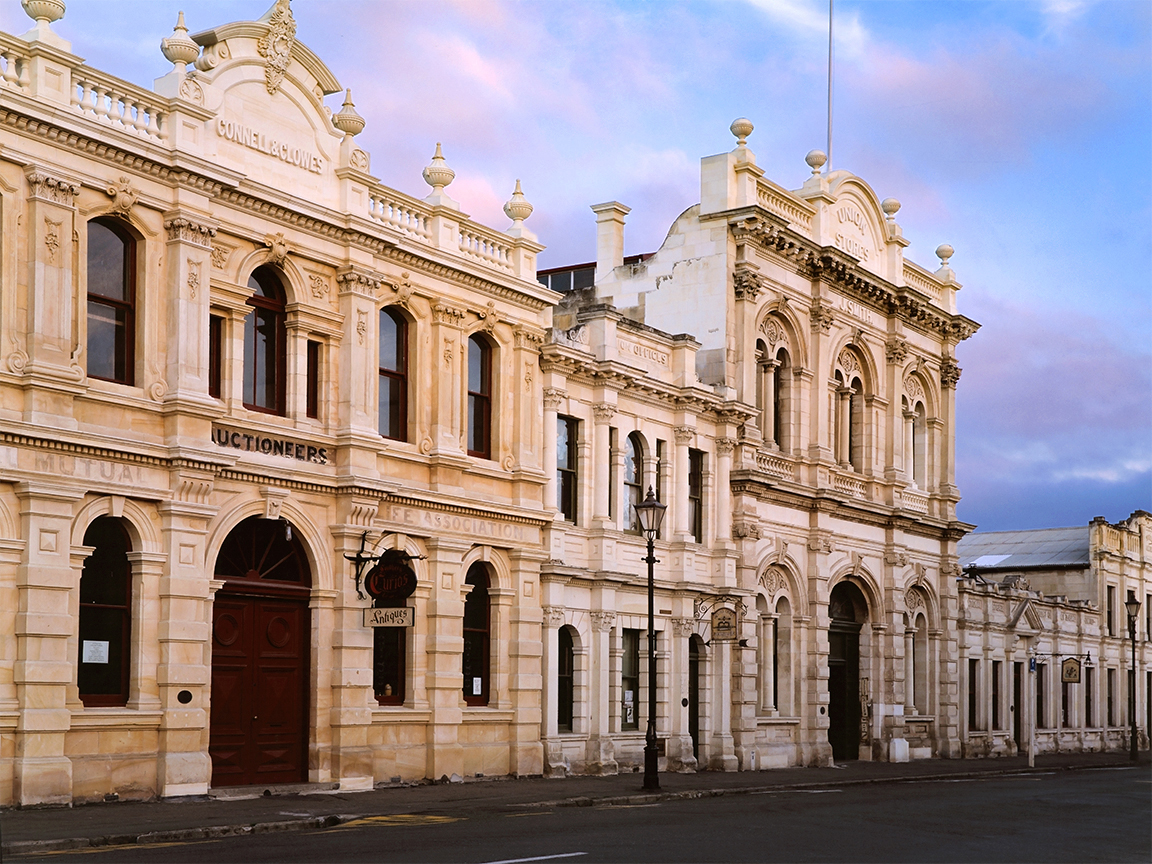
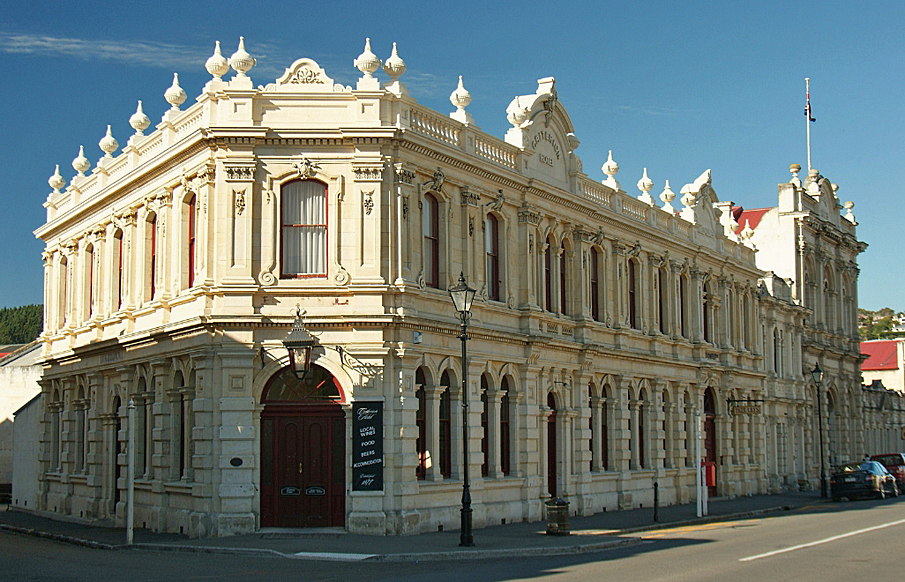
Connell and Clowes’ first store and offices were built in 1877 at about the same time as the Criterion Hotel (Register No. 4689) with the design forming part of the Criterion’s façade, although the businesses and the buildings were separate, as made clear by the entrance which has ‘Connell and Clowes’ on the pediment on the first floor. Forrester and Lemon’s elevation drawings dated October 1877 show the elaborately detailed two storey building with a large central doorway and ornate decorative detailing around the windows, with balustrades and a central pediment.

Connell and Clowes expanded their storage with the construction of a large new store positioned on the corner of Harbour and Tyne Streets, just north of their existing premises, some four years later. Connell and Clowes’ Store was finished in 1881-1882. An article from October 1882 describes the large ‘somewhat irregularly shaped’ building. The Store was 120 ft by 72 ft (36.5 by 22m) in size and 42 ft (13m) high. It contained a large weighbridge which allowed truckloads of grain to be weighed. The building cost £4,000. It sits on a pair of irregularly shaped sections with the building footprint matching the shape of the land parcels.

The partnership was dissolved on 1 January 1884, with Henry Connell continuing the business on his own. Clowes died in 1885 after a long period of ill health. In 1893 the National Mortgage and Agency Company took over the Store, and continued to occupy it into the 1970s. Additions were made to the east elevation in the 1930s. In the late 1970s Wrightson NMA Limited took over the lease.

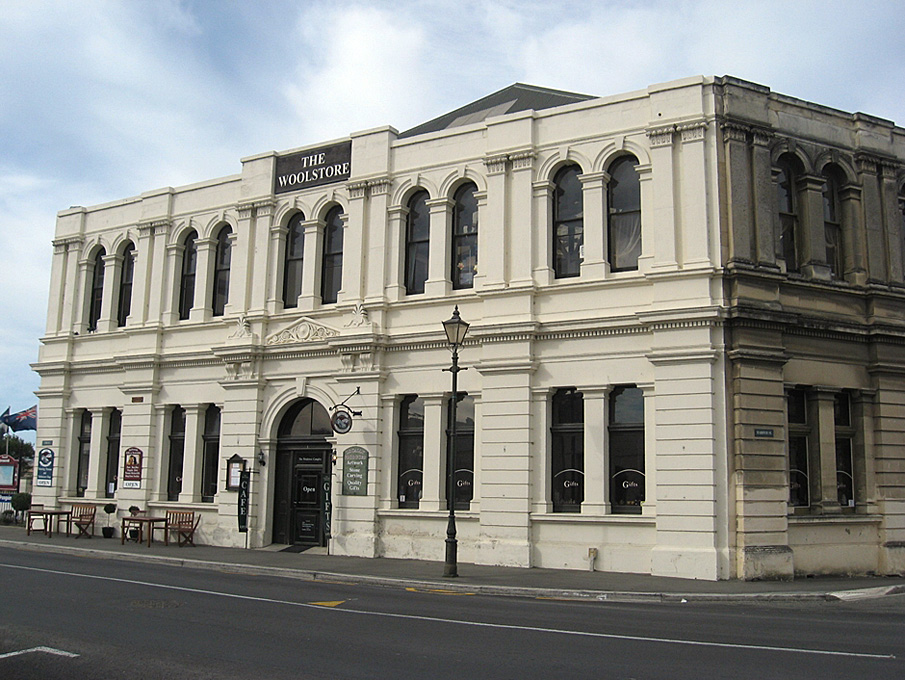
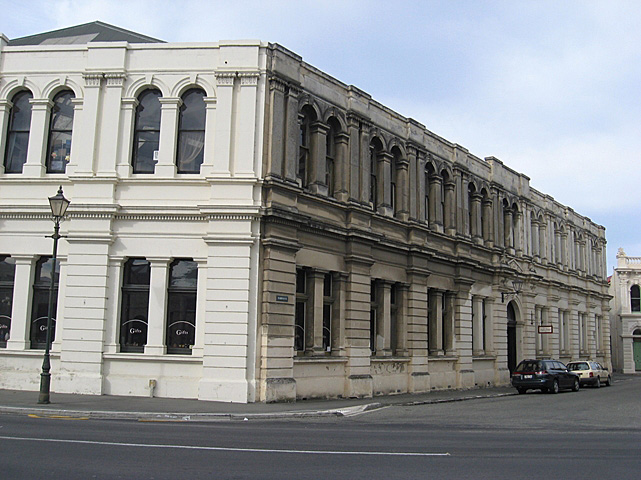
Connell and Clowes’ Store (Former) is a landmark building marking the western edge of Harbour Street, the narrow thoroughfare notable for its outstanding Victorian architecture, particularly the grain stores. Connell and Clowes’ Store has decorative facades to both Harbour and Tyne Streets, with the north and east facades of a utilitarian design. In style the façade makes a visual link to the Criterion Hotel across Harbour Street, although it is plainer in style. The facade is divided into even bays, each with paired round-headed windows. The original drawings indicate that the pediment had the names of Connell and Clowes in raised lettering, with their function as grain and seed merchants also noted on the pediment. The balustrading and pediment details have been removed from the building.

The landmark store has architectural and historic significance, recalling the prosperity of the 1870s and early 1880s in Oamaru which resulted in the magnificent stone architecture associated with the Harbour/Tyne Street area.

In 2013 the former Connell and Clowes’ Store is home to a range of retail businesses, including a café, gift shop, automotive collection and a weekend market.
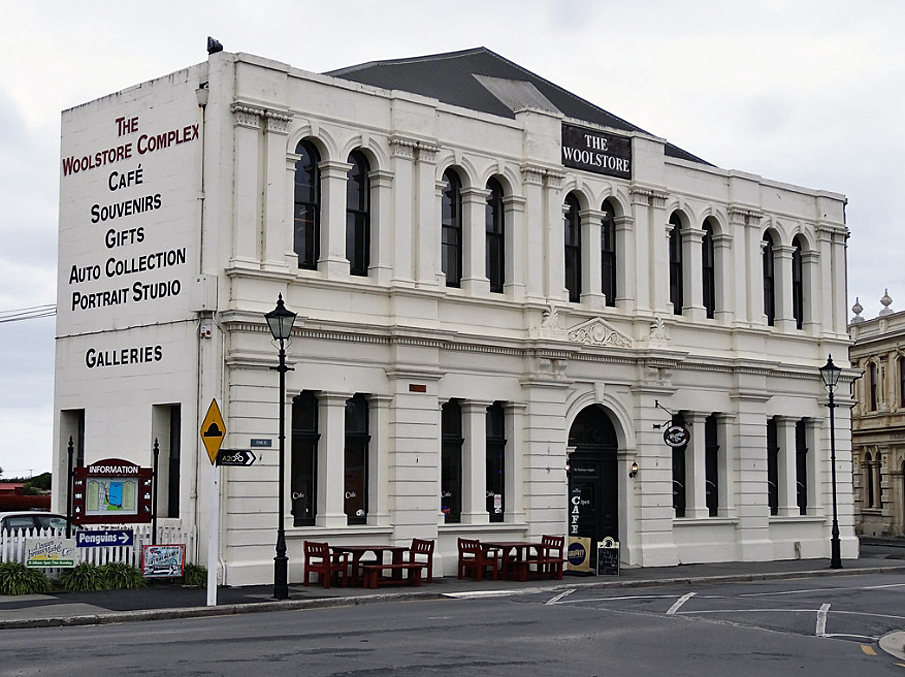
Connell and Clowes' Store (Former), Oamaru. CC Licence 2.0 Image courtesy of www.flickr.com | denisbin | 15/10/2016 | denisbin
Connell and Clowes' Store (Former), Oamaru | Heather Bauchop | 03/04/2008 | Heritage New Zealand
Connell and Clowes' Store (Former), Oamaru. CC Licence 2.0 Image courtesy of www.flickr.com | denisbin | 15/10/2016 | denisbin
Connell and Clowes' Store (Former), Oamaru | Heather Bauchop | 03/04/2008 | Heritage New Zealand

List Entry Information

Overview

Status
Listed

List Entry Status
Historic Place Category 2

Access
Private/No Public Access

List Number
2283

Date Entered
25th September 1986

Date of Effect
25th September 1986

City/District Council
Waitaki District

Region
Otago Region

Extent of List Entry

Extent includes the land described as Lots 29-30 DP 88 (RTs OT18C/649, 1041448), Otago Land District, and the 1881 building known as Connell and Clowes' Store (Former), thereon.

Legal description

Lots 29-30 DP 88 (RTs OT18C/649, 1041448), Otago Land District.

Detailed List Entry

Construction Professional

Name

Forrester & Lemon

Type

Architectural Partnership

Biography

The architectural partnership of Forrester and Lemon was established in Oamaru in 1872. Thomas Forrester (1838-1907) was born in Glasgow and educated at the Glasgow School of Art. Emigrating to New Zealand in 1861 he settled in Dunedin and worked under William Mason (1810-97) and William Henry Clayton (1823-77) and later Robert Arthur Lawson (1833-1902). In 1865 he superintended the Dunedin Exhibition and from 1870 he became involved with the supervision of harbour works. Some time after 1885 he became Engineer to the Oamaru Harbour Board and in this capacity designed the repairs to the breakwater following storm damage in 1886 and later the Holmes Wharf. On his death in 1907 he was still in the employ of the Harbour Board. John Lemon (1828-1890) was born in Jamaica and travelled to England before emigrating to New Zealand in 1849. He settled in Oamaru in 1860 and with his brother Charles established a timber merchant's business. By 1869 he was in partnership with his father-in-law, George Sumpter calling themselves "Timber and General Merchants, Land and Commission Agents". This partnership was dissolved in 1872 and Lemon entered into partnership with Forrester. Lemon had no architectural experience at all, but had a wide circle of business contacts and was an efficient administrator. Buildings designed by the partnership of Forrester and Lemon include St Paul's Church (1875-76), the Harbour Board Offices (1876), Queen's (later Brydone) Hotel (1881), Waitaki Boys' High School (1883), The Courthouse (1883) and the Post Office (1883-84), all in Oamaru. Forrester and Lemon contributed greatly to Oamaru's nineteenth century character. On Lemon's death in 1890 the practice was taken over by Forrester's son, John Megget Forrester (1865-1965).

Construction Details

Start Year

1881

Finish Year

1882

Type

Original Construction

Reference

Completion Date

30th April 2013

Report Written By

Heather Bauchop

Information Sources

McCarthy, 2002

Conal McCarthy, Forrester and Lemon of Oamaru, architects, Oamaru, 2002

McDonald, 1962

K C McDonald, 'White Stone Country', Oamaru, 1962

North Otago Times

North Otago Times

Report Written By

This place was identified as significant under previous legislation with different information requirements. It remains significant under the current legislation. There is opportunity under our legislation and policies to add to this information. Further information about this place may be available from the Otago/Southland Office of Heritage New Zealand Pouhere Taonga. A fully referenced Upgrade Report is available from the Otago/Southland Area office of NZHPT. This registration is also included in the Harbour/Tyne Street Historic Area (Record no. 7064). Please note that entry on the New Zealand Heritage List/Rarangi Korero identifies only the heritage values of the property concerned, and should not be construed as advice on the state of the property, or as a comment of its soundness or safety, including in regard to earthquake risk, safety in the event of fire, or insanitary conditions.

Further Information

Current Usages

Uses: Trade

Specific Usage: Cafe

Uses: Trade

Specific Usage: Shop

Former Usages

General Usage:: Trade

Specific Usage: Warehouse/storage area

Themes

Web Links

Overview

Status

Listed

List Entry Status

Historic Place Category 2

Access

Private/No Public Access

List Number

2283

Date Entered

25th September 1986

Date of Effect

25th September 1986

City/District Council

Waitaki District

Region

Otago Region

Extent of List Entry

Extent includes the land described as Lots 29-30 DP 88 (RTs OT18C/649, 1041448), Otago Land District, and the 1881 building known as Connell and Clowes' Store (Former), thereon.

Legal description

Lots 29-30 DP 88 (RTs OT18C/649, 1041448), Otago Land District.

Status

Listed

List Entry Status

Historic Place Category 2

Access

Private/No Public Access

List Number

2283

Date Entered

25th September 1986

Date of Effect

25th September 1986

City/District Council

Waitaki District

Region

Otago Region

Extent of List Entry

Extent includes the land described as Lots 29-30 DP 88 (RTs OT18C/649, 1041448), Otago Land District, and the 1881 building known as Connell and Clowes' Store (Former), thereon.

Legal description

Lots 29-30 DP 88 (RTs OT18C/649, 1041448), Otago Land District.

Construction Information

Construction Professional

Name

Forrester & Lemon

Type

Architectural Partnership

Biography

The architectural partnership of Forrester and Lemon was established in Oamaru in 1872. Thomas Forrester (1838-1907) was born in Glasgow and educated at the Glasgow School of Art. Emigrating to New Zealand in 1861 he settled in Dunedin and worked under William Mason (1810-97) and William Henry Clayton (1823-77) and later Robert Arthur Lawson (1833-1902). In 1865 he superintended the Dunedin Exhibition and from 1870 he became involved with the supervision of harbour works. Some time after 1885 he became Engineer to the Oamaru Harbour Board and in this capacity designed the repairs to the breakwater following storm damage in 1886 and later the Holmes Wharf. On his death in 1907 he was still in the employ of the Harbour Board. John Lemon (1828-1890) was born in Jamaica and travelled to England before emigrating to New Zealand in 1849. He settled in Oamaru in 1860 and with his brother Charles established a timber merchant's business. By 1869 he was in partnership with his father-in-law, George Sumpter calling themselves "Timber and General Merchants, Land and Commission Agents". This partnership was dissolved in 1872 and Lemon entered into partnership with Forrester. Lemon had no architectural experience at all, but had a wide circle of business contacts and was an efficient administrator. Buildings designed by the partnership of Forrester and Lemon include St Paul's Church (1875-76), the Harbour Board Offices (1876), Queen's (later Brydone) Hotel (1881), Waitaki Boys' High School (1883), The Courthouse (1883) and the Post Office (1883-84), all in Oamaru. Forrester and Lemon contributed greatly to Oamaru's nineteenth century character. On Lemon's death in 1890 the practice was taken over by Forrester's son, John Megget Forrester (1865-1965).

Construction Details

Start Year

1881

Finish Year

1882

Type

Original Construction

Construction Professional

Name

Forrester & Lemon

Type

Architectural Partnership

Biography

The architectural partnership of Forrester and Lemon was established in Oamaru in 1872. Thomas Forrester (1838-1907) was born in Glasgow and educated at the Glasgow School of Art. Emigrating to New Zealand in 1861 he settled in Dunedin and worked under William Mason (1810-97) and William Henry Clayton (1823-77) and later Robert Arthur Lawson (1833-1902). In 1865 he superintended the Dunedin Exhibition and from 1870 he became involved with the supervision of harbour works. Some time after 1885 he became Engineer to the Oamaru Harbour Board and in this capacity designed the repairs to the breakwater following storm damage in 1886 and later the Holmes Wharf. On his death in 1907 he was still in the employ of the Harbour Board. John Lemon (1828-1890) was born in Jamaica and travelled to England before emigrating to New Zealand in 1849. He settled in Oamaru in 1860 and with his brother Charles established a timber merchant's business. By 1869 he was in partnership with his father-in-law, George Sumpter calling themselves "Timber and General Merchants, Land and Commission Agents". This partnership was dissolved in 1872 and Lemon entered into partnership with Forrester. Lemon had no architectural experience at all, but had a wide circle of business contacts and was an efficient administrator. Buildings designed by the partnership of Forrester and Lemon include St Paul's Church (1875-76), the Harbour Board Offices (1876), Queen's (later Brydone) Hotel (1881), Waitaki Boys' High School (1883), The Courthouse (1883) and the Post Office (1883-84), all in Oamaru. Forrester and Lemon contributed greatly to Oamaru's nineteenth century character. On Lemon's death in 1890 the practice was taken over by Forrester's son, John Megget Forrester (1865-1965).

Construction Details

Start Year

1881

Finish Year

1882

Type

Original Construction

Reference

Historical and Associated Iwi / Hapū / Whānau

Completion Date

30th April 2013

Report Written By

Heather Bauchop

Information Sources

McCarthy, 2002

Conal McCarthy, Forrester and Lemon of Oamaru, architects, Oamaru, 2002

McDonald, 1962

K C McDonald, 'White Stone Country', Oamaru, 1962

North Otago Times

North Otago Times

Other Information

This place was identified as significant under previous legislation with different information requirements. It remains significant under the current legislation. There is opportunity under our legislation and policies to add to this information. Further information about this place may be available from the Otago/Southland Office of Heritage New Zealand Pouhere Taonga. A fully referenced Upgrade Report is available from the Otago/Southland Area office of NZHPT. This registration is also included in the Harbour/Tyne Street Historic Area (Record no. 7064). Please note that entry on the New Zealand Heritage List/Rarangi Korero identifies only the heritage values of the property concerned, and should not be construed as advice on the state of the property, or as a comment of its soundness or safety, including in regard to earthquake risk, safety in the event of fire, or insanitary conditions.

Historical and Associated Iwi / Hapū / Whānau

Completion Date

30th April 2013

Report Written By

Heather Bauchop

Information Sources

McCarthy, 2002

Conal McCarthy, Forrester and Lemon of Oamaru, architects, Oamaru, 2002

McDonald, 1962

K C McDonald, 'White Stone Country', Oamaru, 1962

North Otago Times

North Otago Times

Other Information

This place was identified as significant under previous legislation with different information requirements. It remains significant under the current legislation. There is opportunity under our legislation and policies to add to this information. Further information about this place may be available from the Otago/Southland Office of Heritage New Zealand Pouhere Taonga. A fully referenced Upgrade Report is available from the Otago/Southland Area office of NZHPT. This registration is also included in the Harbour/Tyne Street Historic Area (Record no. 7064). Please note that entry on the New Zealand Heritage List/Rarangi Korero identifies only the heritage values of the property concerned, and should not be construed as advice on the state of the property, or as a comment of its soundness or safety, including in regard to earthquake risk, safety in the event of fire, or insanitary conditions.

Further Information

Current Usages

Uses: Trade

Specific Usage: Cafe

Uses: Trade

Specific Usage: Shop

Former Usages

General Usage: Trade

Specific Usage: Warehouse/storage area

Current Usages

Uses: Trade

Specific Usage: Cafe

Uses: Trade

Specific Usage: Shop

Former Usages

General Usage: Trade

Specific Usage: Warehouse/storage area

Location

Loading
Related listings
Oamaru Historic Area. Image courtesy of www.jimwitkowski.com
Oamaru Historic Area
Criterion Hotel, Oamaru
Criterion Hotel
Criterion Hotel, Oamaru
Criterion Hotel
Oamaru Historic Area. Image courtesy of www.jimwitkowski.com
Oamaru Historic Area
Stay up to date with Heritage this month