Quick links


Quick links
Quick links
Quick links
Quick links
Quick links
1-1a Severn Street, OAMARU
Private
Historic Place Category 2
List No. 2284
List Entry Information
Status
Listed
List Entry Status
Historic Place Category 2
Access
Private/No Public Access
List Number
2284
Date Entered
2nd July 1982
Date of Effect
2nd July 1982
City/District Council
Waitaki District
Region
Otago Region
Extent of List Entry
Extent includes the land described as Lot 1 DP 19678 (RT 7307046) (Local Purpose Reserve (Community Buildings) Centennial Rooms, NZ Gazette, 1986, p.4375.), Otago Land District and Lot 1 DP 8328 (RT 1056346) Classification of a Reserve. (Local Purpose (Community Buildings) Reserve, NZ Gazette, 2016), Otago Land District and the Centennial Memorial Rest Room buildings, thereon.
Legal description
Lot 1 DP 19678 (RT 7307046) (Local Purpose Reserve (Community Buildings) Centennial Rooms, NZ Gazette, 1986, p.4375.), Otago Land District and Lot 1 DP 8328 (RT 1056346) Classification of a Reserve. (Local Purpose (Community Buildings) Reserve, NZ Gazette, 2016), Otago Land District.
Status
Listed
List Entry Status
Historic Place Category 2
Access
Private/No Public Access
List Number
2284
Date Entered
2nd July 1982
Date of Effect
2nd July 1982
City/District Council
Waitaki District
Region
Otago Region
Extent of List Entry
Extent includes the land described as Lot 1 DP 19678 (RT 7307046) (Local Purpose Reserve (Community Buildings) Centennial Rooms, NZ Gazette, 1986, p.4375.), Otago Land District and Lot 1 DP 8328 (RT 1056346) Classification of a Reserve. (Local Purpose (Community Buildings) Reserve, NZ Gazette, 2016), Otago Land District and the Centennial Memorial Rest Room buildings, thereon.
Legal description
Lot 1 DP 19678 (RT 7307046) (Local Purpose Reserve (Community Buildings) Centennial Rooms, NZ Gazette, 1986, p.4375.), Otago Land District and Lot 1 DP 8328 (RT 1056346) Classification of a Reserve. (Local Purpose (Community Buildings) Reserve, NZ Gazette, 2016), Otago Land District.
Construction Professional
Name
Steenson, W.I.C.
Type
Architect
Biography
No biography is currently available for this construction professional
Construction Details
Start Year
1940
Type
Original Construction
Construction Professional
Name
Steenson, W.I.C.
Type
Architect
Biography
No biography is currently available for this construction professional
Construction Details
Start Year
1940
Type
Original Construction
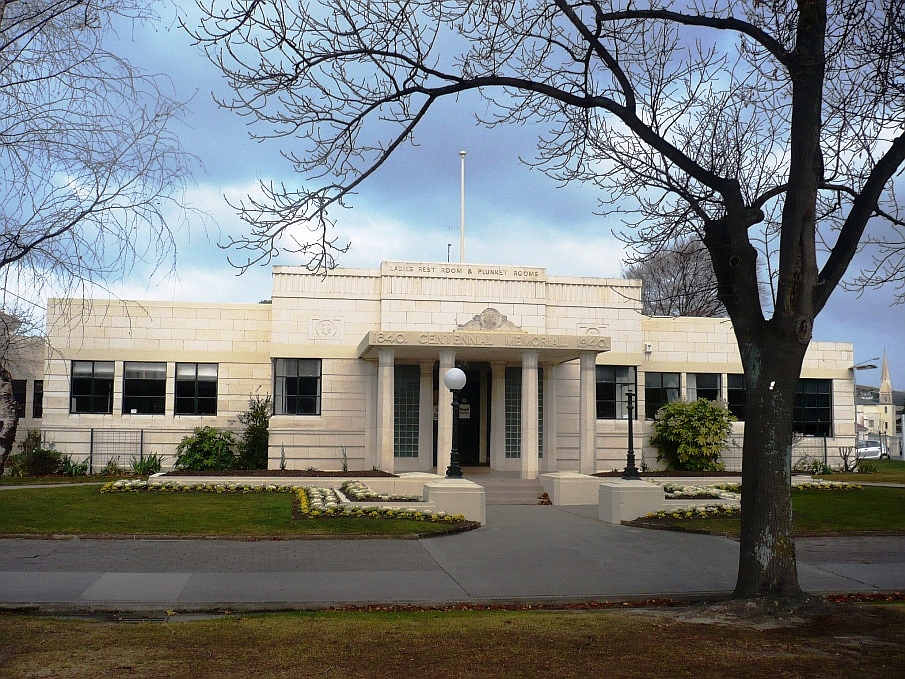
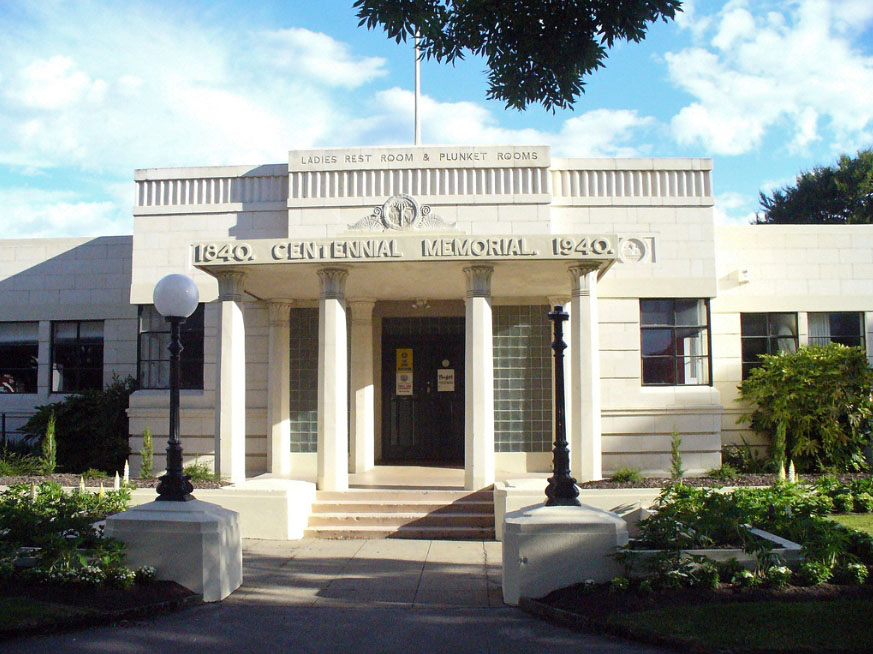
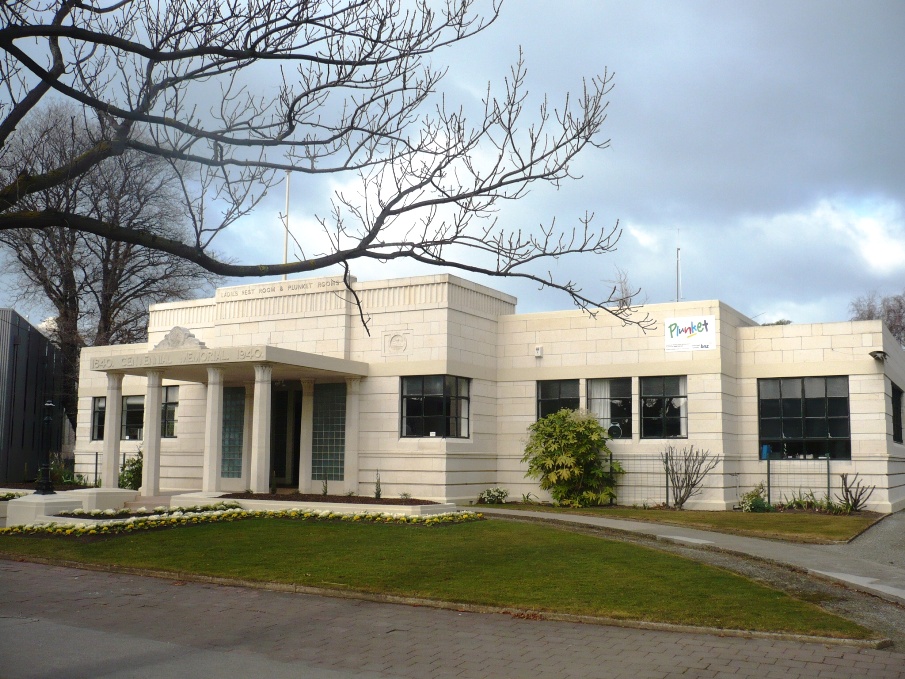
In the late 1930s throughout New Zealand communities got together to commemorate the country’s centenary - 1840-1940 - focusing on the celebration of European effort and progress in New Zealand. The celebration was ‘a deliberate act of national self-definition’ by the first Labour government, unifying the country through ‘commemorations of collective achievement and history’ using a variety of devices - historical publications and re-enactments, memorials and exhibitions. Maori history and the signing of the Treaty of Waitangi took a ‘back seat.’ For many Maori centennial celebrations struck a sour note. The celebration was of European progress. The key Maori contribution to the centenary was centred around the Whare Runanga on the Waitangi Estate. For some Maori, including Te Puea and Koroki, the Maori King, the connection with the Treaty of Waitangi was a reminder of an agreement they had entered with the Crown that had not been honoured. Te Puea and Koroki boycotted the 1940 Waitangi celebrations because of the raupatu (land confiscations) of the nineteenth century. Provincial events dovetailed with a programme of national events focused around the Centennial Exhibition in Wellington. With the Government favouring living memorials structures built included museums (the Wellington Provincial Centennial Memorial - the Petone Settlers’ Museum, Category I, Record No. 206); memorial Gates, parks, avenues of trees, halls, scenic reserves, band rotundas and restrooms. Alongside Oamaru’s proposal for a restroom and Plunket Room, Ross and Greytown also chose rest rooms to commemorate the centenary. In Oamaru there was community support for the centennial and the Oamaru Centennial Committee considered several other proposals - with a committee headed by the mayor coordinating the project. The Minister for Internal Affairs circular indicated that the preferred form was the provision of recreation grounds or playing parks with a community centre building, a ‘living monument’ commemorating the first century of nationhood and the contributions of the current generation. Locals were keen to incorporate a memorial to the settlers of North Otago (an avenue of trees with the names of pioneers, for example), but the council had committed to the concept of the memorial rest room. Otago Province, along with Nelson, and Canterbury, did however hold back their grandest celebrations until their own provincial centenaries. By the end of 1936 the Oamaru Borough Council and the Waitaki County Council were considering the choice of memorials for the centenary. A suggestion was made that the councils combine in the provision of a Rest Room and Plunket Room situated in Oamaru, and the Borough and County Councils committed £1000 to the scheme, with the shortfall made up through fund raising and a subsidy from the Department of Internal Affairs. Negotiations were made with the Police Department for the exchange of the police property at the back of the Oamaru Opera House. The County Council were happy to contribute funds and suggested the provision of a ‘heated ladies’ waiting room, nursery, and parcel depot’ staffed by an attendant. In 1939 the Committee decided to incorporate an additional room for the North Otago Early Settlers’ Association. The provision of toilet facilities for women had been one of the Women’s Christian Temperance Union’s public campaigns in the late nineteenth century and early twentieth century, which went as far as providing such rooms themselves. Women’s rest rooms began to be constructed in the early 1920s, the probable first example being the Hastings Municipal Women’s Rest (Category I, Record No. 1105) built in 1921, which provided a rest room and toilet facilities. By World War Two there were very few towns without such facilities - on the New Zealand Historic Places Trust Register there are examples in Napier (1925), Marton (1927), Havelock North (1930s) and Nelson (1936). An appeal for public subscriptions was launched in order to qualify for the Government subsidy, with a postcard with the proposed design on the front. The building was also to include an ‘Early Settlers’ Lounge’. The Blenheim Plunket and Rest Rooms were put forward as a suitable model for the Oamaru district’s scheme. The Blenheim building contained a rest room, reading room, parcel office, Plunket waiting room, advice room and office, kitchen, ‘penny-in-the-slot’ conveniences, and prams and cups for hire. The Otago Daily Times wrote that such a building ‘would be very much appreciated and used by the women of town and country’ and that it was hoped that the women’s organisations would support the project. Oamaru architect W.I.C. Steenson from Forrester and Steenson, put forward a scheme. The building was originally laid out with the entrance through the centrally placed loggia on the main elevation. On the left side of the entrance hall was the Rest Room, kitchen, caretaker’s room and parcel room; on the right was the lavatories, the Plunket Suite (waiting room, office, advice room, store and crèche). Behind the Rest Room (but with entrance off the hall was the Early Settler’s Lounge and associated cloak rooms. The specifications indicated that the building had concrete foundations, Oamaru stone outer walls (and partition walls between the ‘mens’ and womens’ sections [punctuation original]) and timber framing. The ceilings were fibrous plaster; the tiles in the men’s section were tiled, while the remainder of the floors were timber. The roof was concrete tiles. The newspaper description of the Centennial Memorial Rooms emphasised the appearance, generosity and convenience - including the garden setting and entrance court, the flood-lit façade at night, the central heating. There were chromium plated door handles, bevelled glass in the main entrance doors, and reed glass in the upper sections of the windows. There was a driveway through which passengers could be dropped off in the portico. A black granite memorial tablet was mounted in the vestibule. The Plunket suite included a bathroom shower, lavatories and crèche. The architect was William Ivan Cunninghame Steenson (1889-1967) (known as Ivan) of Forrester and Steenson. The architectural practice was established by Thomas Forrester and John Lemon in 1872 and John, the only son of Thomas Forrester, took over the business in 1890. Forrester worked on his own until 1921 when he entered into partnership with Ivan Steenson as Forrester & Steenson. Forrester retired in 1931 and Ivan Steenson carried on the firm. Steenson had joined the practice in 1904 and studied carpentry, stone masonry and plumbing, before serving in World War One. After the war he returned to the firm before becoming a partner. The practice was continued by his son Harry until 1993. The main contractor was W.R. Williams, the stonemason J. Docherty, and McCallum and Co. the joiners. The function of the Centennial Rooms has changed over time. The Red Cross opened tearooms in the building in 1955. Sometime after 1985 the rest rooms were closed. The building was also home to the Information Centre for a period. In 2012 the North Otago Centennial Rooms are still home to Plunket and the North Otago Settlers’ Association. In addition the building houses a coordination centre for emergency services such as the rural fire service.
In the late 1930s throughout New Zealand communities got together to commemorate the country’s centenary - 1840-1940 - focusing on the celebration of European effort and progress in New Zealand. The celebration was ‘a deliberate act of national self-definition’ by the first Labour government, unifying the country through ‘commemorations of collective achievement and history’ using a variety of devices - historical publications and re-enactments, memorials and exhibitions. Maori history and the signing of the Treaty of Waitangi took a ‘back seat.’ For many Maori centennial celebrations struck a sour note. The celebration was of European progress. The key Maori contribution to the centenary was centred around the Whare Runanga on the Waitangi Estate. For some Maori, including Te Puea and Koroki, the Maori King, the connection with the Treaty of Waitangi was a reminder of an agreement they had entered with the Crown that had not been honoured. Te Puea and Koroki boycotted the 1940 Waitangi celebrations because of the raupatu (land confiscations) of the nineteenth century. Provincial events dovetailed with a programme of national events focused around the Centennial Exhibition in Wellington. With the Government favouring living memorials structures built included museums (the Wellington Provincial Centennial Memorial - the Petone Settlers’ Museum, Category I, Record No. 206); memorial Gates, parks, avenues of trees, halls, scenic reserves, band rotundas and restrooms. Alongside Oamaru’s proposal for a restroom and Plunket Room, Ross and Greytown also chose rest rooms to commemorate the centenary. In Oamaru there was community support for the centennial and the Oamaru Centennial Committee considered several other proposals - with a committee headed by the mayor coordinating the project. The Minister for Internal Affairs circular indicated that the preferred form was the provision of recreation grounds or playing parks with a community centre building, a ‘living monument’ commemorating the first century of nationhood and the contributions of the current generation. Locals were keen to incorporate a memorial to the settlers of North Otago (an avenue of trees with the names of pioneers, for example), but the council had committed to the concept of the memorial rest room. Otago Province, along with Nelson, and Canterbury, did however hold back their grandest celebrations until their own provincial centenaries. By the end of 1936 the Oamaru Borough Council and the Waitaki County Council were considering the choice of memorials for the centenary. A suggestion was made that the councils combine in the provision of a Rest Room and Plunket Room situated in Oamaru, and the Borough and County Councils committed £1000 to the scheme, with the shortfall made up through fund raising and a subsidy from the Department of Internal Affairs. Negotiations were made with the Police Department for the exchange of the police property at the back of the Oamaru Opera House. The County Council were happy to contribute funds and suggested the provision of a ‘heated ladies’ waiting room, nursery, and parcel depot’ staffed by an attendant. In 1939 the Committee decided to incorporate an additional room for the North Otago Early Settlers’ Association. The provision of toilet facilities for women had been one of the Women’s Christian Temperance Union’s public campaigns in the late nineteenth century and early twentieth century, which went as far as providing such rooms themselves. Women’s rest rooms began to be constructed in the early 1920s, the probable first example being the Hastings Municipal Women’s Rest (Category I, Record No. 1105) built in 1921, which provided a rest room and toilet facilities. By World War Two there were very few towns without such facilities - on the New Zealand Historic Places Trust Register there are examples in Napier (1925), Marton (1927), Havelock North (1930s) and Nelson (1936). An appeal for public subscriptions was launched in order to qualify for the Government subsidy, with a postcard with the proposed design on the front. The building was also to include an ‘Early Settlers’ Lounge’. The Blenheim Plunket and Rest Rooms were put forward as a suitable model for the Oamaru district’s scheme. The Blenheim building contained a rest room, reading room, parcel office, Plunket waiting room, advice room and office, kitchen, ‘penny-in-the-slot’ conveniences, and prams and cups for hire. The Otago Daily Times wrote that such a building ‘would be very much appreciated and used by the women of town and country’ and that it was hoped that the women’s organisations would support the project. Oamaru architect W.I.C. Steenson from Forrester and Steenson, put forward a scheme. The building was originally laid out with the entrance through the centrally placed loggia on the main elevation. On the left side of the entrance hall was the Rest Room, kitchen, caretaker’s room and parcel room; on the right was the lavatories, the Plunket Suite (waiting room, office, advice room, store and crèche). Behind the Rest Room (but with entrance off the hall was the Early Settler’s Lounge and associated cloak rooms. The specifications indicated that the building had concrete foundations, Oamaru stone outer walls (and partition walls between the ‘mens’ and womens’ sections [punctuation original]) and timber framing. The ceilings were fibrous plaster; the tiles in the men’s section were tiled, while the remainder of the floors were timber. The roof was concrete tiles. The newspaper description of the Centennial Memorial Rooms emphasised the appearance, generosity and convenience - including the garden setting and entrance court, the flood-lit façade at night, the central heating. There were chromium plated door handles, bevelled glass in the main entrance doors, and reed glass in the upper sections of the windows. There was a driveway through which passengers could be dropped off in the portico. A black granite memorial tablet was mounted in the vestibule. The Plunket suite included a bathroom shower, lavatories and crèche. The architect was William Ivan Cunninghame Steenson (1889-1967) (known as Ivan) of Forrester and Steenson. The architectural practice was established by Thomas Forrester and John Lemon in 1872 and John, the only son of Thomas Forrester, took over the business in 1890. Forrester worked on his own until 1921 when he entered into partnership with Ivan Steenson as Forrester & Steenson. Forrester retired in 1931 and Ivan Steenson carried on the firm. Steenson had joined the practice in 1904 and studied carpentry, stone masonry and plumbing, before serving in World War One. After the war he returned to the firm before becoming a partner. The practice was continued by his son Harry until 1993. The main contractor was W.R. Williams, the stonemason J. Docherty, and McCallum and Co. the joiners. The function of the Centennial Rooms has changed over time. The Red Cross opened tearooms in the building in 1955. Sometime after 1985 the rest rooms were closed. The building was also home to the Information Centre for a period. In 2012 the North Otago Centennial Rooms are still home to Plunket and the North Otago Settlers’ Association. In addition the building houses a coordination centre for emergency services such as the rural fire service.
Historical and Associated Iwi / Hapū / Whānau
Completion Date
7th February 2012
Report Written By
Heather Bauchop
Information Sources
Wood, 1986
Jeanne Wood, A Challenge not a truce: A History of the New Zealand Women's Christian Temperance Union 1885-1985, Nelson, 1986.
Centennial Memorial Rest Rooms
Daybooks (held North Otago Museum, Oamaru)
Daley, 2000
Caroline Daley, ‘Flushed with Pride? Women’s Quest for Public Toilets in New Zealand’, Women’s Studies Journal, 2000, 16(1)
Other Information
A fully referenced Upgrade Report is available from the Otago/Southland Area office of NZHPT. Please note that entry on the New Zealand Heritage List/Rarangi Korero identifies only the heritage values of the property concerned, and should not be construed as advice on the state of the property, or as a comment of its soundness or safety, including in regard to earthquake risk, safety in the event of fire, or insanitary conditions.
Historical and Associated Iwi / Hapū / Whānau
Completion Date
7th February 2012
Report Written By
Heather Bauchop
Information Sources
Wood, 1986
Jeanne Wood, A Challenge not a truce: A History of the New Zealand Women's Christian Temperance Union 1885-1985, Nelson, 1986.
Centennial Memorial Rest Rooms
Daybooks (held North Otago Museum, Oamaru)
Daley, 2000
Caroline Daley, ‘Flushed with Pride? Women’s Quest for Public Toilets in New Zealand’, Women’s Studies Journal, 2000, 16(1)
Other Information
A fully referenced Upgrade Report is available from the Otago/Southland Area office of NZHPT. Please note that entry on the New Zealand Heritage List/Rarangi Korero identifies only the heritage values of the property concerned, and should not be construed as advice on the state of the property, or as a comment of its soundness or safety, including in regard to earthquake risk, safety in the event of fire, or insanitary conditions.
Current Usages
Uses: Government
Specific Usage: Government - other
Uses: Health
Specific Usage: Plunket Rooms
Former Usages
General Usage: Civic Facilities
Specific Usage: Community centre
General Usage: Civic Facilities
Specific Usage: Rest rooms
General Usage: Health
Specific Usage: Plunket Rooms
General Usage: Trade
Specific Usage: Restaurant/cafe/tearoom
Themes
Modern Movement
Current Usages
Uses: Government
Specific Usage: Government - other
Uses: Health
Specific Usage: Plunket Rooms
Former Usages
General Usage: Civic Facilities
Specific Usage: Community centre
General Usage: Civic Facilities
Specific Usage: Rest rooms
General Usage: Health
Specific Usage: Plunket Rooms
General Usage: Trade
Specific Usage: Restaurant/cafe/tearoom
Themes
Modern Movement
Location
Get the latest heritage news, features and events delivered
straight to your inbox.
