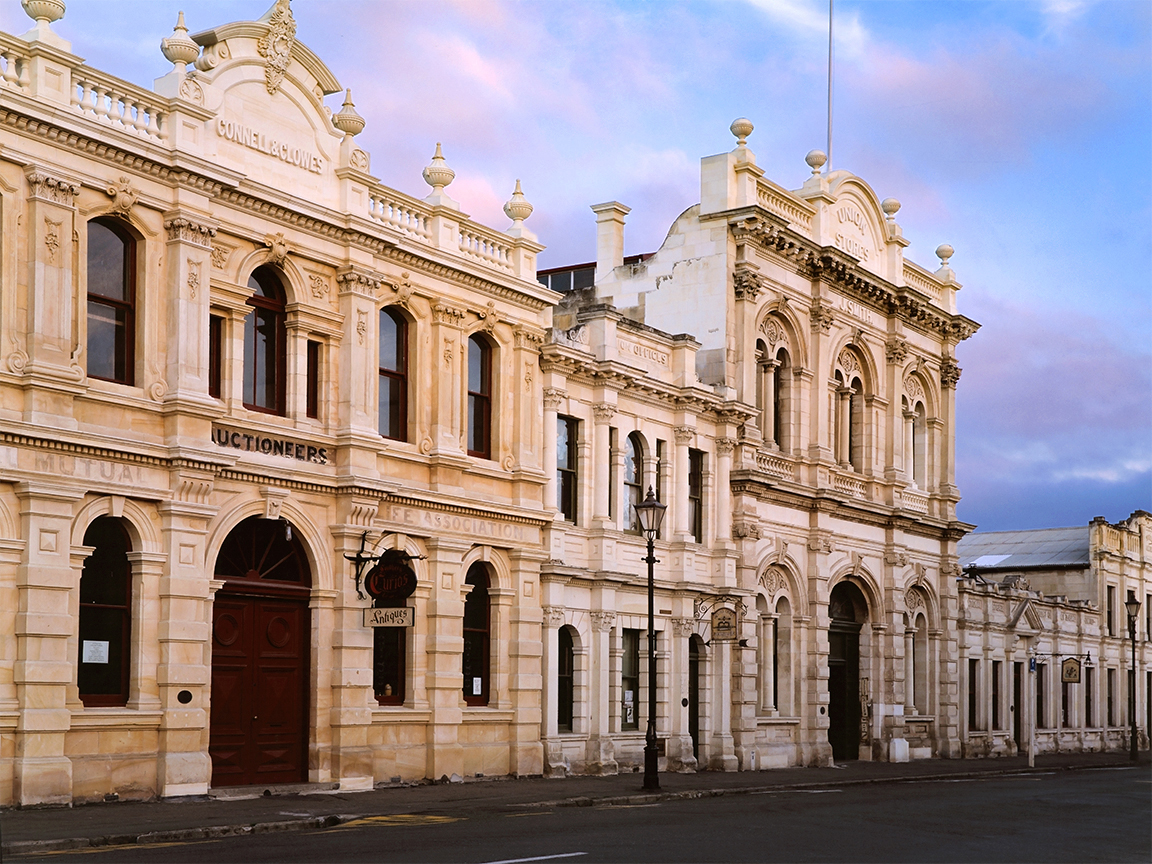
T.H. Brown’s store was built in 1876 and on its completion was described as one of the most attractive single storey store buildings in the Harbour/Tyne Street area. Designed by architect James Brown Johnston (c.1841-1890), it sits along other designs of Johnston’s on Tyne Street (including the outstanding former Smith’s Grain Store), as examples of the exuberant Victorian streetscape for which Oamaru’s Harbour/Tyne Street historic area (Register No. 7064) is known.
The North Otago Times described the store’s façade as the ‘handsomest single-storey front in town.’ The Store was designed by architect James Johnston (1848 -1890), with the stonework completed by Kay and Barclay, and the carpentry work by Lambert and Moore. English born James Johnston had described himself as an organ builder (in London 1869), a builder (in 1871), and by the time he arrived in New Zealand (probably in 1872); he was describing himself as an architect. He made a strong contribution of Oamaru’s Victorian streetscape (issuing 26 of the 113 tenders in Oamaru in 1882 alone, comparing favourably with Forrester and Lemon’s 64). Around 1885 he moved to Gippsland, Victoria, Australia, where he died in 1890.
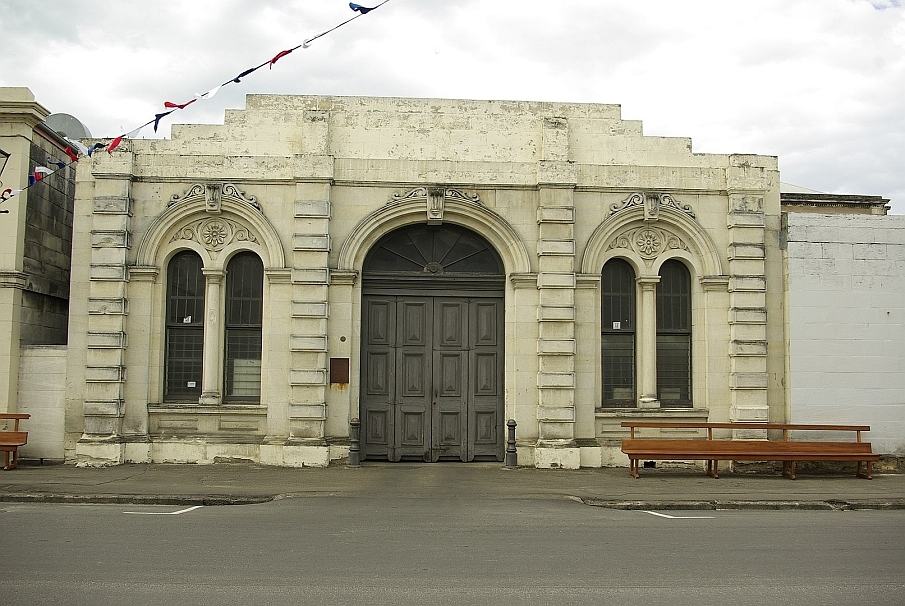
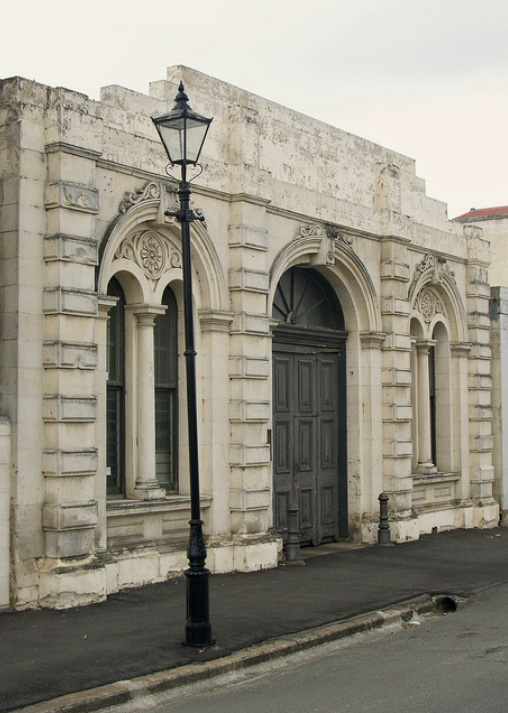
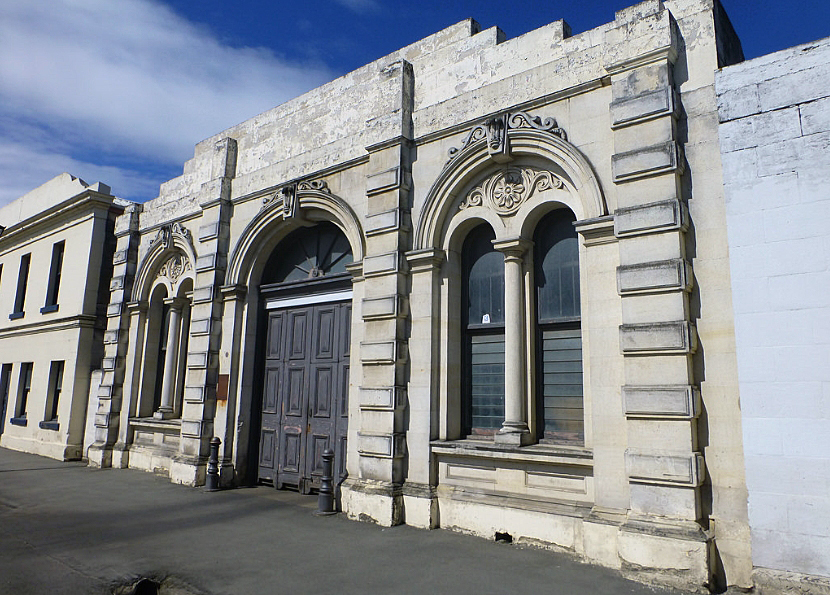
The frontage of Brown’s Store was 44 ft with a height of 28 ft (13 by 8.5m). Built of stone from Cave Valley quarries, it is Italianate in style, with panelled double doors, paired two light double hung sash windows, with engaged Doric columns and ‘foliate adornments.’ The main entrance is also notable for its ornamental scroll work, with the Prince of Wales plumes in relief. The original pediment had its Brown’s name and the date 1876 picked out in relief. The ground area of the building was 44 ft by 101 ft (28 by 31m). The roof had lantern lights with seven trusses running the span of the building. The east end has two pairs of sliding doors, originally providing access to the railway siding, with similar access on the south side. The floor of the east side was raised about 2 ft (just under 1m) to allow for level loading of railway trucks. One the west Tyne Street elevation there were two ‘commodious handsomely-furnished offices (12 by 16 ft) [3.6m by 5m] and behind these a wine store 18 by 12 ft.’ [5.4 by 3.6m]
As with many other merchants of the mid 1880s the economic depression hit Thomas Brown hard: in January 1884 he filed for bankruptcy, being unable to pay his creditors, and the lease was transferred to mortgagor, and in 1892 and later in the 1890s to commission agents Lintott, Skeet and Co. From 1916 to the 1950s the lease of the Store was taken up by flour millers Ireland and Co. In the 1950s the building was leased by rural servicing company Stringer and Co. Ltd, and in the 1970s the to the Oamaru Licensing Trust and later to Gillies Ltd, and to its current owners.
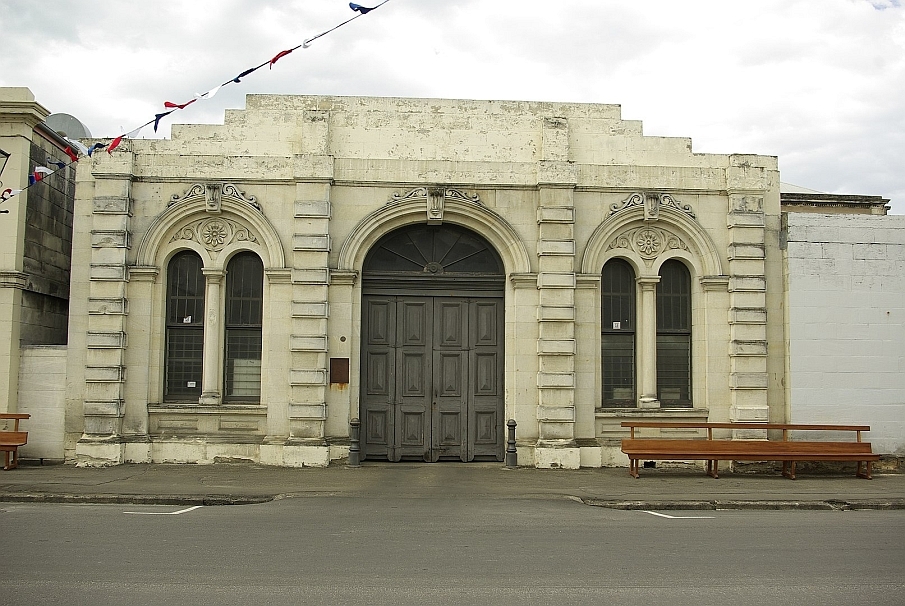
TH Brown’s Store sits on Tyne Street alongside FH Townsend’s Store. The ornately ornamented façade is divided into three bays. The central bay has the large panelled double doors with ornamental fanlight above. The bays on either side of the door have paired double hung sash windows with attached columns and pilasters with decorative relief panels and arches with keystones and scroll work above. The remaining pediment is undecorated (having had the earlier decoration noted above removed). The building is rectangular in plan with a single gabled roof. The footprint reaches from Tyne Street through to Harbour Street.
In 2013 T.H. Brown’s Store (Former) remains a striking Victorian building, representing Oamaru’s boom era of the 1870s, and is a significant component within the Harbour/Tyne Street Historic Area.
The North Otago Times described the store’s façade as the ‘handsomest single-storey front in town.’ The Store was designed by architect James Johnston (1848 -1890), with the stonework completed by Kay and Barclay, and the carpentry work by Lambert and Moore. English born James Johnston had described himself as an organ builder (in London 1869), a builder (in 1871), and by the time he arrived in New Zealand (probably in 1872); he was describing himself as an architect. He made a strong contribution of Oamaru’s Victorian streetscape (issuing 26 of the 113 tenders in Oamaru in 1882 alone, comparing favourably with Forrester and Lemon’s 64). Around 1885 he moved to Gippsland, Victoria, Australia, where he died in 1890.
The frontage of Brown’s Store was 44 ft with a height of 28 ft (13 by 8.5m). Built of stone from Cave Valley quarries, it is Italianate in style, with panelled double doors, paired two light double hung sash windows, with engaged Doric columns and ‘foliate adornments.’ The main entrance is also notable for its ornamental scroll work, with the Prince of Wales plumes in relief. The original pediment had its Brown’s name and the date 1876 picked out in relief. The ground area of the building was 44 ft by 101 ft (28 by 31m). The roof had lantern lights with seven trusses running the span of the building. The east end has two pairs of sliding doors, originally providing access to the railway siding, with similar access on the south side. The floor of the east side was raised about 2 ft (just under 1m) to allow for level loading of railway trucks. One the west Tyne Street elevation there were two ‘commodious handsomely-furnished offices (12 by 16 ft) [3.6m by 5m] and behind these a wine store 18 by 12 ft.’ [5.4 by 3.6m]
As with many other merchants of the mid 1880s the economic depression hit Thomas Brown hard: in January 1884 he filed for bankruptcy, being unable to pay his creditors, and the lease was transferred to mortgagor, and in 1892 and later in the 1890s to commission agents Lintott, Skeet and Co. From 1916 to the 1950s the lease of the Store was taken up by flour millers Ireland and Co. In the 1950s the building was leased by rural servicing company Stringer and Co. Ltd, and in the 1970s the to the Oamaru Licensing Trust and later to Gillies Ltd, and to its current owners.
TH Brown’s Store sits on Tyne Street alongside FH Townsend’s Store. The ornately ornamented façade is divided into three bays. The central bay has the large panelled double doors with ornamental fanlight above. The bays on either side of the door have paired double hung sash windows with attached columns and pilasters with decorative relief panels and arches with keystones and scroll work above. The remaining pediment is undecorated (having had the earlier decoration noted above removed). The building is rectangular in plan with a single gabled roof. The footprint reaches from Tyne Street through to Harbour Street.
In 2013 T.H. Brown’s Store (Former) remains a striking Victorian building, representing Oamaru’s boom era of the 1870s, and is a significant component within the Harbour/Tyne Street Historic Area.