DonateMembershipVisit Heritage
  • Tūrangawaewae
    Places
  • Tira Māori
    Māori Heritage
  • Poutairangahia
    Archaeology
  • Rauemi
    Resources
  • Mō Tātou
    About Us
  • New Zealand Heritage List
  • Nominate and submit
  • Explore the List
  • National Historic Landmarks
  • Plaques
  • Rainbow List Project
  • Lost heritage
  • Visit Heritage
  • Our properties
  • Turnbull House Project
  • Collections
  • Shop
  • Tohu Whenua
  • Tira Māori
  • Conserving Māori heritage
  • Marae built heritage
  • Māori heritage on the List
  • Hinemihi—Te Hokinga Mai
  • What is archaeology?
  • Is there a site on my property?
  • What are my legal requirements?
  • Affecting an archaeological site
  • Declaring an archaeological site
  • Archaeology FAQs
  • Archaeology Digital Library
  • Archaeology guidelines and templates
  • Resources
  • Funding
  • Publications
  • Sustainable management guides
  • Disaster recovery
  • Podcasts & digital resources
  • Education Hub
  • Conservation plans
  • About
  • Board
  • Māori Heritage Council
  • Senior Staff
  • Offices
  • Contact us
  • Careers
  • Covenants
  • Fast-track
  • Corporate documents
  • Currently consulting on
  • Our submissions
  • News
  • Covid-19 response
Quick links
Rārangi Kōrero | The List
Explore the List
National Historic Landmarks
Ngā Manawhenua o Aotearoa me ōna Kōrero Tūturu
Quick links
Tapuwae
A Vision for Places of Māori Heritage
Funding for Māori Heritage
Resources
Quick links
Archaeological Authority Portal
Applying for an archaeological authority
Archaeology FAQs
Browse the most frequently asked questions about archaeological authorities and the archaeological process.
Quick links
Quick links
News
News Keep up to date with Heritage New Zealand Pouhere Taonga
Membership
Membership Find out more and sign up today
DonateMembershipVisit Heritage
  • Tūrangawaewae
    Places
  • Tira Māori
    Māori Heritage
  • Poutairangahia
    Archaeology
  • Rauemi
    Resources
  • Mō Tātou
    About Us
  • New Zealand Heritage List
  • Nominate and submit
  • Explore the List
  • National Historic Landmarks
  • Plaques
  • Rainbow List Project
  • Lost heritage
  • Visit Heritage
  • Our properties
  • Turnbull House Project
  • Collections
  • Shop
  • Tohu Whenua
  • Tira Māori
  • Conserving Māori heritage
  • Marae built heritage
  • Māori heritage on the List
  • Hinemihi—Te Hokinga Mai
  • What is archaeology?
  • Is there a site on my property?
  • What are my legal requirements?
  • Affecting an archaeological site
  • Declaring an archaeological site
  • Archaeology FAQs
  • Archaeology Digital Library
  • Archaeology guidelines and templates
  • Resources
  • Funding
  • Publications
  • Sustainable management guides
  • Disaster recovery
  • Podcasts & digital resources
  • Education Hub
  • Conservation plans
  • About
  • Board
  • Māori Heritage Council
  • Senior Staff
  • Offices
  • Contact us
  • Careers
  • Covenants
  • Fast-track
  • Corporate documents
  • Currently consulting on
  • Our submissions
  • News
  • Covid-19 response
Quick links
Rārangi Kōrero | The List
Explore the List
National Historic Landmarks
Ngā Manawhenua o Aotearoa me ōna Kōrero Tūturu
Quick links
Tapuwae
A Vision for Places of Māori Heritage
Funding for Māori Heritage
Resources
Quick links
Archaeological Authority Portal
Applying for an archaeological authority
Archaeology FAQs
Browse the most frequently asked questions about archaeological authorities and the archaeological process.
Quick links
Quick links
News
News Keep up to date with Heritage New Zealand Pouhere Taonga
Membership
Membership Find out more and sign up today
  • Places
  • Nominate and submit
  • National Historic Landmarks
  • Places
  • Nominate and submit
  • National Historic Landmarks
  • Tira Māori
  • Conserving Māori heritage
  • Marae built heritage
  • Tira Māori
  • Conserving Māori heritage
  • Marae built heritage
  • Archaeological authorities
  • Archaeology Digital Library
  • Archaeological authorities
  • Archaeology Digital Library
  • All resources
  • Publications
  • Funding
  • All resources
  • Publications
  • Funding
  • FAQs
  • FAQs
Follow us on:
Places
  • Places
  • Nominate and submit
  • National Historic Landmarks
Tira Māori
  • Tira Māori
  • Conserving Māori heritage
  • Marae built heritage
Archaeology
  • Archaeological authorities
  • Archaeology Digital Library
Resources
  • All resources
  • Publications
  • Funding
FAQs
  • FAQs
Follow us on
HomePrivacyTerms and conditionsAbout this site
© Heritage New Zealand Pouhere Taonga 2026.
 
Redcastle Stables (Former)

57 Taward Street, NORTH OAMARU

Private

Historic Place Category 2

List No. 2298

Quick links:
List GalleryLocationDetails
These generous stables, designed by Dunedin architect John Arthur Burnside, have historical and architectural significance. Built in 1903, they formed part of the Oamaru estate of St John McLean Buckley, the heir of wealthy pastoralist and businessman John Mclean.

The former Redcastle Stables are built on the estate of John McLean. Scottish-born McLean came to Australia in 1839 where he entered into pastoral pursuits. Selling his holdings, he came to New Zealand in the 1854 with his brother Allan, taking up large pastoral holdings in South Canterbury and North Otago. At one time they occupied over 500,000 acres and were among the largest flockowners in New Zealand. He was member of the Otago Provincial Council and later the Legislative Council. With his brother-in-law George Buckley, he was a large shareholder in the Bank of New Zealand, and on the Council of the University of Otago. McLean died in July 1902. McLean never married and left his estate to his nephew St John McLean Buckley.

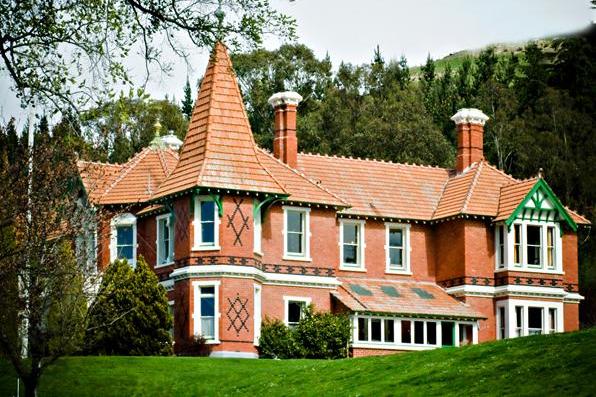
St John McLean Buckley was born in Waikakahi in 1869 and educated privately in England and at Oxford University. He returned to New Zealand in 1891, moving to his uncle’s estate. Buckley set about establishing a country seat at the estate. He engaged Dunedin architect John Arthur Burnside to design a grand residence, and probably at the same time, substantial stables, reflecting Buckley’s enthusiasm for horses and horse racing. The contractors for the house were Joseph E. White and Son and it is likely that they built the stables as well. The house was nearly finished in October 1903.

Buckley built up a stud and training establishment housed in the ‘new and palatial stables that have sprung from the ground to suitably house them.’ The Otago Witness described the establishment as ‘one of the most extensive in the country.’ The reporter was given a tour of the stables: ‘The exterior of the building promised well for the interior, and after being welcomed by our host we entered a well and neatly-paved stable and yard. The reporter saw ‘roomy stalls’, and a ‘well-stocked coach-house’, as well as some impressive thoroughbreds. The building included a ‘training stable ‘a very large and lofty structure, built of Oamaru stone, containing 10 boxes, which are ranged five a-side of a wide passage.’ The building also included feed and gear rooms, the whole being surmounted by a loft. The reporter described the building as ‘as fine a stable as we could wish to enter.’

St John McLean Buckley died in 1915. His eldest son – also John – was not interested in keeping the property, and it was first leased and then sold. Charles Broglie, a leasee in 1917 caused a stir when it was discovered he was an ‘enemy alien’ and he was arrested and sent to Wellington. The property was later sold to a local syndicate (local businessmen flour miller Robert Ireland, Albert Grave (an Oamaru solicitor), company manager Thomas Doyle and William Grave (an Oamaru solicitor)).

The syndicate sold the property the Christian Brothers for a boarding school, with Brother Prunster working to adapt the buildings for a boarding school. St Kevin’s opened on 6 February 1927 as a Catholic boys' boarding and day school. Facilities were developed over the years, with Redcastle becoming the administration block and later providing living accommodation for priests, while the stables were converted to dormitories. In February 1983 St Kevin’s became co-educational and integrated into the state system, with the Christian Brothers remaining the school’s proprietors. In 2015, the former Redcastle Stables remain part of the complex of buildings associated with St Kevin’s College.
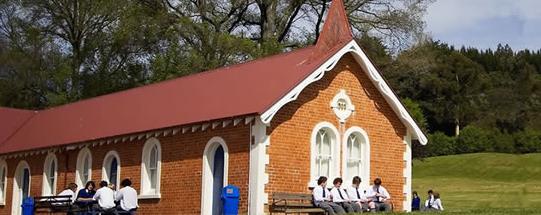
Redcastle Stables (Former) | St Kevin's College | St Kevin's College

List Entry Information

Overview

Status
Listed

List Entry Status
Historic Place Category 2

Access
Private/No Public Access

List Number
2298

Date Entered
2nd July 1982

Date of Effect
2nd July 1982

City/District Council
Waitaki District

Region
Otago Region

Extent of List Entry

Extent includes part of the land described as Pt Sec 54 Blk I Oamaru Survey District (RT OT9B/488), Otago Land District, and the building known as Redcastle (Former) thereon. (Refer to the extent map tabled at the Heritage List/ Rārangi Kōrero Committee meeting on 11 February 2016).

Legal description

Pt Sec 54 Blk I Oamaru Survey District (RT OT9B/488), Otago Land District

Detailed List Entry

Construction Professional

Name

Joseph E. White and Son

Type

Builder

Biography

Joseph Eli White was a Dunedin contractor working in the late nineteenth and twentieth centuries. English-born White was a brick layer by trade. White was born in 1853 at Southampton, England, and learned his trade with Messrs Bull and Son, builders of the Law Courts, London. He came to New Zealand in 1875. As a master builder and sub-contractor, he helped to erect many large and important buildings in Dunedin. His projects included the new centre portion of the D.I.C.; large additions to Donaghy's Rope Works at South Dunedin and Auckland; the hospital ward of the Benevolent Institution; the contract for the brick work in John Roberts' mansion at Littlebourne; the contract for the brick work in Messrs Wright, Stephenson and Co.'s wool and grain stores in Cumberland Street, Dunedin; the contract for Messrs Stronach and Morris' wool and grain stores in Crawford street, Dunedin; the contract for the St. Kilda Hotel, Dunedin; Galt's residence and stables at Marairua, Mataura; the reinstatement of the Bruce Woollen Mills after their destruction by fire; the Nurse's Home at the Dunedin Hospital; the Wesleyan Church, South Dunedin; Moritzson's large grain and wool stores in Crawford Street; Cossens and Black's factory; Dr. McKellar's residence in Pitt Street; additions to the Telegraph Office; Jamieson's building in Moray Place; extensive additions to Messrs A. and T. Burt's engine house, and to Messrs Reid and Gray's premises; the Presbyterian manse at Mornington; the Eastabrook's residence, Stuart Street, Dunedin; the Denton Hat Factory, King Street, Dunedin; Bagley's shops in George Street, Dunedin; the Leviathan Hotel, Cumberland Street; North East Valley tram sheds and stables; North East Valley school gymnasium building; the brick work of Ross and Glendining's warehouse, High Street; the Roman Catholic presbytery, Milton; the large mansion, manager's house and stables for John McLean Buckley, of Redcastle, Oamaru, with a power house for electrical lighting. White was sub-contractor of the Grand Hotel, Butterworth Brothers' warehouse, the New Zealand Insurance Company's building, and the large wing to Seacliff Asylum. Among his later projects were the Kaiapoi Building (1915-1917 designed by Salmond and Vanes); Sweeting’s (1907-1908, designed by Walden and Barton); and Andersons Bay Presbyterian Church (1914, designed by E.W. Walden). Joseph Eli White died on 2 December 1917 aged 64 years and is buried in Dunedin’s Northern Cemetery. Source: List entry report for Andersons Bay Presbyterian Church (Former), DUNEDIN, List No. 9695, 23 Nov 2016.

Name

Burnside, John Arthur

Type

Architect

Biography

Burnside (1856-1920) was born in Dunedin and is believed to be one of the first professional architects who were born and trained in New Zealand. He was articled to the architectural firm of Mason and Wales, remaining with them for two or three years. During this time he won important prizes for designs which he exhibited at international exhibitions. In 1880 he established his own practice at Dunedin. His buildings include Transit House (1880s), Philips Hotel (now Gresham Hotel, 1882) and the Otago Early Settlers' Museum (1908).

Construction Details

Start Year

1903

Type

Original Construction

Start Year

1928

Type

Other

Description

St Kevin’s College opens

Reference

Completion Date

12th January 2016

Report Written By

Heather Bauchop

Information Sources

Otago Witness

Otago Witness

Anon, 1977

Redcastle recollections : a golden jubilee volume : Saint Kevin's College, Oamaru, Saint Kevin's College Jubilee Committee, New Zealand Tablet, Dunedin, 1977

Report Written By

This place was identified as significant under previous legislation with different information requirements. It remains significant under the current legislation. There is opportunity under our legislation and policies to add to this information. Further information about this place may be available from the Otago/Southland Office of Heritage New Zealand Pouhere Taonga. Please note that entry on the New Zealand Heritage List/Rarangi Korero identifies only the heritage values of the property concerned, and should not be construed as advice on the state of the property, or as a comment of its soundness or safety, including in regard to earthquake risk, safety in the event of fire, or insanitary conditions. A fully referenced upgrade report is available on request from the Otago/Southland Office of Heritage New Zealand

Further Information

Current Usages

Uses: Education

Specific Usage: School Dormitory

Former Usages

General Usage:: Accommodation

Specific Usage: Stables - Residential out-building

General Usage:: Education

Specific Usage: Education - other

General Usage:: Education

Specific Usage: School

General Usage:: Education

Specific Usage: School Dormitory

Themes

Web Links

description: St Kevin's College website.

url: http://www.stkevins.school.nz/

Overview

Status

Listed

List Entry Status

Historic Place Category 2

Access

Private/No Public Access

List Number

2298

Date Entered

2nd July 1982

Date of Effect

2nd July 1982

City/District Council

Waitaki District

Region

Otago Region

Extent of List Entry

Extent includes part of the land described as Pt Sec 54 Blk I Oamaru Survey District (RT OT9B/488), Otago Land District, and the building known as Redcastle (Former) thereon. (Refer to the extent map tabled at the Heritage List/ Rārangi Kōrero Committee meeting on 11 February 2016).

Legal description

Pt Sec 54 Blk I Oamaru Survey District (RT OT9B/488), Otago Land District

Status

Listed

List Entry Status

Historic Place Category 2

Access

Private/No Public Access

List Number

2298

Date Entered

2nd July 1982

Date of Effect

2nd July 1982

City/District Council

Waitaki District

Region

Otago Region

Extent of List Entry

Extent includes part of the land described as Pt Sec 54 Blk I Oamaru Survey District (RT OT9B/488), Otago Land District, and the building known as Redcastle (Former) thereon. (Refer to the extent map tabled at the Heritage List/ Rārangi Kōrero Committee meeting on 11 February 2016).

Legal description

Pt Sec 54 Blk I Oamaru Survey District (RT OT9B/488), Otago Land District

Construction Information

Construction Professional

Name

Joseph E. White and Son

Type

Builder

Biography

Joseph Eli White was a Dunedin contractor working in the late nineteenth and twentieth centuries. English-born White was a brick layer by trade. White was born in 1853 at Southampton, England, and learned his trade with Messrs Bull and Son, builders of the Law Courts, London. He came to New Zealand in 1875. As a master builder and sub-contractor, he helped to erect many large and important buildings in Dunedin. His projects included the new centre portion of the D.I.C.; large additions to Donaghy's Rope Works at South Dunedin and Auckland; the hospital ward of the Benevolent Institution; the contract for the brick work in John Roberts' mansion at Littlebourne; the contract for the brick work in Messrs Wright, Stephenson and Co.'s wool and grain stores in Cumberland Street, Dunedin; the contract for Messrs Stronach and Morris' wool and grain stores in Crawford street, Dunedin; the contract for the St. Kilda Hotel, Dunedin; Galt's residence and stables at Marairua, Mataura; the reinstatement of the Bruce Woollen Mills after their destruction by fire; the Nurse's Home at the Dunedin Hospital; the Wesleyan Church, South Dunedin; Moritzson's large grain and wool stores in Crawford Street; Cossens and Black's factory; Dr. McKellar's residence in Pitt Street; additions to the Telegraph Office; Jamieson's building in Moray Place; extensive additions to Messrs A. and T. Burt's engine house, and to Messrs Reid and Gray's premises; the Presbyterian manse at Mornington; the Eastabrook's residence, Stuart Street, Dunedin; the Denton Hat Factory, King Street, Dunedin; Bagley's shops in George Street, Dunedin; the Leviathan Hotel, Cumberland Street; North East Valley tram sheds and stables; North East Valley school gymnasium building; the brick work of Ross and Glendining's warehouse, High Street; the Roman Catholic presbytery, Milton; the large mansion, manager's house and stables for John McLean Buckley, of Redcastle, Oamaru, with a power house for electrical lighting. White was sub-contractor of the Grand Hotel, Butterworth Brothers' warehouse, the New Zealand Insurance Company's building, and the large wing to Seacliff Asylum. Among his later projects were the Kaiapoi Building (1915-1917 designed by Salmond and Vanes); Sweeting’s (1907-1908, designed by Walden and Barton); and Andersons Bay Presbyterian Church (1914, designed by E.W. Walden). Joseph Eli White died on 2 December 1917 aged 64 years and is buried in Dunedin’s Northern Cemetery. Source: List entry report for Andersons Bay Presbyterian Church (Former), DUNEDIN, List No. 9695, 23 Nov 2016.

Name

Burnside, John Arthur

Type

Architect

Biography

Burnside (1856-1920) was born in Dunedin and is believed to be one of the first professional architects who were born and trained in New Zealand. He was articled to the architectural firm of Mason and Wales, remaining with them for two or three years. During this time he won important prizes for designs which he exhibited at international exhibitions. In 1880 he established his own practice at Dunedin. His buildings include Transit House (1880s), Philips Hotel (now Gresham Hotel, 1882) and the Otago Early Settlers' Museum (1908).

Construction Details

Start Year

1903

Type

Original Construction

Start Year

1928

Type

Other

Description

St Kevin’s College opens

Construction Professional

Name

Joseph E. White and Son

Type

Builder

Biography

Joseph Eli White was a Dunedin contractor working in the late nineteenth and twentieth centuries. English-born White was a brick layer by trade. White was born in 1853 at Southampton, England, and learned his trade with Messrs Bull and Son, builders of the Law Courts, London. He came to New Zealand in 1875. As a master builder and sub-contractor, he helped to erect many large and important buildings in Dunedin. His projects included the new centre portion of the D.I.C.; large additions to Donaghy's Rope Works at South Dunedin and Auckland; the hospital ward of the Benevolent Institution; the contract for the brick work in John Roberts' mansion at Littlebourne; the contract for the brick work in Messrs Wright, Stephenson and Co.'s wool and grain stores in Cumberland Street, Dunedin; the contract for Messrs Stronach and Morris' wool and grain stores in Crawford street, Dunedin; the contract for the St. Kilda Hotel, Dunedin; Galt's residence and stables at Marairua, Mataura; the reinstatement of the Bruce Woollen Mills after their destruction by fire; the Nurse's Home at the Dunedin Hospital; the Wesleyan Church, South Dunedin; Moritzson's large grain and wool stores in Crawford Street; Cossens and Black's factory; Dr. McKellar's residence in Pitt Street; additions to the Telegraph Office; Jamieson's building in Moray Place; extensive additions to Messrs A. and T. Burt's engine house, and to Messrs Reid and Gray's premises; the Presbyterian manse at Mornington; the Eastabrook's residence, Stuart Street, Dunedin; the Denton Hat Factory, King Street, Dunedin; Bagley's shops in George Street, Dunedin; the Leviathan Hotel, Cumberland Street; North East Valley tram sheds and stables; North East Valley school gymnasium building; the brick work of Ross and Glendining's warehouse, High Street; the Roman Catholic presbytery, Milton; the large mansion, manager's house and stables for John McLean Buckley, of Redcastle, Oamaru, with a power house for electrical lighting. White was sub-contractor of the Grand Hotel, Butterworth Brothers' warehouse, the New Zealand Insurance Company's building, and the large wing to Seacliff Asylum. Among his later projects were the Kaiapoi Building (1915-1917 designed by Salmond and Vanes); Sweeting’s (1907-1908, designed by Walden and Barton); and Andersons Bay Presbyterian Church (1914, designed by E.W. Walden). Joseph Eli White died on 2 December 1917 aged 64 years and is buried in Dunedin’s Northern Cemetery. Source: List entry report for Andersons Bay Presbyterian Church (Former), DUNEDIN, List No. 9695, 23 Nov 2016.

Name

Burnside, John Arthur

Type

Architect

Biography

Burnside (1856-1920) was born in Dunedin and is believed to be one of the first professional architects who were born and trained in New Zealand. He was articled to the architectural firm of Mason and Wales, remaining with them for two or three years. During this time he won important prizes for designs which he exhibited at international exhibitions. In 1880 he established his own practice at Dunedin. His buildings include Transit House (1880s), Philips Hotel (now Gresham Hotel, 1882) and the Otago Early Settlers' Museum (1908).

Construction Details

Start Year

1903

Type

Original Construction

Start Year

1928

Type

Other

Description

St Kevin’s College opens

Reference

Historical and Associated Iwi / Hapū / Whānau

Completion Date

12th January 2016

Report Written By

Heather Bauchop

Information Sources

Otago Witness

Otago Witness

Anon, 1977

Redcastle recollections : a golden jubilee volume : Saint Kevin's College, Oamaru, Saint Kevin's College Jubilee Committee, New Zealand Tablet, Dunedin, 1977

Other Information

This place was identified as significant under previous legislation with different information requirements. It remains significant under the current legislation. There is opportunity under our legislation and policies to add to this information. Further information about this place may be available from the Otago/Southland Office of Heritage New Zealand Pouhere Taonga. Please note that entry on the New Zealand Heritage List/Rarangi Korero identifies only the heritage values of the property concerned, and should not be construed as advice on the state of the property, or as a comment of its soundness or safety, including in regard to earthquake risk, safety in the event of fire, or insanitary conditions. A fully referenced upgrade report is available on request from the Otago/Southland Office of Heritage New Zealand

Historical and Associated Iwi / Hapū / Whānau

Completion Date

12th January 2016

Report Written By

Heather Bauchop

Information Sources

Otago Witness

Otago Witness

Anon, 1977

Redcastle recollections : a golden jubilee volume : Saint Kevin's College, Oamaru, Saint Kevin's College Jubilee Committee, New Zealand Tablet, Dunedin, 1977

Other Information

This place was identified as significant under previous legislation with different information requirements. It remains significant under the current legislation. There is opportunity under our legislation and policies to add to this information. Further information about this place may be available from the Otago/Southland Office of Heritage New Zealand Pouhere Taonga. Please note that entry on the New Zealand Heritage List/Rarangi Korero identifies only the heritage values of the property concerned, and should not be construed as advice on the state of the property, or as a comment of its soundness or safety, including in regard to earthquake risk, safety in the event of fire, or insanitary conditions. A fully referenced upgrade report is available on request from the Otago/Southland Office of Heritage New Zealand

Further Information

Current Usages

Uses: Education

Specific Usage: School Dormitory

Former Usages

General Usage: Accommodation

Specific Usage: Stables - Residential out-building

General Usage: Education

Specific Usage: Education - other

General Usage: Education

Specific Usage: School

General Usage: Education

Specific Usage: School Dormitory

Web Links

description: St Kevin's College website.

url: http://www.stkevins.school.nz/

Current Usages

Uses: Education

Specific Usage: School Dormitory

Former Usages

General Usage: Accommodation

Specific Usage: Stables - Residential out-building

General Usage: Education

Specific Usage: Education - other

General Usage: Education

Specific Usage: School

General Usage: Education

Specific Usage: School Dormitory

Web Links

description: St Kevin's College website.

url: http://www.stkevins.school.nz/

Location

Loading
Related listings
Redcastle
Redcastle
Redcastle
Redcastle
Stay up to date with Heritage this month