DonateMembershipVisit Heritage
  • Tūrangawaewae
    Places
  • Tira Māori
    Māori Heritage
  • Poutairangahia
    Archaeology
  • Rauemi
    Resources
  • Mō Tātou
    About Us
  • New Zealand Heritage List
  • Nominate and submit
  • Explore the List
  • National Historic Landmarks
  • Plaques
  • Rainbow List Project
  • Lost heritage
  • Visit Heritage
  • Our properties
  • Turnbull House Project
  • Collections
  • Shop
  • Tohu Whenua
  • Tira Māori
  • Conserving Māori heritage
  • Marae built heritage
  • Māori heritage on the List
  • Hinemihi—Te Hokinga Mai
  • What is archaeology?
  • Is there a site on my property?
  • What are my legal requirements?
  • Affecting an archaeological site
  • Declaring an archaeological site
  • Archaeology FAQs
  • Archaeology Digital Library
  • Archaeology guidelines and templates
  • Resources
  • Funding
  • Publications
  • Sustainable management guides
  • Disaster recovery
  • Podcasts & digital resources
  • Education Hub
  • Conservation plans
  • About
  • Board
  • Māori Heritage Council
  • Senior Staff
  • Offices
  • Contact us
  • Careers
  • Covenants
  • Fast-track
  • Corporate documents
  • Currently consulting on
  • Our submissions
  • News
  • Covid-19 response
Quick links
Rārangi Kōrero | The List
Explore the List
National Historic Landmarks
Ngā Manawhenua o Aotearoa me ōna Kōrero Tūturu
Quick links
Tapuwae
A Vision for Places of Māori Heritage
Funding for Māori Heritage
Resources
Quick links
Archaeological Authority Portal
Applying for an archaeological authority
Archaeology FAQs
Browse the most frequently asked questions about archaeological authorities and the archaeological process.
Quick links
Quick links
News
News Keep up to date with Heritage New Zealand Pouhere Taonga
Membership
Membership Find out more and sign up today
DonateMembershipVisit Heritage
  • Tūrangawaewae
    Places
  • Tira Māori
    Māori Heritage
  • Poutairangahia
    Archaeology
  • Rauemi
    Resources
  • Mō Tātou
    About Us
  • New Zealand Heritage List
  • Nominate and submit
  • Explore the List
  • National Historic Landmarks
  • Plaques
  • Rainbow List Project
  • Lost heritage
  • Visit Heritage
  • Our properties
  • Turnbull House Project
  • Collections
  • Shop
  • Tohu Whenua
  • Tira Māori
  • Conserving Māori heritage
  • Marae built heritage
  • Māori heritage on the List
  • Hinemihi—Te Hokinga Mai
  • What is archaeology?
  • Is there a site on my property?
  • What are my legal requirements?
  • Affecting an archaeological site
  • Declaring an archaeological site
  • Archaeology FAQs
  • Archaeology Digital Library
  • Archaeology guidelines and templates
  • Resources
  • Funding
  • Publications
  • Sustainable management guides
  • Disaster recovery
  • Podcasts & digital resources
  • Education Hub
  • Conservation plans
  • About
  • Board
  • Māori Heritage Council
  • Senior Staff
  • Offices
  • Contact us
  • Careers
  • Covenants
  • Fast-track
  • Corporate documents
  • Currently consulting on
  • Our submissions
  • News
  • Covid-19 response
Quick links
Rārangi Kōrero | The List
Explore the List
National Historic Landmarks
Ngā Manawhenua o Aotearoa me ōna Kōrero Tūturu
Quick links
Tapuwae
A Vision for Places of Māori Heritage
Funding for Māori Heritage
Resources
Quick links
Archaeological Authority Portal
Applying for an archaeological authority
Archaeology FAQs
Browse the most frequently asked questions about archaeological authorities and the archaeological process.
Quick links
Quick links
News
News Keep up to date with Heritage New Zealand Pouhere Taonga
Membership
Membership Find out more and sign up today
  • Places
  • Nominate and submit
  • National Historic Landmarks
  • Places
  • Nominate and submit
  • National Historic Landmarks
  • Tira Māori
  • Conserving Māori heritage
  • Marae built heritage
  • Tira Māori
  • Conserving Māori heritage
  • Marae built heritage
  • Archaeological authorities
  • Archaeology Digital Library
  • Archaeological authorities
  • Archaeology Digital Library
  • All resources
  • Publications
  • Funding
  • All resources
  • Publications
  • Funding
  • FAQs
  • FAQs
Follow us on:
Places
  • Places
  • Nominate and submit
  • National Historic Landmarks
Tira Māori
  • Tira Māori
  • Conserving Māori heritage
  • Marae built heritage
Archaeology
  • Archaeological authorities
  • Archaeology Digital Library
Resources
  • All resources
  • Publications
  • Funding
FAQs
  • FAQs
Follow us on
HomePrivacyTerms and conditionsAbout this site
© Heritage New Zealand Pouhere Taonga 2026.
 
Waitaki County Council Chambers (Former)

100 Thames Street, OAMARU

Private

Historic Place Category 2

List No. 2311

Quick links:
List GalleryLocationDetails
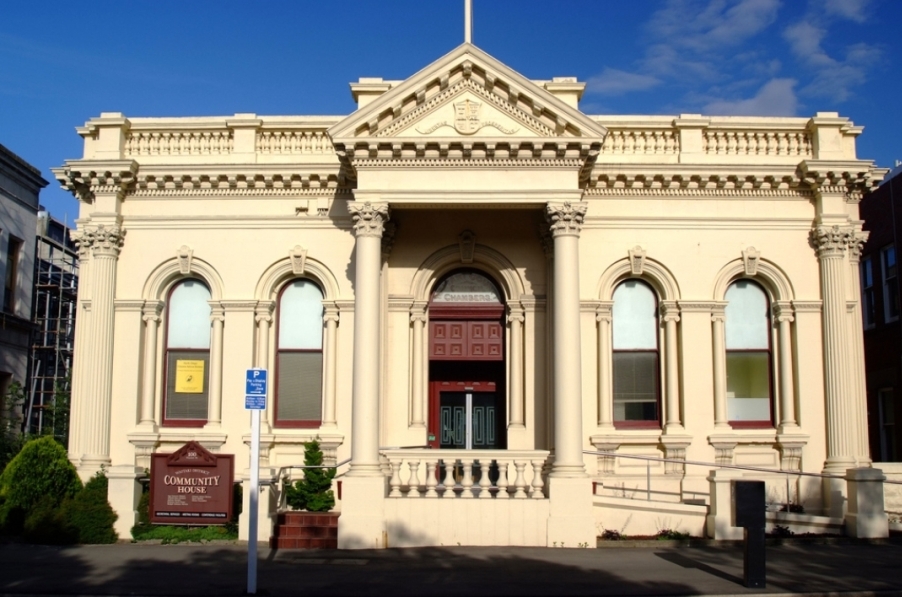
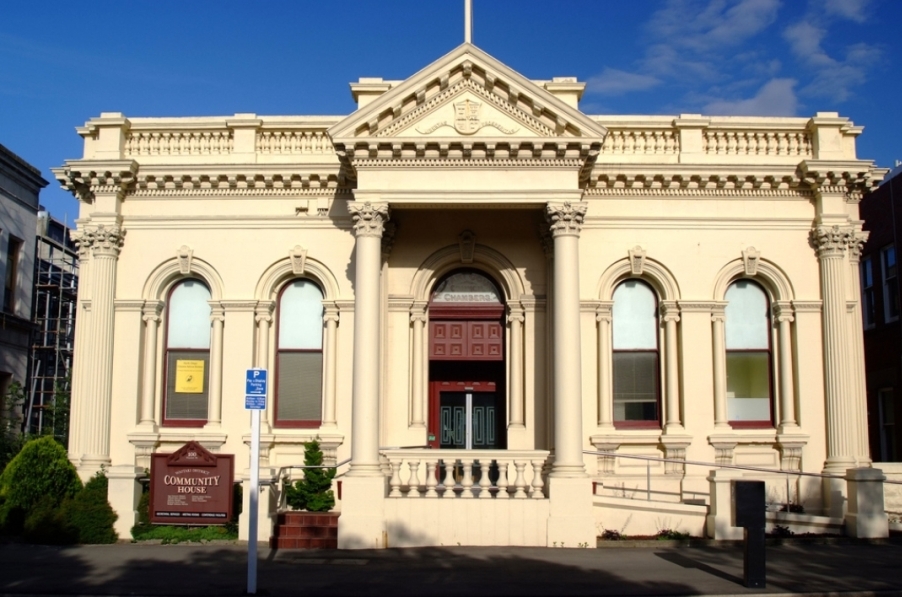
The handsome former Waitaki County Council Chambers on Thames Street was designed by architect James Johnston and erected in 1881. The building, which was home to the Waitaki County Council for close to 100 years, has social, historical, and architectural significance.as a reminder of the importance of civic administration in Ōamaru.

The Waitaki area is traditionally associated with the Kāhui-tipua, Te Rapuwai, Waitaha and Kāti Māmoe peoples. The Waitaki River was an ara tawhito (traditional travel route) for Kāi Tahu into the interior of Te Wai Pounamu and there are many kāika nohoka (seasonal settlements) and kāika mahika kai (food gathering sites) along the river. The land around the Waitaki River mouth shows evidence of extensive settlement, while Moeraki was one of the early cradles of knowledge for Waitaha and Kāti Māmoe histories. Key coastal settlements were at Makotukutuku (Cape Wanbrow), Moeraki, Shag Point, Waikouaiti, and Huriawa (the Karitane Peninsula). Following the arrival of Pākehā in number, Māori were alienated from their land. Later, County Councils were established to govern rural areas after the abolition of the Provincial Government in 1876. The Waitaki County Council was formed in 1876 and its first offices were on Tyne Street. The Council later moved to four rooms rented from merchants Shrimski and Moss on Thames Street. In 1881, the Council purchased the triangular section on the corner of Severn and Thames Street for the site of their new offices.

The Council held a competition to design the new building. After considering the designs, they chose the plan of architect James Johnston. The county clerk advertised tenders for the ‘ERECTION of COUNTY BUILDINGS’ on 20 May 1881. The Council accepted the £905 ($) tender of Alexander Wilson for the stonework, and the £688 ($) tender of R. Hewat for the woodwork. The building opened in March 1882.

The Waitaki County Council met for the first time in their new chambers on 22 March 1882. The Oamaru Mail gave a detailed description: ‘The building…is approached by a flight of six steps having a platform under a pediment supported by four Corinthian pillars of Oamaru stone with Timaru blue stone bases. The doorway, 11ft by 15ft 6in [3.3 by 4.7 metres], leads to a hall 9ft by 36ft [2.8 by 11 metres]. On the right is a magnificent council room, with coved and moulded ceiling ornamented with two centre flowers. This room is 31ft by 20ft [9.4 by 6.1 metres]. Behind the council room is the engineer’s room, 13ft 9in by 13ft [4 by 4.2 metres], and the strong room – for plans, &c – 7ft by 5ft [2.1 by 1.5 metres]. On the left of the main entrance is the clerk’s room, including contractors’ room, 20ft by 19ft [6.1 by 5.8 metres], and a second strong room, 8ft by 5ft 10 [2.4 by 1.8 metres]. At the back of these there are two rooms 20ft by 11ft and 20ft by 11ft by 13ft [6.1 by 3.3 metres] designed for the Road Board Offices. The height of all rooms is 17ft [5.2 metres], with the exception of the council room, which is 20ft [6.1 metres]. The doors throughout the building are oak grained, and the walls are distempered in choice colours. Each room is fitted with a register grate, the mantelpieces being marbled in black and gold. In the hall is a beautiful arch supported by fluted columns, with carved capitals of four Pegasus’s each, the keystone of the arch being carved to represent the head of a man. The windows are all circular headed, finished with columns with Ionic capitals and moulded arches. The whole building is well lighted and highly finished throughout. Outside the building the columns between the windows in front and part of the sides are finished with engaged columns and capitals, which are surmounted by a balustrade, giving a good finish to the whole. The style of architecture is Corinthian.’

In 1887, the Council vacated the building, for temporary premises in the Custom House in Tyne Street. This allowed the County Chambers to be used as premises for Waitaki Girls’ High School, until the school moved to permanent premises on Trent Street. In 1968, a second floor was added within the existing building, made possible because of the high stud height. In 1983, the Council moved to new premises in Eden Street. In 1989, local councils amalgamated to form the Waitaki District Council. In the 1990s, the building became home to several community services, including the Citizen’s Advice Bureau. In 2023, the former Waitaki County Council Chambers remains home to community services such as the Cancer Society and is known as Community House.
Waitaki County Council Chambers (Former), Oamaru | A Breese | 25/01/2024 | Heritage New Zealand Pouhere Taonga
Waitaki County Council Chambers (Former), Oamaru. Image courtesy of vallance.photography@xtra.co.nz | Francis Vallance | 31/12/2007 | Francis Vallance
Waitaki County Council Chambers (Former), Oamaru | A Breese | 25/01/2024 | Heritage New Zealand Pouhere Taonga
Waitaki County Council Chambers (Former), Oamaru. Image courtesy of vallance.photography@xtra.co.nz | Francis Vallance | 31/12/2007 | Francis Vallance

List Entry Information

Overview

Status
Listed

List Entry Status
Historic Place Category 2

Access
Private/No Public Access

List Number
2311

Date Entered
7th April 1983

Date of Effect
7th April 1983

City/District Council
Waitaki District

Region
Otago Region

Extent of List Entry

Extent includes the land described as Sec 20 Blk XCV Town of Oamaru (RT OT177/41, NZ Gazette 1987, p. 1329), Otago Land District, and the building known as Waitaki County Council Chambers (Former), thereon.

Legal description

Sec 20 Blk XCV Town of Oamaru (RT OT177/41, NZ Gazette 1987, p. 1329), Otago Land District.

Detailed List Entry

Construction Professional

Name

Wilson, Alexander

Type

Stonemason

Name

R. Hewat

Type

Carpenter

Name

Johnston, James

Type

Architect

Biography

James Johnston, a mason by trade, was the main rival to Forrester and Lemon in Oamaru. He designed a number of large buildings in a Renaissance palazzo style. These include the Globe Hotel (1881), the Waitaki County Chambers (1881) and Smith's Grain Store (1882).

Construction Details

Start Year

1882

Type

Other

Description

First meeting held in the new chambers

Start Year

1968

Type

Addition

Description

Second storey added within original building

Type

Refurbishment/renovation

Description

Building refurbished and redeveloped by Waitaki District Community House Trust

Period

1990s

Start Year

1881

Type

Original Construction

Reference

Completion Date

9th October 2023

Report Written By

Heather Bauchop and Andrew Winter

Information Sources

Oamaru Mail

22 Mar 1882, p. 2.

Budd and McKenzie

Dorothy McKenzie and Arthur Budd, Waitaki County Council 1877-1977: A Story of Development, Thomas Bracken and Co. Ltd, Oamaru [1977]

Report Written By

This place was identified as significant under previous legislation with different information requirements. It remains significant under the current legislation. There is opportunity under our legislation and policies to add to this information. Further information about this place may be available from the Otago/Southland Office of Heritage New Zealand Pouhere Taonga. A fully referenced copy of the Upgrade Report is available upon request from the Otago/Southland Area Office of Heritage New Zealand Pouhere Taonga Please note that entry on the New Zealand Heritage List/Rarangi Korero identifies only the heritage values of the property concerned, and should not be construed as advice on the state of the property, or as a comment of its soundness or safety, including in regard to earthquake risk, safety in the event of fire, or insanitary conditions.

Further Information

Current Usages

Uses: Civic Facilities

Specific Usage: Community centre

Former Usages

General Usage:: Education

Specific Usage: School

General Usage:: Government

Specific Usage: Council/local government building

Themes

Web Links

Overview

Status

Listed

List Entry Status

Historic Place Category 2

Access

Private/No Public Access

List Number

2311

Date Entered

7th April 1983

Date of Effect

7th April 1983

City/District Council

Waitaki District

Region

Otago Region

Extent of List Entry

Extent includes the land described as Sec 20 Blk XCV Town of Oamaru (RT OT177/41, NZ Gazette 1987, p. 1329), Otago Land District, and the building known as Waitaki County Council Chambers (Former), thereon.

Legal description

Sec 20 Blk XCV Town of Oamaru (RT OT177/41, NZ Gazette 1987, p. 1329), Otago Land District.

Status

Listed

List Entry Status

Historic Place Category 2

Access

Private/No Public Access

List Number

2311

Date Entered

7th April 1983

Date of Effect

7th April 1983

City/District Council

Waitaki District

Region

Otago Region

Extent of List Entry

Extent includes the land described as Sec 20 Blk XCV Town of Oamaru (RT OT177/41, NZ Gazette 1987, p. 1329), Otago Land District, and the building known as Waitaki County Council Chambers (Former), thereon.

Legal description

Sec 20 Blk XCV Town of Oamaru (RT OT177/41, NZ Gazette 1987, p. 1329), Otago Land District.

Construction Information

Construction Professional

Name

Wilson, Alexander

Type

Stonemason

Biography

Name

R. Hewat

Type

Carpenter

Biography

Name

Johnston, James

Type

Architect

Biography

James Johnston, a mason by trade, was the main rival to Forrester and Lemon in Oamaru. He designed a number of large buildings in a Renaissance palazzo style. These include the Globe Hotel (1881), the Waitaki County Chambers (1881) and Smith's Grain Store (1882).

Construction Details

Start Year

1882

Type

Other

Description

First meeting held in the new chambers

Start Year

1968

Type

Addition

Description

Second storey added within original building

Type

Refurbishment/renovation

Description

Building refurbished and redeveloped by Waitaki District Community House Trust

Period

1990s

Start Year

1881

Type

Original Construction

Construction Professional

Name

Wilson, Alexander

Type

Stonemason

Biography

Name

R. Hewat

Type

Carpenter

Biography

Name

Johnston, James

Type

Architect

Biography

James Johnston, a mason by trade, was the main rival to Forrester and Lemon in Oamaru. He designed a number of large buildings in a Renaissance palazzo style. These include the Globe Hotel (1881), the Waitaki County Chambers (1881) and Smith's Grain Store (1882).

Construction Details

Start Year

1882

Type

Other

Description

First meeting held in the new chambers

Start Year

1968

Type

Addition

Description

Second storey added within original building

Type

Refurbishment/renovation

Description

Building refurbished and redeveloped by Waitaki District Community House Trust

Period

1990s

Start Year

1881

Type

Original Construction

Reference

Historical and Associated Iwi / Hapū / Whānau

Completion Date

9th October 2023

Report Written By

Heather Bauchop and Andrew Winter

Information Sources

Oamaru Mail

22 Mar 1882, p. 2.

Budd and McKenzie

Dorothy McKenzie and Arthur Budd, Waitaki County Council 1877-1977: A Story of Development, Thomas Bracken and Co. Ltd, Oamaru [1977]

Other Information

This place was identified as significant under previous legislation with different information requirements. It remains significant under the current legislation. There is opportunity under our legislation and policies to add to this information. Further information about this place may be available from the Otago/Southland Office of Heritage New Zealand Pouhere Taonga. A fully referenced copy of the Upgrade Report is available upon request from the Otago/Southland Area Office of Heritage New Zealand Pouhere Taonga Please note that entry on the New Zealand Heritage List/Rarangi Korero identifies only the heritage values of the property concerned, and should not be construed as advice on the state of the property, or as a comment of its soundness or safety, including in regard to earthquake risk, safety in the event of fire, or insanitary conditions.

Historical and Associated Iwi / Hapū / Whānau

Completion Date

9th October 2023

Report Written By

Heather Bauchop and Andrew Winter

Information Sources

Oamaru Mail

22 Mar 1882, p. 2.

Budd and McKenzie

Dorothy McKenzie and Arthur Budd, Waitaki County Council 1877-1977: A Story of Development, Thomas Bracken and Co. Ltd, Oamaru [1977]

Other Information

This place was identified as significant under previous legislation with different information requirements. It remains significant under the current legislation. There is opportunity under our legislation and policies to add to this information. Further information about this place may be available from the Otago/Southland Office of Heritage New Zealand Pouhere Taonga. A fully referenced copy of the Upgrade Report is available upon request from the Otago/Southland Area Office of Heritage New Zealand Pouhere Taonga Please note that entry on the New Zealand Heritage List/Rarangi Korero identifies only the heritage values of the property concerned, and should not be construed as advice on the state of the property, or as a comment of its soundness or safety, including in regard to earthquake risk, safety in the event of fire, or insanitary conditions.

Further Information

Current Usages

Uses: Civic Facilities

Specific Usage: Community centre

Former Usages

General Usage: Education

Specific Usage: School

General Usage: Government

Specific Usage: Council/local government building

Current Usages

Uses: Civic Facilities

Specific Usage: Community centre

Former Usages

General Usage: Education

Specific Usage: School

General Usage: Government

Specific Usage: Council/local government building

Location

Loading
Stay up to date with Heritage this month