Maori History
Ancient stories tell the origins of southern Maori, with the waka of Aoraki becoming Te Wai Pounamu (the South Island), and its sternpost, Te Taurapa a Te Waka o Aoraki becoming Bluff Hill (also known as Motupohue). The Maui traditions are told in the south, with Maui arriving in his waka Maahunui, and pulling up the stone to be used as an anchor - Te Puka o Te Waka a Maui (Rakiura). Maui’s achievements are recognised in place names in the south, including Omaui near Bluff, and Te Tapuwae o Maui and Te Rereka o Maui in Fiordland (Maui’s footstep and Maui’s leap).
Stories of the original explorers of the south are also told. The explorer Rakaihautu journeyed through the south with place names recalling his journey.
After Rakaihautu came the Takitimu waka with Tamatea Pokai Whenua. The waka was overcome by three waves O-te-wao, O-roko and O-kaka, coming to rest near the mouth of the Waiau (Waimeha). The three waves continued across the low lying lands and ended up as features of the landscape.
The early generations learnt about the land and its resources: stone sources were found, and stone (especially pounamu) became an important trading item. Kaika were established close to resources. Rights and resources and places were established, and traditions established which protected the manawhenua.
According to the Ngai Tahu Statutory acknowledgments in the settlement important villages along the south coast included: Te Wae Wae (Waiau), Taunoa (Orepuki), Kawakaputaputa (Wakapatu), Oraka (Colac bay), Aparima, Turangiteuaru, Awarua (Bluff), Te Whera, Toe Toe (mouth of the Mataura River) and Waikawa. Mokamoka (also known as Mokemoke or Mokomoko) was a settlement at the Invercargill estuary sustained by the rich resources found there. Tauranga waka occur up and down the coast linking land and sea trails with mahinga kai resources. Whaling boats plied the waters from the 1820s leading to changes in settlement patterns and resource use.
1853 saw the Murihiku purchase which left Maori south of the Waitaki (excluding the Otakou Block) with only 4,630 acres, the start of a long quest by southern Maori for justice questioning the legality of the purchase as well as the inadequacy of the land reserved.
The Anglican Church in Southland
In the early 1840s a Maori mission was set up on Ruapuke Island, the earliest known Anglican mission work in Southland. In 1844 Bishop Selwyn visited whaling stations and Maori communities on the Southern Coast.
Invercargill Township was laid out by chief surveyor John Turnbull Thomson in 1856, Thomson choosing the location for its centrality for both sea-based and land-based traffic, though the surrounding low lying swampy ground made the new settlement practically inaccessible. A visit from Bishop of Christchurch, the Right Rev. J.C. Harper and his son followed in 1857. Harper recalled their wading ashore at Waituna Lagoon: ‘Three fellows, stark naked, one of them a Bishop, up to their waists in water, clothes on their heads, plodding through mud and water.’ Southland was under the jurisdiction of the Bishop of Christchurch until the Diocese of Dunedin was formed in 1868.
The glint of gold in Queenstown and Central Otago drew people to Invercargill in the early 1860s as hopeful miners made their way from the port at Bluff through the town, and a network of commercial enterprises were set up as a result of the new demands. Spiritual needs were also foremost in the minds of many residents, with the congregation growing during this busy period.
With the arrival of the second Anglican vicar, Rev. H. Stocker, there was a further impetus expanding the congregation. Services in the Clifton, a sawmilling settlement area, on the southern outskirts of Invercargill were initially held under the auspices of St John’s Church. St John’s Church had been designed by architectural partnership Mackenzie and Gilbertson in the 1880s and it was to this firm that the church turned to design a much more modest church at Clifton.
The building of Christ Church represents the period of development in the Anglican Church which saw the consolidation of communities and a steady building programme which saw many new churches constructed in small towns. This is the period described by historian H.T. Purchas as the Macrocarpa period where small church buildings sprung up alongside towns where the church building itself grows dear to its community and the work of established religion, education, fund raising and outreach goes on. This was a period where church building accelerated for the Anglican Church throughout New Zealand, when urban centres grew and small centres consolidated. That the community came together, drawing together to donate the land and organise the building of the church shows the importance of the church as an institution both historically and currently.
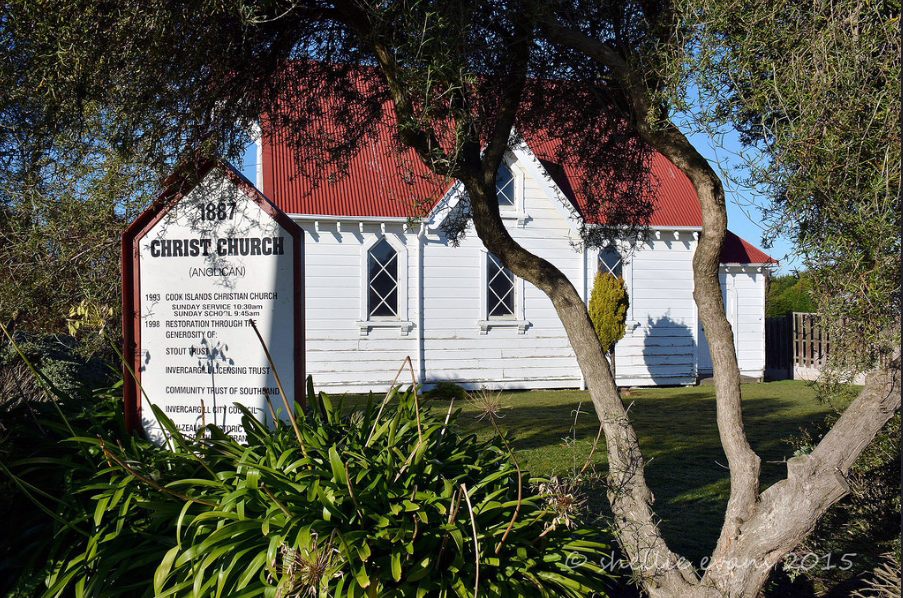
In 1887 the community organised Jubilee balls (it was Queen Victoria’s jubilee year) and dances to raise money. By September £48 had been raised and a further £43 was promised. The lowest tender received was from Mickie and Ritchie, for the amount of £158. In December Mr Pollard, who had offered to lend the remaining money needed to build the church, proposed that the church be called ‘Christ Church.’ The timber was donated by Thomas Gillies and John Murdoch.
Mackenzie and Gilbertson went into partnership in June 1882 with Gilbertson joining John Mackenzie in his Dee Street offices in the Earnslaw Chambers. Little is known about Charles Gilbertson except that he was in partnership in the firm McKenzie & Gilbertson between 1882 and 1897, and subsequently practiced on his own account. During that time the firm built residential and commercial properties in the town such as the residence Altrive (1894) at Waipounamu, and the Invercargill Club on Don Street. In January 1897, the Weekly Times reported that Mr C. Gilbertson was due to leave Invercargill and had transferred his interests in the architectural firm to Mr E. R. Wilson. It is not clear if Gilbertson left, as he is reported to have designed Invercargill’s Victoria Railway Hotel in 1907. John Mackenzie retired to Nelson.
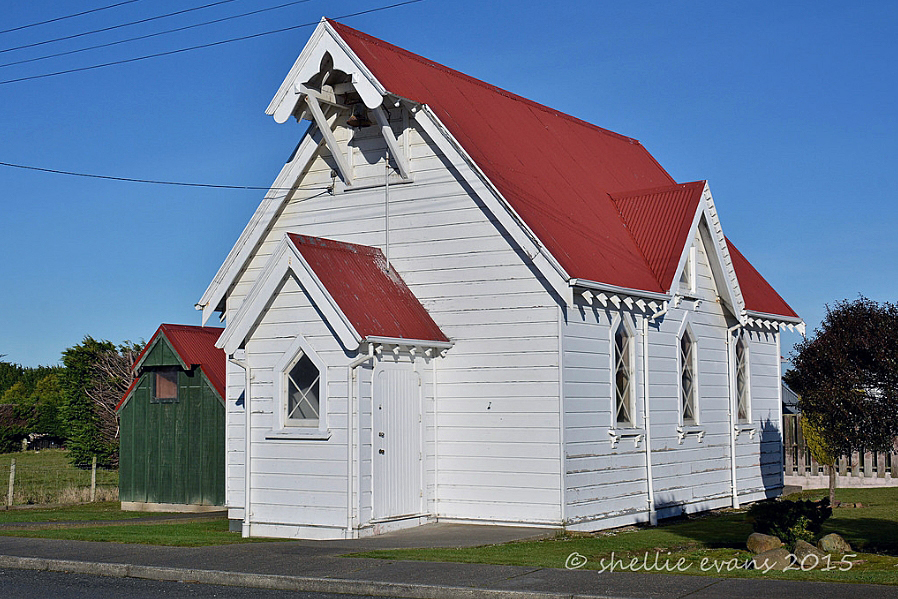
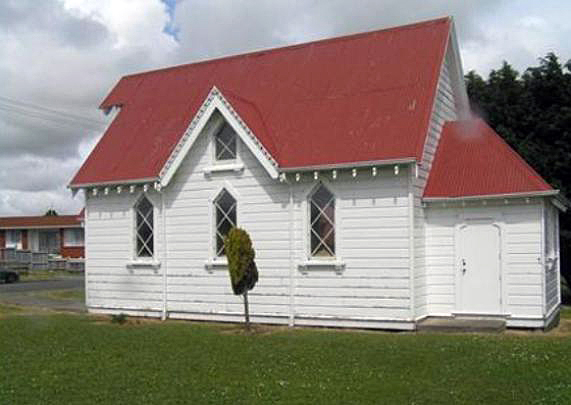
The Southland Times reported the opening of the church by the Ven. Archdeacon Stocker. The Church was judged ‘most satisfactory’ and was considered a ‘credit’ to the architects. The main building was 30 feet by 20 feet (circa 9m by 6m), with a height at the peak of the gable of 27 feet (8m), and included a porch and vestry, and could seat 90 worshippers. The Church was designed to accommodate future additions, the newspaper noting that the design ‘admits future extensions at little extra cost.’
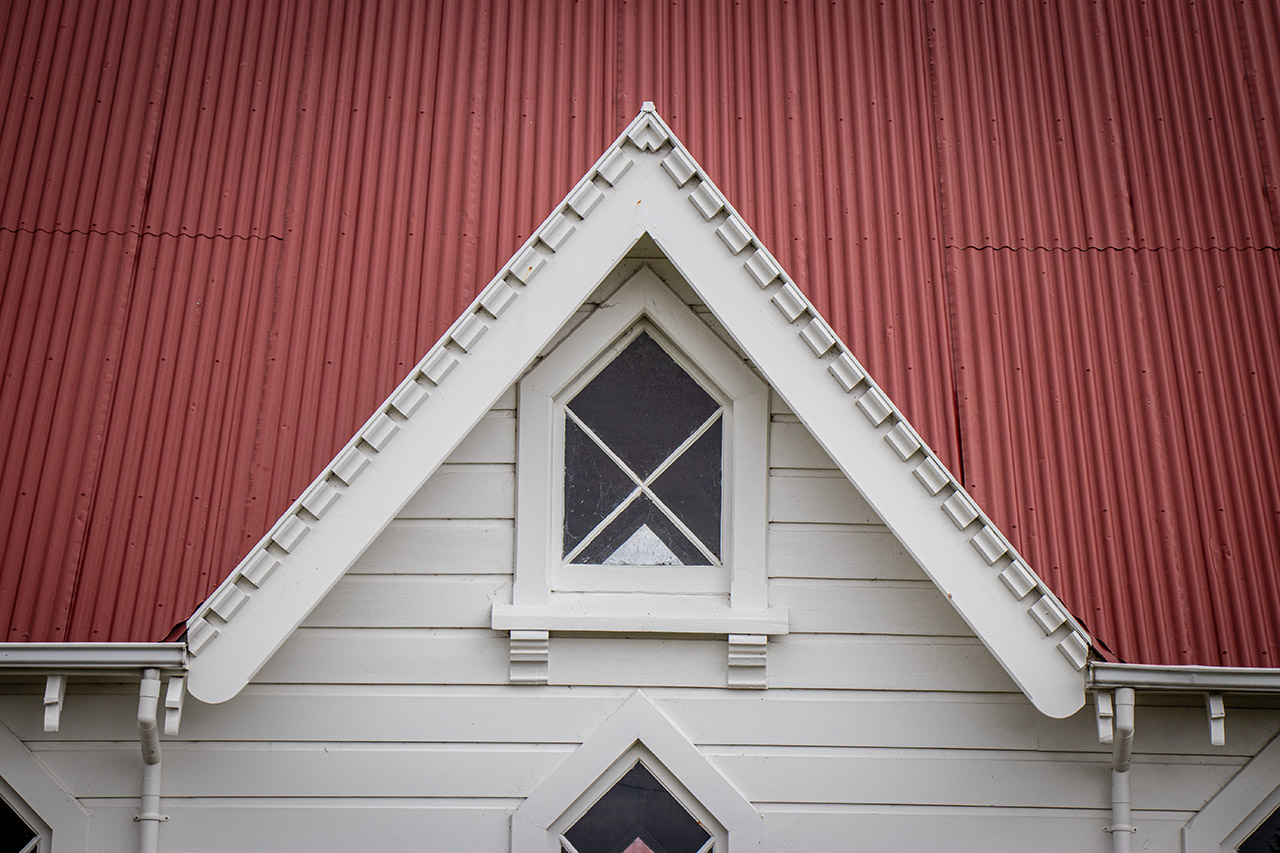
The Church was built of timber, with a steeply pitched iron roof with ‘gablets’ at the sides, ‘making a pleasing break in the outline of the eaves, the latter being brought down with exposed rafters having moulded ends.’ The windows had pointed heads and diagonal sash bars giving a ‘neat and rustic appearance.’ The doors had ‘moulded beads’ and ‘foliated iron work hinges.’ The belfry rated a special mention being formed by ‘carrying the forward part of the gable end which now provides shelter for the bell. The hole was surmounted with ‘iron finials of Gothic design and elegant appearance.’ The interior was lined with ‘red pine’ with decorative mouldings. There circular ventilators in the ceiling and louvred vents in the gable ends. The altar was on a raised dais, along with a ‘specially designed lectern’, having a ‘revolving book board.’ The old bell from St John’s Anglican Church in Invercargill was given to Christ Church.
Fundraising to clear the construction debt continued after the opening with concerts and other money raising activities. By mid 1890 the Southland Times reported that there was only a ‘small balance’ owing at Clifton Anglican Church. Efforts at paying off the debt were successful and the building was consecrated in 1891.
Electric light was installed, as a celebration of the jubilee. A packed congregation were present as the lights, ‘the outward sign of goodwill’, were switched on.
The Church has served as a place of worship for over 120 years. Earlier parishioners are remembered in the Church by memorial plaques. There are plaques to Thomas Cooper (erected 1908), Ellen Gavey (erected 1930s) and to William and Mary Ann Couling who were foundation members of the Church.
The parish of St John’s looked after the Church, and used by the Maori pastorate in the 1980s and the early 1990s until they found the Church too small and inconvenient given its lack of toilets and no water supply. In 1986 Christ Church was restored led by Rev. R.P. Katene. The Fox Family Trust, administered by the Dunedin Diocesan Trust Board, directed funds to the Koreti Maori Pastorate for the upkeep of the Church. Their efforts were supported by a grant from the New Zealand Historic Places Trust. The timber piles were replaced with concrete piles.
Discussions were held between the Diocese, the congregation and the Cook Island Christian Congregation about the future of the Church. Attendees expressed the hope that the church would keep its present name; that the memorials would remain as part of the church as they were an important part of the history; that the items in the care of the Maori Pastorate be returned to St John’s; that the furniture, including the font, be transferred with the church; that the bell (dating from 1861 and coming from St John’s) be returned to St John’s; and that the Prayer Desk gifted as a memorial to the Fox family, be returned to the family. The Cook Islands Christian Congregation were happy to accede to these requests.
In 1993 Christ Church was gifted to the Cook Islands Christian Congregation by the Dunedin Diocese of the Anglican Church. The congregation wished the Cook Island Christian Congregation ‘all the blessings, joy, and happiness for the future here that we have received here in the past.
In 1999 the Church was restored with the support of the community and the Southland Branch Committee of the New Zealand Historic Places Trust. The Church was rededicated for the Cook Island Christian community. Chairperson the Branch Committee Maureen Fox described the church as ‘one of the smallest and oldest of its kind in the South, a beauty sanctified by the years and worth preserving for the future,’ recognising the ‘deep spiritual significance’ of the building in linking an ‘English past with a Pacific Island future.’ Rev. Ngatupuna Nioputa explained the Church was ‘a house of God but it’s also very much a focus for our community life, which makes the improvements so much more significant.’ The Invercargill mayor described the building as a ‘true southern icon.’
The restoration project cost $32,000 and was overseen by the Southland Branch Committee. A grant of $15,000 was also received from the Wellington-based Stout Trust, with significant monies also provided by the Community Trust of Southland, the Invercargill Licensing Trust, and the Southland Branch Committee of the New Zealand Historic Places Trust.
In 2011 Christ Church remains the centre of worship for the Cook Islands Christian Congregation.