Quick links


Quick links
Quick links
Quick links
Quick links
Quick links
Grand Hotel (Former)
76 Dee Street, INVERCARGILL
Private
Historic Place Category 2
List No. 2471
Quick links:
List GalleryLocationDetails
76 Dee Street, INVERCARGILL
Private
Historic Place Category 2
List No. 2471
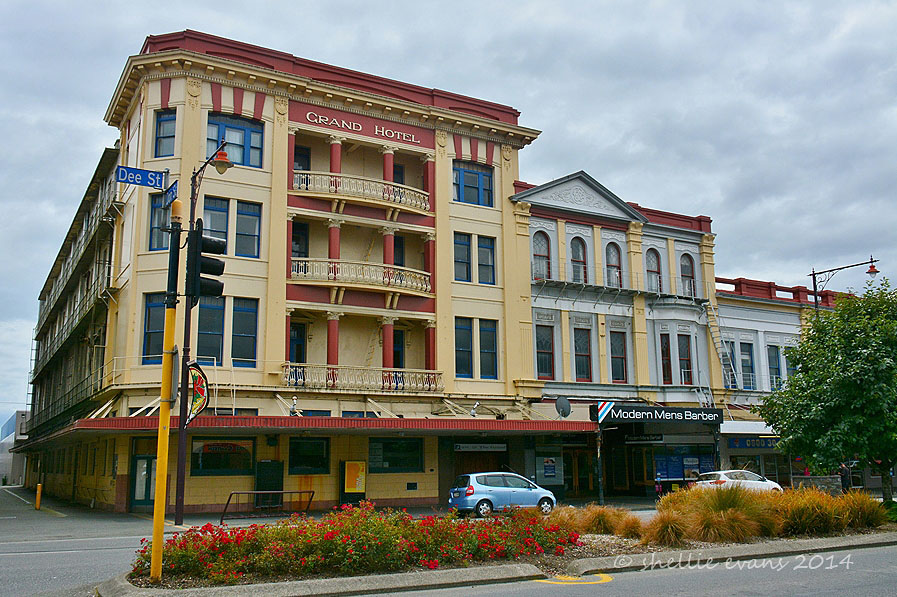
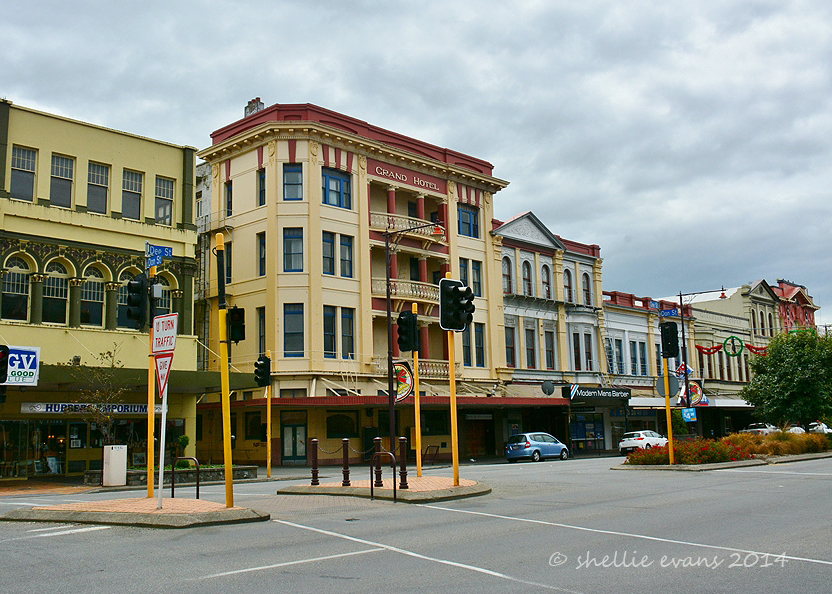
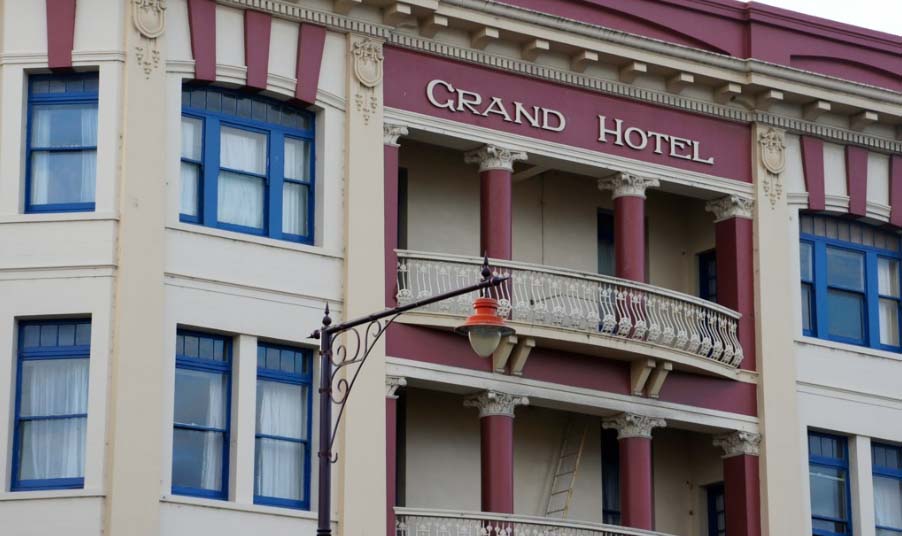
List Entry Information
Status
Listed
List Entry Status
Historic Place Category 2
Access
Private/No Public Access
List Number
2471
Date Entered
24th November 1983
Date of Effect
24th November 1983
City/District Council
Invercargill City
Region
Southland Region
Extent of List Entry
Extent includes part of the land described as Lot 3 DP 341371 (RT 170209), Southland Land District, and the building known as Grand Hotel (Former), thereon. Refer to the extent map tabled at the Heritage List/ Rārangi Kōrero Committee meeting on 28 January 2021.
Legal description
Lot 3 DP 341371 (RT 170209), Southland Land District
Construction Professional
Name
Ball, A.J.
Type
Builder
Biography
No biography is currently available for this construction professional
Name
CJ Brodrick
Type
Architect
Biography
Cuthbert John Brodrick (1867-1946) was born in Invercargill, the fifth son of Thomas Brodrick. He was named for his uncle, the well-known Victorian architect Cuthbert Brodrick (1822-1905). Brodrick was educated at Southland Boys High School. In 1884 Brodrick was articled to F.W. Burwell and trained in the classical tradition, travelling to Melbourne with Burwell to complete his training. Brodrick returned to New Zealand in 1891 after architectural draughting in Queensland for the Government. In 1906 he married Jemima ('Nonnie') Thomson, stepdaughter of surveyor John Turnbull Thomson. After practising in Hawera for six years he returned to Invercargill. Brodrick entered into a partnership with his pupil Thomas Royds during World War One. Royds died in 1936. Brodrick retired from practice about 1943. During his career, he served as President of the Institute of Architects in 1911, as Vice-President in 1917, and as a member of the council in 1935. The first building he designed in Invercargill was the Alexandra building. Others (with partner Thomas Royds) included the Italian Renaissance Bank of New South Wales (1912), the Kaiapoi building, the Grand Hotel (1914), the Edwardian Baroque Southland Daily News (1913), the stripped Classical Invercargill Savings Bank (1926), the classical temple Masonic Lodge of St John (1926), the Georgian Waimahaka Homestead, and grandstands for the Southland Racing Club. Brodrick was also a member of the Borough Council for three terms and became Deputy Mayor.
Construction Details
Type
Modification
Description
Addition of awning
Period
Post-1913 (but pre-1954)
Type
Modification
Description
Rear brick wall replaced and lift installed
Period
1960s
Start Year
2009
Type
Refurbishment/renovation
Description
Extensive refurbishment of rooms
Start Year
2014
Type
Refurbishment/renovation
Description
Partial roof replacement
Start Year
2014
Type
Modification
Description
Removal of rear window and installation of roller door to create internal car park
Start Year
1912
Finish Year
1913
Type
Original Construction
Historical and Associated Iwi / Hapū / Whānau
Completion Date
8th December 2020
Report Written By
Sarah Gallagher
Information Sources
Otago Daily Times
Otago Daily Times, 1 Jun 1915, p.10.
Southland Times
Southland Times
Other Information
This place was identified as significant under previous legislation with different information requirements. It remains significant under the current legislation. There is opportunity under our legislation and policies to add to this information. Further information about this place may be available from the Otago/Southland Office of Heritage New Zealand Pouhere Taonga. A fully referenced upgrade report is available on request from the Otago/Southland Area Office of Heritage New Zealand. Please note that entry on the New Zealand Heritage List/Rarangi Korero identifies only the heritage values of the property concerned, and should not be construed as advice on the state of the property, or as a comment of its soundness or safety, including in regard to earthquake risk, safety in the event of fire, or insanitary conditions.
Current Usages
Uses: Accommodation
Specific Usage: Hotel
Former Usages
General Usage: Civic Facilities
Specific Usage: Pub/bar/tavern/public hotel
General Usage: Education
Specific Usage: University Halls of Residence
General Usage: Trade
Specific Usage: Office building/Offices
General Usage: Trade
Specific Usage: Shop
General Usage: Trade
Specific Usage: Showrooms
Location
Get the latest heritage news, features and events delivered
straight to your inbox.
